

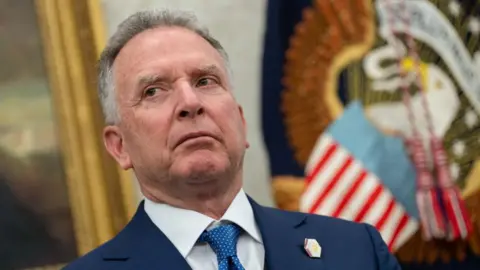
Zhanna Avagyan: Tigran, the US President Donald Trump’s Special Representative, Steve Witkoff, has announced that Armenia and Azerbaijan may possibly join the Abraham Accords. First, I’d like you to explain to our viewers what this agreement is.
Tigran Grigoryan: The Abraham Accords were one of the main foreign policy achievements of Donald Trump’s first presidential term. They were signed in September 2020 between Israel and the United Arab Emirates, and between Israel and Bahrain, with U.S. mediation. The main goal was to establish broader peace in the Middle East.
These agreements also created the opportunity for formal economic cooperation—because, of course, there may have been some unofficial trade relations between those countries, but the accords opened a new door for establishing such official relations. Later on, other countries joined these agreements as well, specifically Morocco and Sudan.
So, in general, this is primarily a story of Arab-Israeli normalization—about establishing relations between Israel and Arab countries.
Azerbaijan, after Donald Trump’s election, began efforts to become part of the accord. If I’m not mistaken, we dedicated a separate episode to this topic in the past. Azerbaijan was trying to use its close relationship with Israel to connect with the new administration and become part of these agreements. There was also talk of some kind of trilateral strategic relationship between the United States, Azerbaijan, and Israel.
And if you remember, a few months ago, when Witkoff—Trump’s special envoy for the Russia-Ukraine conflict—went to Moscow and then to Baku, where he spent eight hours, it became clear even then that they were discussing issues like this. Now, for the first time, he has publicly spoken about it.
Interestingly, the media outlet he gave those comments to—Breitbart—is a very well-known Trump-aligned media outlet. Back when Trump wasn’t even president yet—still a candidate during his first campaign—it was one of the first outlets to support his candidacy. Steve Bannon, one of Trump’s well-known former advisers, was also one of the site’s founders. So it’s notable that they were the first to publish this information.
I believe this could, in theory, create opportunities—but there are also risks. We've talked about those risks before. The problem here is that Witkoff embodies Trump’s transactional approach to foreign policy. That is, this person has no background in diplomacy—he comes from the real estate business, just like Trump. For him, foreign relations and foreign policy happen largely in the same logic as business deals.
So if Witkoff ends up being the chief negotiator on these issues, what will be missing is the institutional memory that, for example, exists within the State Department—as we’ve seen in some of its recent statements.
I think in this case it will be much easier for Aliyev to convince Trump and Witkoff of certain things than it would be for Armenia. But it’s also important to emphasize that Armenia’s and Azerbaijan’s potential accession to the Abraham Accords is being tied to the peace process. Witkoff mentions that if the peace process concludes successfully—and he notes that peace is near and the process is close to completion—then both countries could join.
The other new element here is that Armenia is now being mentioned, whereas previously we thought only Azerbaijan wanted to become part of this format.
But would joining these accords actually change anything on the ground? What kind of legal or even non-legal but practical force do they carry?
Legally, probably none. If we take Arab-Israeli relations, for example, those were seriously disrupted by the Gaza war. Before the Gaza war, there were still some efforts underway, and if that war hadn't happened, several other Arab countries might have joined the accords as well. But even before the war, it’s hard to say that any major, serious successes had been achieved.
I looked into the economic side. Yes, some investment projects were carried out by Israel, for example in the Emirates, but we’re talking about very small-scale efforts. Now, if we try to project this onto our own region, I find it hard to imagine how this would work. If the whole logic is about reconciling Israel with the Islamic or Arab world—well, Azerbaijan already has excellent relations with Israel. You could say Azerbaijan has strategic-level relations with Israel.
In Armenia’s case, yes, there are problems between Armenia and Israel, but I don’t understand why the Armenia-Azerbaijan normalization should be tied to Armenia-Israel relations.
The main component here might be economic. After the signing of the accords, there was an attempt to create a foundation called the Abraham Fund.
In short, they tried to establish a fund which aimed to raise about $3 billion to implement various projects in places like Gaza and other areas. In other words, to make some investments. But during that entire period, they were unable to raise any money.
Azerbaijan may also be viewing this through that lens. We’ve discussed how recently Azerbaijan has been trying to “sell” this peace agreement byarguing Armenia needs it more and basically saying: “You need to give us something of added value so that we’ll agree to sign this and accept peace.” They’re talking about what’s called the peace dividend, and lately, in discussions with Europeans and Americans, they’ve been trying to say, “Okay, we’ll sign, but you need to invest, support us, maybe with reconstruction efforts,” and so on. This is how they may be trying to frame it.
Overall, if we’re talking about any somewhat positive aspects, it’s that this format could be one that the United States might be interested in when it comes to peace. Previously, we used to say that our conflict was very low on the list of priorities—considering Ukraine, Gaza, and now also conflicts like India-Pakistan, and other crises, which constantly flare up.
But now we’re seeing that the new administration is keeping the Armenian-Azerbaijani peace process on its radar, and by helping bring it to completion, they might be able to score an easy foreign policy win. That can be seen as a positive development.
They might become interested at some point in saying: “Look, we can’t get anything done in Ukraine—not even a ceasefire. Same thing with the war in Israel, in Gaza. But here’s something we achieved in Armenia.” This was a common narrative especially after Trump’s election—that we should try to sell this peace process as a quick foreign policy win.
An interesting factor in this process is also Witkoff’s involvement, and whether he will personally be in charge of these negotiations. We’ve only briefly touched on this topic before. What does his prior experience say about his involvement in conflict resolution, and what can we expect for Armenia-Azerbaijan?
Yes, it’s interesting that Witkoff, aside from being Trump’s chief negotiator in U.S.-Russia relations and during the Russia-Ukraine war, is also the chief negotiator on Middle Eastern issues.
Up until now, his only and first real success was as a member of Trump’s transition team, even before the inauguration, when he managed to negotiate the return of American hostages held by Hamas, as well as a ceasefire agreement.
Although, of course, there were differing opinions back then over who actually negotiated that—Biden administration representatives claimed it was their work, while Trump and particularly Witkoff claimed it was thanks to them.
So far, that’s his main accomplishment. Prior to that, as I already mentioned, he was mostly active in the business sector.
In other words, this is someone who emerged from the New York real estate scene, the very environment where President Trump made his name.
In the context of the Russia-Ukraine negotiations, we saw that from the outset, his approach was very superficial. In the early stages, it was clear that he was to some extent under the influence of Russian narratives. He would echo and repeat the same lines.
We’ve mentioned before that notorious interview with Tucker Carlson, during which he didn’t even know the names of the occupied Ukrainian territories. He just repeated these very simplistic arguments, which are typically Russian propaganda talking points.
So we’re dealing with someone who doesn’t have deep knowledge or experience in these kinds of issues. And that means he can be influenced. If Putin managed to persuade him of certain things, it’s quite telling.
People like that are vulnerable to being influenced by authoritarian leaders, and Witkoff’s relationship with Putin is the best example of this.
Initially, several American officials were working on the Ukraine issue. Witkoff joined the effort at some stage, but General Kellogg was also involved—and he was much more pro-Ukrainian in his views. Now Kellogg has been pushed aside, or at the very least, he no longer plays a leading role, and Witkoff has become far more prominent.
I’m fairly sure that Aliyev and Witkoff will find it much easier to communicate than, say, Pashinyan and Witkoff, simply because they speak entirely different political and rhetorical languages.
Still, it’s possible to try to make use of this. If interest from the U.S. grows over time, we might try to use that to at least prevent future escalations.
Because if the Americans get involved again, if Trump becomes re-engaged, it’s unlikely that Azerbaijan launching a new escalation will be welcome from their side.
We see a similar situation on the Russia-Ukraine front, where, despite apparent efforts to reach an agreement that would be more favorable to Russia, Moscow continues to put forward maximalist demands. That’s why they’re now at a deadlock, unable even to agree on a ceasefire, let alone a peace deal.
So yes, if that kind of opportunity arises, we should try to use it to allow the United States to play a positive role—but we also need to take into account all the risks we’ve discussed today.
Thank you, Tigran.
Thank you as well.