

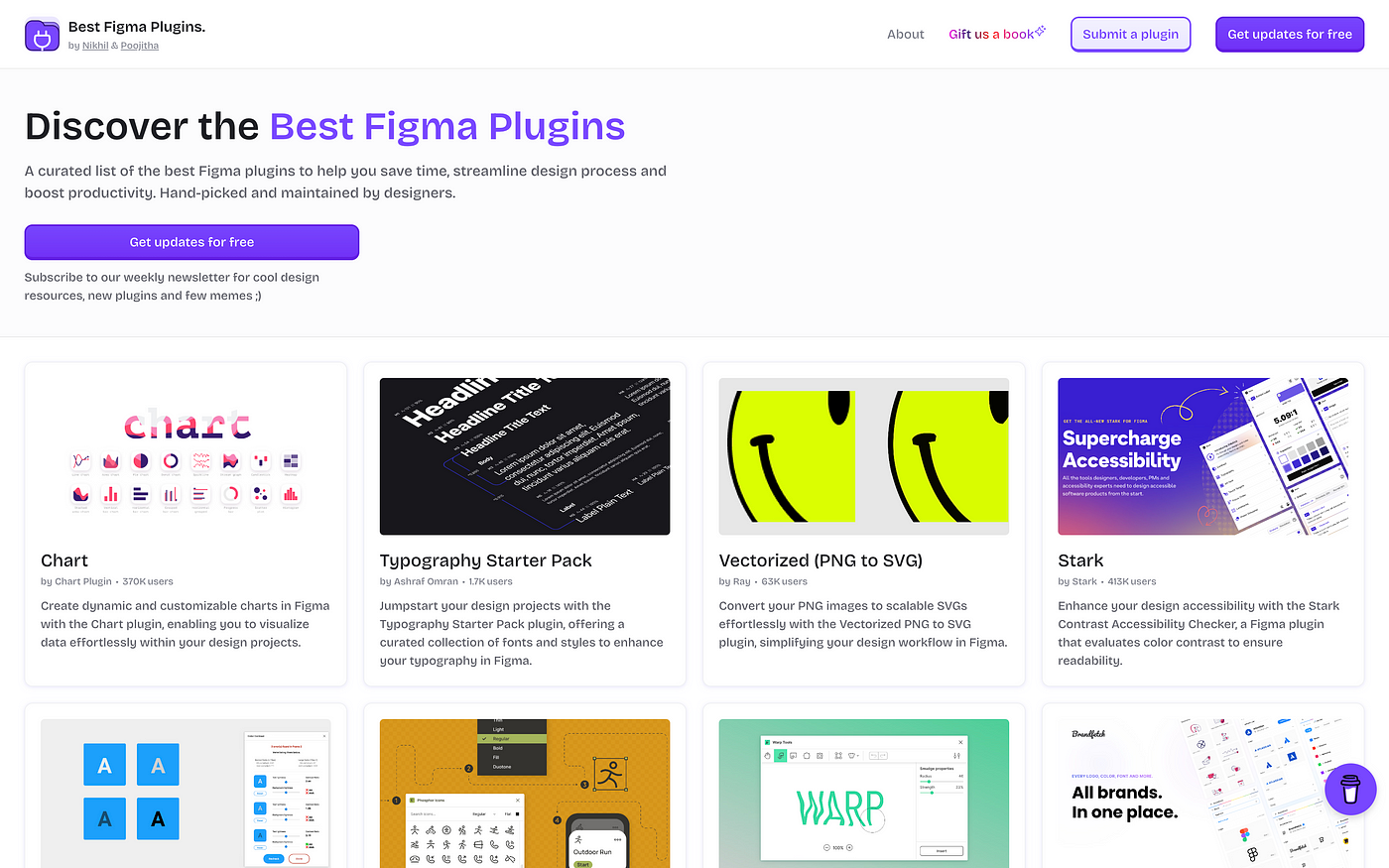
I recently built a directory of Figma plugins in just 14 days alongside my day job.
The idea came from a real need I noticed in our design team — they were curating plugins to automate tedious tasks and boost productivity.
This got me thinking: what if there was a go-to directory of handpicked Figma plugins, curated by designers for designers?
So, with my friend Poojitha Inakota, a product designer, we co-built bestfigmaplugins.com to help fellow designers save time and streamline their workflow.
We launched in two weeks, and within the first 24 hours, we’d already seen 75+ visitors. Here’s a behind-the-scenes look at what we did, what worked, and the lessons I learned along the way.

Validating Idea
After the idea struck, the first thing I did was head to Google Keyword Planner to validate it. I cross-checked on Google Trends, search bars, Reddit, and YouTube, and the demand seemed promising.


Since the .COM domain for “figmaplugins” was taken, we settled on bestfigmaplugins.com — thanks to John Rush and his Directory Guide for helping with the choice.

If there’s one takeaway here, it’s that keyword research and domain selection deserve the lion’s share of your efforts when starting a directory.
SEO can make or break your directory’s visibility, so take the time to validate your idea and pick a domain that stands out.
Lesson 1: Don’t skip validation. SEO will drive your growth game, so research well and pick your name carefully.
Curating the Right Content
The next step was deciding what plugins to feature.
My partner Poojitha dove into testing and reviewing plugins, and we both focused on quality over quantity.
Instead of flooding the directory, we handpicked 46 plugins that actually make a designer’s workflow smoother.
I worried this might seem too few, but once the site was live, it was clear that less was more.
Users appreciated the curated list because it was focused and didn’t overwhelm them.
Lesson 2: Curate quality. A well-chosen selection is more valuable than a long, diluted list.
Using No-Code for Speed
To keep things simple, I chose Framer, a no-code tool, to build the directory.
Even though I could code (learnt recently :D), Framer allowed me to focus on content and marketing instead of backend complexity.
Building the directory on Framer meant I could skip the coding headaches and get the site live faster.
I initially planned to add categories, filters, and an “About” page, but after checking analytics, I found that no one even clicked on the “About” page!
The extra features I thought were “essential” were unnecessary for v1.
Users just cared about finding the plugins.
Lesson 3: Don’t overbuild. Launching lean keeps things focused and gets you feedback faster. Ship the 20% of features that drive 80% of results.
Going Live: Facing the Fear and Getting Feedback
Hitting the “publish” button was nerve-wracking. The directory wasn’t perfect, but there’s something freeing about shipping anyway.
As soon as we went live, the feedback started rolling in, and it was invaluable to see how others viewed the project.
Building in public has its risks, but the reward is a closer connection with your audience and real, actionable feedback.
Seeing others use and appreciate the work was a huge motivator.
Lesson 4: Ship, even when it’s scary. The real feedback — and real growth — starts once it’s live.
What’s Next?
Now that the directory is live, I’m already thinking about what’s next. I want to add a few features, optimize for SEO, and continue curating high-quality plugins.
But the biggest takeaway for me has been this: small steps build momentum.
Each improvement brings me closer to what users actually want, and I’m learning with every update.
Key Lessons Recap
Know What People Search For: Validate before building. Spend 80% of your time researching keywords and picking the right domain.
Curate Only the Best: Quality trumps quantity. A curated list is more valuable than an exhaustive one.
Don’t Code, Even If You Can: Use no-code tools to speed up the launch and focus on what matters — content and distribution.
Ship Only What’s Essential: Launch lean, get feedback, and iterate.
This journey has been a reminder of the power of focus, and that sometimes, simplicity really is the best approach.
If you’re thinking about starting something, I hope this inspires you to take that leap. Start small, stay focused, and keep building in public — you’ll learn more than you ever imagined.
Before you leave…
If you like my story, show your appreciation by hitting the claps.
Follow for more updates like this.
See ya
Ps: this was originally posted on Medium