

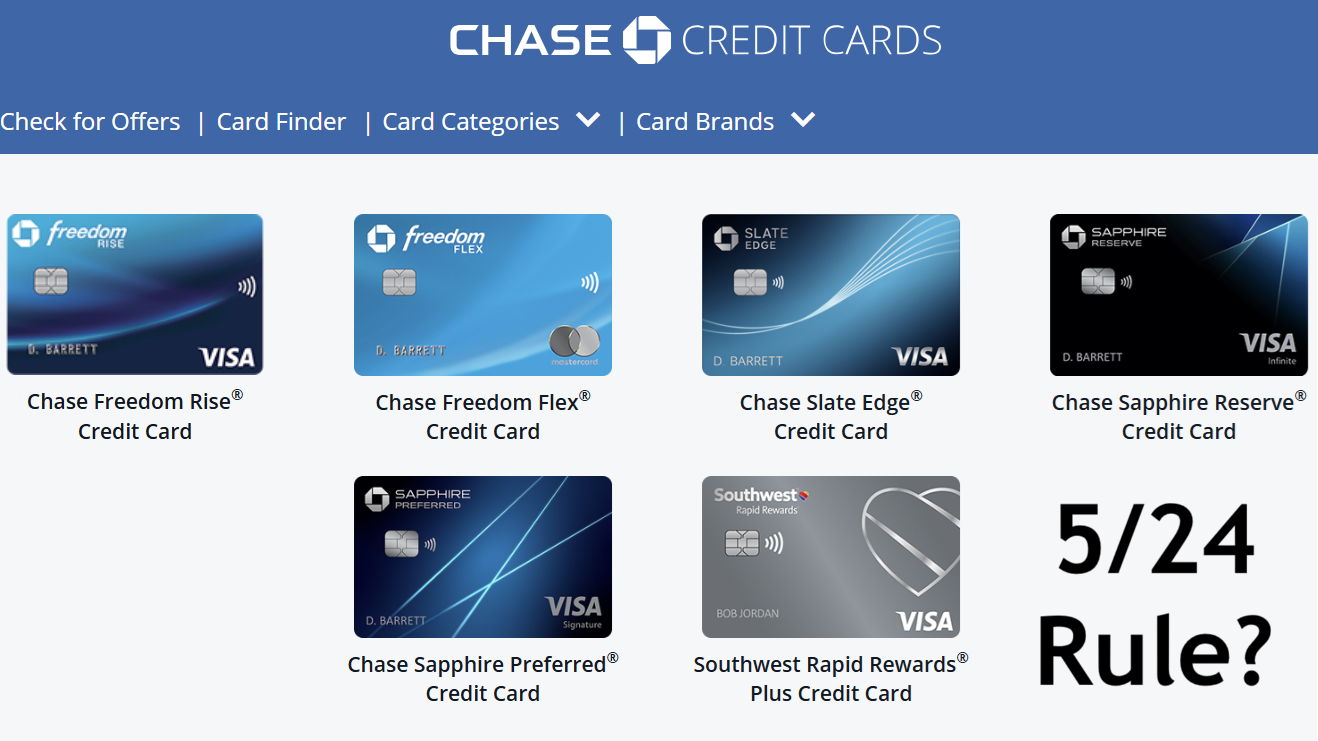
📊 Deep Dive: The Chase 5/24 Rule
The Chase 5/24 Rule is one of the most important factors in the Chase credit card ecosystem, as it governs who can and cannot be approved for most Chase credit cards. This rule is based on the number of personal credit cards you’ve opened in the last 24 months, not your credit score or income level.
In simple terms, if you’ve opened 5 or more personal credit cards from any issuer in the past 24 months, you will automatically be denied for most new Chase cards, regardless of your credit history. It’s essential to understand how the 5/24 rule works so you can plan your applications wisely and maximize your chances of approval.
In this section, we will break down exactly what counts toward the 5/24 limit, which cards follow the rule, how to check your status, and provide strategic advice on how to navigate the Chase ecosystem to your advantage.
📊 What Counts Toward Your 5/24 Limit?
Understanding what counts toward your 5/24 status is crucial for navigating Chase's application process. Here's a breakdown of the different factors that do and do not count against you.
✅ Counts Against You:
Personal Credit Cards from Any Issuer
This includes any personal credit cards you’ve opened in the last two years—from any bank or financial institution. Even if you’ve closed the card or it’s no longer active, it still counts.
Example: If you opened a credit card with Citi, Capital One, or American Express in the past 2 years, it will count towards your 5/24 limit.Business Cards from Certain Issuers
Business credit cards from issuers like Discover, TD Bank, and most Capital One small business cards (excluding certain business cards like Capital One Spark Travel Elite) count against your 5/24 total.
Example: A Capital One Spark Cash for Business card will be considered when determining your 5/24 status.Authorized User Accounts
If you’re an authorized user on someone else's credit card and that account appears on your credit report, it will count toward your 5/24 limit.
Pitfall: Authorized user accounts can be removed from your credit report by calling Chase's reconsideration line. Be aware that not all authorized user accounts appear on your credit report, but they still can if they're considered "active."Certain Retail Cards
Some retail store cards that report to the credit bureaus, like Amazon or Target credit cards, count toward your 5/24 limit, even though they are specific to one merchant.
Example: If you recently opened a Target RedCard or Amazon Store Card, it counts toward your total.
❌ Does NOT Count:
Denied Credit Card Applications
Simply applying for a credit card and being denied does not affect your 5/24 status. Chase only counts cards that you’ve successfully opened.
Pitfall: While a denial doesn’t count, multiple rejections may signal a problem with your application or eligibility, so it’s worth reviewing your credit profile or reconsidering your application strategy.Most Small Business Cards
Business credit cards from issuers other than Chase, TD Bank, or Capital One small biz cards (like American Express Business cards) do not count toward your 5/24 limit.
Example: A Chase Ink Business Preferred card won’t count against your 5/24 limit, so if you apply for it at 4/24, you will stay at 4/24.Non-Credit Transactions
Auto loans, mortgages, and student loans don’t count toward your 5/24 limit. These are not considered credit card accounts and are not tracked in the same way for the purpose of this rule.
🤔 Pitfalls of Focusing Too Much on the 5/24 Rule
While the 5/24 Rule is crucial, obsessing over it can sometimes lead to missed opportunities or poor strategy. Here are some common mistakes:
Prioritizing the 5/24 Rule Over Card Benefits
Focusing too much on staying under 5/24 can cause you to miss out on valuable sign-up bonuses or perks from credit cards that fall outside of the Chase ecosystem. If you’re eligible for an amazing offer from another bank, it might be worth applying, even if it pushes you over 5/24.Delaying Applications to Stay Under 5/24
Waiting too long to apply for a Chase card to keep your 5/24 status under 5 can result in lost bonuses or the inability to take advantage of limited-time promotions. Sometimes, applying sooner rather than later, even if it pushes you over 5/24, may be better in the long run.Being Too Focused on “Perfect” Credit
Even if your credit is near perfect, the 5/24 rule is hard to bypass—it doesn’t matter if you have excellent credit scores or high income. The rule is about frequency of applications, not your creditworthiness.
🔍 Summary: Navigating the Chase 5/24 Rule
The Chase 5/24 Rule can be a major hurdle for those who want to leverage Chase’s credit cards, but it’s not an insurmountable one. By understanding what counts and what doesn’t, you can make informed decisions and avoid pitfalls:
What counts: Personal cards, business cards from certain issuers, authorized user accounts, and certain retail cards.
What doesn’t count: Denied applications, most small business cards, and non-credit loans.
To maximize your chances of getting the Chase cards you want:
Plan ahead: Keep track of your opened credit cards.
Apply strategically: Prioritize Chase cards before others and apply only when you’re eligible.
Don’t overthink: Don’t let the 5/24 rule control every decision—sometimes, it’s okay to apply for a non-Chase card if it’s the right choice.
By understanding the rules and strategically navigating the Chase ecosystem, you’ll be better positioned to maximize rewards and build your long-term credit strategy.