

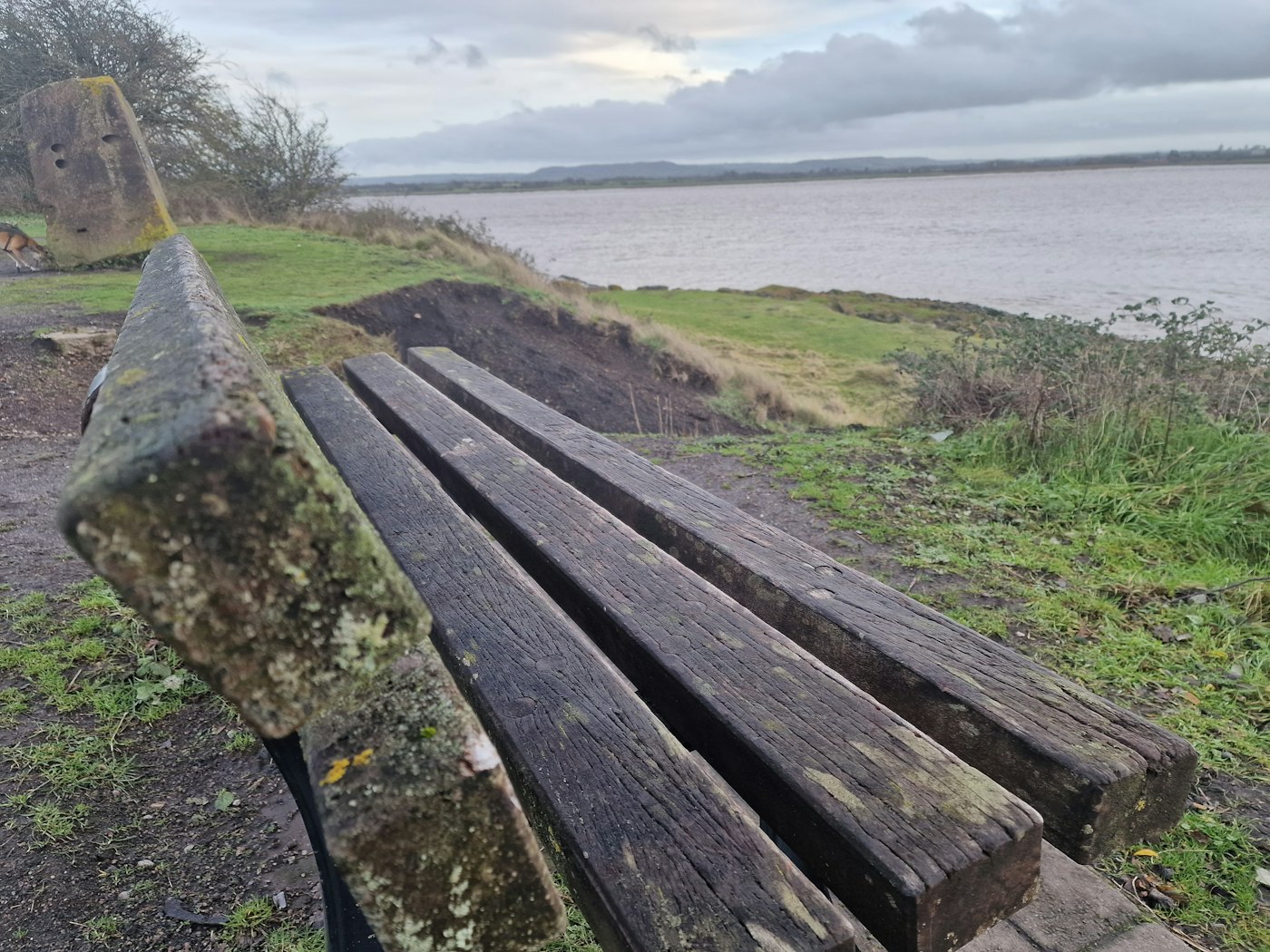
Retirement was sold to me as an open horizon. Nobody mentioned that most of it would be a bench, a flask of tea, and a long private argument about whether sitting here counts as doing something. I used to have a rota to tell me when to stop. It turns out the rota was doing most of the relaxing for me, and it never once asked for a share of the tea.
The harbour water is grey, except where a strip of light catches the small ripples beside the wall. Hands in my coat pockets, I watch a boat move beyond the moorings. Its movement has a purpose — somewhere to go, something to do.
I have time to watch.
That is the good part. The awkward part comes a moment later, when I wonder what I am supposed to do after the watching. Tea, perhaps. A walk home. All perfectly reasonable possibilities, none carrying the old certainty that I am between one definite duty and the next.
Shore leave had an edge. However you spent it, there was a return built into the arrangement. The freedom was genuine, but it sat inside a larger structure. You could enjoy being away without having to decide what away would mean forever.
Retirement removes the return. The time is yours, and so is the business of finding somewhere to put it.
Our generation was told to look forward to stopping. We discussed rest as though it were an occupation anyone could take up without instruction. After enough years of being required somewhere, surely being required nowhere would feel like an improvement. Often it does. But an empty timetable and a settled life are not quite the same thing, as I am discovering beside a bench I don't actually need.
At 67, I sometimes feel I have been granted leave by an organisation which has quietly ceased to exist.
I know I'm not going back. There isn't a confusion about the facts. The confusion is physical: the little readiness in the shoulders, the tendency to check the time, the suspicion that an unrestricted afternoon must eventually be accounted for.
Nobody is waiting for the account. I prepare it anyway.
I have spent decades navigating ships and now require a detailed passage plan to buy a packet of biscuits.
The quiet humiliation is how difficult an ordinary choice can become when it isn't attached to a responsibility. I could go somewhere new. I could read. I could stay beside the water another ten minutes. Instead I find myself weighing these options as though the afternoon were a valuable shipment I might accidentally deliver to the wrong address.
No, valuable isn't the wrong word. The afternoon is valuable. What I keep getting wrong is the belief that its value depends on choosing the most defensible use of it.
I can be glad of freedom and still miss the boundary round it. That sounds contradictory until I notice how often a boundary let me relax. You knew when the work resumed. Until then, the rest did not need constant justification.
Now I am both the person taking leave and the person authorising it. They do not enjoy a particularly trusting relationship.
The bench has a small patch of bird droppings at one end. I consider how strategically this has limited the available seating. There is probably a useful lesson about making do. No, there isn't. I am simply deciding where not to sit.
Some days I try to solve the uncertainty by making myself busy. A calendar full of appointments looks reassuringly like a life under control. Then the appointments arrive and I complain that the day isn't mine. I have rebuilt the very pressure I was pleased to leave, without even acquiring a wage for the trouble.
Other days I go too far the other way and call every reluctance peace. There's no requirement to go out, so I don't. A week can become smaller by a series of entirely reasonable decisions.
What I want is neither a new ship nor permanent idleness. I want a connection between the day and something I am genuinely interested in — one that doesn't require me to prove I am still capable of command. I am not sure that connection can be ordered into existence. It seems to grow from paying attention often enough that something begins to matter.
The boat has moved beyond the wall. I sit at the clean end of the bench and let the wind remind me that watching is an activity with its own physical arrangements. Cold ears, for example.
I can go for tea when I choose. That's a small luxury, and I like it. There is no need to return before a shift, no clock deciding the end of the outing on somebody else's behalf. I haven't resolved the larger question of what the days are for. But I would rather not make this pleasant half-hour responsible for answering it.
Eventually I stand. Home is a direction, even when it isn't a duty.
If retirement has felt like extended leave to you, I'd be interested in when the feeling changed, or whether it hasn't. You don't need to offer a new purpose with an impressive name. I'm thinking about the ordinary afternoon, once the relief has settled and nobody is expecting you back. What do you still find yourself preparing to return to, even though you know there is no departure time?
Read the daily essay on Substack: https://dub.sh/bmac-20261118-substack
Visit the TOGT store on Eden: https://dub.sh/bmac-20261118-eden
More from TOGT on Gumroad: https://dub.sh/bmac-20261118-gumroad