

The Great Workplace Showdown
Every year, the corporate world gears up for the workplace equivalent of the Oscars, where companies fight tooth and nail for the coveted title of "Best Place to Work." These rankings, churned out by platforms like Glassdoor, Great Place to Work, and Forbes, are more than just glitzy PR opportunities. They set the stage for a broader conversation: What does it actually mean to be a great employer? And are these rankings just self-congratulatory marketing fluff, or do they offer something of real value?
The Metrics of Happiness: How the Sausage Gets Made
The criteria for making the cut vary, but the usual suspects include employee satisfaction, compensation, diversity, career growth opportunities, and that ever-elusive unicorn: work-life balance.
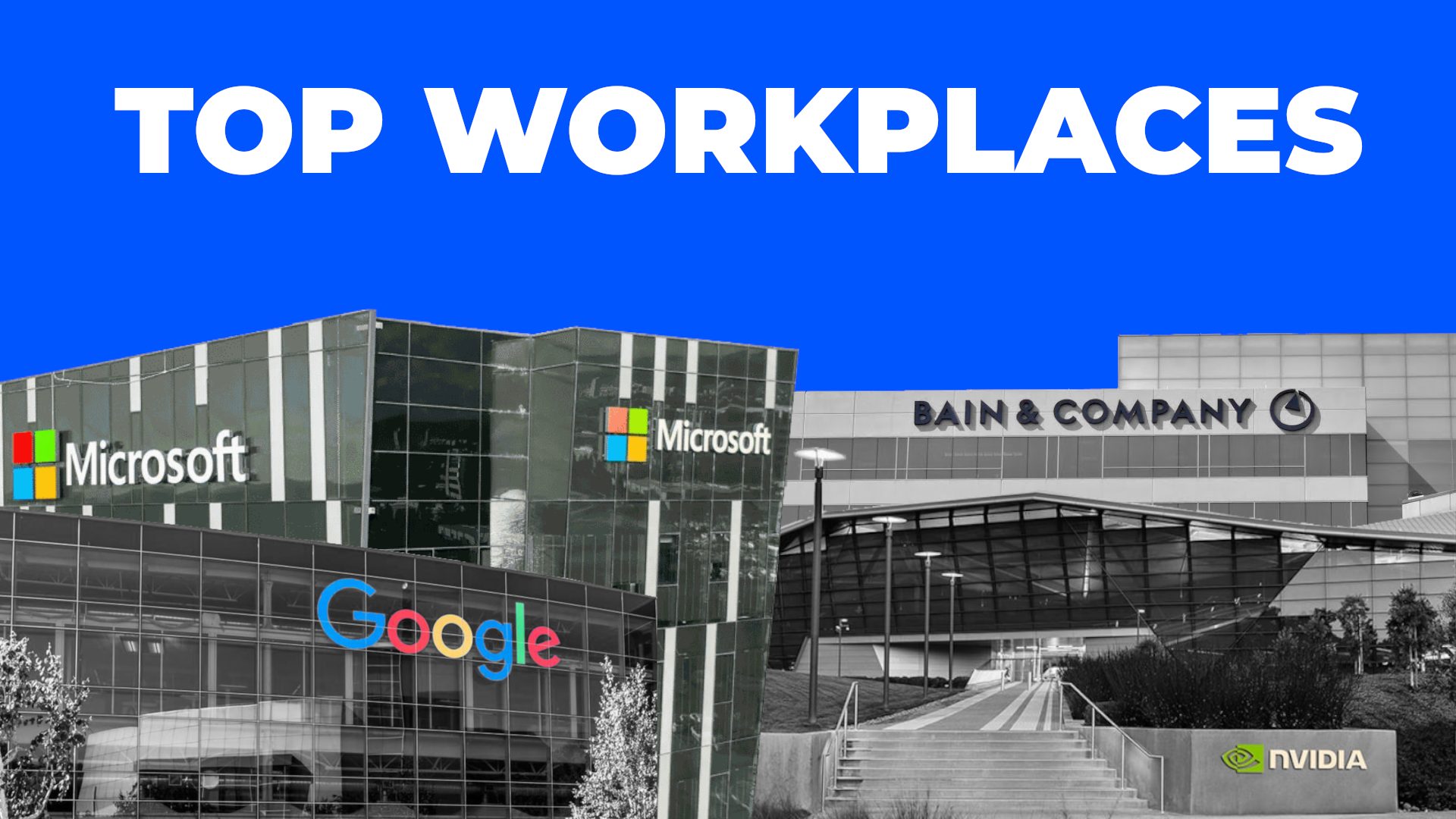
Employee Reviews: Anonymized Glassdoor rants or praises that shape corporate reputations. According to Glassdoor’s 2025 rankings, over 72% of employees at top-rated companies report high job satisfaction. Tech companies like Google and NVIDIA, as well as consulting firms like Bain & Company, consistently rank high due to strong career development programs and an emphasis on a positive workplace culture.
Perks & Benefits: From free kombucha on tap to unlimited PTO (Paid Time Off, which employees are too scared to use). Research from Great Place to Work shows that companies offering strong benefits see a 20% lower turnover rate. Companies like Salesforce and Adobe are known for generous parental leave policies, wellness programs, and even mental health days.
Leadership & Culture: Because having a CEO who isn’t a sociopath apparently counts for something. A recent Deloitte study from 2024 found that 82% of employees say leadership transparency directly impacts their job satisfaction. For example, companies like Microsoft have been recognized for their commitment to inclusive leadership and employee feedback mechanisms.
Diversity & Inclusion (D&I) Policies: Companies that prioritize inclusivity perform better. A McKinsey report found that companies in the top quartile for gender and ethnic diversity are 35% more likely to outperform their peers financially. Firms like Accenture and Unilever have aggressive D&I policies that are seen as industry benchmarks. These policies typically include hiring initiatives aimed at underrepresented groups, equal pay audits, employee resource groups (ERGs) that provide community and support, unconscious bias training, and leadership accountability measures to ensure real progress rather than just lip service.
The companies that ace these rankings—think NVIDIA, Microsoft, Google, Bain & Company, and BCG—aren’t just looking for a pat on the back. They use these accolades to attract the best and brightest, a talent war fought with stock options, remote work flexibility, and ergonomic chairs that cost more than a used car.
Meritocracy or Just Another Rigged Game?
On paper, these rankings reward meritocratic environments where talent thrives. In reality, the "best companies" tend to be elite tech firms, management consultancies, or finance giants—places where Ivy League grads, who were born into privilege, can reap the benefits of an already uneven playing field. Meanwhile, blue-collar and service industry jobs remain glaringly absent from these lists. The message? Being a "top employer" is often about the type of worker you attract rather than an inherent commitment to fairness.
However, these rankings are not all smoke and mirrors. Companies on these lists often lead the way in implementing better working conditions, diversity initiatives, and employee well-being programs. According to a 2023 Harvard Business Review report, employees at top-rated workplaces are 40% more likely to receive professional development opportunities than those at lower-ranked firms. While the rankings may be imperfect, they do push businesses to at least pretend they care. And sometimes, pretending turns into action.
What an Ideal Company Should Actually Look Like
If we take these rankings at face value and assume they reflect best practices, an "ideal company" would look something like this:
Genuine Meritocracy: Promotions based on ability, not just networking over overpriced lattes. Studies show that companies with structured promotion criteria see 30% higher retention rates among top talent. LinkedIn’s 2024 Workplace Report found that companies with clear, skill-based promotion paths see 2x higher engagement from employees.
Equitable Opportunities: Clear pathways for workers from all backgrounds, not just those who interned at daddy’s hedge fund. Data from McKinsey suggests that diverse teams outperform their competitors by 35% in profitability. Companies like Accenture and Cisco have been praised for their extensive inclusion programs and investment in diverse hiring.
Real Work-Life Balance: Not just empty words on a careers page, but tangible policies that ensure people aren’t glued to their laptops at 11 PM. A study from Gallup found that employees with strong work-life balance are 21% more productive. Countries like Denmark, where companies prioritize shorter workweeks, consistently rank highest in employee happiness.
Competitive Compensation: Fair wages for all employees, not just C-suite bonuses that rival small GDPs. According to PayScale, employees at "best workplaces" earn 15-20% more than industry averages. Companies like NVIDIA and HubSpot are known for paying competitive salaries while offering equity options to all employees, not just executives.
Transparency & Trust: Open communication that doesn’t involve deciphering cryptic corporate memos. Research shows that companies fostering trust-based cultures see 50% more engagement among employees. Patagonia, for example, is lauded for its employee-first culture and transparent leadership.
Continuous Learning & Growth: The best companies invest in their employees’ future. Amazon and Google both offer extensive learning programs, covering tuition for degrees in tech, business, and healthcare fields. This approach ensures that employees feel valued and are less likely to jump ship for a company offering a marginally higher paycheck.
Mental Health & Well-Being: Forward-thinking companies recognize that burnout isn’t a badge of honor. SAP and Salesforce, for example, have implemented robust mental health initiatives, including free counseling services and mandatory mental health days.
Cautionary Tales: The Fall from Grace
Not all once-great companies stay at the top. WeWork’s spectacular implosion is a cautionary tale of workplace culture gone wrong, where a toxic leadership environment and financial mismanagement led to one of the most infamous corporate meltdowns. Uber, in its early days, was riddled with allegations of workplace harassment and cutthroat competition that made headlines for all the wrong reasons. Even companies with once-stellar reputations can see their rankings plummet if they don’t walk the talk.
Final Thoughts: Why These Rankings Still Matter
Sure, workplace rankings are part marketing stunt, part self-serving propaganda. But they also create a baseline for what companies should be offering. The competition to be listed as a "top employer" forces companies to at least keep up appearances—whether through improved pay, better policies, or fostering a healthier workplace culture. And for employees, knowing which companies actually practice what they preach can mean the difference between thriving at work or dreading every Monday morning.
So, is your company living up to these standards? If not, maybe it’s time to demand better.
Sources (a.k.a. “Stuff We Didn’t Just Make Up”)
📊 Glassdoor – Best Places to Work 2025
Where anonymous employees spill the tea on their companies, and sometimes it’s actually good news.
👉 Here’s the list
📈 Great Place to Work – Fortune 100 Best Companies to Work For® 2024
Because some workplaces really are better than free pizza on Fridays.
👉 See who made it
🧑🤝🧑 McKinsey & Company – Diversity Wins: How Inclusion Matters (2020)
Spoiler: diverse teams don’t just make you look good on LinkedIn, they actually boost your bottom line.
👉 Read the report
📚 Harvard Business Review – 8 Essential Qualities of Successful Leaders (2023)
A deep dive into why some companies are talent magnets and others are just... magnets for complaints.
👉 Here’s the analysis
💼 LinkedIn – 2024 Top Companies Report
Where people want to work (and stay), not just for the swag bags.
👉 Check the rankings
🧠 Deloitte – 2024 Global Human Capital Trends
Because leadership transparency isn’t just a nice-to-have—it’s what keeps people from rage-quitting.
👉 Here’s the data
💰 PayScale – 2021 Fair Pay Impact Report
Turns out, paying people fairly does make them happier. Who knew?
👉 Look at the numbers
🌍 World Economic Forum – Future of Jobs Report 2023
What jobs will look like in five years—and yes, flexibility still matters.
👉 Get the insights
🛑 Gallup – State of the Global Workplace 2024
The hard truth: most people are still disengaged. But hey, there’s hope.
👉 See the full report