

I have had an increasingly alarming rate of phone calls and e-mails talking about how their citrus tree died, but it has come back stronger than ever, or, it just didn't/hasn't flowered, what is wrong? In almost every case, except a couple, it is because the tree that was once there is no more, the rootstock has taken over. This has been especially prevalent in Texas after the wicked cold spell that hit them in February 2021.
Rootstock, in case you didn't know, is what a "good fruit" is grafted onto. The rootstock of choice is used depending on what the grafter is trying to overcome. Some of them are used to dwarf the tree, others are used for nematode resistance, some are to deter different diseases, and many other things. Not all citrus is grafted, but many are.
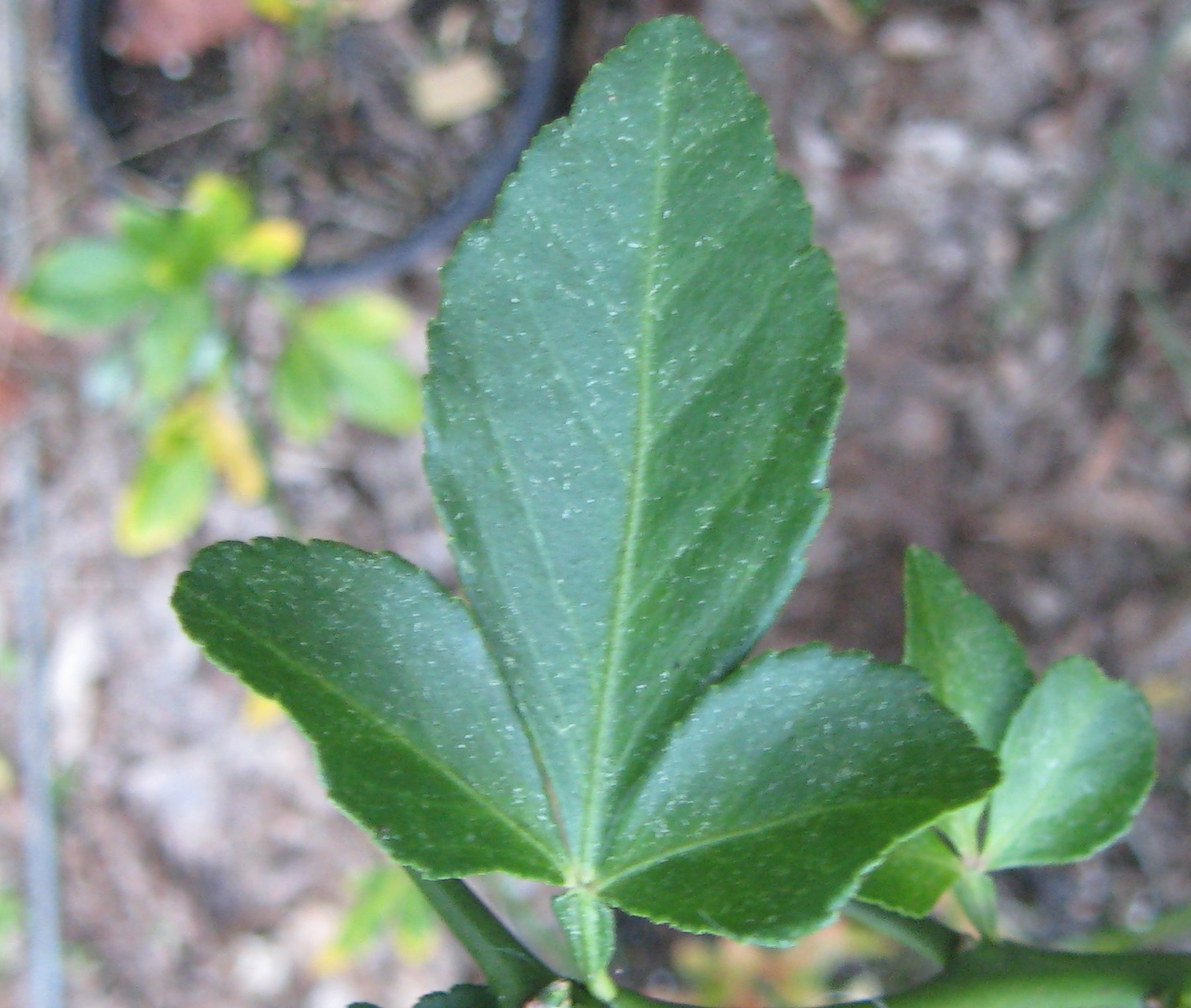
If your new growth looks anything like the picture above, you have rootstock growing. Though there are many others, this is just one of the most popular.
Hopefully, you remember what it looked like or took a picture of the tree when you first got it, so you can compare the leaves. Citrus leaves come in MANY shapes and sizes, as illustrated here.
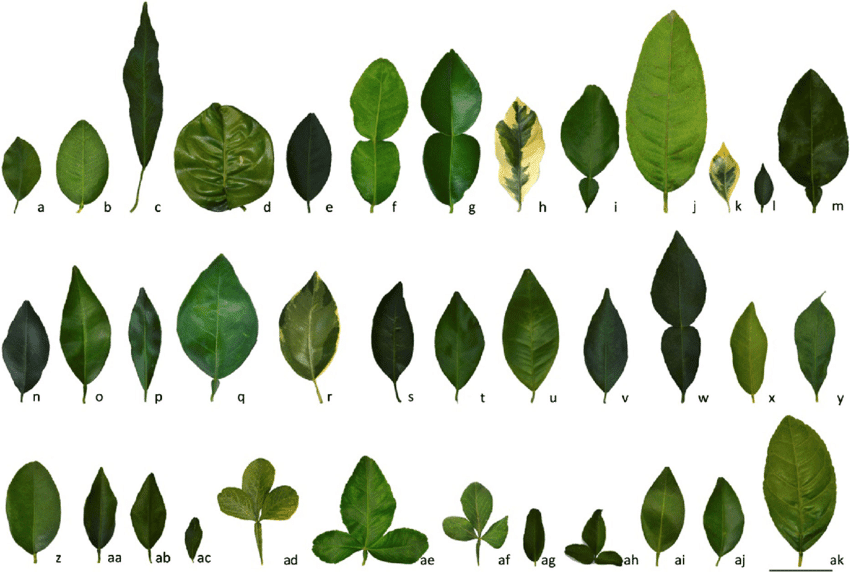
Here is the key to what each of the 37 different leaves is:
a 'Nasnaran' mandarin (C. amblycarpa), b 'Galego Inerme Key' lime (C. aurantiifolia), c 'Narrow Leaf' sour orange (C. aurantium), d 'Bergamot' orange (C. bergamia), e 'Taiwan' mandarin (C. depressa), f 'Mauritius papeda' (C. hystrix), g C. hystrix hybrid, h 'Variegated' true lemon (C. limon), i 'Talamisan' orange (C. longispina), j 'Etrog' citron (C. medica), k 'Variegated' calamondin (C. madurensis), l 'Chinotto' orange (C. myrtifolia), m 'Star Ruby' grapefruit (C. paradisi), n 'Cleopatra' mandarin (C. reshni), o 'Fairchild' tangerine-tangelo [C. clementina 9 (C. paradisi 9 C. tangerina)], p 'Szincom' mandarin (C. reticulata), q 'Valencia Trepadeira' sweet orange (C. sinensis)\, r 'Variegated' sweet orange (C. sinensis), s 'Jaboti' tangor (C. sinensis 9 C. unshiu), t common ‘Sunki’ mandarin(C. sunki), u ‘Tachibana’ orange (C. tachibana), v ‘Mency’ tangor (C. tangerina 9 C. sinensis),w ‘Papeda Kalpi’ (C.webberi var. montana), x ‘Jindou’ kumquat (Fortunella hindsii),y Fortunella sp., z ‘Changshou’ kumquat (F. x obovata), aa ‘Jindan’ kumquat (F. x crassifolia), ab ‘Wart Java’ lime (Citrus sp.), ac Microcitrus papuana, ad ‘Benecke’ trifoliate orange(Poncirus trifoliata), ae ‘Coleman’ citrange (C. sinensis 9 P. trifoliata), af ‘Flying Dragon’ trifoliate orange (P. trifoliata), ag ‘Chinese box-orange’ (Severinia buxifolia), ah ‘Limeberry’ (Triphasia trifolia), ai ‘Cravo’ mandarin (C. reticulata), aj ‘Citros Processo’ (Citrus sp.), ak ‘Jeroˆnimo’ lime (Citrus sp.).
COURTESY of https://www.researchgate.net
The good news is, if you have rootstock that has taken over, all of them are edible, though, you may disagree once you taste them. There are a few that have a very sour almost kerosene taste.
With all that being said, you basically have three options if you discover you now have rootstock instead of what it originally was.
1) Let the tree grow. In many cases, it will be extremely cold hardy. We are talking low teens to almost zero degrees cold hardy. The fruit could be useful for cooking and such, it all depends on what it is.
2) Learn to graft. You can create a multi-citrus type tree. I have a friend in California that has 50 different citrus fruit types grafted onto one tree.
3) Cut the whole thing down and start over. You will need to dig up the roots because it will come back, often with a vengeance.
Lastly, if you are not completely sure what you might have growing, send me a picture of the leaves, close up, and at a little bit of a distance to [email protected]. I may not be able to determine with 100% accuracy what it is, but I will be able to rule out many different possibilities.
Happy Growing!
Darren