
“The true paradises are the paradises we have lost”
– Marcel Proust
Paradise Lost
For a long time, I would tie my nerves up into knots mapping out stories, just to find, by the time I had finished, that I had lost all desire to embark on the journey of the writing itself. Having painted the map without ever stepping foot into the landscape, I lost all desire to discover the view. Whereas, as a child, I would spend endless unplanned hours inventing in the garden, I now found myself bent stubborn over the sweat-spattered plans I no longer wished to execute – “that for which we find words is something already dead in our hearts[1]”.
In his essay On the Puppet Theatre, Heinrich von Kleist remembers a young boy who, upon catching his reflection in the mirror and discovering its resemblance to a famous sculpture, “lost his innocence and, despite all imaginable efforts, never regained the paradise it affords”. The boy, eager to recreate his discovery, repeated the resembling posture over and over, to increasingly comic effect. After that initial encounter the boy became fixated by his mirror image and, after spending a year in the looking glass, had lost all his initial grace – “it was like a steel net lay over his every gesture and expression”.
We can imagine Kleist’s self-conscious youth, upon finally leaving the house, constantly distracted by the search for himself in well-lighted windows, bright silver spoons, and even the reflecting shine of a loved one’s eyes. The world, for him, had become a hell of mirrors.
Paradise Regained
Kleist recalls this story to a dancer friend while discussing the natural grace of the dancing marionettes in the popular puppet theatre. The dancer, who believes that the grace of the puppets far exceeds the best efforts of him and his colleagues, explains that the puppets achieve their grace not through a complex “maze of strings”, but through straight and simple moves made around points of gravity in the puppets’ bodies. He attributes their grace to a complete lack of self-consciousness and explains: “Self-consciousness arises when the soul is situated at some point other than the centre of gravity of a movement”.
He offers the counterexample of a colleague: “When she dances Daphne and is pursued by Apollo, she looks back at him – her soul is located in the vertebrae of the small of her back; she bends as if she were about to break in half, like a naiad from the school of Bernini”. This loss of grace, he believes, is inevitable “because we have eaten of the tree of knowledge.”
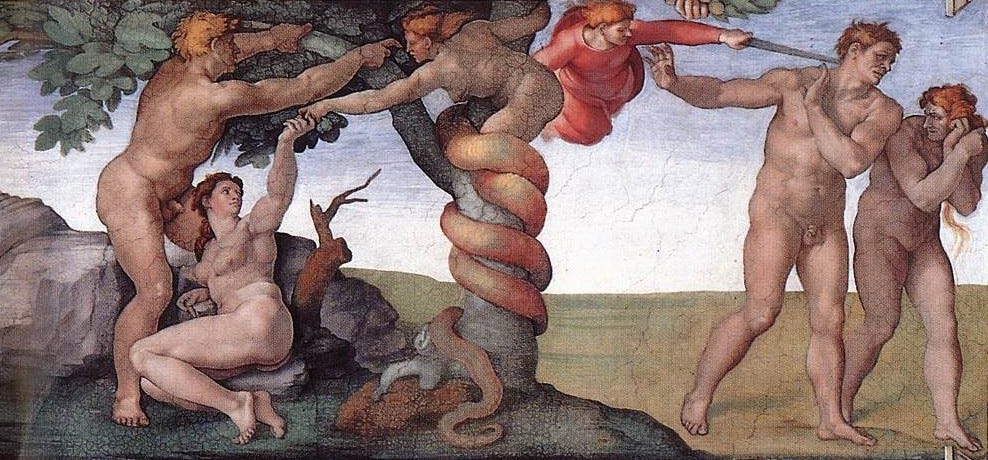
Having eaten from the tree of knowledge we have discovered ourselves which, like the boy’s damning discovery in the mirror, has separated the soul from our centres of gravity – has banished us from Paradise. Once banished, we cannot simply return by turning back; “Paradise is bolted, with the cherubim behind us; we must journey around the world and determine if perhaps at the end somewhere there is an opening to be discovered again.” Once we have the knowledge of experience, we can no longer return to a state of innocence but must instead find a way through experience, around the world, to find our way back to the enchanted garden.
But how are we to do this? Returning is not so simple, and increasingly complicated, in the increasingly disenchanted Modern Age where “the oracles, who knew in every situation what was to be done, no longer speak to men[2]”.
The Road Untraveled
The Fall of Man tells not only the story of the progress from natural childhood to conscious maturity, of innocence lost through experience, but of a constant pattern in the process of our lives and through the ages.
In his Cosmopolis, Stephen Toulmin distinguishes two distinct phases in the birth of Modernity; the first he finds in the humanism of the later Renaissance – that spectrum of colour between the Dark Ages and Enlightenment. This age of Erasmus, Rabelais, Shakespeare, and Montaigne, he characterises as a time of expanding horizons, playful speculation, and treasures found from dwelling in uncertainties.
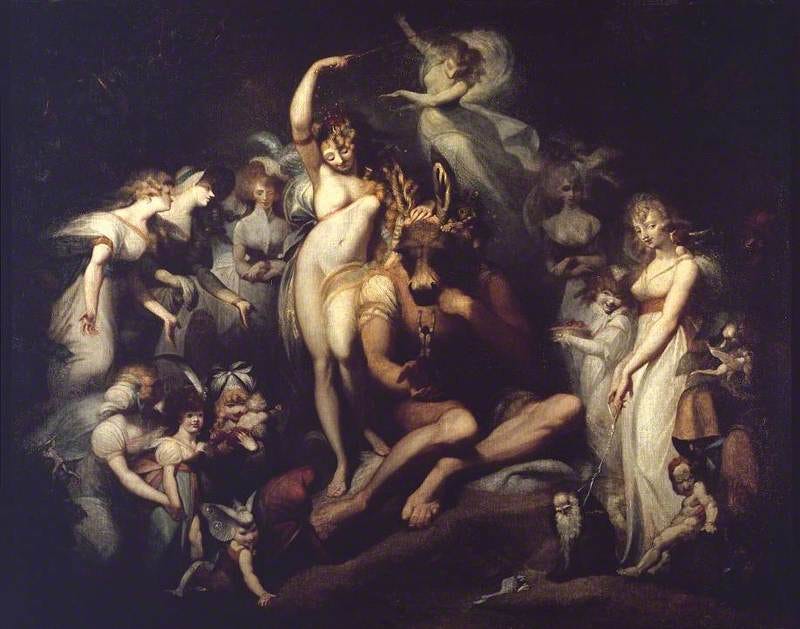
Toulmin locates the second birth of Modernity in the 17th century, the world of Newton and Descartes, which he believes turned its back on the lessons of the Renaissance. This abandonment of the roads untraveled in favour of well trodden ways follows the effect of the Thirty Years War (1618 – 1648); a devastation so severe that it saw the public taste shift from the expanding openness of the Renaissance to a narrowing of focus and a need to grab at the stability of certainties. What needed to remain in the realm of the implicit has been dragged into the explicit public light and the world was reduced to what can be measured, controlled, and explained.
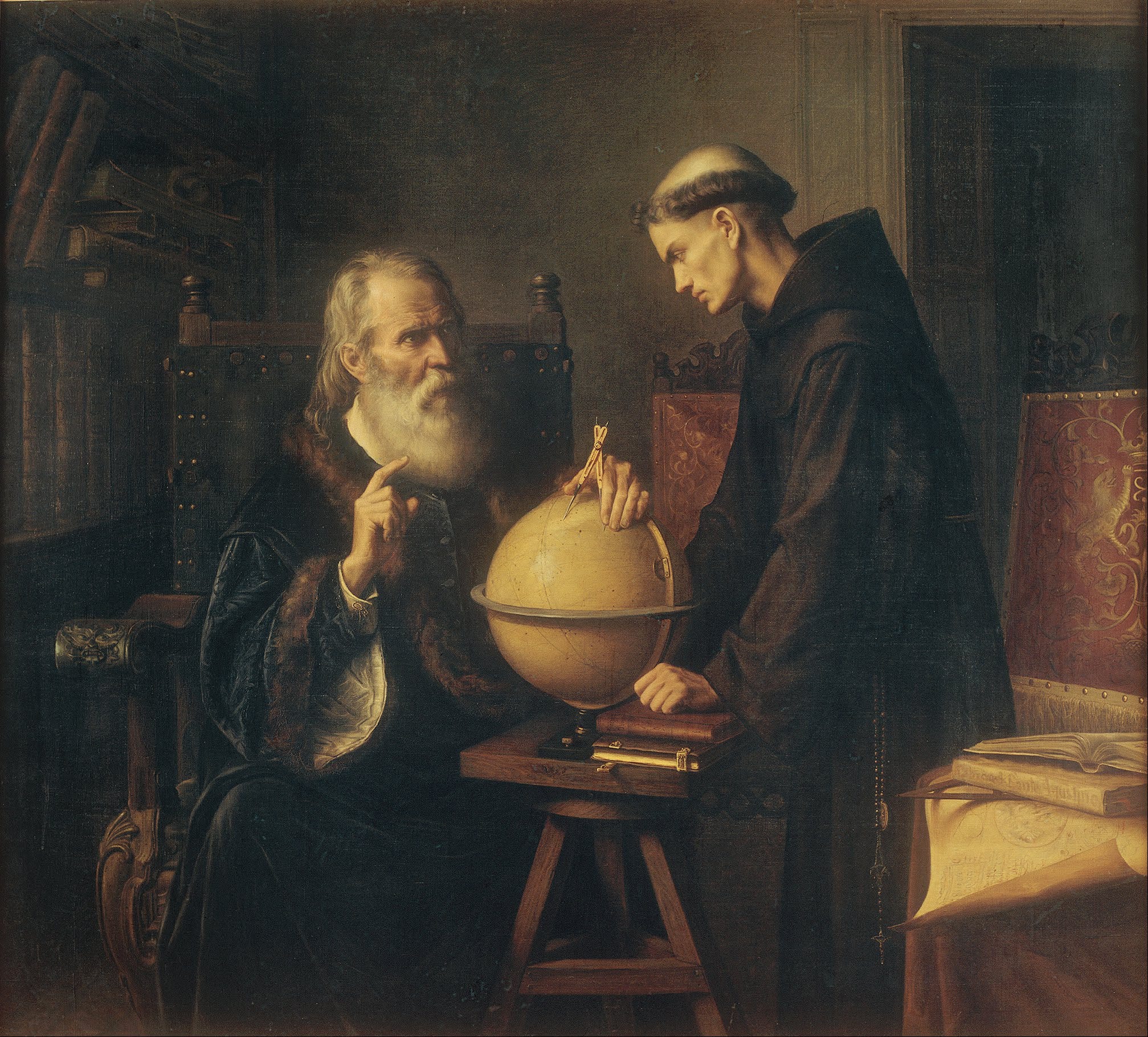
“The statues have become stone corpses from which the soul has flown.”
This descent, from our ability to move freely in the shades of uncertainty to a desire for an all-revealing light, Max Weber referred to as the disenchantment of the world. We’ve learned by the TV-bright light of our reason to see no giants in the trees, that roses do not bleed, and that our tired little beagle is no Rocinante, no steed. The fairies have not fled the forest, we have simply lost our ability to find them.
An Old Joke
One night a police officer sees a man anxiously searching the ground below a streetlight. The officer asks him what he’s looking for and the man explains that he has dropped the keys to his home. After a while of futile searching the officer asks the man whether he is certain that this is where he lost his keys. “No,” the man replies, “I lost them at the park.” “Then why are we searching over here?” the policeman asks exasperated. “The light was better,” the man replied.
The Keys to Paradise
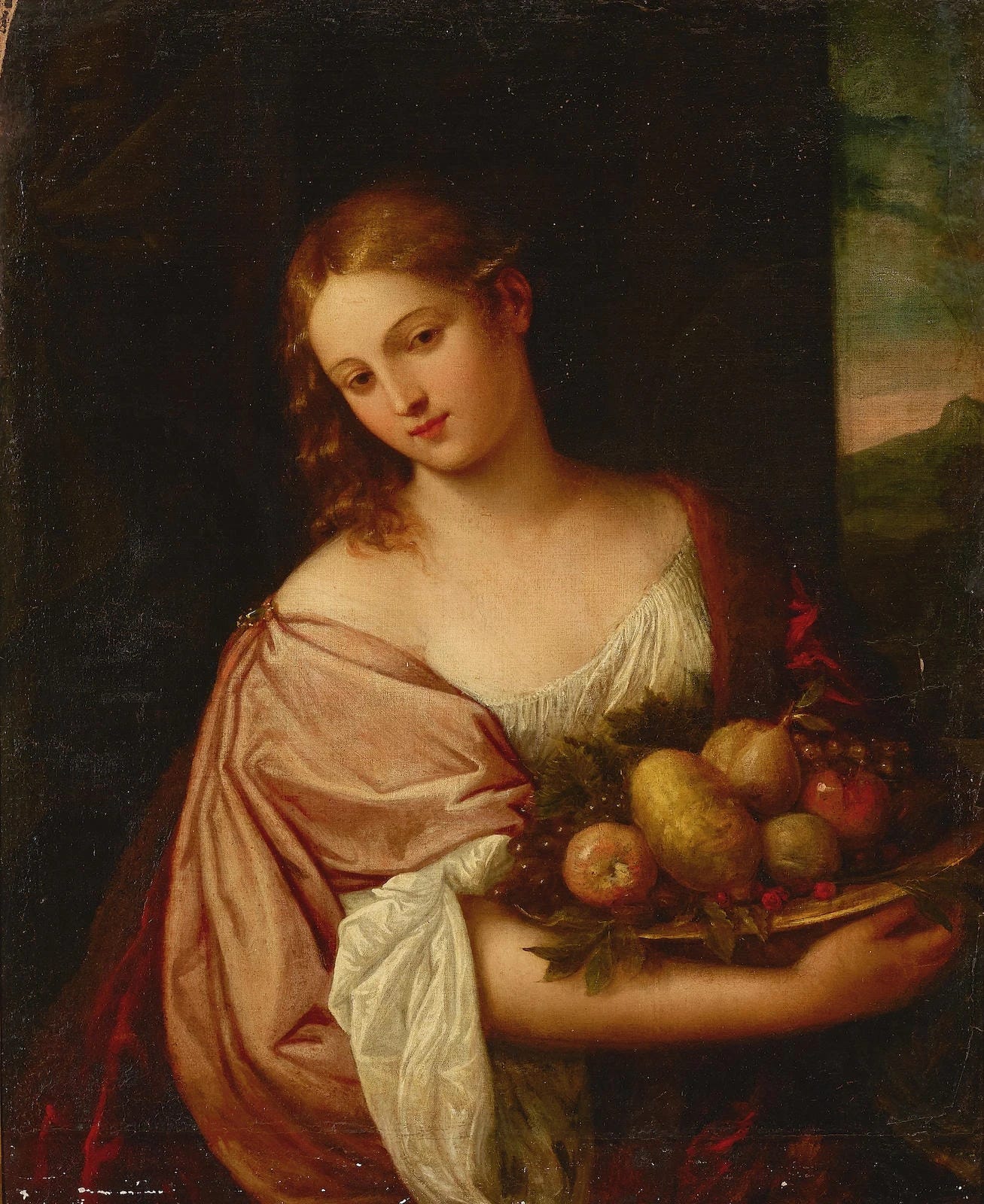
For Hegel the paradisal treasures of the past (its culture, art, and history) lie before us like “beautiful fruit, broken off a tree” which “a kindly fate has passed on to us, much as a girl might offer us such fruit”. Since the world that made them no longer exists, they can never grow again and “when we enjoy them, therefore, it is not an act of worship”, which would lead us back to Paradise, “but an outer act, as if wiping off some drop of rain or speck of dust from these fruits”.
He does, however, offer hope: “the maiden who hands us the plucked fruits is more than the Nature that produced them in the first place” and contains all the elements which produced the initial fruit “at a higher level in the glint of self-awareness in her eye, and her gesture in offering the gifts”. It is not by turning back but by going through that we will once again encounter Paradise.
The Paradise reached through the transcendence of experience is not only an alternative to our initial innocence but preferable – as the initial perfume of romance must dissipate for us to discover the deeper natural fragrance of love; that scent which the best perfume could only wish to imitate.
Dwelling in Mystery
To return to Paradise, to the innocent invention of the childhood garden, we need to develop the ability to look for the key in the absence of reason’s light; we need to develop our ability to dwell in mystery. John Keats referred to this ability “to dwell in mysteries and uncertainties without the need to grab after fact and reason”, Negative Capability, a quality which he believed “Shakespeare possessed so enormously”. It is not by the map of Scottish history that Shakespeare discovered the multitudinous seas incarnadine, and no equation ever equalled Hamlet.
William Hazlitt, a mentor of John Keats, refers to this graceful openness to mystery as possessing a disinterested mind (quite distinct from an uninterested mind). Hazlitt believed if we approach the world with too bright and focussed a light, with too much interest, we risk missing (if not scaring away) all the natural and enchanting treasures in the deeper shades of our fancy.
Keats implores: “Let us not therefore go hurrying about and collecting honeybee like, buzzing here and there impatiently from a knowledge of what is to be arrived at: but let us open our leaves like a Flower and be passive and receptive – budding patiently under the eye of Apollo and taking hints from every noble insect that favours us with a visit.”
On the unpaved road back around to Paradise, we might not find what we thought we were looking for, but what we might find, we might find to be much more.
Taking Risks in Search of Miracles
"Yet an experiment, were you to try it,
could free you from your cavil, and the source
of your arts' course springs from experiment."
- Beatrice to Dante, The Divine Comedy
My re-acquaintance with the paradisal gardens came through my encounter with Keith Johnstone’s work on improvisation for storytellers[3].
Johnstone recounts the world dulling as he aged, becoming a far cry from the vivid world of his childhood, and how he simply accepted it as a fact of growing up. Eventually he came to believe that he had lost all his creative talents. It was only when he learned to hold his mind still, “like a hunter waiting in a forest”, and attend to the images that naturally occur to him that he once again became free of trying to create and simply learned to play – for we can’t dance with any grace while thinking of our feet.
Johnstone is famously a fierce opponent of thinking your way through a scene and trying to be creative. Instead, he encourages “not knowing the next step but having the courage to take it” & “taking risks in search of miracles”.
Over years of experimenting with his students, Johnstone developed a few liberating principles which, like the centres of gravity in a marionette, freed his improvisers to dance. His insistence that his players must develop storytelling skills to avoid frivolity fuels his books and made many of his principles easily adaptable to the practice of dramatic writing. I continue discovering new roads untraveled through exploring and experimenting with them. My nerves have been untied and I am free to play.
…
The Arcadian Dispatch is not a journey with an end, but a constant dwelling in mystery towards Paradise. It is a step into the landscape, with a compass, yes, but not a map, open to the unexpected roads untraveled one might find along the way.
[1] Nietzsche, The Twilight of the Idols
[2] Hegel, The Phenomenology of Mind
[3] Keith Johnstone, Impro & Impro for Storytellers