
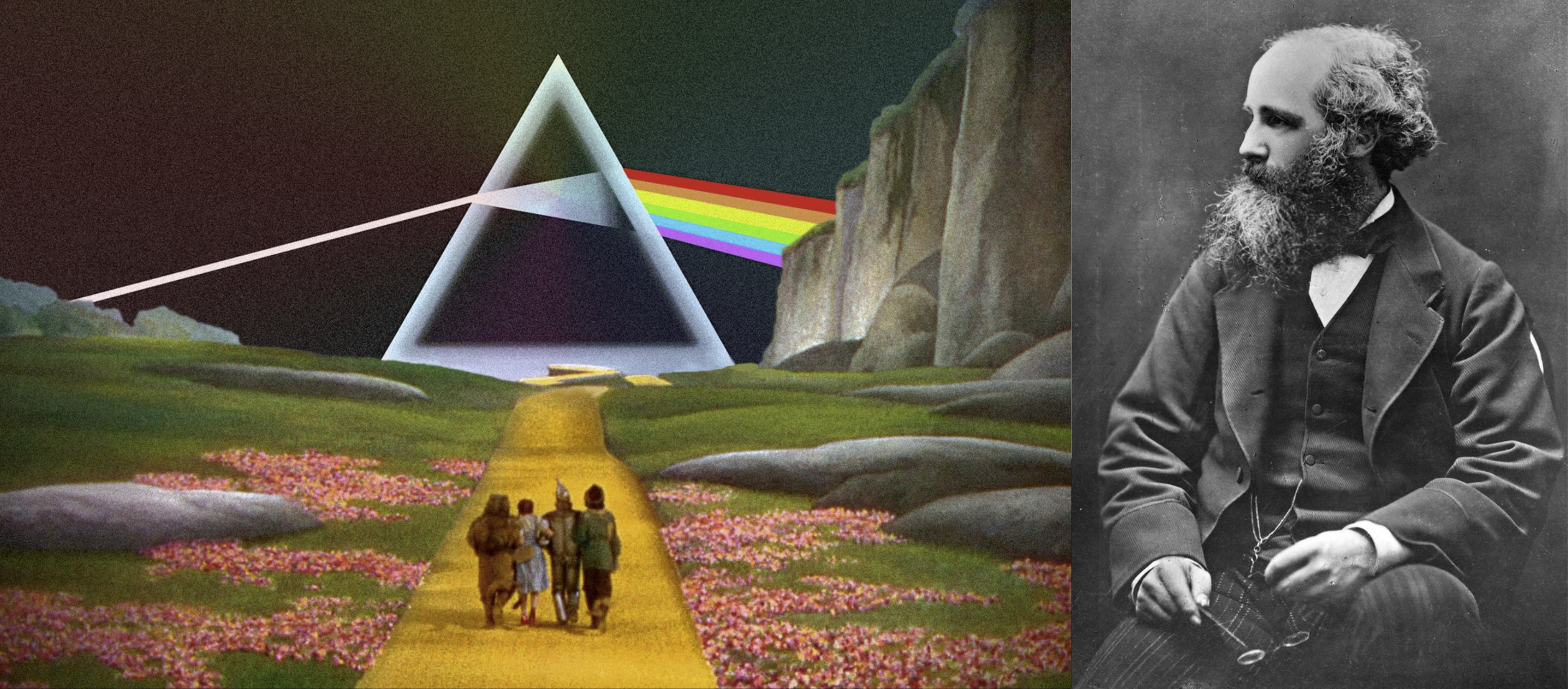
It’s entirely possible that James Clerk Maxwell, the quiet Scottish genius who gave us the foundation for modern electromagnetism, was twice exceptional. That is, profoundly gifted and neurodivergent. While there’s no formal diagnosis (because none existed in his era), the signs are unmistakable when you look through the right lens – one of nuance, complexity and respect for divergent minds.
From an early age, Maxwell exhibited traits that are typical of gifted individuals: an astonishing memory, insatiable curiosity and an early fascination with abstract concepts. He was obsessed with geometry before he could write properly, creating elaborate oval drawings that baffled adults. He memorized entire books and was already pursuing original scientific questions as a teenager. These are not just signs of high intellect, but creative divergence.
However, Maxwell’s childhood wasn’t easy. Like many 2e children, he struggled in conventional learning environments. He was reportedly beaten by an early tutor for being “too slow,” which, in hindsight, may have been a profound misunderstanding of his unique processing style – something many 2e individuals experience. It was only later in 1850, when he was placed in a more supportive environment like Cambridge, that his true abilities started to shine through. There he found mentors who allowed his mind to flourish and develop authentically. With the right nurturing environment, 2e people often go from misunderstood to revolutionary.
Maxwell was known to exhibit behaviors that today might be considered autistic traits. His speech, for instance, was described as odd – sometimes halting, sometimes overly formal or rhythmic. He used unusual phrases and displayed a peculiar cadence. He could be brilliant one moment and socially awkward the next. He wasn’t the typical charismatic Victorian gentleman-scientist. But within that unique social dissonance, there existed a rich internal world that was full of humor, insight and multi-dimensional thinking.
He also wrote whimsical poetry filled with clever puns, scientific wordplay and philosophical depth. One moment he’d be composing the math behind electromagnetic theory; the next, he was spinning satirical hymns about Saturn’s rings. That dynamic between high abstraction and creative self-expression is classically indicative of 2e. It suggests a need to play with complex ideas, not just analyze them. Thus his sharp, unique sense of humor helped to make him more approachable and illustrated the multifaceted nature of his intellect. He was not only capable of grasping and advancing complex scientific theories in physics but also enjoyed using his creativity to entertain others and lighten the mood with his wit.
In terms of emotionality, Maxwell was deeply loyal and empathetic, especially toward those he trusted. His care for his chronically ill wife was unwavering and he was respected by students for being kind, curious and intellectually humble. Like many 2e individuals, he wasn’t emotionally detached – just on a wavelength others didn’t always understand. He wasn’t wired for superficial interaction, but for depth, integrity and sincerity.
Maxwell’s scientific contributions were not just incremental – they were visionary. His ability to mentally visualize abstract phenomena like electromagnetic fields (long before visualization was a scientific norm) was outstanding. This type of mental modeling and intuition is often reported in highly gifted autistic individuals. It’s not just intellect; it’s an entirely different mode of perception. He essentially imagined how invisible forces moved through the universe and decided to prove it mathematically. That’s cognitive divergence at its most profound.
It’s also worth noting that Maxwell’s dedication and drive was unwavering. He persevered in the face of doubt and rejection, navigating a world that was not prepared for many of his contributions. For example, his electromagnetic work was initially underappreciated, but he never abandoned it. This ability to remain focused and intrinsically motivated – despite repeated social misunderstandings – is another calling card of the twice-exceptional mind. They don’t need applause to pursue their passions and truth. They just need space and time.
If Maxwell had been born today, it’s possible he would have been labeled slow, odd, or even quite baffling in early educational settings. But given the right support, like an IEP, creative outlet or mentor who fully understands him, he might have been recognized early for what he truly was: brilliant, unusual and worthy of protection.
So was Maxwell 2e? We’ll never know for sure but his life embodies the contradictions, gifts and quiet suffering that often define 2e individuals. And recognizing this isn’t just about honoring a historical figure – it’s about changing how we see the misfits and misunderstood minds around us now. It inspires us to catapult ourselves into our own careers and passions, embodying all that we have to offer to the world.
The recognition of twice-exceptionality in these legendary people or even unassuming geniuses who fly under the radar, reminds us why it’s so vital to create environments that don’t pathologize difference but embrace and support it. Because who knows what revolutions we’re delaying every time we fail to nurture a mind that simply doesn’t think like the rest?