

Exposing the Dangers: Telepathy and Government Exploitation
The recent release of the Telepathy Tapes podcast has sparked widespread interest and discussion, shedding light on the potential exploitation of telepathic abilities by governments and institutions. While the podcast explores both speculative and real-world scenarios, it underscores a chilling reality: individuals with extraordinary cognitive powers, especially children, could be vulnerable to exploitation, surveillance, and coercion. This possibility prompts important questions about ethics, privacy, and protection in an increasingly interconnected and technologically advanced world.
The Looming Threat of Exploitation
Imagine a world where telepathy (the ability to communicate or perceive thoughts directly) is weaponized. Governments could forcefully recruit telepathic individuals, monitoring their minds for intelligence gathering or using their abilities to manipulate events behind the scenes. The potential for abuse is vast, especially when coupled with advanced brain-computer interfaces (BCIs) or artificial intelligence capable of tapping into mental activity.
For telepathic children, the risks are even greater. Without robust safeguards, these vulnerable individuals might face forced separation from their families or coercion into unethical experiments under the guise of scientific progress or national security. Historical precedents, such as unethical studies conducted on marginalized groups, serve as stark reminders of how quickly such situations can escalate.

Mental Privacy: The Final Frontier
As technology advances, privacy concerns are no longer limited to physical spaces or digital data. Telepathic individuals face the terrifying prospect of mental surveillance. What protections exist for thoughts and ideas? Current privacy laws do not address the nuances of telepathy, leaving those with such abilities exposed to potential intellectual theft or coercive manipulation. This lack of legal recognition is a glaring oversight in a world increasingly focused on ethical technology use.
Stigma and Isolation
Public misunderstanding and sensationalized portrayals of telepathy exacerbate the problem. The Telepathy Tapes has amplified awareness, but it also risks creating fear and stigma. For those with telepathic abilities, this could mean social isolation, distrust, or even ostracism. Telepathic individuals might feel compelled to hide their gifts to avoid scrutiny or exploitation, cutting them off from potential support systems.
The Unique Vulnerability of Children
Children exhibiting telepathic abilities are especially susceptible to exploitation. Families (especially those without the means to fight legal or governmental pressures) might find themselves powerless to protect their children. Governments or organizations might frame their actions as serving the “greater good,” removing children from their homes for experimentation or recruitment. The psychological toll on these young individuals could be devastating, leading to long-term trauma and a loss of autonomy.

The Perils of the Common Good
Notions of equality, human rights, and the common good can be hijacked by authoritarian governments with malicious intent by distorting these principles to justify oppressive measures. Authoritarian leaders may frame their policies as necessary for "protecting" or advancing the collective good, when in reality, they serve to consolidate power and suppress dissent. They might create the illusion of equality by enforcing conformity, silencing opposition in the name of unity or safety. Large populations can be fooled through propaganda, emotional appeals, and control over media, shaping perceptions of reality to align with authoritarian agendas.
For example, equality can be weaponized by suppressing individuality and diversity, demanding uniformity under the guise of fairness. Human rights movements can be co-opted to enact repressive laws if framed as protecting the greater good. Additionally, slogans about the collective good can promote surveillance, control, and the erosion of personal freedoms, with people supporting such measures believing they’re essential for societal stability or security.
In George Orwell's 1984 and Animal Farm, this tactic is vividly portrayed. In 1984, the concept of the common good is manipulated by the Party to justify total control, where freedom is redefined as slavery, and truth is continually reshaped. In Animal Farm, the idea of equality is exploited by the pigs to establish a dictatorship, where "all animals are equal, but some animals are more equal than others." Through such manipulation, large populations can be indoctrinated, supporting systems that ultimately harm their own freedom and autonomy.
George Orwell himself was personally at odds with many leftists due to the potential hijacking of the "greater good” and copious deceptive practices lurking within the movement. While Orwell identified as a democratic socialist and was deeply critical of capitalism and imperialism, his experiences and observations led him to develop a strong opposition to authoritarian tendencies within leftist movements, particularly communism as practiced in the Soviet Union under Stalin. Many leftist groups and intellectuals in the 1930s and 1940s aligned themselves with the Soviet Union, which Orwell saw as a dangerous and oppressive regime.
Orwell had a disdain for what he saw as the hypocrisy and detachment of some intellectual leftists, particularly those who supported the Soviet Union uncritically. In his essay "The Lion and the Unicorn", he mocked English left-wing intellectuals for their perceived lack of connection to ordinary people and their romanticization of authoritarian regimes. His belief in the sanctity of individual freedom clashed with collectivist ideologies that prioritized the state or the party over the individual. He saw these tendencies as prevalent in many leftist movements.

Advocating for Protection
The risks highlighted by the Telepathy Tapes underscore the urgent need for advocacy and legal protections. Governments must enact legislation specifically addressing telepathic phenomena, ensuring that individuals are safeguarded from coercion and exploitation. Furthermore, international organizations like the United Nations should establish guidelines to uphold the rights of telepathic individuals worldwide.
Public awareness is equally important. Accurate representation of telepathy in media and education can reduce stigma, fostering empathy and understanding. Providing mental health resources for telepathic individuals is essential to help them navigate the unique challenges they face, from managing their abilities to coping with societal pressures.
A Call to Action
The revelations from the Telepathy Tapes serve as a wake-up call to the ethical dilemmas posed by telepathy and similar cognitive abilities. It is imperative to prioritize the autonomy and well-being of these individuals, ensuring that their talents are nurtured rather than exploited. With informed advocacy, robust legal protections, and public vigilance, we can prevent a future where telepathic individuals are reduced to tools for power—and instead create a world where their unique gifts are celebrated and supported.
Can Neurotech Be Used for Good Without Harm?
In an era where technology and neuroscience are advancing at an unprecedented pace, the boundaries between human cognition and artificial systems are becoming increasingly blurred. This intersection offers transformative possibilities, from enhancing education to treating neurological disorders, but it also opens a Pandora’s box of ethical concerns. As society grapples with these innovations, the risk of misuse (particularly against individuals with unique cognitive abilities) becomes a pressing issue. Without robust safeguards, these advancements could shift from tools of empowerment to instruments of exploitation, leaving vulnerable individuals, such as those with telepathic abilities, at the mercy of coercive forces.
Coercion through Technology
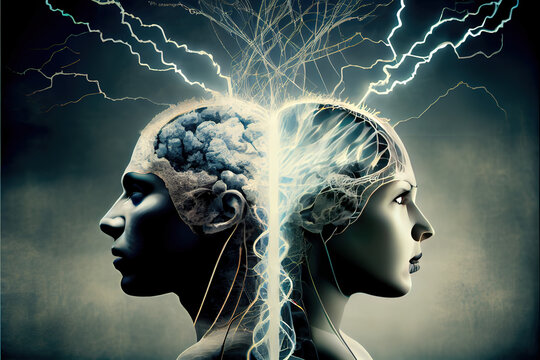
The integration of brain-computer interfaces (BCIs) and artificial intelligence (AI) has opened avenues for direct interaction with the human mind. While these technologies hold promise for medical and educational applications, they also pose risks of coercion. Authoritarian regimes could potentially use BCIs to extract knowledge or creativity from gifted individuals without consent, effectively turning their minds into resources for state propaganda or cyber warfare. The ethical implications of such technological exploitation are profound, raising questions about autonomy and consent in the digital age.
Manipulation via Education or Employment
Educational and professional environments are pivotal in shaping the trajectories of gifted and 2e individuals. However, these settings can be manipulated to limit autonomy and direct innovation toward state or elite interests. By controlling curricula or research agendas, Machiavellian leaders might suppress independent thought and co-opt intellectual output for their own purposes. This form of manipulation aligns with historical patterns where regimes have sought to control intellectual discourse to maintain power.
Psycho-Social Manipulation
Gifted and 2e individuals often experience heightened emotional sensitivities, including existential anxiety and perfectionism. Narcissistic elites could exploit these vulnerabilities through psychological manipulation, fostering dependence or compliance. By leveraging emotional insecurities, they might coerce gifted minds into aligning with their agendas, undermining individual autonomy and well-being. Understanding the dynamics of such manipulation is crucial for developing resilience and protective strategies.

Bio-Engineering or Cognitive Enhancement
Advancements in neurotechnology and gene editing present possibilities for enhancing cognitive abilities. However, in the hands of unethical actors, these technologies could be used to modify the minds of gifted individuals, enhancing productivity while diminishing autonomy. Such bio-engineering efforts raise ethical concerns about consent, identity, and the potential creation of a subjugated intellectual class tailored to serve elite interests. The intersection of biotechnology and ethics remains a critical area for ongoing discourse.
Surveillance and Control
The pervasive reach of modern surveillance technologies enables continuous monitoring of individuals' activities. Gifted and 2e individuals could be subjected to heightened scrutiny to ensure their creative outputs align with authoritarian or elitist agendas. Through a combination of rewards, threats, or isolation, these entities might enforce compliance, stifling independent thought and innovation. The balance between security and personal freedom is increasingly precarious in such scenarios.
With rapid technological advancements, society faces the pressing challenge of unlocking potential while safeguarding fundamental human rights. The exploitation of gifted and 2e individuals by digital dictatorships and self-serving elites emphasizes the need for stronger vigilance and ethical protections. As technology continues to evolve, so too must our commitment to protecting individual autonomy and fostering environments where intellectual talents can flourish free from coercion and manipulation.