

A caregiver planner should make life easier — not turn care for an aging parent into another full-time job.
 Hi dear friend!
If you’re helping an aging parent, you already know how quickly “just keeping track of a few things” can grow into a swirl of appointments, medication changes, phone calls, paperwork, reminders, and tiny details that somehow all live in your head.
That’s why a caregiver planner can be so helpful — but only if it stays simple, useful, and realistic.
A lot of families start with good intentions and end up creating a giant binder, a dozen scattered notes, or a system so complicated that nobody wants to use it. The goal is not to document every breath your parent takes. The goal is to create one calm, practical place for the information your family actually needs.
What a caregiver planner is really for
A good caregiver planner does three things:
helps you find important information quickly
helps you keep changing information current
helps another trusted person step in if needed
That’s it.
It is not a scrapbook, not a medical textbook, and not a punishment for loving your family.
If you’re new to this stage of life, it may help to think of caregiving as coordination first. Before you build a perfect system, start with the real life you already have — the appointments, names, medications, schedules, and responsibilities that keep coming back.
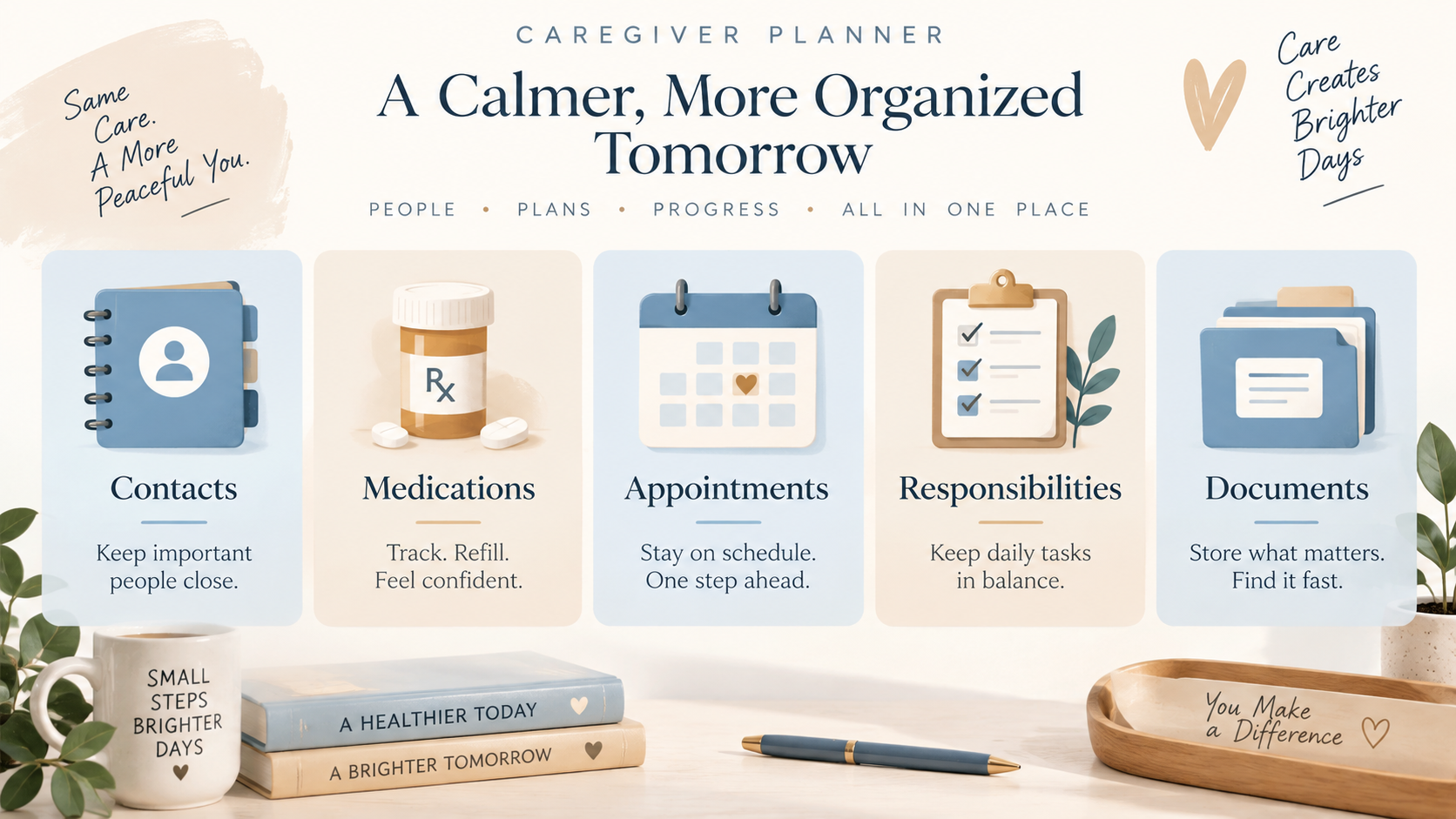 What to track in a caregiver planner
A caregiver planner works best when it focuses on information that is important, changeable, or easy to forget under stress.
1. Core contacts
Keep one place for the people and services your family may need to reach quickly:
primary doctor
specialists
pharmacy
home care services
emergency contacts
nearby family members or neighbors who help
This sounds simple, but when something urgent happens, even one missing number can create unnecessary stress.
2. Current medications
One of the most useful parts of any caregiver planner is a current medication list.
That list should include:
medication name
dosage
when it is taken
what changed recently
prescribing doctor or source if helpful
The point is not perfection. The point is clarity. If there was a recent change, note it. If something was stopped, mark that too. A current list is often more useful than a beautifully formatted old one.
3. Appointments and follow-up
You do not need a long diary of every medical visit. You do need a clean record of:
upcoming appointments
what needs to be asked
what happened at the visit
what needs follow-up afterward
A simple appointment page saves time and reduces that frustrating moment of thinking, “Wait… what did the doctor say to do next?”
4. Health history and ongoing observations
This section should stay practical.
Useful things to track may include:
major diagnoses
allergies
surgeries or major events
recurring symptoms or patterns
mobility or support changes
things the family needs to mention at the next visit
You do not need to record every tiny detail. Track the patterns that help with decision-making.
5. Daily routine and practical support
For many families, everyday life is where the real caregiving work happens.
A caregiver planner can include:
meal preferences or restrictions
mobility support notes
sleep routine
reminders that matter
who helps with what
transportation arrangements
shopping or household needs
This kind of information becomes especially useful when another family member needs to help temporarily.
6. Responsibilities and family coordination
One of the biggest causes of caregiver stress is not just the workload — it’s the confusion.
Who is handling appointments?
Who picks up medications?
Who speaks with doctors?
Who checks insurance paperwork?
Who is the backup if the main caregiver is unavailable?
A good caregiver planner reduces silent assumptions. It helps families move from “I thought someone else was doing that” to “We know who handles what.”
7. Important documents and where to find them
You do not need to stuff every official paper into one place, but you do need a clear map.
Track where key documents are stored, such as:
insurance information
ID details
medical documents
legal documents
emergency papers
account or service details relevant to care
The planner can tell you what exists and where it is — which is often much more useful than frantic searching later.
 What not to track
This part matters just as much.
A caregiver planner becomes overwhelming when families start collecting information that is too detailed, too repetitive, or unlikely to be used.
Try not to turn it into:
a record of every single conversation
a page for every tiny daily event
duplicate copies of the same information in five places
endless notes nobody reviews
a perfect system that requires constant maintenance
If a page is not helping you make decisions, stay organized, or communicate clearly, it may not belong in the planner.
A useful caregiver planner should reduce mental clutter — not create a second pile of it.
Keep Your Caregiver Planner Simple
This is where many systems fall apart.
Here are a few gentle rules that help:
Keep the critical information first
Put the most important, high-use information at the front or in the easiest-to-find section.
Update only what changes
Not every page needs constant attention. Focus on items that shift often: medications, appointments, contacts, responsibilities, and follow-up notes.
Use short notes
You do not need essays. A few useful lines are better than long paragraphs no one will read later.
Review on a rhythm
Choose a simple rhythm that fits real life:
quick check weekly
fuller review monthly
larger update after major changes
Let it be “good enough”
A caregiver planner is a living tool, not a museum exhibit. If it helps your family today, it is doing its job.
A simple way to build one
If the whole idea feels overwhelming, start with just a few pages:
critical contacts
current medications
next appointments
main responsibilities
important document locations
That small foundation can already make life easier.
From there, you can build gradually based on what your family actually needs.
When a caregiver planner becomes especially valuable
A caregiver planner is most helpful in exactly the moments when families feel stretched:
before a doctor’s visit
after a medication change
during a hospital or urgent care situation
when siblings need to coordinate
when the main caregiver needs backup
when information has to be explained quickly
In those moments, a simple organized system can feel like a deep breath.
Final thoughts
A caregiver planner should not ask you to become a full-time administrator. It should support you, lighten the mental load, and help your family stay steady when life gets busy or uncertain.
You are already carrying a lot. A practical system does not remove love, responsibility, or hard decisions — but it can remove a surprising amount of scrambling.
And sometimes that is exactly what a family needs most:
less chaos, more clarity, and one trusted place to begin.
If you want a ready-made way to organize all of this, a structured family care organizer can help bring the moving parts into one calm place without making caregiving feel even heavier.
✨ If this article was helpful, feel free to like it, share it with someone caring for an aging parent, or tell me this: what part of family caregiving feels hardest to keep organized right now?
With warmth,
Tamara
Makeup of the Soul ✨