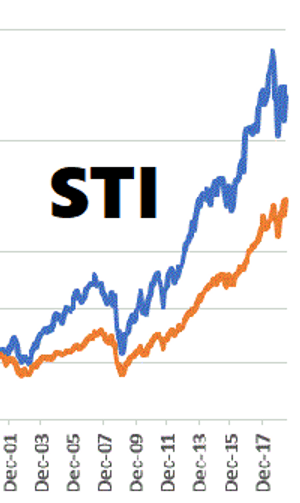


How were STI models developed?
STI models were designed and continue to be refined via a combination of tools and quantitative approaches that include preliminary backtesting, followed by forward testing and other proprietary methodologies that allow for more timely adaptation to new products (e.g., ETFs), trends and changing market conditions.
When does STI execute the trades for each model?
Monthly trades for STI models are designed to be executed on the 1st trading day of each month (note: the first trading day of each month does not always occur on the first day of the month).
How do subscribing members view the monthly trade signal posts?
STI aims to post the trade signals for each model on the STI page here by or before 9:29 am ET on the first trading day of each month (i.e., prior to the US Stock Market open at 9:30 am ET). However outside of unforeseen technical limitations, during most months STI aims to post trade signals the night before or even sooner (e.g., if the first trading day falls after a weekend/holiday).
Once trade signals are posted, email copies of the posts are usually automatically sent out to members. However, due to potential for technical difficulties outside of STI control, STI cannot not guarantee the the successful sending or receiving of automated emails, so members are always encouraged to check the STI page for new posts if they have not successfully received a trade signal email by the target deadlines outlined above.
How important is the timing of the trades?
As with all active trading, STI model trading strategies are time-sensitive to a certain degree. To optimize long-term performance, trades are executed at or as close to market open (i.e., at 9:30 a.m. ET or shortly after) on the 1st trading day of the month and/or after trade signals have been posted.
Other considerations:
Conversely, STI models are NOT designed to be so time-sensitive that an occasional trade executed 24 hours late would likely have a significant impact on performance in the long-term. Sometimes (through luck) being late can even have a positive impact depending on market conditions. However, the further away in time a trade is executed from the 1st trading day of the month and/or the original date/time of the trade signal, the more performance can potentially deviate (positively or negatively) from the actual trading model strategy.
While unlikely, it is at least possible that an unforeseen event (e.g., technical issue, website down, power outage, black swan event, etc) could occur, preventing execution of trades and/or posting of STI trade signals on the actual 1st trading day of the month and/or before the market opens. In this type of scenario, trade executions & trade signal posts would be pushed back to the nearest feasible date &/or time (***see disclaimer below).
What do the trade signal posts show/indicate?
Each trade signal post begins by clearly stating what holdings will be contained in the "current, up-to-date portfolio" for the corresponding model following any new trades (if any) for the upcoming month. Below that, a breakdown of the positions will be further outlined by categorizing each ETF/stock under: "New Buys," "Holding", or "New Sells". Current members can see prior trade signal posts to view examples:
ETF x1 - December 02, 2024 (= Basic Tier & Ultimate Tier)
NSDQ x2 - December 02, 2024 (= Mid-Tier & Ultimate Tier)
Ultra x1 - December 02, 2024 (= Premium Tier & Ultimate Tier)
How does STI allocate $ to holdings in a given model with consideration for the different number of positions?
As stated, "x1" or "x2" in a model title refers to the total number of positions traded &/or held at one time for that model (e.g., the "x2" in: "NSDQ x2" indicates that 2 positions are held for this model). $ amounts allocated to a given trading model are divided evenly between the # of holdings in that model. For example, a hypothetical amount of $1,000 allocated for trading would be deployed as such for each model (using random ETF tickers QQQ & IVV as examples):
ETF x1: $1,000 (100%) -> QQQ
NSDQ x2: $500 (50%) -> QQQ. $500 (50%) -> IVV.
Ultra x1: $1,000 (100%) -> QQQ
Does STI invest the entire amount allocated to a given model?
Yes. The entire $ amount allocated to a given trading model is intended to be "fully invested," i.e., at no point is a portion of the allocation meant to be on the sidelines or "in cash." When holdings are sold & bought following trade signals, the $ amount from the holding that was sold is used to buy the new holding.
EXAMPLE: $1,000 is allocated to a portfolio reserved for the ETF x1 trading model. On the 1st trading day of the month, the initial trade signal shows a "New Buy" for ticker QQQ, so $1,000 of QQQ is purchased in the ETF x1 portfolio. Over the course of the month, the value increases to $1,120 (+12%). On the 1st trading day of the following month, the new trade signal shows "New Sell" for QQQ & "New buy" for IVV. QQQ is then sold, and the entire $1,120 from that sale is used to buy IVV, which is held for the next month (after which point could be sold or held for another month, depending on the new trade signal).
Does STI recommend any specific trading/investing platforms?
No. STI-style trading strategies can be successfully executed on a variety of trading/investing platforms. However, from an "ease of use" perspective, STI-creator prefers (& uses) M1 Finance. One of the better features of M1 is that once someone has created a portfolio (or "pie") and invested in it initially, all they need to do to set up new trades is edit the portfolio (i.e., add &/or delete holdings and set up target % allocation) as opposed to entering in a manual buy or sell order which takes more time and can require math. ***NOTE: while STI uses/prefers M1 Finance for STI-style trading models, STI is not otherwise affiliated w/ M1 in any way and is not paid to mention/promote M1 Finance products/services.
How can an STI-style active trading strategy potentially fit into an individual's total investment portfolio?
STI-style trading strategies are NOT intended to represent 100% or even the majority of any individual investment portfolio. While STI cannot provide financial advice or recommendations (***see disclaimer below), more broadly STI holds the position that if one or more active trading strategies were employed as part of a total portfolio, the strategies would take up a smaller subset of the stock (i.e., equity) allocation in the portfolio.
Is it better to use STI-style active trading strategies in a taxable brokerage account or a tax-sheltered account like a Roth IRA?
There are both potential advantages and disadvantages to actively trading in a taxable brokerage account verses tax-sheltered (or "tax-advantaged") account like a Roth IRA. While STI cannot provide tax or financial advice (***see disclaimer below), more broadly STI holds the position that successful active trading strategies can potentially have a place in taxable brokerage accounts, tax-sheltered accounts or even both. STI encourages all members/supporters to discuss their options with a qualified tax professional to help determine best course of action based on individual financial needs and goals.
Other Notes & FAQs:
Stop-loss orders
STI model trading strategies were NOT designed to use stop-loss orders. STI does not reject use of stop-loss orders outright, but they are not in line with STI model trading strategies. A major potential disadvantage of using stop-loss orders in conjunction with STI model trading strategies is the possibility of getting "stopped out," e.g., missing out on sizeable returns when/if an ETF/stock recovers after initially having a sizeable drawdown. This scenario is common, especially for the higher-volatility trading strategies.
Of note, during backtesting & forward testing, STI found no additional benefit to using stop-loss methods with STI model trading strategies, and in fact, found that use of stops were ultimately suboptimal as they negatively impacted long-term returns.
____________________
***DISCLAIMER: Systematic Trade-Invest (STI) does not provide financial/ investment/ tax advice, services or recommendations. Any information shared by STI is presented without consideration (and thus, may not be suitable) for any specific member/investor/supporter's individual investment objective(s), risk tolerance, or financial circumstances. Past performance is not a guarantee of future returns. While the primary performance goal for each STI model is to outperform the market over time, there is no guarantee they can continue to do so. STI model trade signals shared with monthly members are for illustrative purposes only and are in NO way a recommendation to buy, sell, hold, or otherwise transact in any of the products/ ETFs/ stocks mentioned. While STI aims to post model trade signals on the first trading day of each month prior to US Stock Market open during most months, STI makes NO guarantee this target can/ will be met every month. Trading/investing involves risk, including possible loss of principal capital. Trade/invest at your own risk. STI encourages all members/supporters to get personal financial advice from a professional investment advisor, qualified tax professional and to make independent investigations before acting on any information shared or posted by STI.
____________________
===> Back to: Home Page
-Last updated: 12/02/24