

The pumpkins have faded, fireworks have been launched, and everywhere is filled with festive decorations for the Christmas holidays in the UK. November has drawn to a close and we’re now on the home straight for the end of 2025. As I predicted in last months’s update, I have been continuing to spend a lot of extra time on the day job as I take on an additional set of systems. This means I have had very little time to focus on my personal projects, so again, this will be a shorter than usual summary.
 ThoughtAsylum
This month I put out a blog post on how to use Alfred as a Stream Deck alternative. Now my Elgato Stream Deck is one of my favourite pieces of desk technology, but it is a bit bulky for popping in your bag to take to the local coffee shop - though I have done that on multiple occasions in the past. In the post I explain some of the alternatives I have for this, and one of these is how I can use Alfred’s remote app and my iPhone to give me a Stream Deck mobile app sort of experience. I still prefer a physical key, and I have alternatives in the post for that too, but the Alfred option is providing useful.
 Forums
My forum posts this month were few and far between, but there were some good in-depth responses to some of the queries.
Drafts
I took an educated guess on explaining how someone had shown a daily draft in a widget with a walk through.
There was a question on how to make the default Drafts window look like the quick capture window. While it can’t be replicated, I did have some suggestions to meet the requirement hidden behind the request.
Finally, a post on how to create a customised (rich text) output for someone needing some deeper background resulted in one of my longer in-depth responses. If you are interested in copying rich text out of Drafts, styled to your own needs, this topic should give you a really good guide for how to do this.
Automators
A post on Scratch Notifications brought someone in who has never used Scriptable widgets before, so I was able to point them to YouTube tutorial (not one of mine) to help them out.
Another Scriptable post, this time for adding tags to a Reminder got a quick reply from me.
With no updates on iOS for a year now, and only a few updates (mainly bug and regression fixes) for the previous year, Scriptable is certainly falling behind on the integration front. Not quite at Pythonista statis levels yet, but it looks like it is heading that way.
Other
The only other things I have managed to do in the past month are a bit of work on a model for 3D printing something to help me identify equipment, and some amateur radio bits and pieces to get me set up for mobile portable operations.
3D Printing Tags
This month I created a new OpenSCAD model for a customisable keyring tag. Along with some split rings and some new rugged zip bags I figured I would print up some custom sized labels for the zips that I can print stickers for to indicate what the bags contain. As I move things into different bags based on volumes, groupings, etc, I can then replace the labels or move the tags without damaging the bags and without labels peeling off the bags themselves.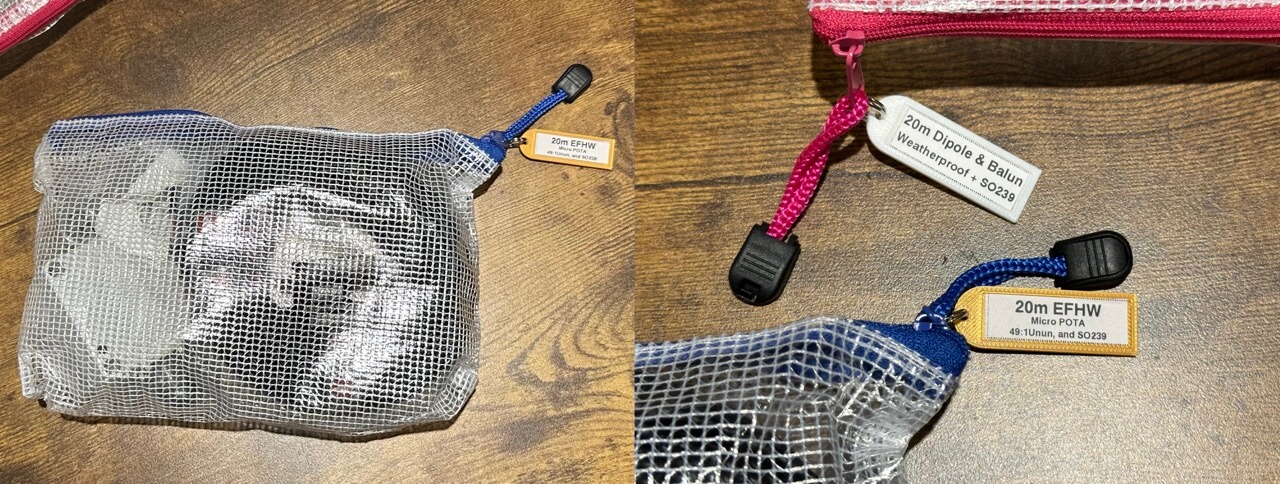 The model is parametric and allows me to change the dimensions, add the label recess, vary ring hole sizes, round or square off ends, etc.
Portable Operations for Amateur Radio
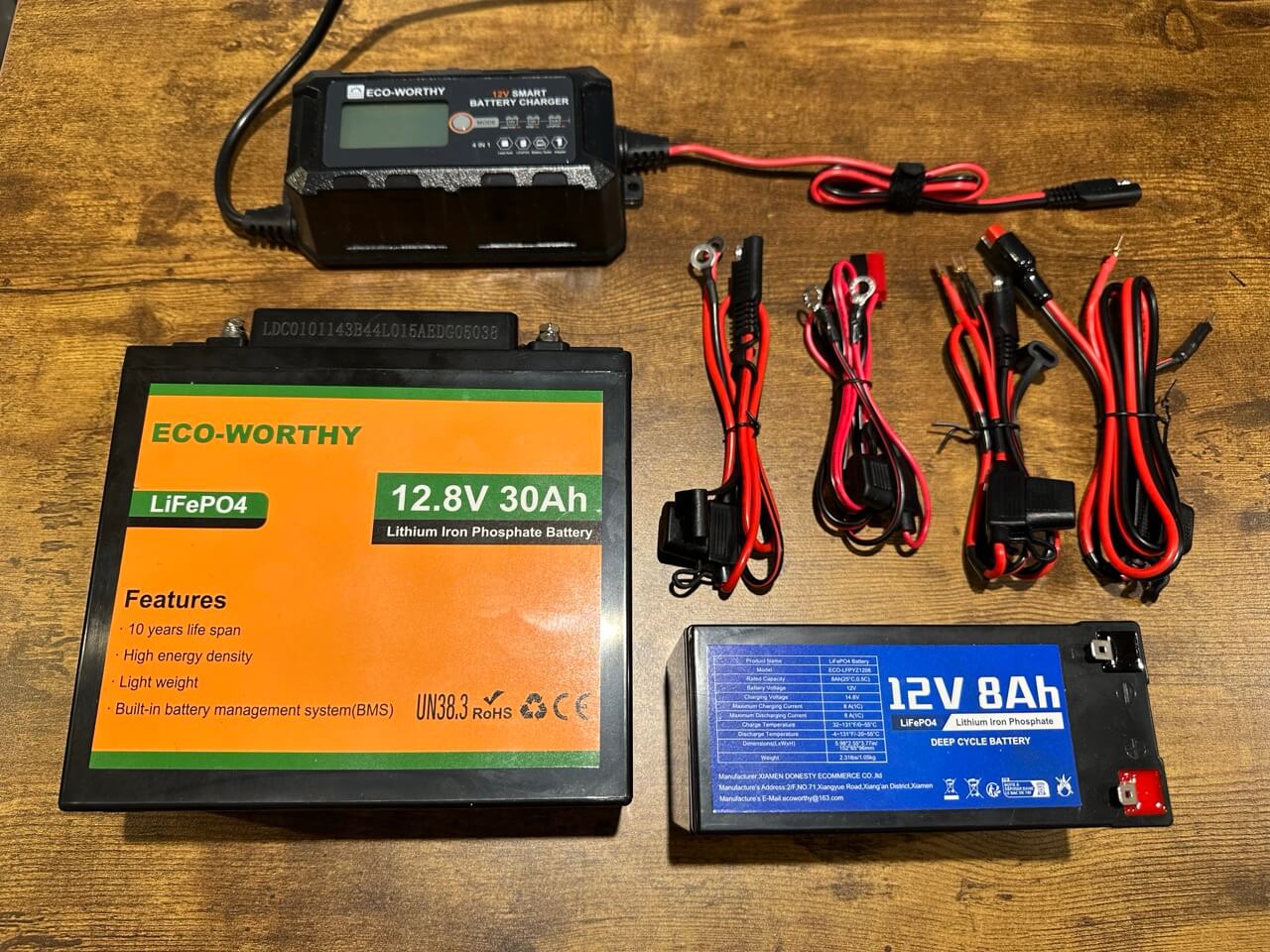
While the weather has certainly turned somewhat, I do want to use amateur radio operation as an excuse to get me out and about more. Because that has been my aim, I was recommended an Eco-Worthy LiPo4 12.8v 30Ah battery for my transceiver. I had noted that I was going to be backpacking rather than driving, but it turns out the battery bundled into my original equipment order was one that comes in at over 3 kg. That is fine for a short hike, but if I’m carrying lots of other gear, then this is a little more cumbersome than I was hoping for. It would let me operate all day, but chances are, at least for now, I’d only be operating for a few hours. I had just gone with the recommendation of an experienced operator, but I don’t think they quite factored everything in.
I managed to find an Eco-Worthy LiPo4 12.8v 8Ah battery that comes in at about 1 kg (and I waited for Black Friday to get a better deal). By my calculations, this should still give me several hours operating, and is much more the size and weight I was expecting for a backpacking recommendation. The only issue was that the 30Ah battery uses screw terminals, and the 8Ah uses F2 connections. To accommodate this I ended up having to buy various components so I could actually use it.
I had to buy a fused SAE cable, and replace the standard rings with some F2 compatible spade connectors to allow me to charge the battery from my current charger. I also had to get some heat shrink, a heat gun, some crimpers, and some standard 10A car fuses so I could do it properly. I then had to get a fused Anderson pole cable, and once again replace the ring terminals with F2 space connectors, and this time also get some mini 10A car fuses as frustratingly the inline fuse compartment was a different physical size.
This amateur radio business really does need you to be able to tinker and spend on all sorts of paraphernalia that you may not necessarily have around. But it all worked and I am sure a lot of the extras I got will be useful for future projects.
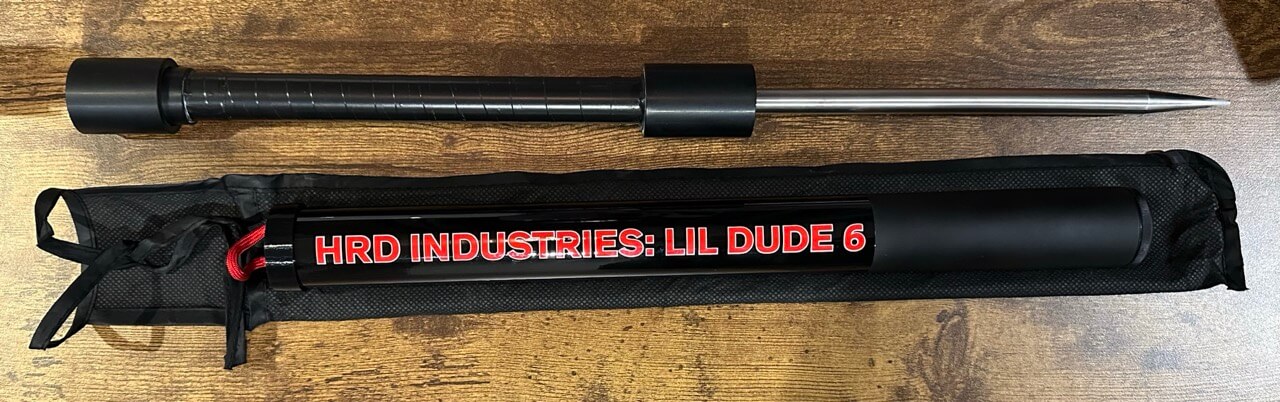
 This past month I also acquired a new carbon fibre mast and a mounting spike. After all the hassle with getting stuff tangled in a tree at last month’s Cub Scout camp I figured I might find it less stressful to have a small and light solution for getting a wire in the air. Enter theLil Dude 6 V2 by Ham Radio Dude, a 6m telescopic carbon fibre mast, and the accompanying Dude Spike 2.0. I was very fortunate to get my order in at about the right time to get both items, but this now gives me a great option for not having to deal with trees so much.
I have not had chance to try it out yet, but the two pieces are pretty close in weight. The mast comes pre-assembled, but the spike kit comes as parts. I was very glad it came with the PVC pipe as we don’t use quite the same pipe sizes in the UK so sourcing one exactly the right size would have been troublesome. It was easy to put together and to cover the writing on the piping I just wrapped it in black electrical tape like you would the handle of a tennis racket with grip tape, and the result looks pretty nice - somewhat ironic given it is designed to go inside the mast.
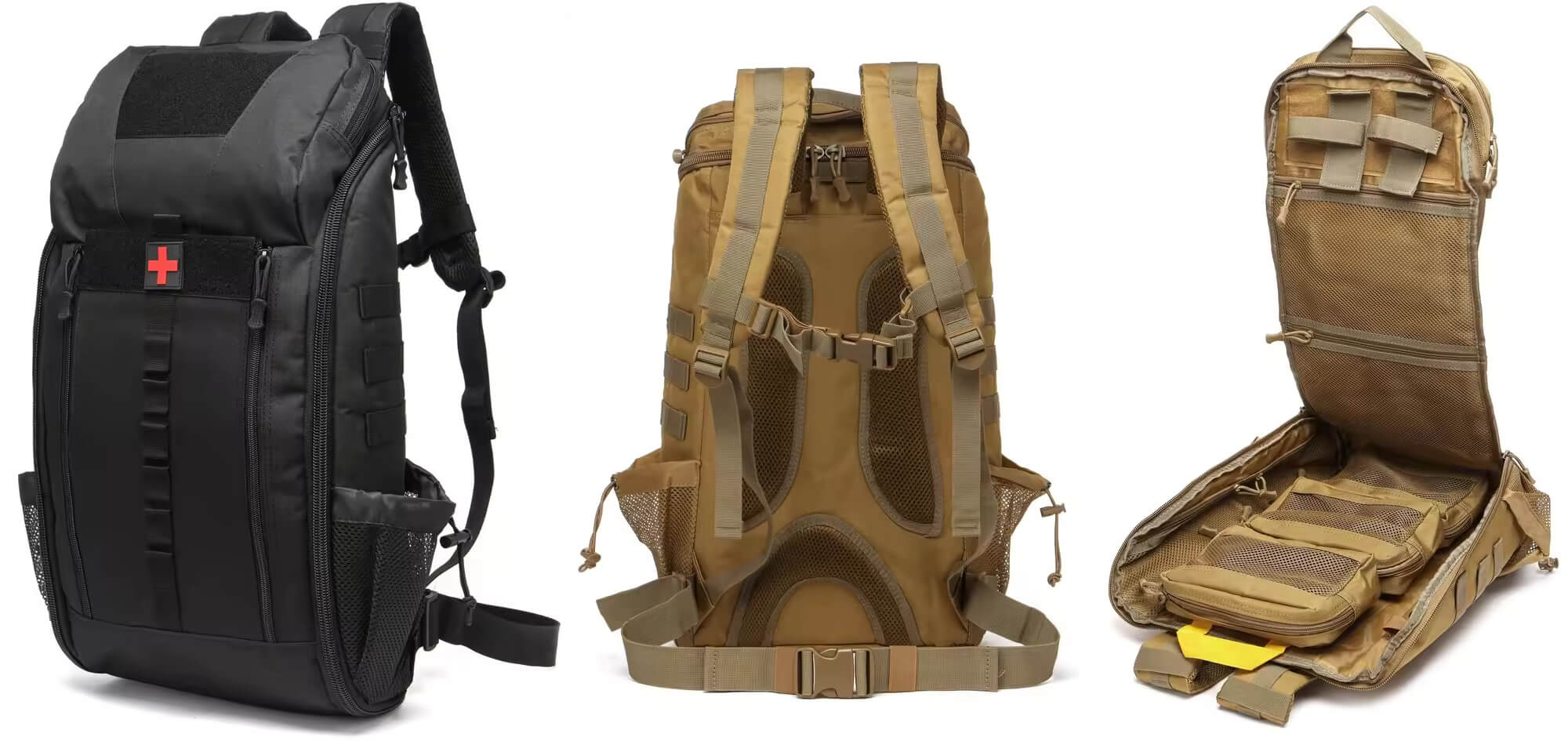
 I also decided to pick up a backpack that was a little more amateur radio friendly. There were lots of recommendations for the Gigaparts Explorer as it fully opens and has lots of straps and velcro. However, there were equally recommendations about getting a very similar bag from Ali Express - a 40L tactical medical backpack. Given the pricing difference and the fact that it would be way more expensive to get the Gigaparts bag shipped to the UK, I opted for a bag from Ali Express. That, and it seems that Gigaparts are no longer stocking it.
There are many resellers on Ali Express, so I recommend shopping around on the site if you want to get one, and make sure you check the delivery cost. But before you do, Shaun, the same guy who made the mast I bought also has a video deep diving on the two bags.
 Getting all the bits together for this new hobby to do it the way I want to is certainly not cheap, but even though I have not really got going yet, I am enjoying the learning, the research and starting to get hands on with tailoring things to my liking.
Links
In the link section this month I have an app, an app add-in, and an online service to share.
Mac Mouse Fix
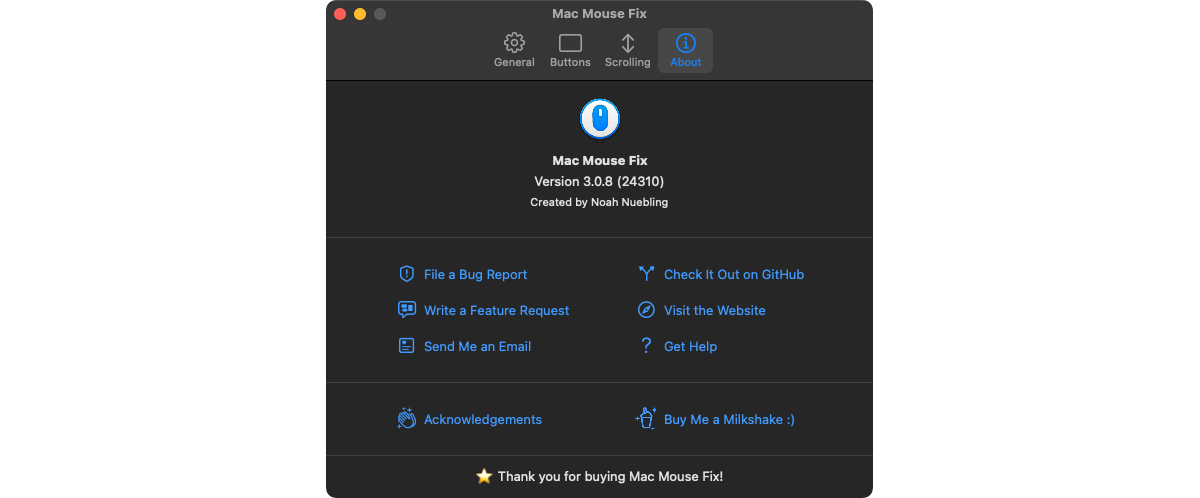
First up is a new app I have installed on my Mac Studio to use with my Logitech MX Master mouse - Mac Mouse Fix. Previously I had been utilising BetterTouchTool to manage my mouse (rather than the universally acknowledged troublesome Logitech Options software). However, for some reason my mouse wheel scrolling started becoming erratic - particularly in my web browsers (Safari & Brave). A reboot didn’t fix it, and I still don’t know why it suddenly became an issue. I don’t recall updating either macOS or BetterTouchTool, which were my first thoughts as to the why.
I remembered from a few years ago seeing people discussing a useful utility for their Logitech mouse on the Mac that had been working solidly. I tracked down Mac Mouse Fix, and at under £3, it was an easy sell - even if just to try it out.
As you may have guessed by my adding it as a link, it solved my scrolling issues instantly.
 Remove Unused Layouts in Microsoft PowerPoint
This is something I have been using for quite a while now and I use it quite regularly in my day job. It is a PowerPoint add-in that comes with a variety of functionality, but the one I needed from it was to remove unused layouts.
A layout in PowerPoint is the set up of a slide such that you can switch between slide layouts and just change the background, the styling, etc. In the default template slide deck issued internally, it contains a massive number of these layouts. Many of them are ones that include photographs of company activities. They are great, but you would never use them all in one real slide deck, and because many of those images were added uncompressed for presentations, they really do rack up that file size - making the PowerPoint file slower to save and copy, and difficult to e-mail when necessary.
The add-in includes a function to scan through your slide deck, identify any layouts not in use, and remove them. I have found it to be only as destructive as necessary (i.e. to the unused layouts), and as such, reliable.
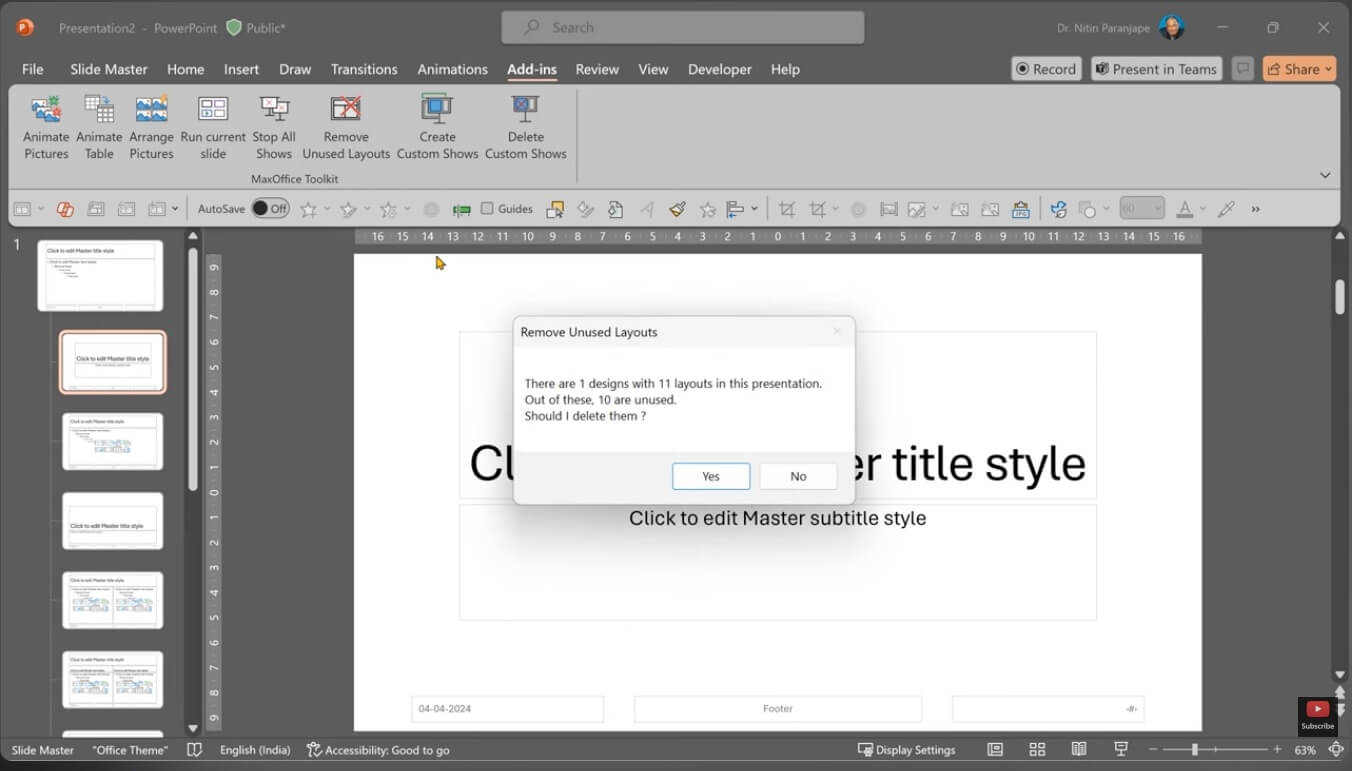 I would recommend watching the author’s video on how to use it (but it is very easy), and then downloading the latest version from its GitHub repository.
MX Toolbox
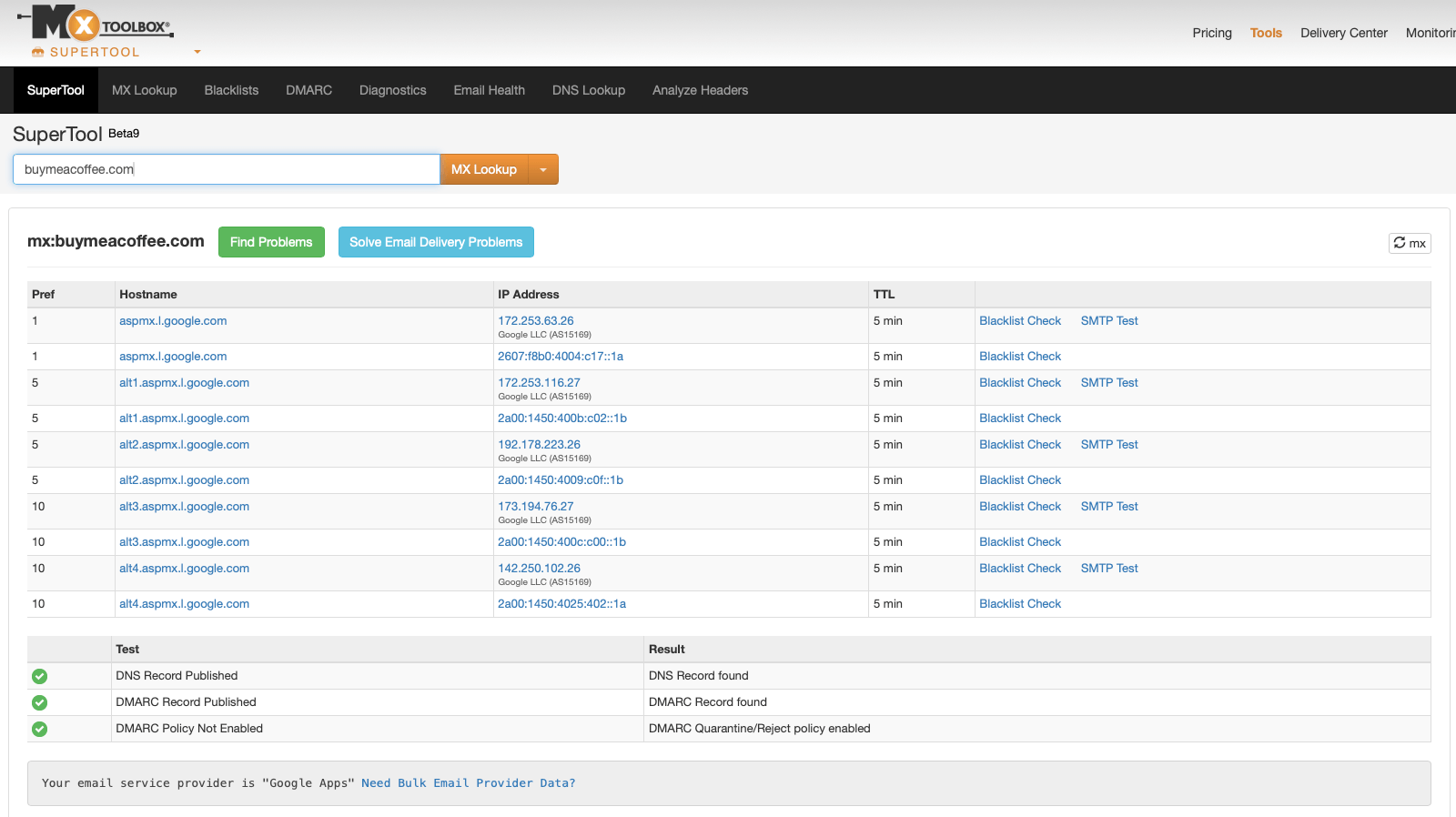
MX Toolbox is a website that has been around for almost 20 years, and I think I must have been using it for most of that time. Originally targeted at allowing IT professionals to view mail server records (MX), it also included options to review various domain records (DNS) and others. Over time they have expanded to include even more, but MX and DNS are usually what I am after and they do it well.
If you want to know more about a domain, try the free MX Toolbox Super Tool. If you want to quickly parse out an e-mail header, use their Analyze Headers Tool. There are more tools to look at, but these are my day-to-day ones.
 Upcoming
While recent months have been constrained on the personal projects front, I have accrued a good chunk of annual leave that I will be taking at various points through to the end of the year. I am optimistic that this will give me some opportunity to make some progress on a number of areas that have been purposefully neglected this past few months.
I don’t know that there will be anything particularly new and exciting coming, but I have a backlog of 3D print designs to share out, lots of amateur radio bits and pieces to build out (it has actually been months now with the certification and equipment and I still haven’t got to try out the transmission side of the hobby), some Alfred workflow updates, and some Obsidian updates.
Thank you all for reading. If you are reading this on the Buy Me a Coffee website, just follow me and you will get a copy of these monthly posts direct to your mailbox. It is all free, and hopefully there are some interesting and useful elements in each post.
Thank you too to everyone who has bought me a coffee, be it this past month or years ago. You are all incredibly kind and as someone who loves his coffee, I do very much appreciate each and every single cup. Take care and I will be back in 2026 with my December 2025 round up.