

Building a 3D Engine for the Atari Jaguar
I'm developing a custom 3D engine from scratch for the Atari Jaguar. The goal is to build a flexible and efficient foundation capable of rendering polygonal worlds on the Atari Jaguar, hardware that requires a very different approach from modern systems.
Here's a simple overview of how the engine is designed and how its main components fit together.
To render each frame, the engine will follow three main steps:
1. Scene
First, the engine builds a list of entities to render, including their geometry and transformations. This list describes what needs to be drawn in the current frame and where each object is located in the scene.
2. Transformation
Next, the engine processes the scene list and performs the necessary 3D transformations. Vertices are transformed from local coordinates into world and camera space, preparing the geometry for rendering.
Lightning will be done here.
The result is a list of polygons ready to be drawn.
3. Rendering
Finally, the engine processes the polygon list, rasterizes the polygons, and draws them on the screen.
The engine is being developed from the ground up, so there's still plenty of work ahead. I'll be sharing more updates as development progresses and new features are implemented.
Initially, I planned to build the engine using flat-shaded polygons and Gouraud shading, but seeing that others have implemented texture mapping—and that the performance is better than I expected—I’ll have to add it.
What's done:
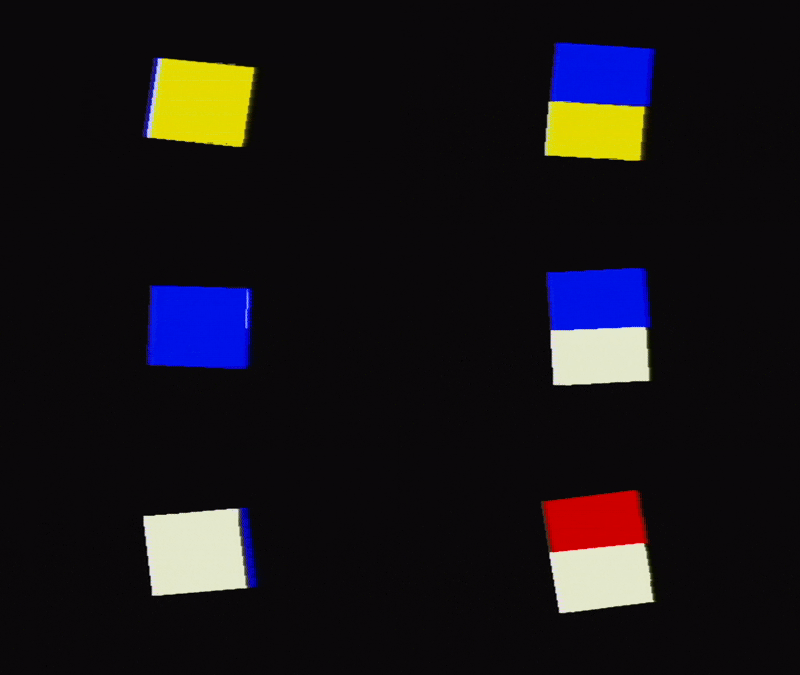
3D Matrix rotations
Dot, triangle and quad drawing routines
Simple object model
Development Approach
For now, the entire engine is written in C and compiled for the Motorola 68000 processor, using the blitter to draw pixels. My first goal is to create a simple, functional API that makes it easy to define scenes, transform objects, and render polygons without worrying about the low-level implementation details.
Once the engine is ready, I want to use it to create a simple 3D game. This will provide a practical way to test the engine and identify performance bottlenecks.
After that, I'll gradually rewrite selected parts of the engine in assembly language to improve performance and make better use of the Jaguar's hardware. The idea is to start with a working engine in C and optimize the most demanding parts only when necessary.
There's still a lot of work ahead, but the first step is to get a functional 3D engine running on the Jaguar and build from there.
Thanks for following the journey!