

Bless me, Father Hippocrates, for I have sinned. It’s been… I don’t know. A few night shifts. Maybe longer. Somewhere between the guidelines and my better judgment, I stopped keeping track.
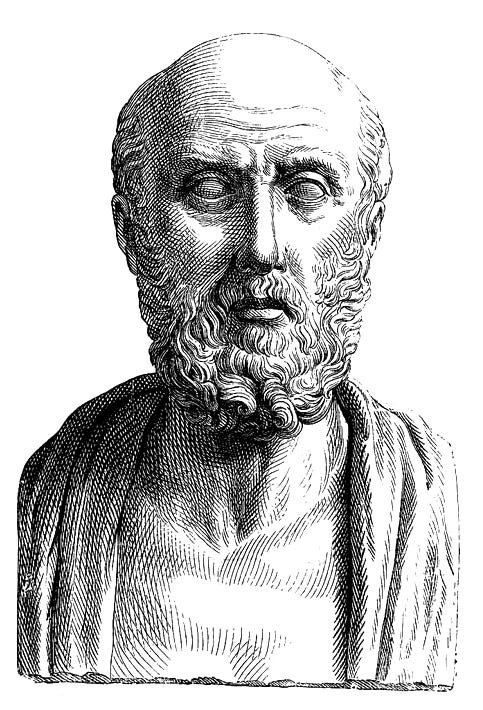
Hippocrates, the father of medicine. Metrodora is the mother of medicine but no one knows what she looks like… I am sensing a theme here.
Every doctor makes a mistake. The ones who say they don’t are lying. Or worse. If that thought bothers you, good. It means there’s still something in there worth saving.
This started when I was fresh out of medical school. Still dumb enough to think protocols meant certainty instead of consensus. I’d just begun the foundation program. Two years of paperwork, bloods, cannulas, and the occasional honour of holding a retractor while someone senior complained about taxes and the decline of everything.
Then I landed in emergency medicine. And suddenly it wasn’t dull anymore. It was chaos. Fast, loud, unapologetic chaos. Anything came through those doors. Drunk, broken, bleeding, confused.
My rule was simple. Can I fix you? Good. Off you go.
I can’t? Fine. Someone else can. Medics. Surgeons. Ortho. Whoever claimed that particular piece of anatomy.
It wasn’t pretty.
It wasn’t clever .
But it worked…until it didn’t
Enter sweet Dorris. The kindest woman you’ll ever meet. The sort who’d bake you a tray of cookies for no reason other than you looked like you needed it. The kind who says thank you when you’re the one inconveniencing her.
No fuss.
Never a fuss.
Fiercely intelligent too. You could see it if you paid attention. But life had taught her to keep that part quiet. Years of being talked over, talked down to, slowly filing the edges off herself just to make other people comfortable. The kind of patient everyone likes. The kind you don’t expect to go wrong.
Abdominal pain. Indigestion. “GP problem,” someone mutters, already halfway out the door.
I look at her properly. Not the way you’re taught to in exams, but the way you do when something doesn’t sit right. A bit of arthritis. Cholesterol that’s been misbehaving for years. Blood pressure creeping north. Smoked most of her life until, heroically, last week.
“My doctor at home gave me pills,” she says. “It hasn’t gone away.” Fair enough. So I do what keen juniors do when they still believe medicine is a logic puzzle you can brute force your way through. Bloods. Lots of them. The kind of panel that makes the lab sigh. Somewhere in my head I’m already writing the case up as ischaemic bowel.
Early catch. Gold star.
I even charm radiology into a CT abdomen pelvis. Pull a favour or two. Scan comes back. Pristine. Organs behaving like they’re in a textbook.
Meanwhile, she’s getting worse. Pain climbing. Morphine taking the edge off but not fixing the story.
“Discharge her, Bear,” my consultant snaps.
“She’s clearly drug-seeking.” He says it with the confidence of a man who has never been wrong in his own mind.
Which is impressive, because I’d seen him be wrong. Often.
I hesitate. Not out of defiance. Out of that itch you get when the narrative doesn’t fit the patient in front of you. There’s a feeling in medicine you can’t teach. It’s not knowledge, not quite experience. More like a low-grade alarm that hums under the surface. You ignore it at your peril. Mine kicked in and for reasons I still can’t fully justify, my brain dredged up something completely irrelevant.
Years ago. Lecture theatre. I wasn’t paying attention. Too busy passing notes to a girl who was miles out of my league and incidentally left me broken hearted! But somewhere between heartbreak and humiliation, a slide stuck.
Heart attacks in women don’t read the script. No crushing chest pain. No dramatic collapse. Just… odd. Vague. Easy to dismiss.
I look back at her. “Let’s just do an ECG.”
Boom.
ST elevation.
Textbook.
Troponin comes back north of 2000.
Not indigestion. Not anxiety. Not drug-seeking.
Just a heart attack that didn’t look like one.
You see, dear reader, medicine has always had a soft spot for wealthy men. Back when heart disease first strutted onto the stage, it wore a suit, smoked too much, ate like it had something to prove, and had the money to survive long enough to get diagnosed.
Those men became the blueprint. The data followed them around like a loyal dog. Studies like the Framingham Heart Study turned their suffering into something almost elegant, left-sided chest pain, down the arm, up into the jaw, clean, predictable, the kind of pain you could write a textbook about.
And women? Women were in the room, just not in focus. They had chest pain too, but it came with static, fatigue that didn’t make sense, nausea, breathlessness, a kind of chaos medicine doesn’t like to admit it can’t control. So we called it “atypical,” which is a polite way of saying it didn’t fit the story we were already telling ourselves.
I’d love to tell you we rewrote that story. That medicine sobered up, took a long look in the mirror, and decided to be better. Truth is, it’s trying. It really is. But old habits don’t die, they just get dressed up in better language and the price of that delay hasn’t been academic. It’s been paid in time, in doubt, in outcomes that never quite lived up to the version of reality we were so comfortable believing.
Dorris made it, by the way. Guess even death knows better than to pick a fight with a sweet old woman who smells like sugar and nostalgia and has spent a lifetime perfecting the kind of kindness this world keeps trying to forget.