
Trust Fall — the first installment of Month of Murder
I’m ready to kick off a new daily project this September: A Month of Murder, a short-story series publishing one fresh anthology piece every day. Today’s the first installment is “Trust Fall.”
Premise: At a stormy corporate retreat in the Florida Keys, an affair and simmering office grudges collide. Janine, fed up with being the loyal friend, watches Nan and John. When the storm traps everyone, Janine chooses violence. The story follows the quiet slide from suspicion to murder.
“Trust Fall” sets the tone: small settings, ordinary resentments, and how everyday slights can turn deadly. It’s murder as a cold, practical solution, not a dramatic outburst.
Give it a read, leave comments, and maybe even inspire future stories. Like someone using their Homeland Security resources to track down and murder internet trolls.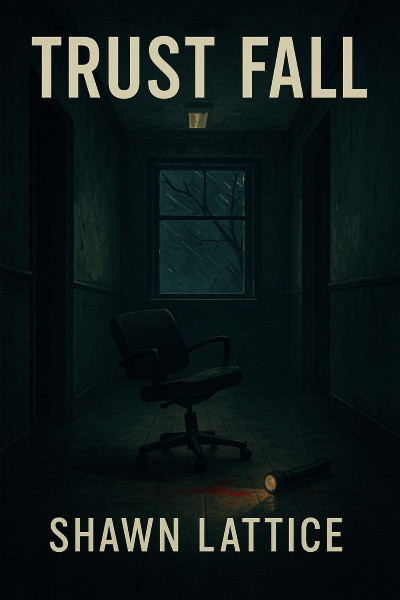 The Florida Keys looked better on the brochure. Palm trees bent in glossy arcs, the ocean turquoise under soft skies, the perfect backdrop for an "innovative corporate retreat." What they got was a ragged storm warning, a moss-smelling inn that doubled as a “conference center,” and a schedule of mandatory team-building exercises that read like a sentence, not an opportunity.
The inn was a recent acquisition by a REIT Nan’s husband controlled, offered up “at no cost” in exchange for feedback from her company. She’d passed the suggestion to HR before ever stepping foot inside. Now, staring at the drab walls and storm-battered shutters, Nan wondered if he’d picked it deliberately. It was exactly his style of punishment: a place she couldn’t stand and couldn’t escape.
She’d married her husband for his ambition, his sharp instincts, his image in the business world. A millionaire without a degree—just a high school diploma and a ruthless work ethic gained from growing up in Chicago—he had built the kind of life her master’s in computer science could never buy. But in her circle, pedigree mattered more than results. To them, he was money without manners, drive without decorum.
John, by contrast, was safe: educated, charming in a shallow way, never intimidating in his confidence, never aloof in his assurance. He liked to flirt, and Nan liked being the one he flirted with—though his wife certainly didn’t. What Nan failed to see was that polish could be faked, but ruthlessness could not. She mistook her husband’s lack of refinement for weakness, when it was the very thing that made him dangerous.
John leaned over her chair in the cramped meeting room, his cologne fighting the earthy smell. He was handsome in that HR-safe, button-down way—teeth too white, hair too perfect, laughter rehearsed like a commercial. To Nan, he was at least a reminder that she was still capable of being wanted. They'd been careful back in Pompano, slipping into hotels with fake work calls as cover. Here, surrounded by their coworkers and trapped by the storm, caution wore thin.
“Tonight,” John whispered, while the facilitator droned about “trust falls.”
Nan smiled. Everyone else was too bored to notice. Everyone but Janine.
The second night of the storm was worse than the first. The wind whined against the shutters like a bored child dragging its nails along the siding. Rain hammered the metal-tiled roof so hard it drowned out the facilitator’s cheerful voice, already brittle from two days of forced optimism. When the lights flickered and groaned, the cheer collapsed.
“All right, everyone,” he said, clutching his clipboard as if it could ward off lightning. “We’ll reconvene once the generator’s stable. For now—please, head back to your rooms to ride this out.”
Laughter scattered nervously around the room, relieved more than amused. Nobody wanted another trust fall or “empathy circle.” They were already calculating excuses for skipping tomorrow. Everyone shuffled down the narrow hallways, muttering, rolling their eyes, pretending not to notice the storm or each other.
Nan and John slipped away like they were late for a meeting. They didn’t run, but their hurry showed in every clipped step, every half-turn of the head. No one stopped them. No one had to. Everyone suspected. Everyone whispered.
But Janine didn’t just suspect. Janine knew.
She saw John first. He emerged from Nan’s room into the dark hallway, shirt untucked, hair mussed. He was fixing his cuffs, but the grin on his face was what did it—cocky, careless, like he’d just gotten away with something. The flashlight beam caught him mid-smirk.
“Janine,” he said, startled but trying to cover it with charm. “Lights out, huh? Guess you’re the cavalry.”
Janine didn’t answer. She let the silence bite, the beam of the flashlight steady on him like an interrogation lamp. John shifted, suddenly less certain of his smirk. Then he chuckled, forced and thin. “Don’t worry. I was just…checking in.”
“Sure,” she said finally, voice flat. She lowered the light, letting him pass. But her mind was already sharpening its edge.
Janine went to “check in” on Nan.
Nan was slower to open the door, hair damp with sweat, lipstick smeared like a guilty badge. She had the nerve to look annoyed when Janine stepped inside.
“What do you want?” Nan hissed.
Janine shut the door behind her, holding the Mag-Lite low. “Everyone thinks it, Nan. I know it.”
Nan scoffed. “Don’t start. It’s none of your business.”
“It’s my friend’s business. It’s John’s wife’s business. It’s the business you took when you decided it was yours to have.”
The words cracked like the shutters in the wind. Nan’s bravado faltered, but only for a moment. She straightened, voice rising. “You think you’re better than me? You think you deserved his attention? Or his job? You didn’t get either.”
The shove came quick, clumsy. Janine stumbled back against the dresser. Instinct took over. She swung the Mag-Lite. The metal cracked across Nan’s temple with a hollow, sickening thud. Nan dropped, stunned but still breathing, gasping for air.
Janine knelt fast, rage and panic and loyalty mixing into one. She pressed the flashlight into Nan’s throat. Nan’s eyes widened as her windpipe gave way beneath the weight. The fight was brief. The sound was worse. And then there was silence.
Janine stood over her, chest heaving. No speech, no victory. Just the wet stink of inevitability.
When she found John again, he was heading for the back door, muttering about checking the generator. Oblivious. Still smirking.
“You’ll need this,” Janine said, handing him the same Mag-Lite that had ended Nan. He took it without hesitation, as though her hand hadn’t just silenced his mistress.
“Thanks,” he said. “You’re a lifesaver.”
She let him go ahead into the storm. The shed door banged open and shut. She followed, but not too closely. John crouched over the generator, flashlight balanced on the machine. He bent low, muttering about wires and switches, pretending he knew what he was doing.
Janine stepped in quietly, the smell of ozone heavy already. The floor was slick with puddles from the storm, wires trailing like snakes across concrete.
She gave him a few seconds, just long enough to think he was in control. Then she shoved.
The scream was short, cut off by the crackling roar of electricity. His body jerked once, twice, then collapsed into the puddle, limbs twisted, smoke curling from his hair.
The flashlight rolled across the floor, beam wobbling, until it went still.
“For teamwork,” Janine whispered, and left him to burn.
By dawn, the inn held two corpses and a dozen alibis.
The official line was straightforward enough: John had assaulted then killed Nan in a fit of rage, then died in a tragic accident trying to restore power. Tragedy neatly labeled, paperwork ready for filing.
Nan’s husband, meanwhile, was in Chicago, touring properties he intended to buy up to “save” his childhood neighborhood. When Janine had called him weeks earlier, confessing her suspicions, he had only sighed. Yes, he already knew. No, he wasn’t surprised. She thought he sounded hurt. Really, he just sounded tired–as in tired of thinking about it.
Janine had wanted justice and said as much. His only reply was, “Do what you feel is best.” It wasn’t instruction, only acknowledgment. But that acknowledgment was enough. Motive and opportunity did the rest.”
Back in Chicago, Nan’s husband closed the deal, signing papers with a pen worth more than the inn itself. When the call came about Nan’s death, he asked the right questions, made the right noises, hung up, and poured himself a drink, then signed the next page.
Two weeks later, Janine was promoted into the very position Nan had claimed. No ceremony, no fanfare—just an email from HR citing “organizational restructuring.”
Days after that, a bottle of bourbon arrived at her office, the label far too expensive for any colleague she knew. The week after, an expensive fountain pen in a velvet box appeared on her desk, no note attached.
She never asked who sent them. Some acknowledgements didn’t need words.
-SL-