

The Chameleon Ultra is the ultimate RFID emulation device: low and high-frequency emulation, full read and write capabilities, state-of-the-art cracking, and wireless control—all packed into a keychain-sized, open-source device.
Chameleon Ultra is a testament to exceptional engineering ingenuity. The development team uncovered a little-known RFID feature in a popular Bluetooth controller, leveraging it to deliver high-performance, multi-frequency RFID reading, writing, and cracking, along with emulation performance nearly indistinguishable from that of a physical card.
This breakthrough led to the creation of the Chameleon Ultra: a compact, high-performance RFID companion device for multi-frequency emulation, cracking, reading, and writing.
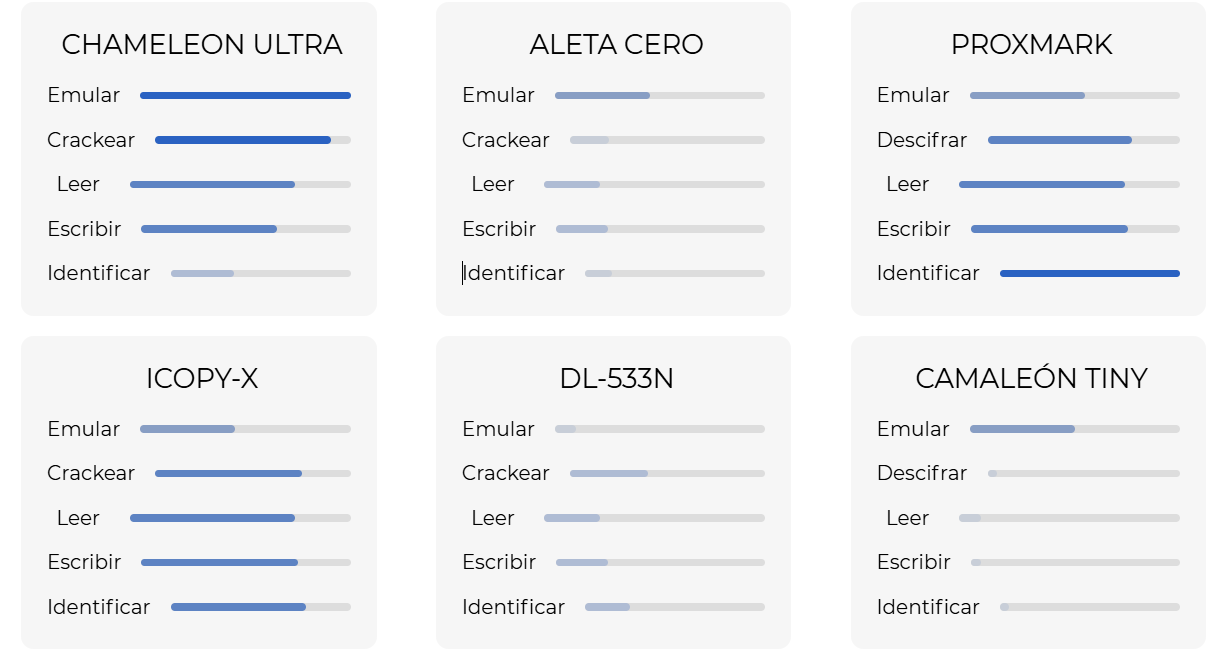
The primary use of the Chameleon Ultra is RFID emulation. Instead of relying on physical cards, it can emulate various types of chips and frequencies with a single device.
The Chameleon Ultra also includes other powerful features: cracking, reading, and writing.
When working with RFID tags, five key functions are typically required:
Identification – Identifying the tag’s frequency, modulation, chipset, protocol, etc. Most tags can be identified easily, but some require manual identification, which demands specialized hardware like the Proxmark.
Cracking – Many common chipsets (e.g., MIFARE Classic®) require keys to read or write card data. If these keys are unknown, they must be cracked. The Chameleon Ultra’s cracking capabilities are on par with those of the Proxmark.
Reading – Extracting data from an identification card.
Emulation – Digitally simulating an identification card. Instead of carrying multiple physical cards, an emulator can replace them. Moreover, emulated data and chipsets can be fully customized, something that is impossible with physical cards.
Writing – Writing data to an existing card or cloning data onto a new card.
The table below highlights the Chameleon Ultra’s coverage in each of these categories and compares it to other tools.
Unboxing
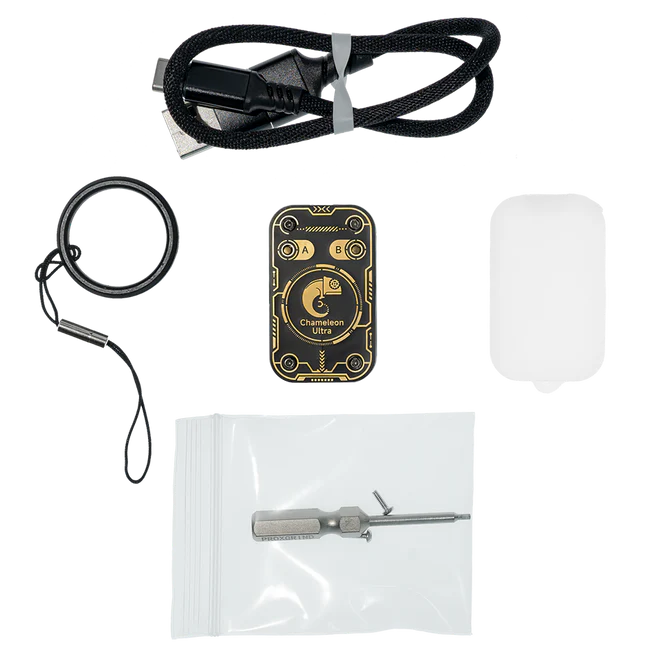
Content
1x Chameleon Ultra
1x Protective silicone case
1x USB-A to USB-C cable
1x Keychain
Setup the Chameleon Ultra
Chameleon GUI
A GUI for the Chameleon Ultra/Chameleon Lite written in Flutter for cross platform operation
The project description offers comprehensive, step-by-step installation instructions, tailored to suit your platform of choice.
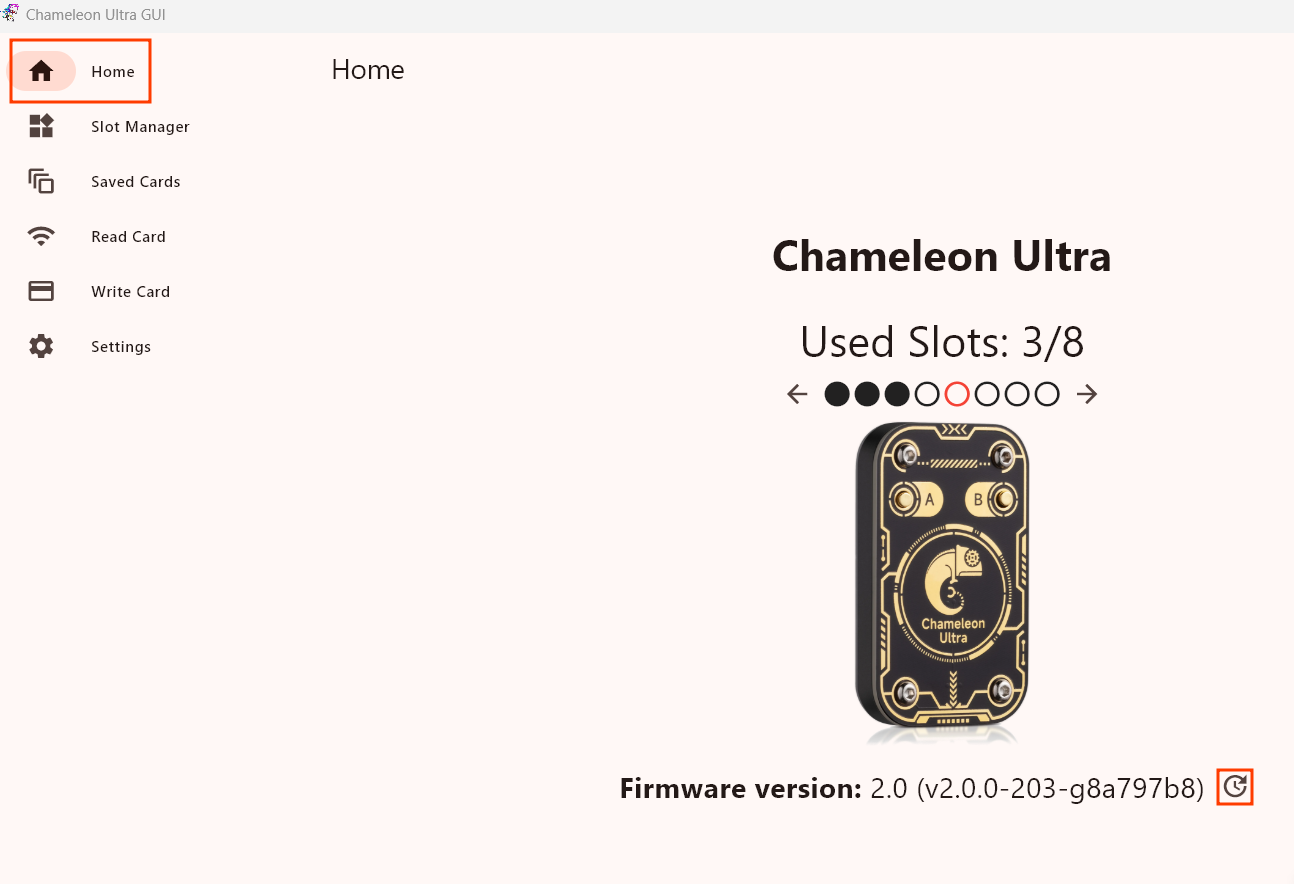
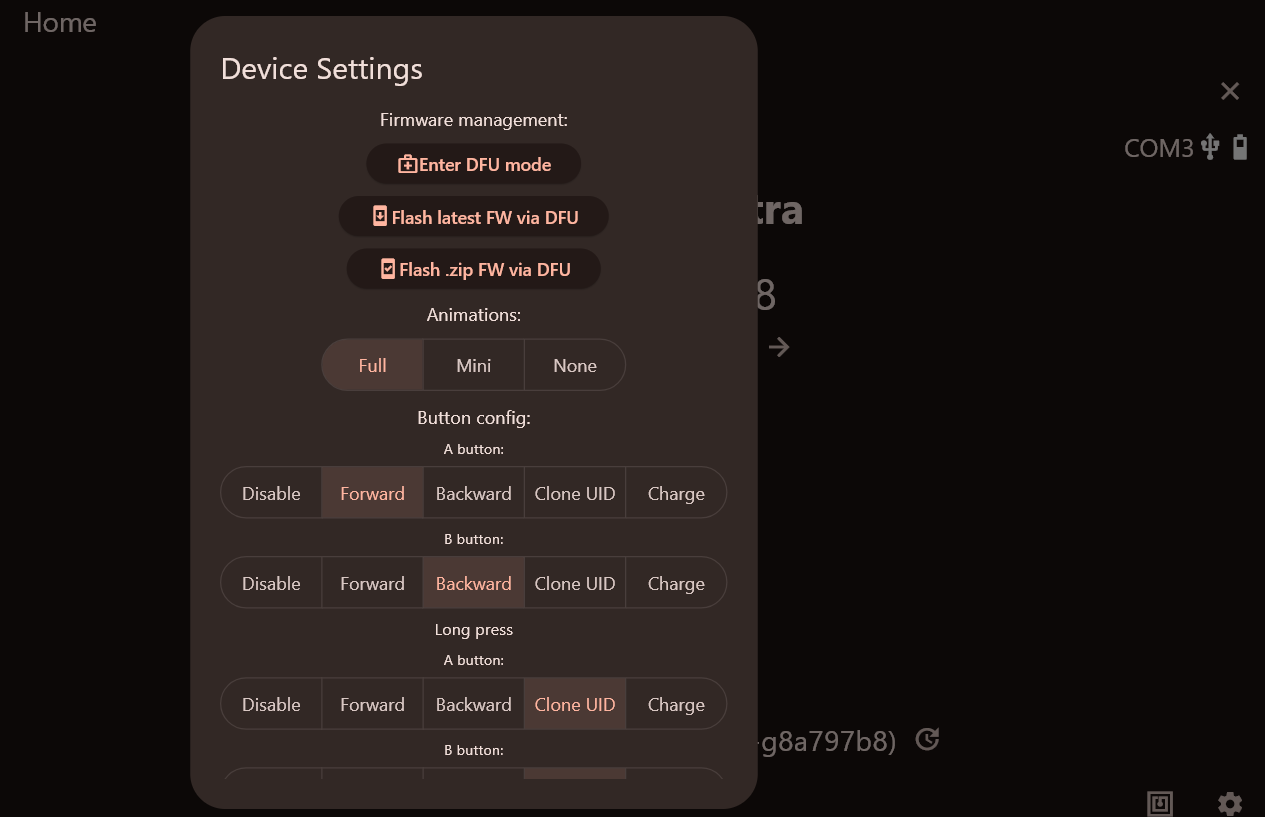
When we connect our Chameleon Ultra, the first section of the home screen displays information about the installed firmware, allowing us to perform an update if a newer version is available.
The Device Settings and Emulation Mode on the Chameleon Ultra are crucial features that allow users to configure how the device interacts with RFID/NFC systems. These settings enable you to customize the device’s behavior for specific tasks, such as emulating different types of RFID cards or adjusting operational parameters.
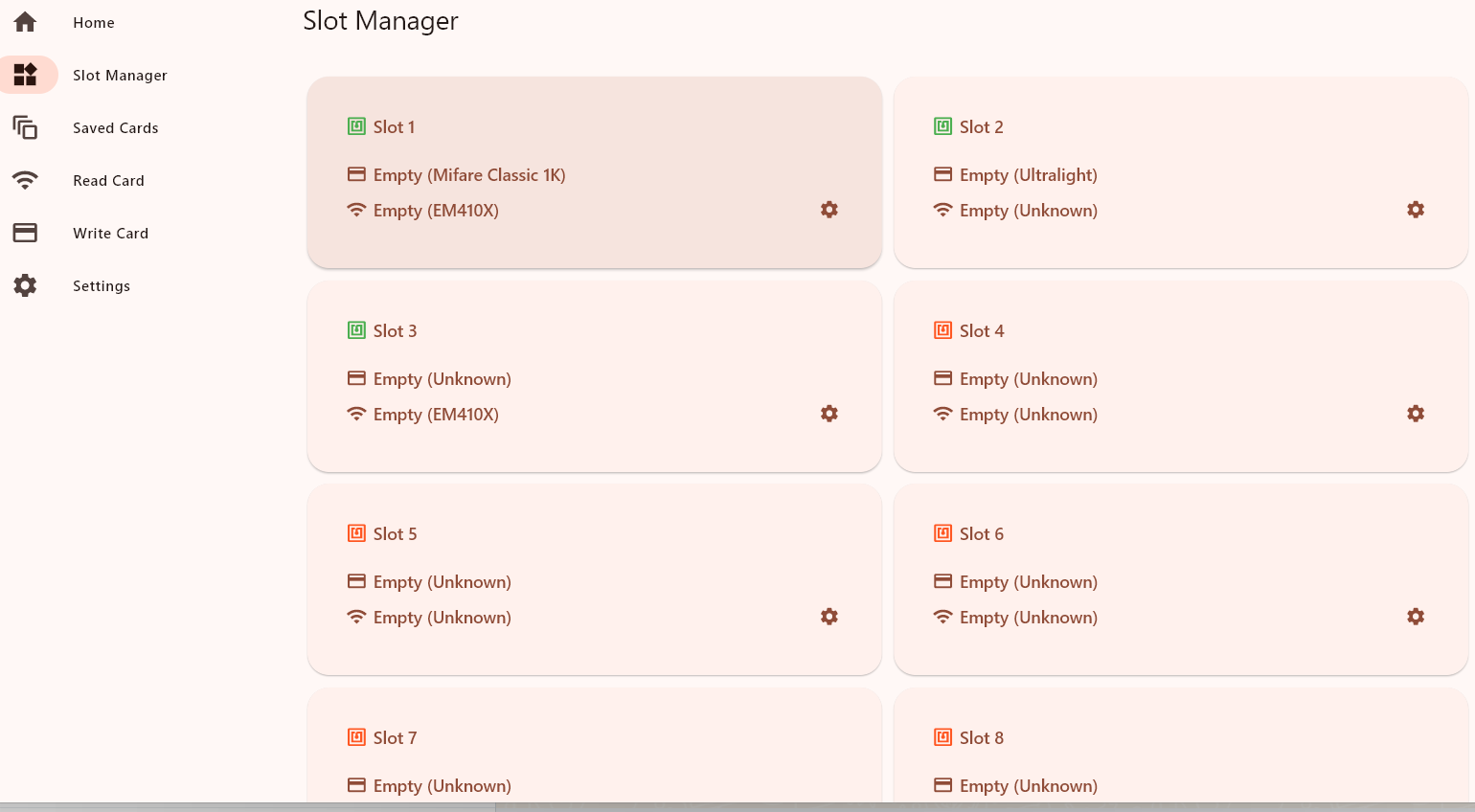
The Slot Manager in the Chameleon Ultra interface allows you to manage different RFID/NFC profiles by allocating them to specific slots. Each slot can store an emulation of a particular RFID card or tag, which can then be used for testing, or cloning.
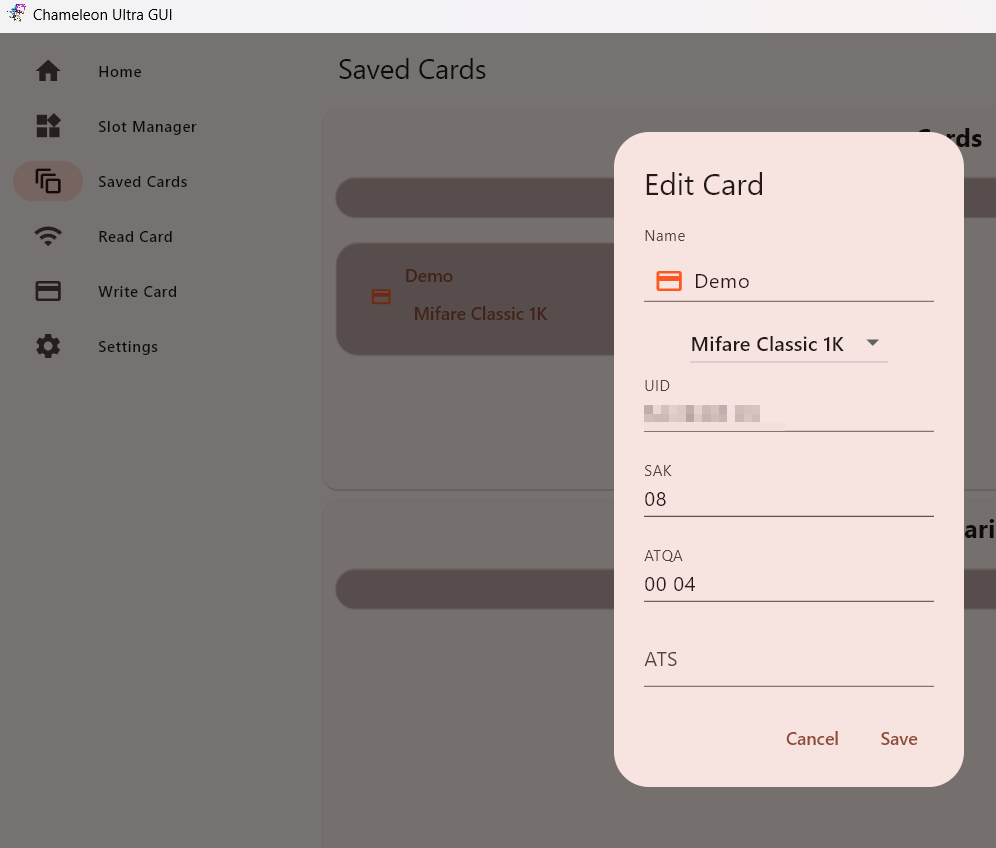
The Saved Cards feature in the Chameleon Ultra allows you to store and manage RFID/NFC card profiles that you have created or cloned for future use. These saved profiles are stored in a specific memory slot, making it easy to quickly switch between different cards or tags during testing
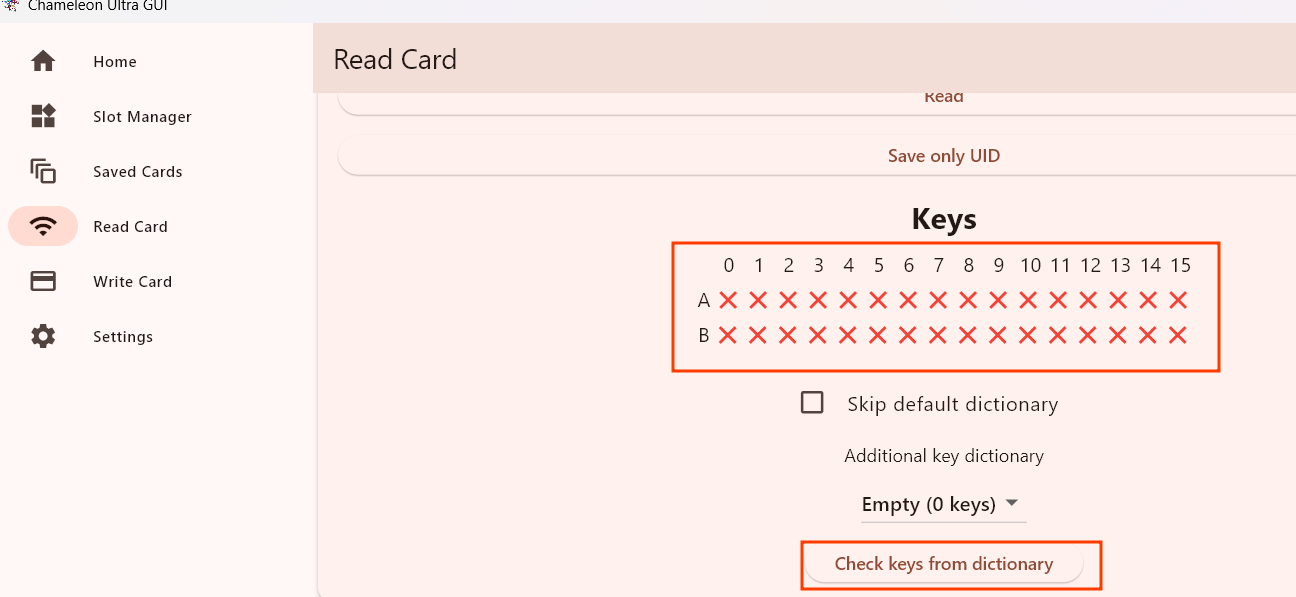
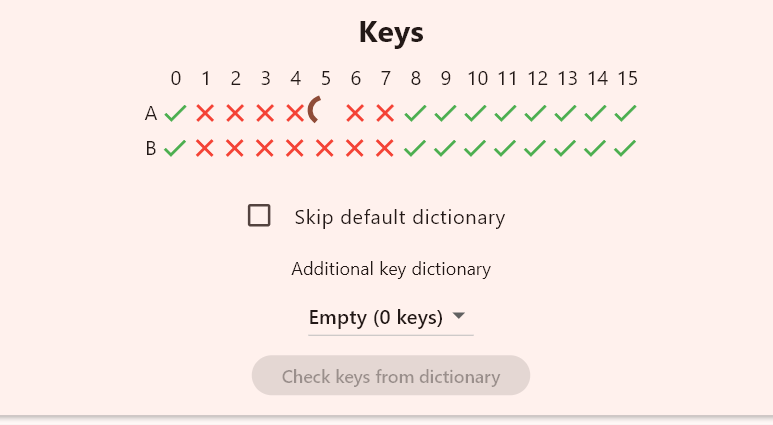
The Read Card function on the Chameleon Ultra can indeed be used as a part of dictionary attacks and can be leveraged for attacking the Crypto-1 algorithm, particularly in systems like MIFARE Classic cards that use Crypto-1 for encryption.
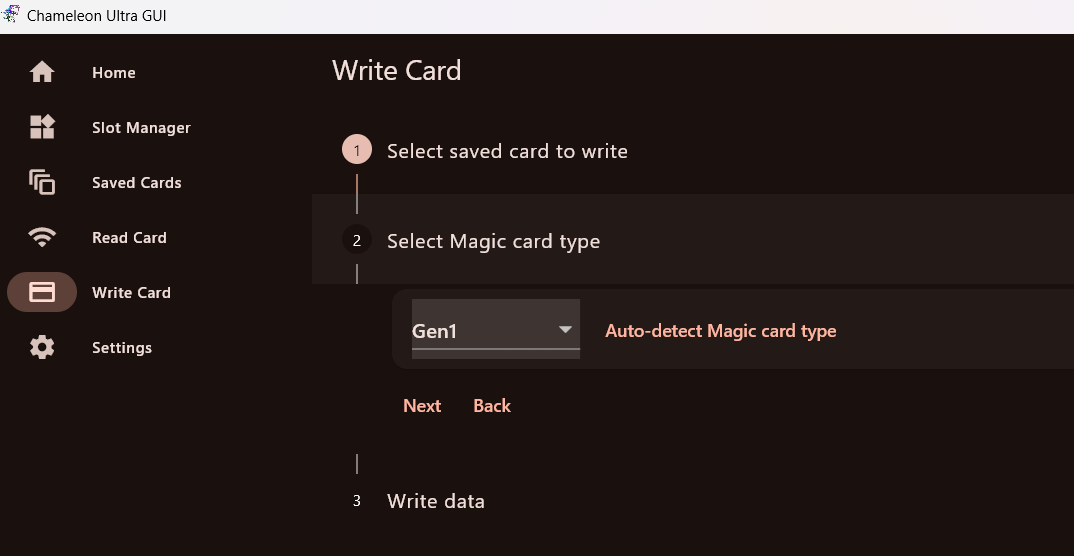
The Write Card function on the Chameleon Ultra allows you to write data to an RFID/NFC card or tag, effectively enabling you to clone or modify card information.
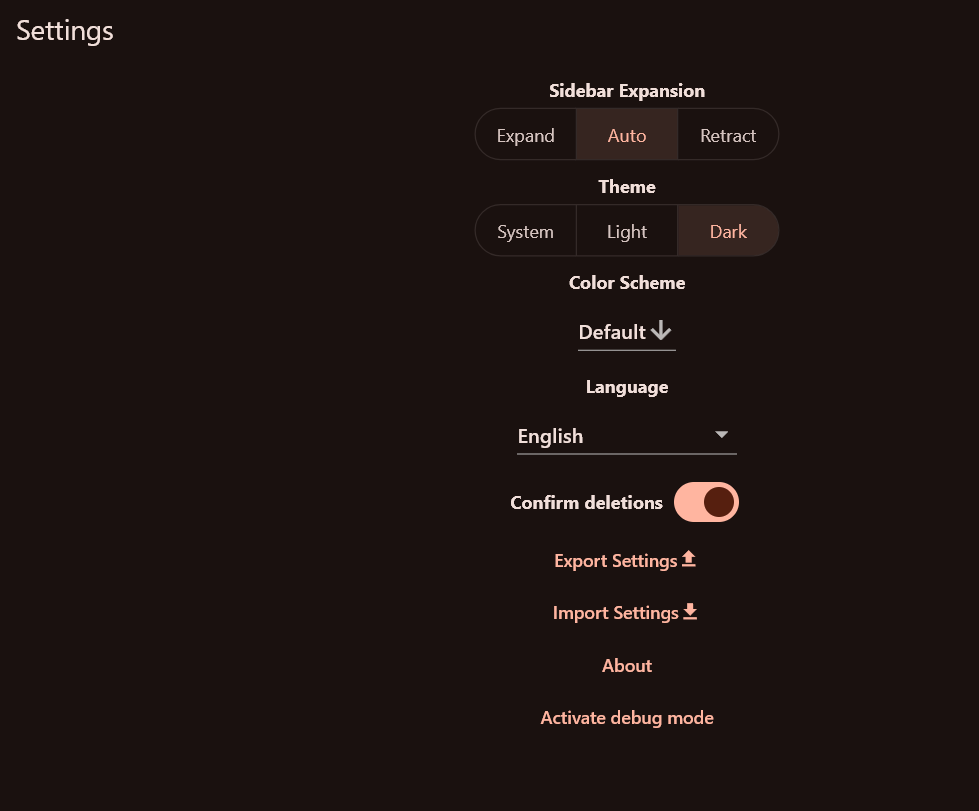
The General Settings on the Chameleon Ultra are designed to make your user experience more flexible and convenient. Whether you're adjusting the device’s language, selecting a theme that suits your visual preferences, or reviewing the credits to acknowledge contributors, these settings ensure that the device meets your personal and professional needs. By providing these customization options, Chameleon Ultra allows users to work efficiently in different environments while enjoying an interface that suits their needs.
Conclusion
The Chameleon Ultra is a powerful and versatile tool for RFID/NFC research, testing, and emulation. With its broad range of features, it stands out as an essential device for security professionals, researchers, and developers working with RFID and NFC technologies. Whether you’re conducting penetration tests, cloning cards, or experimenting with different types of RFID protocols, the Chameleon Ultra offers a comprehensive and flexible platform to accomplish your tasks.
Key highlights of the Chameleon Ultra include:
Emulation Capabilities: The device supports the emulation of various RFID/NFC cards, including MIFARE Classic, DESFire, NTAG, and many others, allowing users to replicate real-world scenarios and test the security of RFID systems.
Customizable Settings: With options to adjust the device’s language, theme, and system configuration, the Chameleon Ultra ensures a user-friendly and adaptable experience for people from different regions and with varying preferences.
Versatile Card Management: Through features like slot management, saved cards, and the ability to read and write card data, users can manage, clone, or modify cards efficiently for different use cases.
In conclusion, the Chameleon Ultra is not just a piece of hardware—it's a comprehensive toolkit for those exploring or working with RFID/NFC technologies. Its ease of use, flexibility, and wide range of supported features make it a go-to choice for anyone looking to delve deeper into the world of RFID and NFC, whether for ethical hacking, development, or research.