
Track every ride. Own every kilometre.
A free local first mobility application that brings trips, vehicles, receipts, costs and maintenance together with self hosted data, privacy and user control.
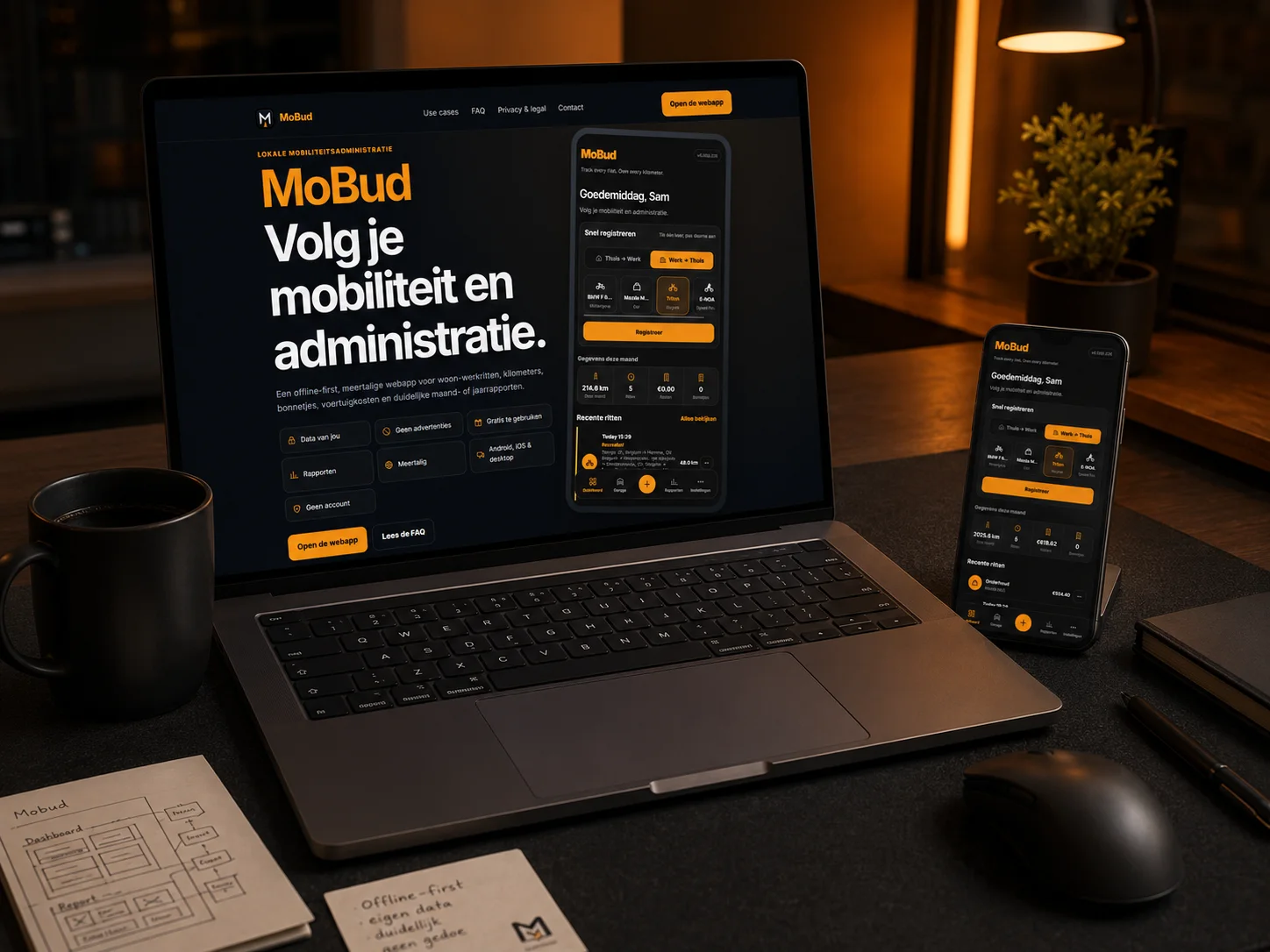 Every ride leaves admin behind. Kilometres, receipts, maintenance, reimbursements, insurance documents and costs that seem trivial until a monthly report is due or somebody asks where the invoice went. Mine was scattered between calendars, spreadsheets, gloveboxes, email and memory. MoBud started with one question: what would mobility administration look like if the user stayed in control of both the information and the system holding it?
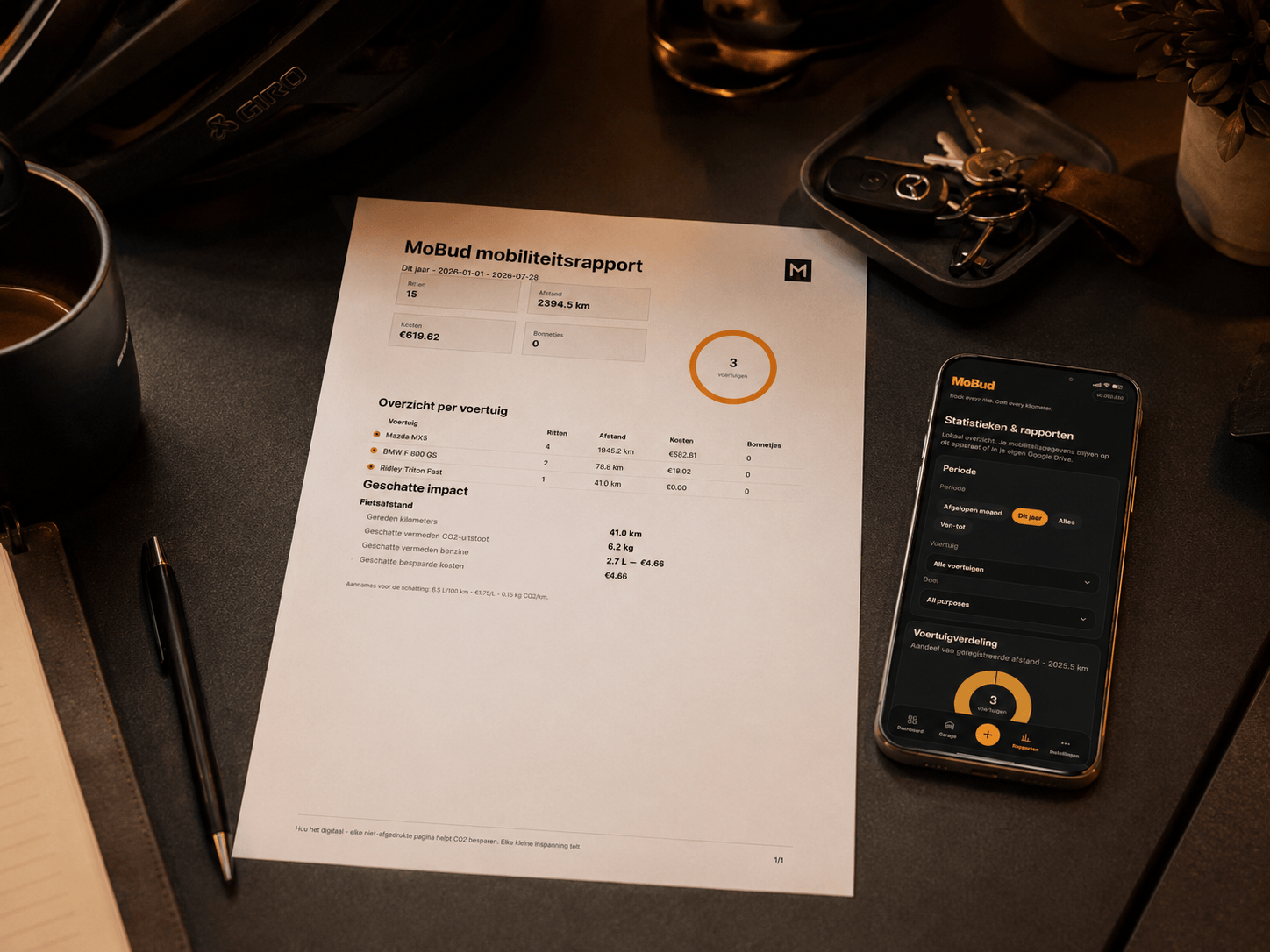 I regularly switch between forms of transport, and each one creates a slightly different paper trail. A bicycle commute is not logged like a motorcycle trip. A maintenance invoice is not a fuel receipt. A private ride changes character when it has to be reported to an employer or accountant. Existing tools usually covered one fragment, so MoBud became the layer connecting trips, vehicles, mileage, purposes, stops, costs, receipts, maintenance and supporting documents. Daily registration had to take seconds, while monthly and yearly reports still needed enough structure to be useful.
That means:
No advertising.
No obligatory subscription.
No business model.
Selfhosted data & backups.
 WORK
ABOUT
STUDIO
CONTACT
WORK / CASE
Track every ride. Own every kilometre.
2 MIN READ · 2026
VIEW STORY ↓
A free local first mobility application that brings trips, vehicles, receipts, costs and maintenance together with self hosted data, privacy and user control.
Client
MoBud
Role
Personal project
Strategy
UX
UI
Front-end Development
Application Development
Systems & Data
Track every ride. Own every kilometre.
Every ride leaves admin behind. Kilometres, receipts, maintenance, reimbursements, insurance documents and costs that seem trivial until a monthly report is due or somebody asks where the invoice went. Mine was scattered between calendars, spreadsheets, gloveboxes, email and memory. MoBud started with one question: what would mobility administration look like if the user stayed in control of both the information and the system holding it?
Project image
I regularly switch between forms of transport, and each one creates a slightly different paper trail. A bicycle commute is not logged like a motorcycle trip. A maintenance invoice is not a fuel receipt. A private ride changes character when it has to be reported to an employer or accountant. Existing tools usually covered one fragment, so MoBud became the layer connecting trips, vehicles, mileage, purposes, stops, costs, receipts, maintenance and supporting documents. Daily registration had to take seconds, while monthly and yearly reports still needed enough structure to be useful.
That means:
No advertising.
No obligatory subscription.
No business model.
Selfhosted data & backups.
Privacy shaped the architecture rather than appearing in a settings screen later. MoBud is local first, free to use and built around self hosted data. It works without an account or central customer database, so trips, addresses, costs and documents remain on the user's own device. Backups can stay local or optionally live in the user's own Google Drive. No advertising. No obligatory subscription. No business model. The garage brings together mileage, maintenance, repair contacts, insurance, roadside assistance, lease details, dealers and files per vehicle, while reports make the accumulated data easier to interpret and export. Data privacy is not a feature bolted on afterwards. It is the reason the system is shaped this way.
MoBud currently combines:
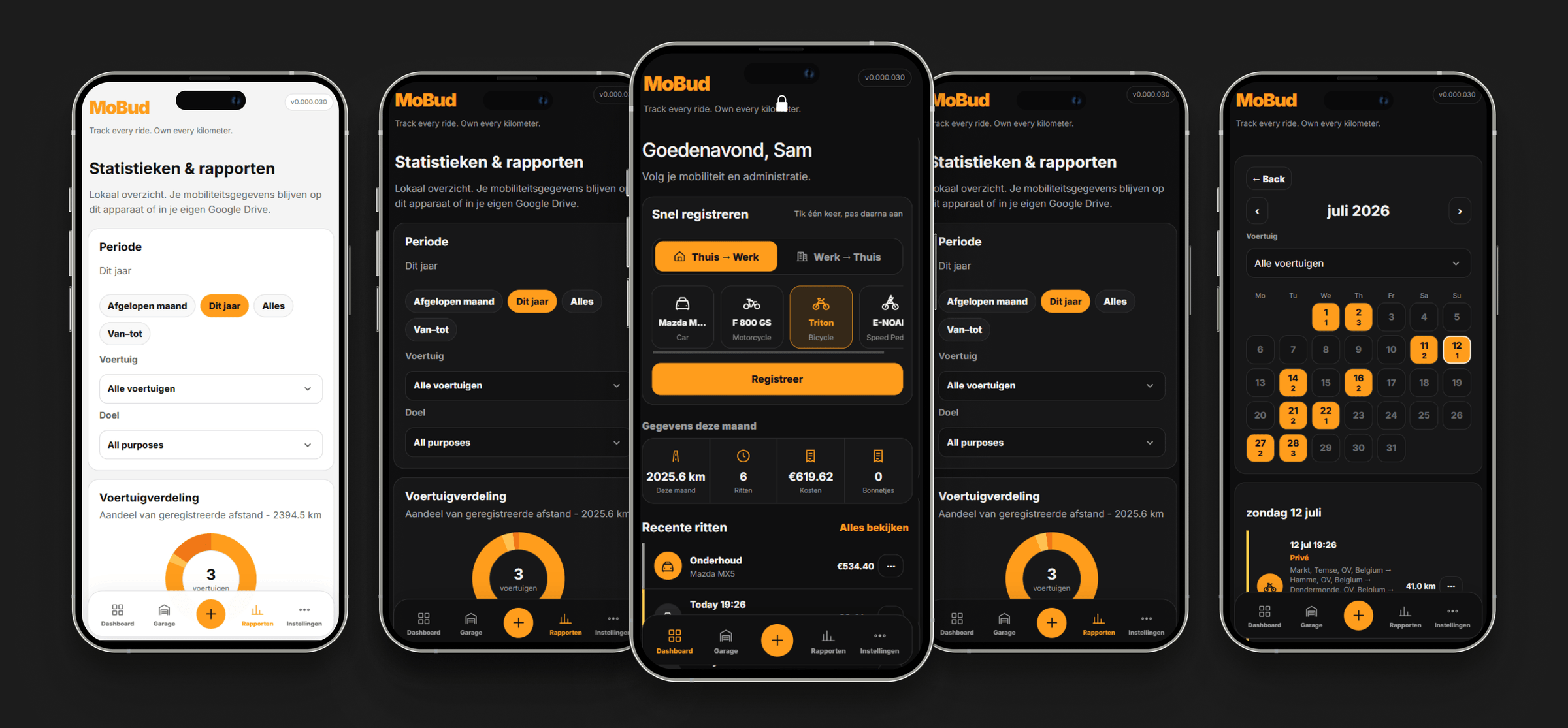
Trip registration
Users can record dates, vehicles, routes, destinations, distances, purposes, stops and optional supporting documents.
Costs and receipts
Expenses can be linked to a vehicle, supplier, category, mileage and uploaded receipt. The interface also makes clear that a digital copy does not replace the legally required original document.
Vehicle administration
The garage brings together mileage, maintenance, repair contacts, insurance, roadside assistance, lease information, dealers and supporting documents per vehicle.
Reports
Monthly and yearly summaries make trips, costs, usage and vehicle information easier to interpret and export.
Backup and portability
Local and optional Google Drive backups allow information to be moved or restored without creating a central MoBud account.
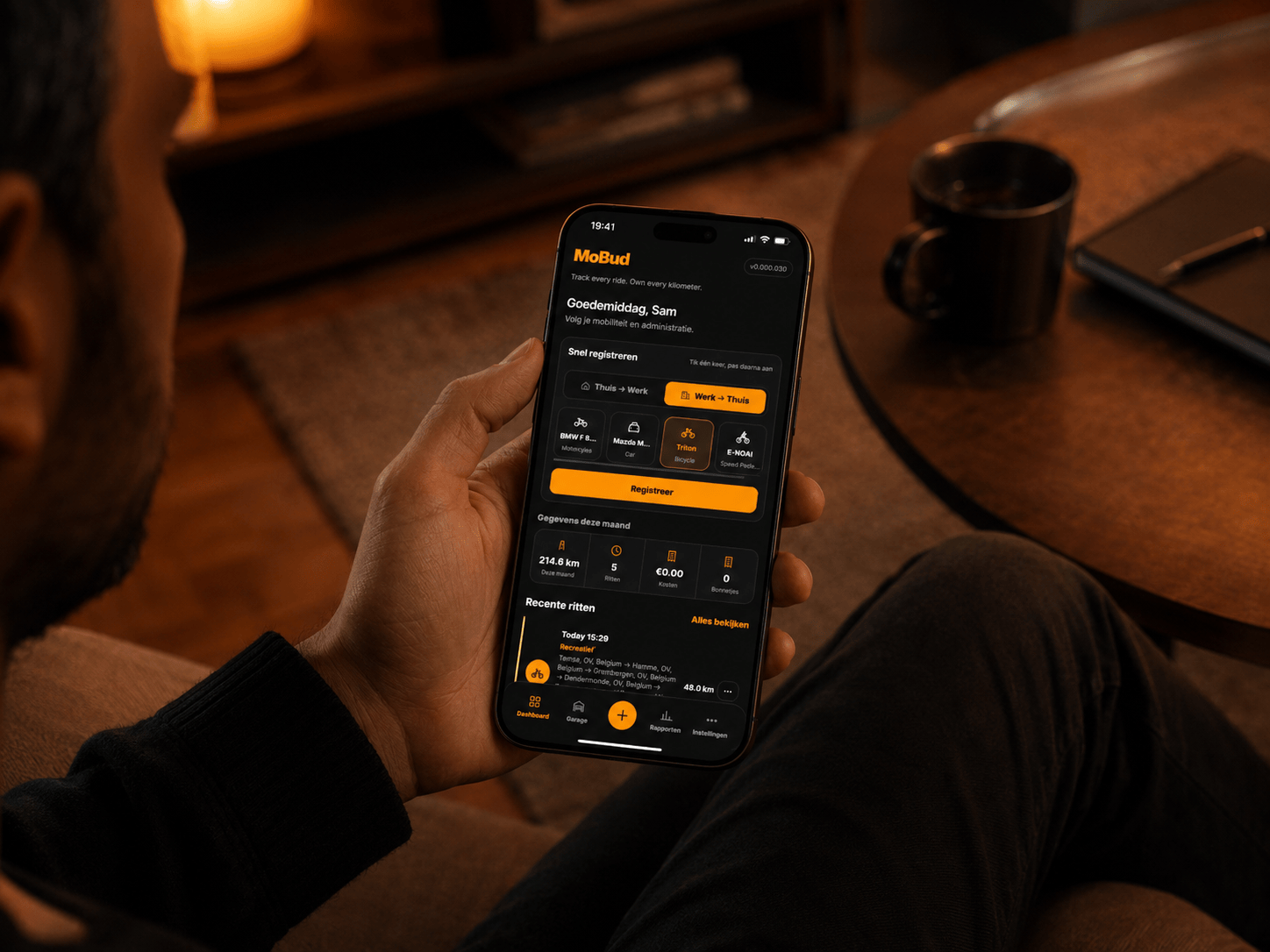 I built the product across strategy, UX, visual design, data modelling and front end development, using AI assisted coding where it shortened the route from idea to working version without outsourcing the judgement. Today, MoBud is an installable, multilingual PWA, a progressive web application for mobile, tablet and desktop. It is deliberately not a spreadsheet wearing an app costume. It is a small argument for useful software that asks for less, gives back more and keeps the user in control.