
Every summer, Europe's major legacy airlines add a handful of seasonal routes to popular holiday destinations. Sometimes they make perfect sense. Sometimes you genuinely wonder why they exist in the first place. So what do you actually get by flying a legacy carrier out of a small holiday airport? Is there really a difference compared with the low-cost airlines that usually dominate these routes? I decided to find out for myself. Getting there was already part of the story. I made my way to Rijeka overland from Zagreb — around three hours by bus, and honestly, the timing was a bit tight. The airport serving Rijeka sits on the island of Krk, roughly 30 minutes from the city, at least in theory. The bridge can get seriously congested in summer, so if you're travelling during peak season, I'd budget more time than that.
A brand-new seasonal route
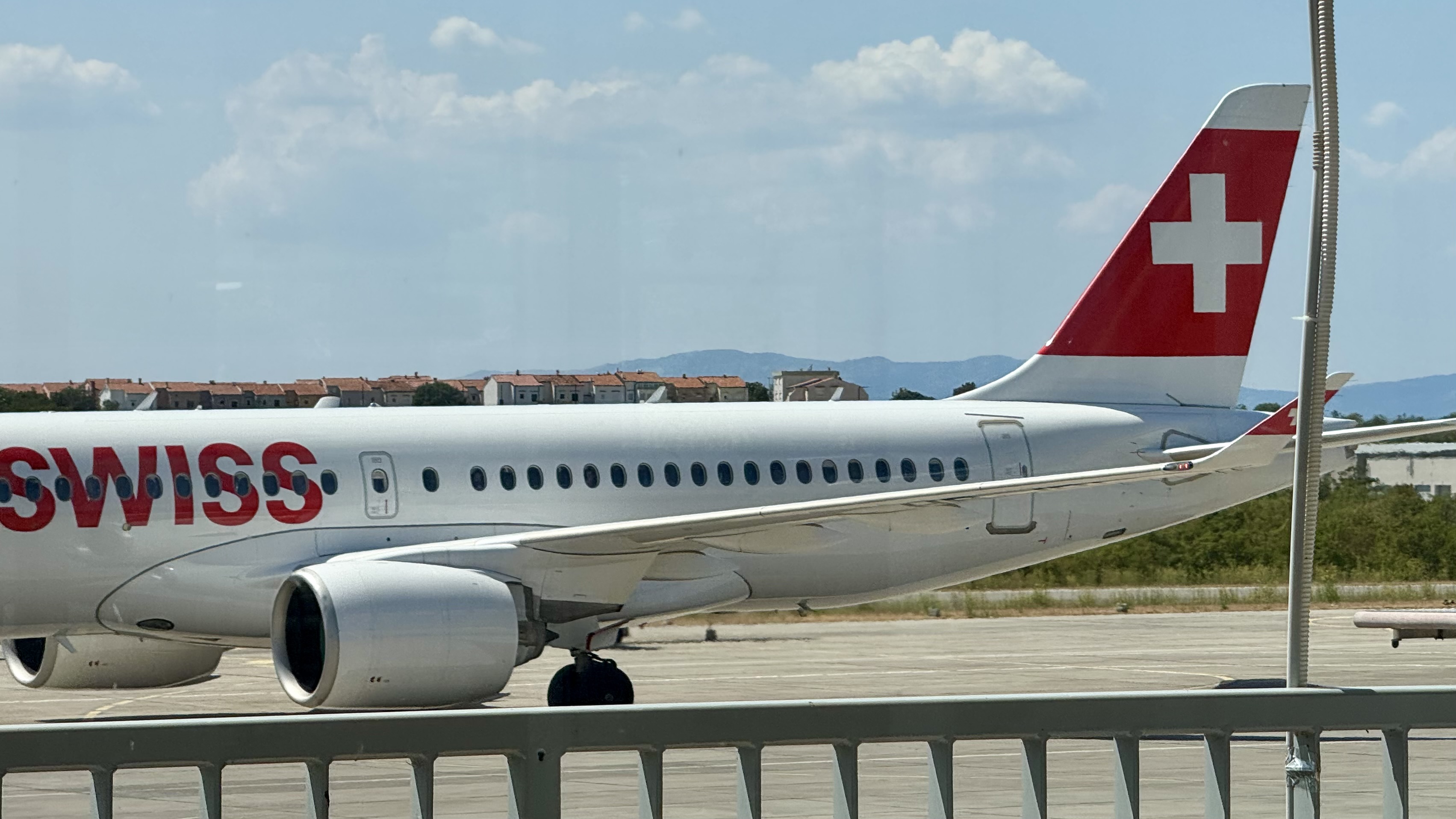
The route itself is brand new. SWISS announced it in October 2025 as part of its wider network expansion for summer 2026, alongside new destinations like Poznań. Zurich–Rijeka runs twice a week, Mondays and Fridays, and only for a short window: 29 June to 21 August 2026. Sixteen round trips in total, nothing more. It's also SWISS's first nonstop connection to the Kvarner Gulf. What struck me is that this isn't handed off to a regional partner (Helvetic) — SWISS flies it with its own Airbus A220-300 and its own crew, which makes the whole thing feel much closer to a genuine SWISS flight than a seasonal service outsourced elsewhere. Which raises the real question: why choose a legacy airline for a route like this, when low-cost carriers are usually so dominant in holiday markets? That's really what this trip was about for me.
On the ground: very much a holiday airport
Rijeka Airport is small. Very small. When I arrived there was one main check-in area, shared that day with Eurowings and Ryanair, while Wizz Air also serves the airport. The SWISS counters were easy enough to spot, and there was a priority counter too — though actually reaching it through the crowd was sometimes a bit of a mission. The staff were young and clearly seasonal. A few procedures didn't seem fully second nature yet, but everyone was friendly and the mood was relaxed. Security, on the other hand, was a completely different story — easily the worst part of the whole departure experience. I waited around 45 minutes, with no priority lane available for passengers who'd normally have access to one. As a Lufthansa Senator flying on a SWISS ticket, that's something I noticed immediately. The airport and boarding: summer mode
The terminal itself is, let's be honest, pretty dated. There's a small dive bar — not a joke — and a duty-free shop selling local products. Once the summer crowds show up, everything feels a little improvised, boarding area included. There's no lounge, which isn't surprising given the airport's size. What did surprise me was that no voucher or alternative was offered to passengers who'd normally expect lounge access. Boarding followed the same pattern: no real priority groups, no announcements reflecting the usual legacy-carrier perks. Everyone boarded together. At that point, you genuinely forget you're flying a full-service airline.
Onboard: SWISS does what it needs to do
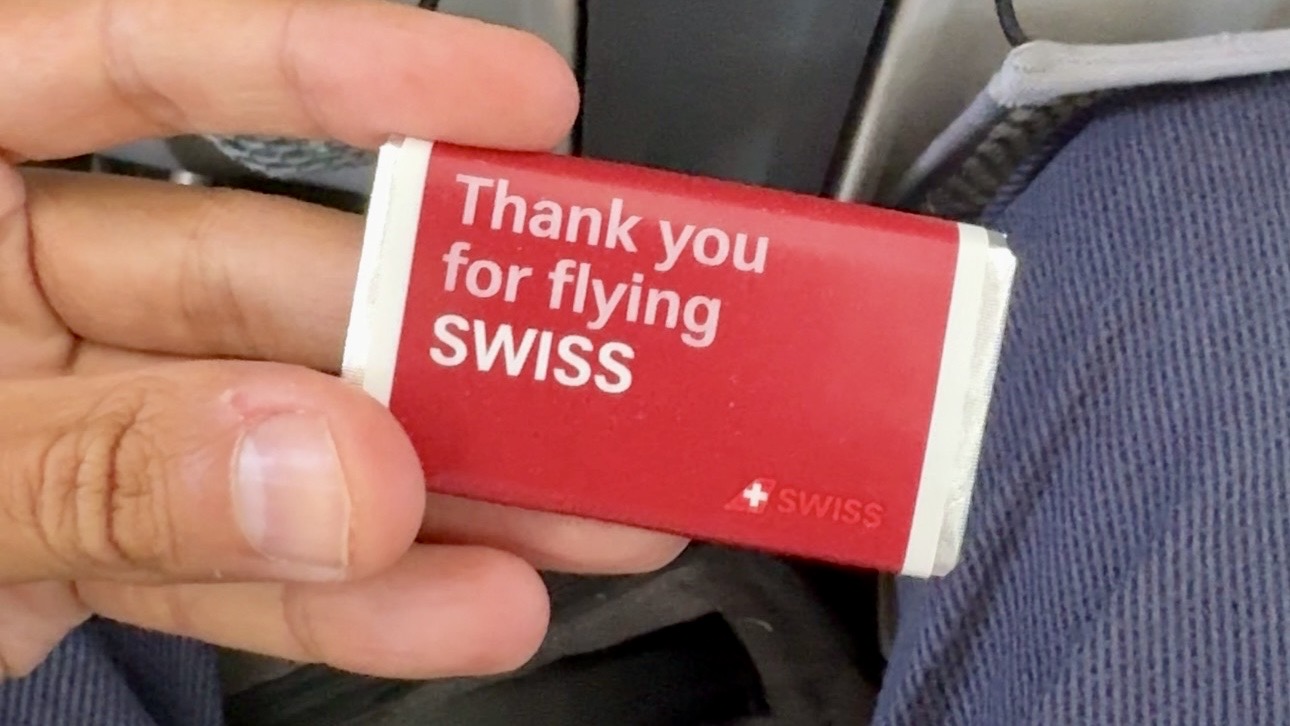
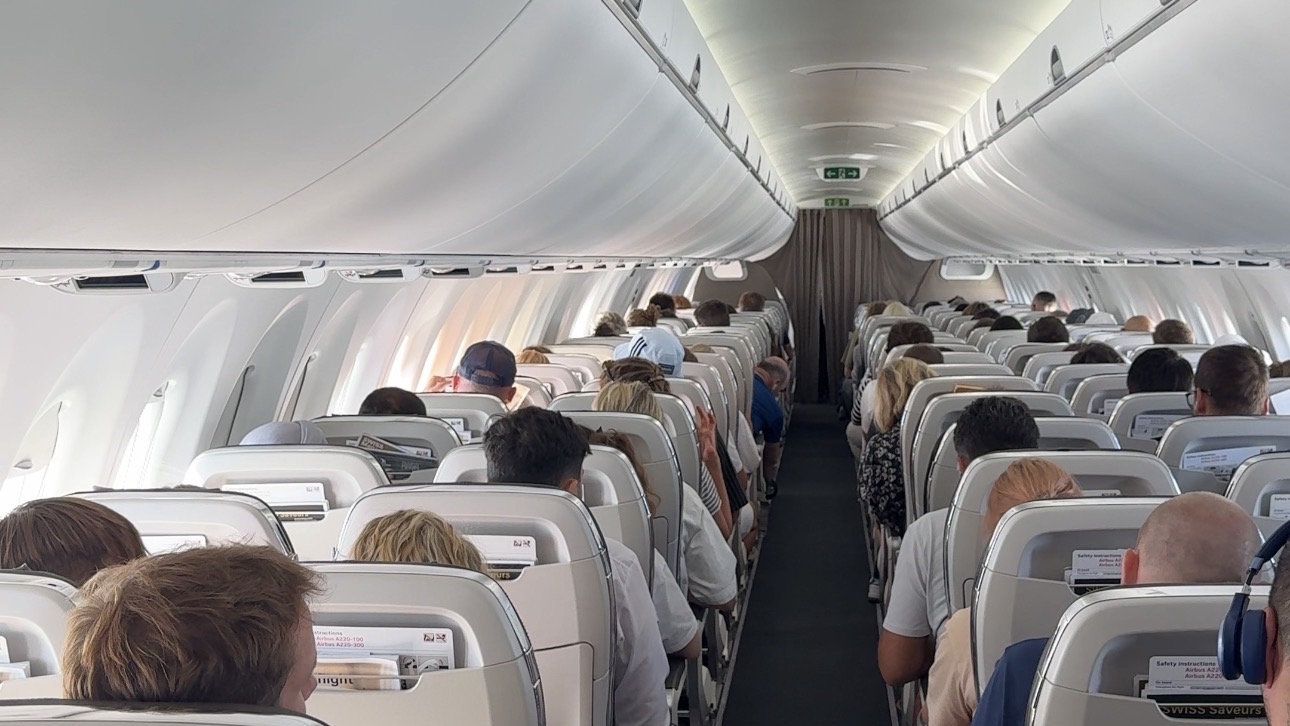
Once on board, things felt more familiar again. The crew were pleasant and professional — nothing spectacular, but nothing to complain about either. As is usual on European SWISS flights, there was complimentary water and chocolate, with the option to buy more through the SWISS Saveurs range. The A220 is probably the biggest advantage of this particular flight. It's quiet, modern, comfortable — noticeably better than the regional jets or older narrowbodies you sometimes get on short European routes. A few passengers were connecting onward from Zurich and needed some assistance; the crew went to check on them directly without being asked, which I appreciated. Small detail, but it reminded me this wasn't just another holiday-charter-style operation — the flight feeds into a proper hub, and the crew are genuinely SWISS crew.
So, is it worth it?
I wasn't expecting miracles from a twice-weekly flight running eight weeks between a major European hub and a small summer airport. The main advantage here is practicality: you get to Rijeka and the coast arround quickly, on a modern aircraft, with a proper SWISS crew and the option of connecting onward through Zurich to the world. The experience on the ground tells a different story, though. If you're a business or premium traveller used to what you'd normally get at major airports, you need to adjust your expectations here. You can pay a full-service fare and still end up standing in a 45-minute security queue, with no lounge, no priority boarding, and little of the usual recognition of your status. Personally, I think this is where SWISS could have done a bit more — it wouldn't take much. Even a simple gesture, like a voucher or clearer handling of premium passengers, would make a real difference. There's another side to it, though. In my case, the fare made a lot of sense. I booked the flight as part of a connection through Zurich, continuing on to Lisbon, and the one-way ticket was roughly half the price I'd normally expect — though bags weren't included. Was SWISS simply trying to fill the flight, making the overall connection more attractive in the process? That's my guess, anyway.
Rijeka isn't necessarily an exception
SWISS isn't alone in doing this. Legacy carriers across Europe are increasingly adding short seasonal routes to destinations traditionally dominated by low-cost airlines. Austrian Airlines has done something similar out of Vienna this summer, with seasonal services to places like Ohrid and Bastia. KLM leans on wet-lease partners for some secondary routes, while British Airways runs seasonal services to destinations such as Dubrovnik and Split. The approach varies, but the logic is the same: try a route over summer, see if there's real demand, and decide later what to do with it. For passengers, the word "seasonal" is worth keeping in mind. You might get the same aircraft, the same crew, and the same frequent-flyer programme as on a normal legacy-carrier flight — but don't necessarily expect the same experience on the ground. That's probably the biggest lesson I took from Rijeka : the flight itself was completely normal. It was the airport experience where the difference really showed. Would I fly SWISS from Rijeka again? Probably, especially if the price is right. Would I expect the same premium experience I'd get at a major capital-city airport ? Not for a second. Have you ever flown one of these temporary summer routes with a legacy carrier — and did it actually feel different from flying a low-cost airline?
See you soon, Antoine