

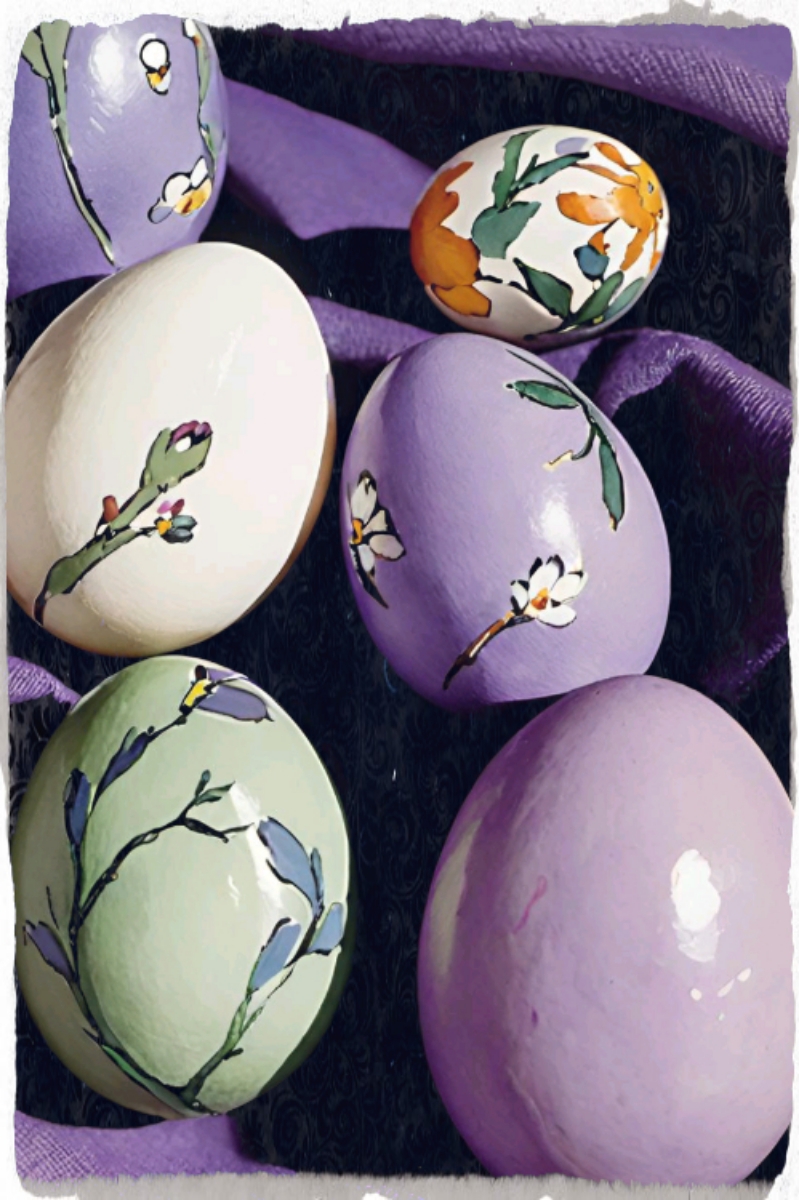
The egg is one of the most universal symbols in human history. Across cultures and time, it has represented life, fertility, and magic. Its simple yet profound shape holds a deeper meaning: the potential for creation, renewal, and transformation. While many of us associate eggs with springtime and celebrations like Easter, their significance stretches far beyond a single season. From ancient myths to modern superstitions, the egg has woven itself into the fabric of human storytelling.
Let’s start with creation myths. In many cultures, the egg is the starting point of everything. In Chinese folklore, the universe began as an egg. A deity named Pan Gu formed inside it, and when he grew too large, the egg cracked open. The top half became the sky, and the bottom half became the earth. As Pan Gu grew, the distance between sky and earth increased, creating the world as we know it. Similarly, in some Native American traditions, the universe was born from a giant egg. In the Pacific Northwest, there are tales of “thunder eggs”—geodes thrown by mountain spirits—that symbolize the power of creation.
Eggs also play a central role in fertility rituals and spring celebrations. In Persia, painting eggs has been part of the spring festival of No Ruz for thousands of years. Families place colored eggs on their dinner tables, and mothers eat one egg for each child they have, symbolizing life and continuity. In Ukraine, the tradition of pysanka eggs dates back to pre-Christian times. These intricately decorated eggs were originally made to honor the sun god Dazhboh, but when Christianity arrived, the tradition adapted to celebrate the resurrection of Christ. The designs on the eggs, often geometric or floral, are said to carry protective and magical properties.
The connection between eggs and fertility is perhaps most famously illustrated by the Easter bunny. This character, which first appeared in 16th-century German folklore, was said to reward well-behaved children with colored eggs. German immigrants brought the tradition to America in the 18th century, where it became a staple of Easter celebrations. But why a rabbit? Rabbits are known for their rapid reproduction, making them a natural symbol of fertility. The idea of a rabbit delivering eggs might seem odd, but it perfectly captures the themes of life and renewal that define the season.
Eggs also appear in Christian legends. In Greek Orthodox tradition, there’s a story about Mary Magdalene visiting the Roman emperor after Christ’s resurrection. When she told him about Jesus rising from the dead, the emperor scoffed, saying it was as likely as the eggs on his table turning red. To his astonishment, the eggs did turn red, and Mary Magdalene used this miracle to spread the message of Christianity. This story is often linked to the tradition of dyeing Easter eggs red, symbolizing the blood of Christ and the promise of new life.
Beyond myths and rituals, eggs feature prominently in folklore and superstitions. In England, there’s a charming tale for young women seeking love. On a stormy night, a girl is told to place an egg near the fire. As the wind howls, the man she is destined to marry will walk through the door and pick up the egg. A similar story from the Ozarks involves a girl boiling an egg, removing the yolk, and filling it with salt. If she eats the egg before bed, she will dream of the man who will bring her water—her future husband.
Sailors, too, had their own egg-related superstitions. It was believed that after eating a boiled egg, one should always crush the shell. Failure to do so could allow evil spirits or witches to use the shell as a boat, sailing the seas and causing havoc. This belief highlights the idea that even the smallest part of an egg could hold magical power.
In American folk magic, eggs were often used in agricultural practices. Farmers believed that setting eggs under broody hens during a full moon would ensure a successful hatch. Carrying eggs in a woman’s bonnet was said to produce the best pullets, while keeping them in a man’s hat would result in roosters. Even the eggs of specific birds were thought to have special properties. For example, scrambled owl eggs were considered a cure for alcoholism, while dirt from under a mockingbird’s egg could soothe a sore throat. In Appalachian folklore, tossing a small egg onto the roof was believed to “appease the witches,” and spotting blood on an eggshell burned on May Day was seen as an omen of death.
The egg’s symbolism is as varied as the cultures that cherish it. It represents the cycle of life, the promise of renewal, and the mysteries of creation. Whether it’s a cosmic egg cracking open to form the universe, a brightly decorated pysanka egg protecting a household, or a simple boiled egg revealing a future spouse, the egg continues to captivate our imagination. Its magic lies in its simplicity—a perfect, self-contained symbol of life’s endless potential.
Sonja