

Yesterday, my older daughter asked if we could light the candle she had received from school. So we switched off the dining room lights and had dinner by candlelight. As the small flame flickered on the table, I explained that this was what life was like before electricity. Once the sun went down, people depended on candles and oil lamps to see.
For a brief moment, I felt like a wise father giving my children an important history lesson. My two year old daughter was not impressed. She became upset because she could not see the food on her plate. Eventually, we switched the lights back on, the whole room became bright again, and dinner continued peacefully. Thank God for modern inventions :P
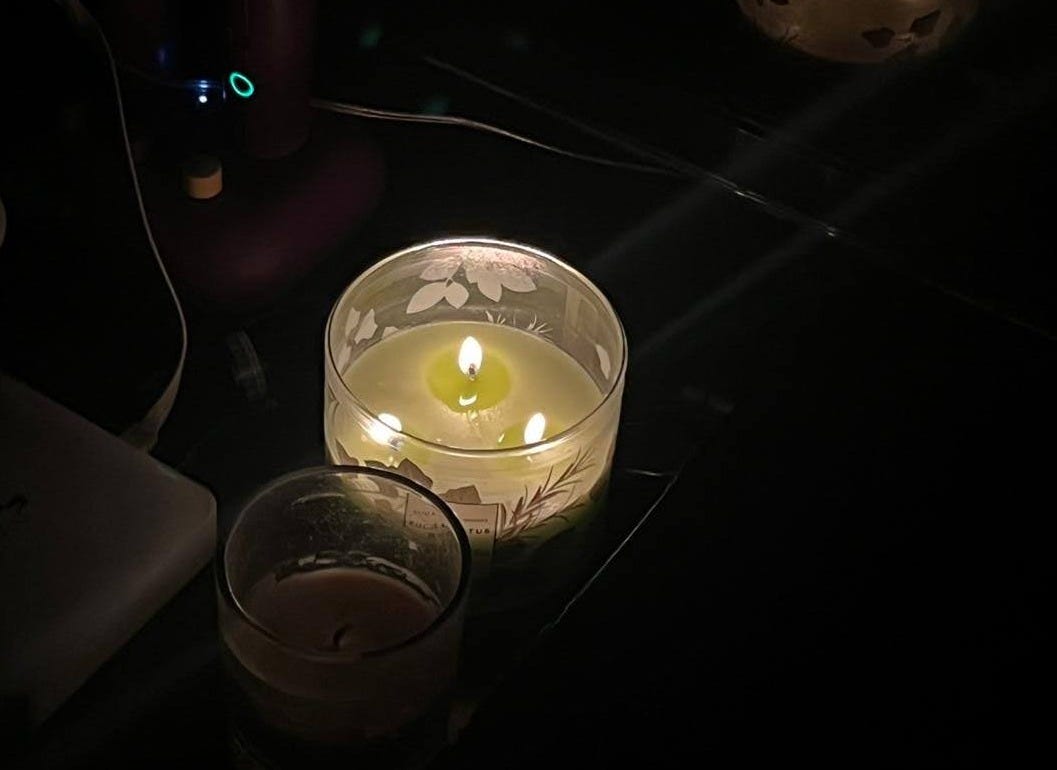 (wait.. I didn't know I can insert a photo until today ... -_-)
But that small moment made me think about how difficult it is to ask for something when we do not yet have the words for it. Before the light bulb existed, someone who wanted a brighter room could only ask for a brighter candle. If all someone had ever known was travelling by horse, perhaps the best they could ask for was a faster horse.
Watching my younger daughter struggle in the dim light, I realised this was not only about inventions. She did not calmly explain, “Daddy, the candle is not producing enough light for me to see my food.” She simply became upset. Because she is two, we naturally try to look beyond her reaction and understand what she is trying to tell us.
But somehow, we become less patient when adults struggle to express themselves. We assume they should already know what they feel, what they need, and how to explain it clearly. Yet adults also experience fears, hopes, and needs that they do not have the right words for. Sometimes, even they are still trying to understand what is happening inside them.
Many misunderstandings begin when we respond too quickly to someone’s words without listening for what might be underneath them. We correct their wording, dismiss their idea, or become impatient with their explanation. But perhaps they are asking for a light bulb using the only language they have... the language of candles.
Maybe patience is giving someone space to search for the right words. It is listening for the desire behind an imperfect request and asking one more question before making a judgment. We should not expect one incomplete sentence to light up the entire room.
Once the lights were back on and my younger daughter could see her food again, she finally noticed the candle itself. She watched the little flame dancing on the table, leaned forward, and blew it out as if it were a candle on her birthday cake.
The flame disappeared, and a thin trail of smoke rose into the brightly lit room. A few minutes earlier, the candle had frustrated her because it could not give enough light. But now that the room was bright, she could finally see its beauty.