

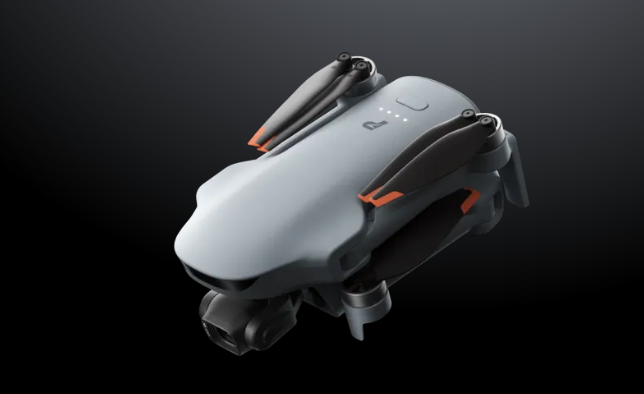
There is a particular kind of buyer who has been waiting for this drone. They like the idea of the DJI Mini series. They just do not love the price, or they live in a market where the newest Mini models are harder to buy cleanly. For those pilots, the Potensic Atom 3 is not just another budget option. It is the first time in a while that a non-DJI sub-250 g camera drone feels like a genuine alternative rather than a compromise you have to apologise for.
That does not mean it is better. It means the gap has narrowed enough that the choice now requires actual thought.
Key Specifications (Manufacturer Data)
Aircraft
• Takeoff weight: under 249 g (including original intelligent battery, propellers, and MicroSD card)
• Folded size: 148 × 91 × 62 mm
• Unfolded size (with propellers): 343 × 266 × 63 mm
• Max horizontal speed (Sport Mode): 16 m/s
• Max wind resistance: 10.7 m/s (Level 5)
• Max flight time: 40 minutes (Smart Battery) / 50 minutes (Smart Battery Plus) — measured at 5 m/s in low-altitude, windless conditions
• Max hovering time: 34 / 45 minutes
• Max takeoff altitude: 5,000 m (standard) / 4,000 m (Plus)
• GNSS: GPS + GLONASS + Galileo + BeiDou
• Operating temperature: 0° to 40°C
• Class: C0 (EU)
Camera
• Image sensor: 1/1.3-inch CMOS, 50 MP effective pixels
• Aperture: f/2.8; FOV 84°; equivalent focal length ≈24 mm
• Focus: 2 m to ∞
• Video: 4K 3840×2160 up to 60 fps; 2.7K and FHD options; vertical (9:16) supported
• Photo: up to 50 MP (JPG / JPG+RAW)
• Colour modes: HDR, P-Log
• Digital zoom: up to 2–4× depending on resolution
• Med-Tele mode available
• Lens tilt range: –90° to +30°
Transmission & Intelligent Features
• Video transmission: PixSync 5.0, up to 16 km (manufacturer figure under ideal FCC-style conditions)
• Live view: 1080p/60 fps
• AI Tracking 2.0 (Spotlight, Follow, Parallel)
• AI QuickShots: Pull-away, Spiral, Rocket, Circle, Boomerang, Dolly Zoom, Drift
• Downward vision system for positioning (no full omnidirectional obstacle avoidance suite)
Why This Drone Matters Right Now
The Atom 3 arrives at a moment when the sub-250 g category feels both mature and strangely constrained. DJI still sets the pace on sensing, ecosystem polish, and low-light refinement. But the Atom 3’s 1/1.3-inch sensor, 4K/60 fps capability, and claimed 40–50 minute flight times give it enough imaging and endurance authority that many pilots will stop and compare rather than automatically default to the Mini line.
That is the real achievement here. Not that it beats the Mini 5 Pro across the board — it does not — but that it makes the conversation honest again. You are no longer choosing between a proper camera drone and a toy that happens to fly.
The Camera: Where the Excitement Lives
A 1/1.3-inch 50 MP sensor in this weight class is still a serious statement. Paired with 4K/60 fps, P-Log, and a usable med-tele mode, the Atom 3 gives creators room to work. Vertical shooting is present for social-first workflows. The numbers on paper are competitive enough that the question shifts from “can it deliver usable footage?” to “how does it behave when the light gets difficult or the subject starts moving?”
This is where the emotional split appears. If your flying is mostly daylight landscapes, travel, and controlled tracking, the Atom 3 can feel surprisingly capable for the money. If you regularly chase golden hour into blue hour or need the most confident night obstacle behaviour, the larger sensor on the Mini 5 Pro and its more complete sensing suite still carry weight.
Flight Character and the Sensing Gap
Potensic rates the Atom 3 at up to 40 minutes on the standard battery and 50 minutes on the Plus version under laboratory conditions. Wind resistance is listed at 10.7 m/s. These are respectable figures for the class. In practice, pilots should treat them as best-case ceilings rather than everyday expectations — the same discipline required with every manufacturer’s published endurance numbers.
The more consequential limitation is sensing. The Atom 3 relies on a downward vision system for positioning. It does not offer the full omnidirectional obstacle sensing package that higher-end DJI Minis now treat as standard. For open fields and careful pilots this is manageable. For tighter environments, trees, or less experienced operators, it is a real difference in how forgiving the aircraft feels. This is not a hidden flaw; it is a design trade-off that shows up in the price and should be weighed honestly.
What Customers Are Actually Saying
Early and ongoing customer feedback on the Atom 3 and its Fly More-style bundles tends to cluster around strong value and image quality for the asking price. Many reviewers who have flown previous Atom models describe a clear step up in sensor performance, flight time, and overall maturity. Praise frequently lands on the camera, stability in moderate conditions, and the sense that the package punches above its cost.
The recurring notes of caution are consistent with the specification sheet: the absence of comprehensive obstacle avoidance, real-world battery life that varies with conditions, and occasional mentions of support or accessory friction. None of these are surprising. They are the exact points a careful buyer should pressure-test against their own flying style.
Who Should Buy It — and Who Should Keep Looking
Buy the Atom 3 if you want a modern sub-250 g camera drone with a genuinely competitive sensor and solid endurance numbers, and you are willing to fly with more active awareness of your surroundings. It is especially compelling for travellers, content creators on a tighter budget, and pilots who prioritise image quality per dollar over the most polished sensing suite.
Look elsewhere if obstacle avoidance is non-negotiable for the environments you fly in, if you need the most refined low-light and tracking behaviour currently available in the class, or if ecosystem polish and long-term accessory support sit high on your list. In those cases the Mini 5 Pro (or its nearest available equivalent) remains the safer emotional and practical bet.
Verdict
The Potensic Atom 3 does not dethrone the best DJI Mini models. What it does is something almost as useful: it restores meaningful choice. For the first time in a while, a pilot can look at a non-DJI sub-250 g drone and feel that the decision is about priorities rather than settling.
If your priority is maximum sensing confidence and the most complete mini-drone experience, the premium still points toward DJI. If your priority is strong imaging, usable endurance, and a price that leaves room to buy batteries and filters without wincing, the Atom 3 earns a serious look. It is not perfect. It is, however, honest about what it is — and that honesty is rare enough in this category to matter.