
 Florida’s New Immigration Services Law
Effective July 1, 2025, Florida notaries must comply with new rules on how immigration-related services are advertised and described. This law (House Bill 915 / Senate Bill 846) was passed to protect immigrant communities from misleading claims and to clarify the limited role of notaries when it comes to immigration documents.
If you are a Florida notary who works with diverse communities, this law directly affects how you market your services. Here’s a breakdown of what’s changing, what’s prohibited, and how to stay compliant.
Why Florida Passed This Law
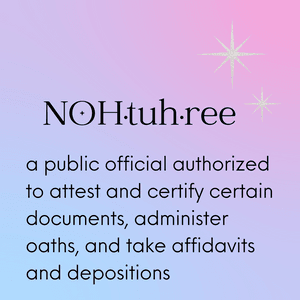
Across many Latin American and European countries, the term “notario” or “notario público” refers to an attorney or legal expert with specialized training. In the U.S., however, a notary public’s authority is much more limited: verifying identities, witnessing signatures, and administering oaths.
Unfortunately, some notaries in Florida have advertised themselves using terms like “notario” or “immigration consultant,” leading immigrants to mistakenly believe they were dealing with licensed attorneys. This practice, often called notario fraud, has harmed vulnerable families who trusted unqualified providers with sensitive immigration matters.
The new law is designed to stop this confusion and ensure that only licensed attorneys or accredited representatives can provide immigration legal services.
Key Changes in the Law
1. Restricted Terms in Advertising
Non-attorney notaries may not use certain words or phrases in advertising, regardless of the language used. These include:
Notario público
Notario
Immigration consultant
Immigration specialist
Immigration assistant
Any other term suggesting legal authority in immigration matters
2. Required Disclaimer for Non-English Advertising
If you advertise in any language other than English—whether it’s Spanish, Haitian Creole, Portuguese, or another language—you must include a clear and conspicuous disclaimer in both English and the non-English language.
The disclaimer must state:
“I am not an attorney licensed to practice law in the State of Florida, and I may not give legal advice or accept fees for legal advice. I am not accredited to represent you in immigration matters.”
This disclaimer cannot be hidden in fine print. It must be visible and easy for the public to understand.
3. Unauthorized Practice of Law Still Prohibited
Even with proper disclaimers, notaries who are not attorneys or accredited representatives cannot:
Provide legal advice about immigration forms
Recommend what forms to use
Represent clients in immigration court or with federal agencies
Charge fees for immigration-related legal services
Your role remains limited to properly notarizing signatures and following Florida notary law.
What Notaries Should Do Now
To stay compliant, Florida notaries should:
Audit Your Materials
Review all business cards, flyers, websites, office signage, and social media pages. Remove any restricted terms immediately.Update Your Advertising
If you advertise in a language other than English, add the required disclaimer in both languages. Use clear, easy-to-read formatting so there’s no confusion.Educate Your Customers
Many customers may not understand the difference between a notary and an attorney. Be upfront about your role. If asked for legal advice, politely explain your limitations and refer them to a licensed immigration attorney or accredited representative.Document Compliance
Keep copies of your disclaimers, updated marketing materials, and records of any changes you’ve made. If a complaint arises, having this documentation shows you took proactive steps to comply.
Be Careful with Training Programs
As this law takes effect, notaries should also be mindful of the training programs and courses being marketed online.
Some companies advertise classes with titles like “Immigration Forms Specialist” or “Notary Immigration Specialist.” These titles are misleading because they suggest a notary can legally act as an immigration consultant, which is not true under Florida law.
While it may sound like a way to expand your services, completing these courses does not authorize you to:
Give immigration legal advice
Select or prepare forms on behalf of customers
Represent customers before immigration agencies
Taking one of these courses may provide general knowledge about immigration documents, but it does not change your legal authority as a Florida notary. Worse, advertising yourself using those titles could violate the new law and expose you to lawsuits or disciplinary action.
Bottom line: If you are not an attorney or an accredited representative, avoid any training or marketing that positions you as an “immigration specialist.” Protect your commission and your reputation by sticking to what notaries are legally allowed to do.
Penalties for Violating the Law
Failure to follow this law carries serious consequences. Possible outcomes include:
Civil lawsuits from harmed individuals
Injunctions (court orders stopping your advertising practices)
Damages and attorney’s fees awarded to the injured party
Suspension or loss of your notary commission
The cost of non-compliance—both financial and reputational—far outweighs the effort of updating your business practices now.
Why This Law Matters for Your Business
At first glance, these restrictions may seem burdensome. But in reality, they help notaries protect their clients and strengthen trust in their services.
Immigrants often rely on notaries for important document support. By clearly communicating your limitations, you build transparency and credibility. Customers will appreciate your honesty, and you’ll avoid misunderstandings that could damage your reputation.
Frequently Asked Questions
Q: What counts as “advertising in a language other than English”?
A: Any form of promotion—business cards, signs, websites, social media, radio ads, flyers—if it uses another language, it must include the disclaimer.
Q: What does “conspicuous” mean for the disclaimer?
A: The disclaimer should be clear, readable, and easy to spot. Avoid tiny fonts or burying it in long text.
Q: Can I still help someone fill out an immigration form?
A: You may only write information exactly as the customer instructs you, without offering guidance or advice. For example, you can type what the customer tells you, but you cannot suggest what to put on the form.
Q: What should I do if a customer asks me for legal advice?
A: Politely decline and explain that you are not an attorney. Provide referrals to licensed attorneys or trusted legal aid organizations.
Q: What if I am an attorney as well as a notary?
A: If you are licensed to practice law in Florida (or accredited to handle immigration matters), you may provide immigration services—but you must represent yourself as an attorney, not just a notary.
Final Thought
Florida’s new immigration services law is a reminder that our words matter. The way notaries present their services—especially in immigrant communities—can mean the difference between trust and misunderstanding.
Effective July 1, 2025, your business cards, signage, and online presence should be compliant. Add the required disclaimers, remove restricted terms, and be clear about your role.
Doing so not only keeps you on the right side of the law but also shows your clients that you value honesty, transparency, and their best interests.
✅ Action Step for Notaries: Review your marketing materials this week. If you find restricted terms, misleading titles, or missing disclaimers, make the changes now!
Still need clarification?
#Immigration #NotaryServices #ImmigrationFormsSpecialist #FloridaNotary #NotarioFraud #Notario #ImmigrationConsultant #NotarioPublico