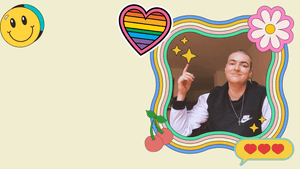

In 2024, I was diagnosed with ADHD at 30 years old. I felt validation, anger, sadness, and relief all at once.
I already had some understanding of ADHD—someone close to me had the diagnosis growing up—but I didn’t realize how vastly different the experience can be from person to person. That difference is exactly why so many people, like me, receive a late diagnosis.
In true Autistic fashion, I deep-dived into everything I could find about ADHD and how it shows up differently in people—especially for those AFAB (assigned female at birth), are a Person of Color (POC), and/or diagnosed Autistic. My symptoms had always been there, but socialization, masking, and lack of support made them harder to recognize.
As I researched and reflected, I began to understand just how disabling ADHD can be—and how taboo it still is to ask for help.
Historically, a mental health diagnosis could be life-altering in all the wrong ways. And with today’s political climate—where RFK Jr., the current HHS secretary, has made statements about sending people using psychiatric meds, like stimulants, to “wellness farms”—I felt an urgent need to share accurate, compassionate, and lived-in information.
✨ What Is ADHD?
ADHD = Attention Deficit Hyperactivity Disorder
But that name is outdated and misleading. Some, myself included, prefer the term VAST (Variable Attention Stimuli Trait) to better reflect the condition’s complexity.
ADHD isn't about being lazy, hyper, or seeking attention. It’s about your brain functioning differently—especially when it comes to:
Focus
Motivation
Impulsivity
Energy regulation
⚡ ADHD Brains Run on Dopamine
The “deficit” in ADHD refers to a dopamine deficiency, which means our brains often seek out things that increase dopamine just to function “normally.” Research has found that having multiple genes that struggle to function can cause poor dopamine production, resulting in ADHD symptoms.
We are not motivated by:
🚫 Importance
🚫 Guilt
🚫 Deadlines (unless they’re super last-minute)
We are motivated by:
✅ Interest
✅ Novelty
✅ Challenge
✅ Urgency
🧩 ADHD + Autism = A Unique Experience
When you’re both ADHD and Autistic, your symptoms can show up differently:
Easily distracted? → Could actually be sensory overload
Forgetful? → Routines breaking may cause distress
Hyperactive? → Your body wants to move, but your mind craves calm
Impulsive? → You might blurt out facts about your special interest
Hyperfocused? → You get stuck in a task... even if you're starving
You’re not “too much.”
Your brain is working really freaking hard, be kind to yourself and others.
🚧 Common Struggles (Not Failures!) + ADHD-Friendly Strategies
💥 Executive Dysfunction
“I want to do it… but I just can’t.”
Break tasks into tiny steps
Use short timers or body-doubling (in-person, FaceTime, YouTube)
🌀 Time Blindness
“I thought 5 minutes passed. It was 2 hours.”
Try visual timers (YouTube has great ones)
Set alarms and reminders
🔥 Emotional Whiplash
Your feelings hit hard.
Create a cool-down space where you feel safe
Use tools like a feelings wheel if you struggle with alexithymia
🧠 ADHD Is a Spectrum—and a Disability
There are 3 main subtypes of ADHD:
Predominantly Inattentive
Predominantly Hyperactive-Impulsive
Combined Type
Some professionals, like Dr. Amen, suggest up to 7 subtypes—though these aren’t universally accepted.
The DSM-5 also categorizes ADHD by severity:
Mild: Minor impact on daily life
Moderate: Clear challenges in multiple areas
Severe: Significant impairment in daily functioning
Under U.S. law (ADA & Rehab Act of 1973), ADHD is a protected disability if it severely affects your ability to work or function in public settings. This means:
➡️ You can request workplace accommodations
➡️ You may be eligible for certain support services
(Scroll down for specific ADHD resources.)
🧠✨Managing ADHD Symptoms
This one's tough—because it means trusting yourself and others, which can feel uncomfortable. But I promise: it’s worth it. So I'm not going to point and tell you do this, this, this and BOOM! ADHD managed. Instead I'm going to suggest what works for me and if it works for you, then great! If not, also great! I explain why below.
Step 1: Get to Know Your Symptoms 📝
Start noticing where you struggle. Use:
Notes app
Paper on the fridge
Voice memos
Or ask a trusted person what patterns they’ve noticed.
Step 2: Try Small Experiments 🧪
Pick one new strategy or tool. Use it for a week. Then ask:
✅ Did this make life easier? Keep it.
❌ Didn’t help? Toss it. Try another.
No shame, just learning.
Step 3: Plan for Vulnerable Moments ⏰
When I’m sick, overwhelmed, or traveling, I need more structure.
That might mean:
🍽️ Reminders to eat
🛏️ Starting my wind-down routine early
💧 Hydration checks
☎️ Asking friends for gentle nudges
Support = backup, not failure.
Step 4: Monthly or Quarterly Check-Ins 🔁
Ask yourself:
Is this still working?
Is there something I want to bring back?
❤️ You Are Not Broken
Yes, ADHD can make basic tasks difficult. That doesn't make you a failure—it makes you human in a system that wasn’t built for your brain.
You might struggle with:
Starting things
Staying organized
Doing boring tasks
Remembering steps
But you might also be:
🧠 Creative
🔎 Curious
❤️ Deeply empathetic
💡 Insightful
You are not lazy. You're navigating a neurotypical world with a neurodivergent brain.
💸 Capitalism + ADHD
A capitalist society often profits from our insecurities—selling us products to "fix" us. That messaging shows up in how we talk to ourselves and others.
But here's the truth:
ADHD may be disabling, but it does not make you less-than.
✨ Final Thought
ADHD affects every part of life: relationships, finances, emotions, health. And it still looks different across people, especially those who are AFAB, POC, or late-diagnosed.
Give yourself room to:
Learn through trial and error
Feel your emotions
Ask for help
Rest
Start over when needed
You're doing your best. That’s enough.
🧰 Resources I Use & Recommend
Virtual Workshops for Habit Support (currently running with financially accessible rates)
ADHD Friendly Planner + resources (accessible pricing options, I currently have a $36/year subscription, and last I checked a free option?)
Work Accommodations for ADHD (used as a reference when I requested accommodations)
Support Group (have not used before)
Suicide Support Hotline : call 1-800-985-5990 or text “TalkWithUs” to 66746
📣 Interested in ADHD Support Workshops?
I run virtual workshops focused on building ADHD-friendly habits, routines, and systems. These are financially accessible and designed for real-life brains.
👉 Follow me on IG @maintaining_shanity
🌐 Or visit my website for event updates!
📝 Disclaimer
This guide is based on lived experience, my psychology education, and ongoing research. I am not a licensed medical professional, and this is not diagnostic or medical advice.
Support needs vary. If you’re struggling or unsure, it’s okay to reach out to a qualified provider who understands neurodivergence.
This is just a starting point—and your experience, even if different from what’s shared here, is valid.
Let me know if you'd like this converted into:
A downloadable PDF guide
Carousel format for Instagram
An Audio version
My goal is to increase accessibility and I want to support your needs!