

Imagine it's mid-February. That $50 flashy weekly planner you bought in January sits on your desk—gorgeous cover, gilt-edged pages, and still utterly empty. It's a museum piece for intentions: habit trackers for things you never tracked, goal‑setting prompts you keep ignoring, meal planner when your weekly menu is just 'pot noodle variant of the day'.
You flip through glossy spreads and feel that small, familiar sinking: it's beautiful, but not useful. The layout is bloated—too many widgets, half a dozen sections you think you’ll use someday. The dated pages march from January 1st onward, and now you do the quick math: buy another 2026 planner now, and you’ve already lost six weeks of tracking, six weeks of missed continuity.
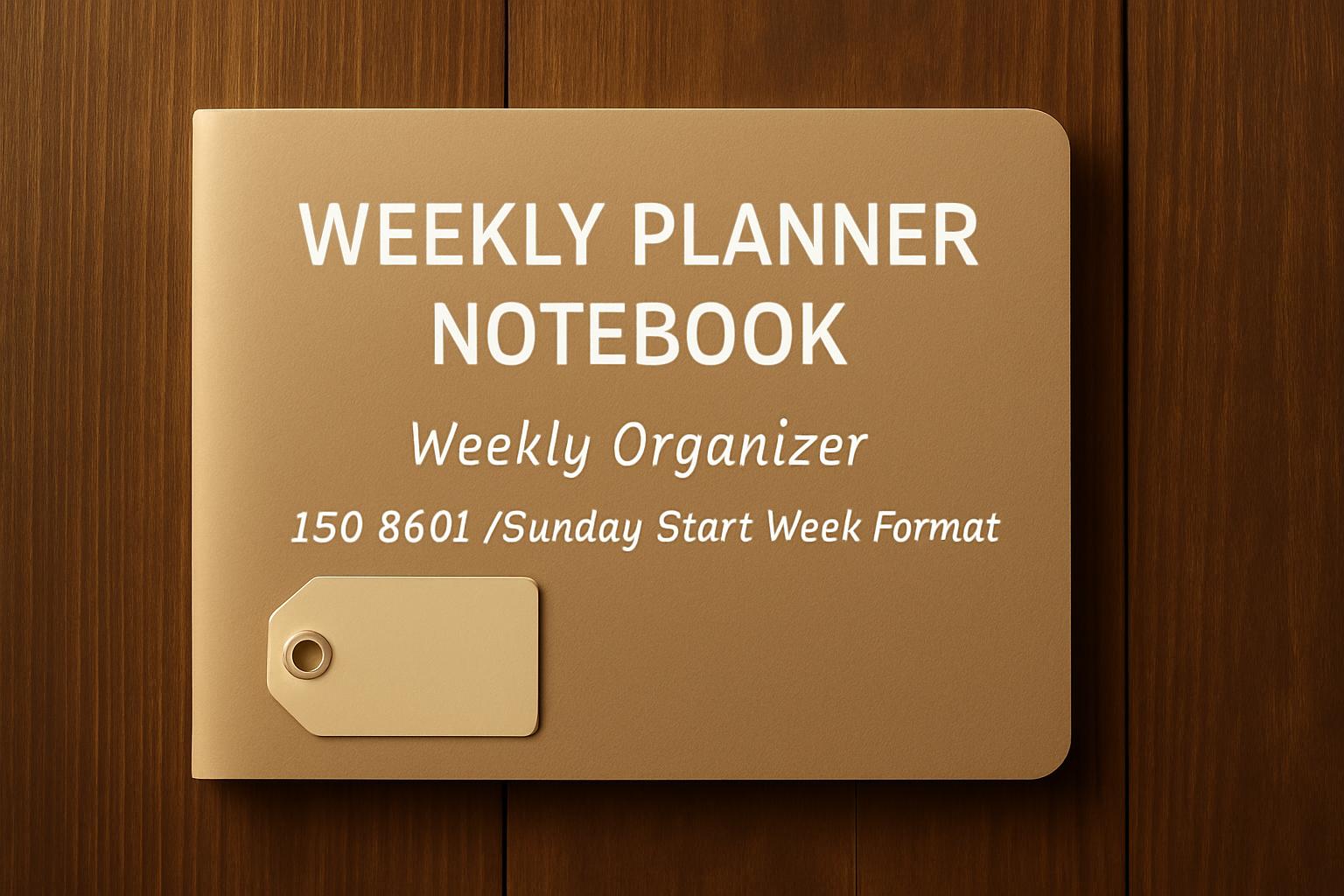 Then you stop and laugh at yourself. What you actually need isn’t another aspirational object; it’s something that meets you where you are today. So you reach for the undated weekly planner notebook (Amazon ASIN: B0FXFDJKL2)—slim, efficient, and honest. No wasted months, no forced January resets. Each spread gives you a clean week. At the top is a dedicated full-width to‑do section where you can list the big tasks, goals, or carry‑overs that matter most for the week. Below that, the main body unfolds into seven generous rows across two facing pages—one row per day in a horizontal layout. At the bottom, an end‑note section.
Best part: it accommodates how you think. Want to organize by project sprints using clean ISO 8601 week numbers? Perfect — just scan the nearby QR code to instantly pull up the current ISO week number (e.g., W07 for week 7), then jot it big and bold in the large header space at the top of the spread. Prefer a Sunday-first layout that aligns better with your family rhythm or weekend-focused routine? No problem — the same QR code scan also gives you the Sunday-start week number. No more scrambling to figure out “which week is this?”, no more guilt for “lost” weeks, no more pressure to fill every box with perfect habits. Choose whichever system feels intuitive, jot it once at the top, and proceed.
You open to the first page, write the week number, and scratch a single, honest item at the top: “Do the thing.” The rest of the planner is potential, but in a way that actually helps you use it. This time the planner works for you.
Not quite feeling that clean, minimalist weekly planner spread as your own yet? Focus on small, meaningful touches that fit how you actually live and plan.
Use washi tape in its most direct way: create a slim monthly calendar right at the top or along one edge of the spread. This lets you see the whole month at a glance, peel and reposition when the week changes, or add stickers for the same practical forward view.
For clean, consistent shapes, grab stencils, trace neat boxes for a quick priority sidebar, arrows pointing to key tasks, or simple banners over the to-dos. A few seconds per spread, and everything looks pro—without freehand wobbles or mess.
Slip in an NFC tag on the header or notes area for your quiet tech boost:. One tap pulls up your calendar app, or a forward-planning note. Invisible until you need it.
Build slowly until it mirrors your thinking; this planner adapts quietly and travels with you.
As a Temu Affiliate I earn from qualifying purchase