

Did you know that there are 3 different ways to play B-flat on flute? This is more than just a fun fact - as you advance in your playing, it's helpful to have some alternative fingerings in your tool belt. That way, you have options for smoother transitions between notes when you're playing more complicated passages. Here's a breakdown of each fingering and what I recommend them for!
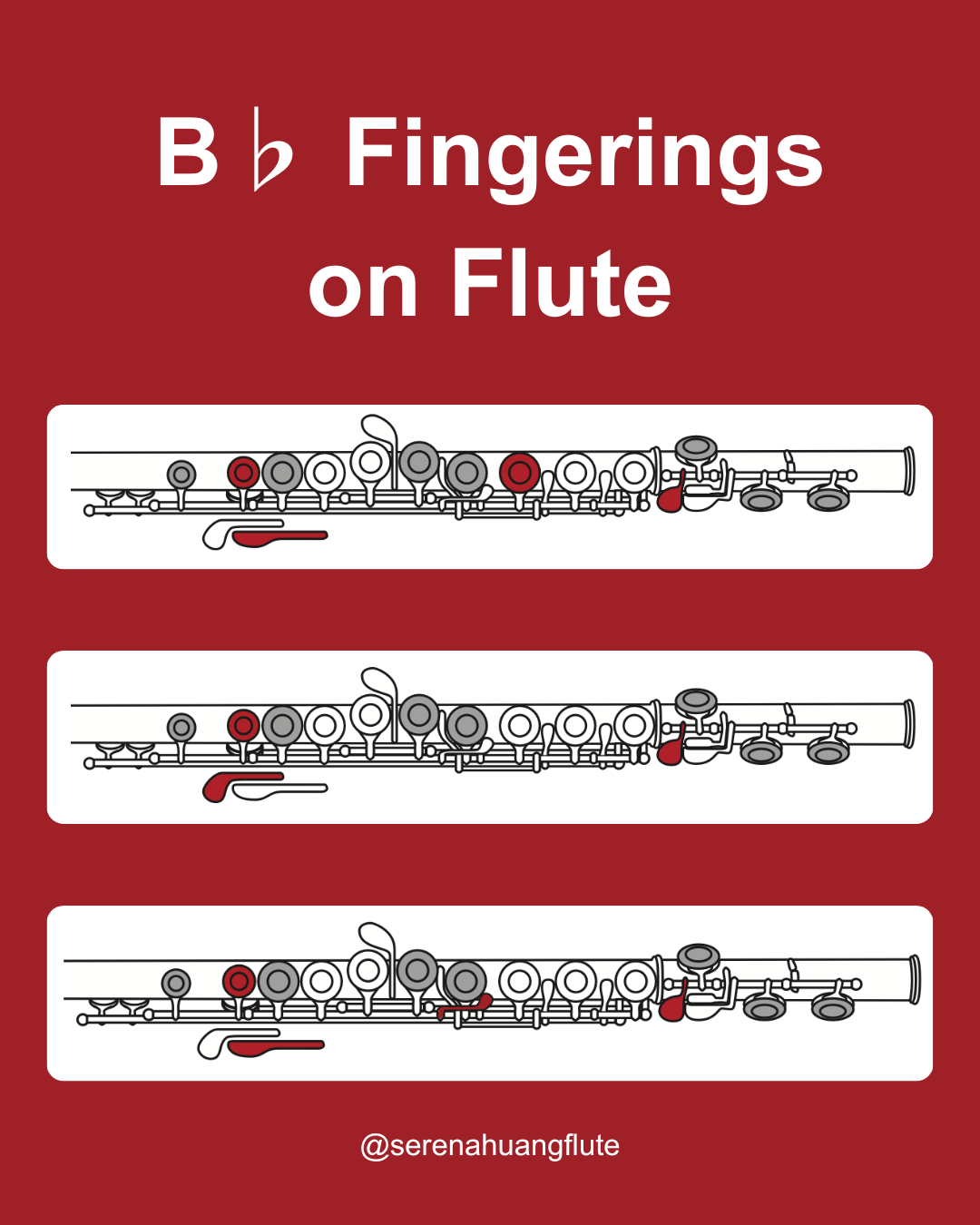 1. Pointer B-Flat
This is most likely the first fingering you learned, and it works well in most situations. However, if you find yourself playing fast passages with a lot of B-flats, you might save yourself a little bit of trouble by using the next option (thumb B-flat)
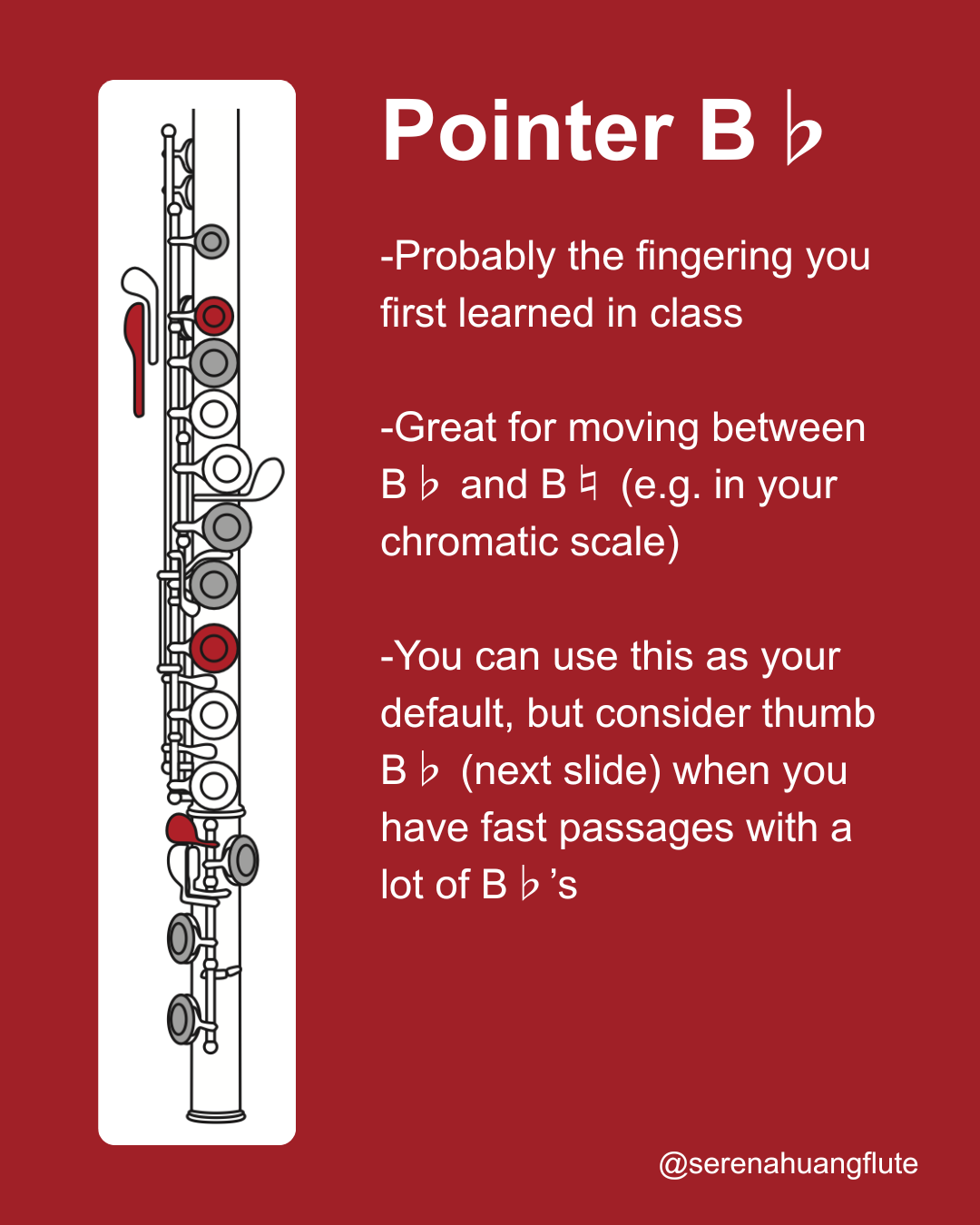 2. Thumb B-Flat
This is the one I use most frequently, and it's particularly helpful when you're playing something with B-Flat in the key signature. Be careful though - your high F-Sharp won't sound right if you leave your thumb on the B-Flat key for that note. It can be tricky to think about sliding your thumb on and off the B-Flat at first, but it becomes a habit pretty quickly!
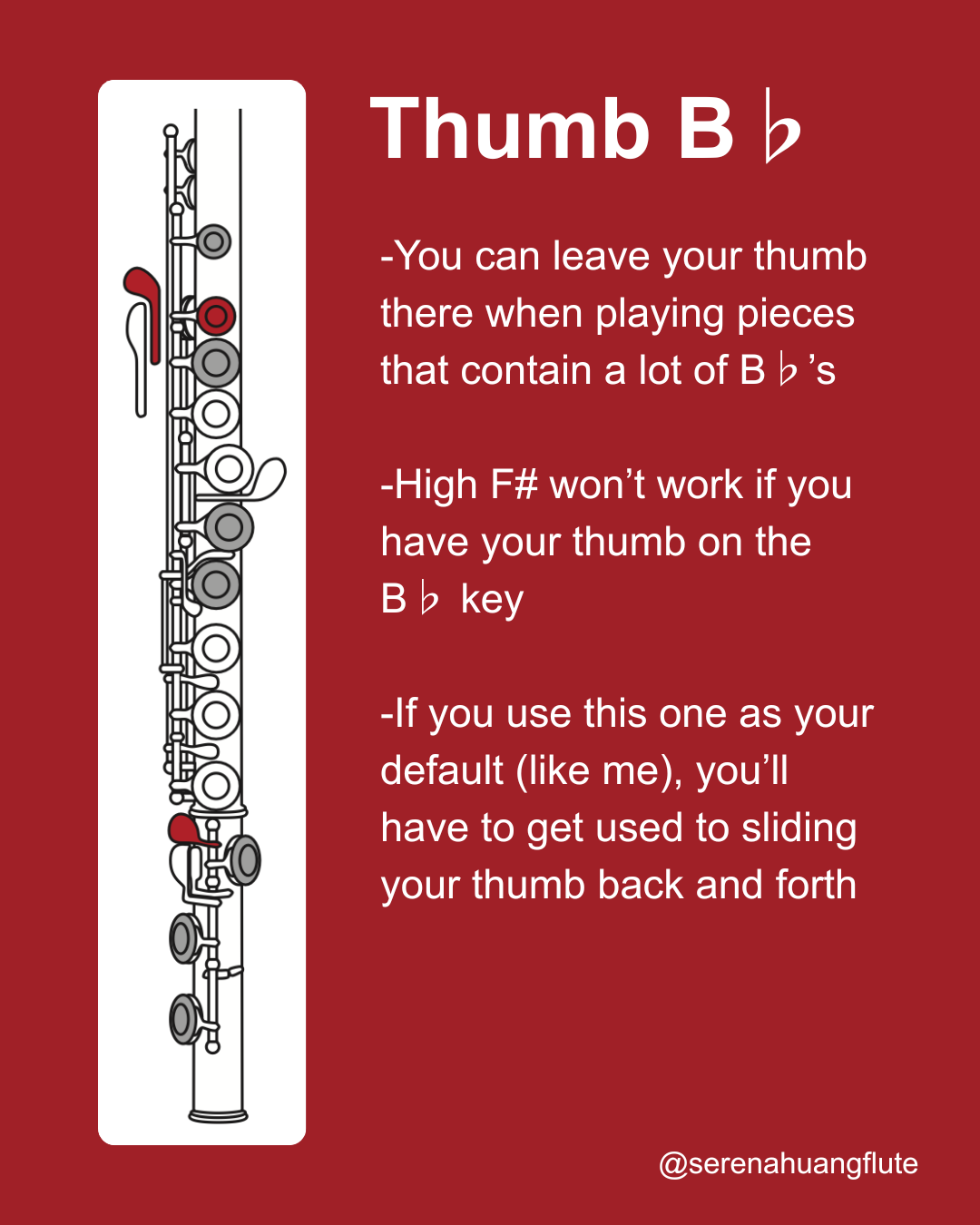 3. Lever B-Flat
This one is the one I use the least, but some flutists swear by it! The lever feels a bit lighter than your pointer key, so it can be nice for trills or when you're moving quickly past the B-Flat.
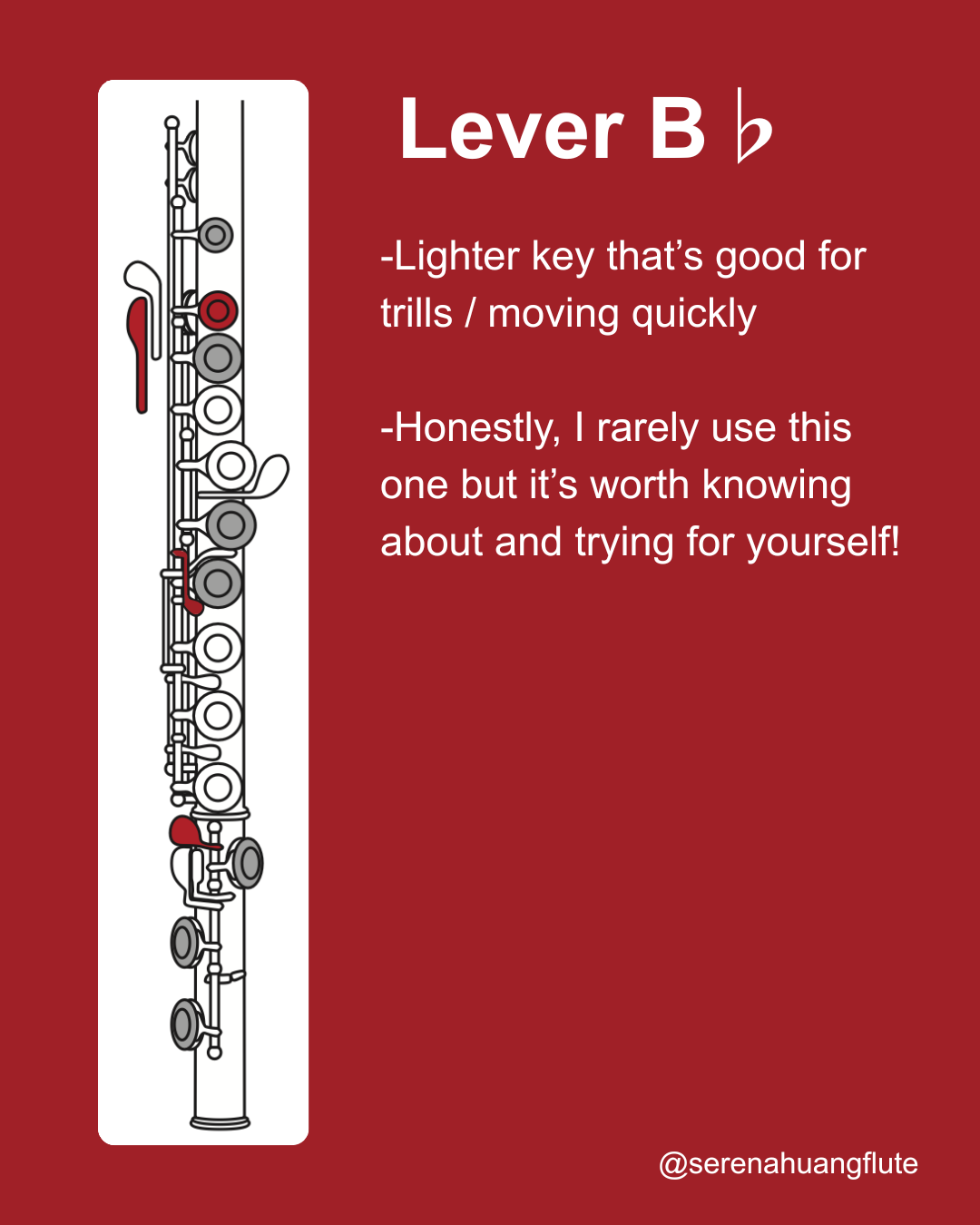 The flute graphics are from my favorite fingering chart by Yamaha, which you can download here!