
À propos Sarah Russo
creating a Coca Leaf Visual Monograph
Who I Am & Why I’m Here
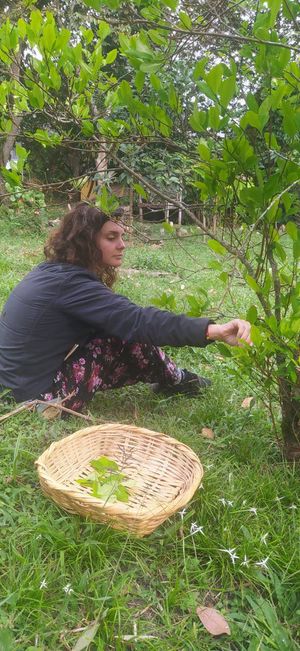
Greetings. I’m Sarah Russo, an independent herbologist, writer, and researcher with 15 years of experience helping humanity reconnect with our botanical allies. My background has focused on herbal education, environmental advocacy, and ethical considerations in health and science. With a love for both deep science and creative expression, I have collaborated with medical and technical teams as well as artists and creatives across six continents. After recent trips to South America, I was deeply called to the profound healing and expansive cosmovision of the coca plant. It inspired me to create a critical project: the first multicultural, visual herbal monograph on the coca leaf.
I am one of the three lead researchers on this project, alongside Professor Lineth Alarcón Franco, students, and others guiding the investigation at the Cooperative University of Colombia (UCC in Spanish) in Medellín. While the university funds parts of the project, my international travel and research time are not covered. Your support will help me get there and carry out the essential fieldwork. Here’s a closer look at the project and why its time has truly come.
The importance of coca & its policy struggle
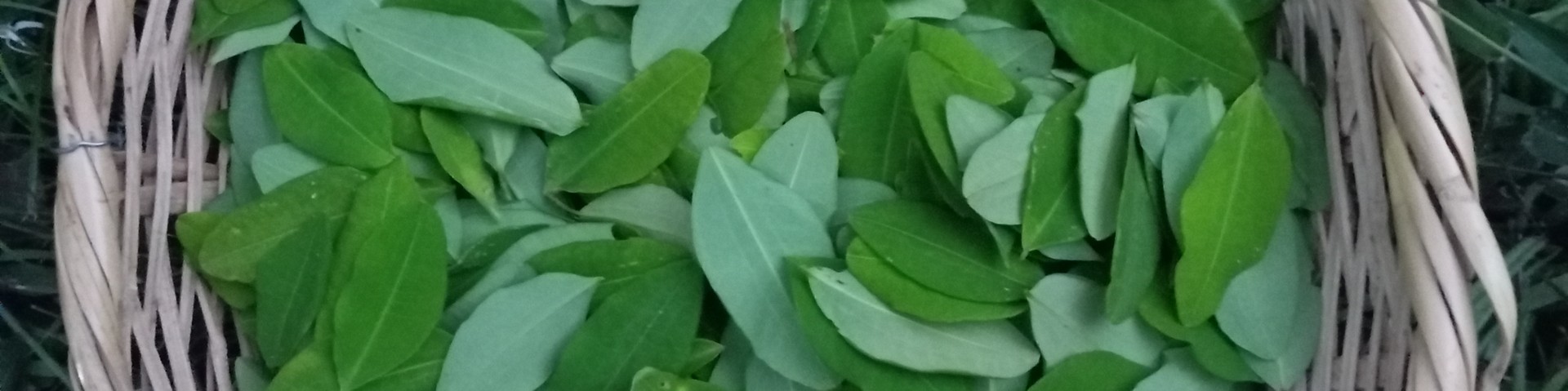
Coca is far more than a plant. For Indigenous peoples of the Andes and Amazon, it is a sacrament and a key part of social and spiritual life. It can be found as an offering at funerals, weddings, and town meetings. It is used as a tool for divination and offers a connection to the divine. Some Indigenous communities even trace their origin stories to the plant, which they call Mama Coca. Coca is also a valuable medicine that alleviates hunger, fatigue, headache, altitude sickness, and much more. It is a superfood, rich in vitamins and minerals. There is a thriving local market for coca leaf products in countries like Colombia, Bolivia, and Peru.
Outside South America, coca is misunderstood and criminalized because international laws focus on one of its chemical components, cocaine, which is found only in trace amounts. Unfortunately, coca is one of just three plants prohibited internationally under the 1961 Single Convention on Narcotic Drugs. This framework criminalizes the coca leaf and punishes individuals solely for exercising their cultural rights. This act of reductionism denies justice to both the plant and its communities. It also demonstrates that the nations and people most disconnected from nature are governing international law. The Coca Visual Monograph will be a tool to advance fairer policies and support ongoing efforts in the plant’s home countries to change its international legal status.
The Project
The goal of this monograph is to reclaim the sacred role of coca in South America and beyond. It will act as a reference that educates policymakers, supports legal defense for people facing criminal charges, and strengthens global movements to reform international drug law. We see coca not as a botanical specimen, but rather as a teacher and ally. Our responsibility is that the monograph honors the sacredness of the plant and her stewards.
Botanical monographs are created by herbalist communities as focused encyclopedias to provide an in-depth report of individual plant groups. Botanical monographs help policymakers see plants in their full context. Now is the time to support Latin American efforts to shift international perspectives on coca and help educate the people who are responsible for making these new policies happen.
The Coca Visual Monograph will be published in English and Spanish and co-authored with Indigenous knowledge carriers who have safeguarded Mama Coca for generations. This project will be made available as a free, open-access resource in print and online.
The monograph will contain:
· Scientific research on medicinal and nutritional properties
· Traditional knowledge and ceremonial practices, disseminated in right relationship with those who have carried this information.
· Legal and policy context
· Visual materials: drawings, photographs, and charts.
· Practical details: constituents, herbal actions, safety, dosage, administration, and ethics.
The project will:
· Distinguish coca from cocaine and restore its true identity as medicine, sacrament, and superfood.
· Support Indigenous rights and cultural preservation, with knowledge carriers as co-authors.
· Provide evidence for international drug policy reform (United Nations, World Health Organization, etc.)
· Serve as a legal and educational resource for herbalists, health professionals, and defense cases.
· Promote cross-cultural understanding and the decolonization of plant medicine.
· Reintegrate coca into the global herbal medicine canon.
Where You Come In
Many of us are tired of the unjust ways that society views plants and the policies that keep us disconnected from nature. In an era where acceptance of plant medicine is expanding, it is unacceptable that we continue to backslide and put those who have carried this essential wisdom behind bars. Education and advocacy will support the forward momentum to liberate Mama Coca and those who have safeguarded her wisdom.
While the research for this monograph involves deep dives in scientific papers and academic literature on coca, this work cannot be researched solely from books. Access to coca is limited to a small geographic range in countries like Colombia, Peru, and Bolivia. This fieldwork cannot be done anywhere else. The UCC has partially funded this project (including printing costs and remuneration for Indigenous communities), but my travel and research time are not covered.
Your support will go directly toward:
· My round-trip flight from Barcelona to Bogotá (Dec 2025/January 2026)
· 50+ hours of research and writing
100% of the funds will go to making this project happen. Backers will receive early access to the monograph and updates from the field. Donations can also be received via Venmo or Paypal.
A contribution of any amount helps. If you are unable to support this work financially, please share this page with others who care about plant medicine, Indigenous rights, and policy reform.
In our current turbulent times, we must honor the plants that work for our collective liberation. Thus, it is only fair that we work to set them free. Thank you for helping us spread the word and uplift the voices of justice into global conversations.
Learn More
· Universidad Cooperativa de Colombia (UCC) – My collaborators and academic home for this project.
· Writing Samples – A collection of my articles on plant medicine and drug policy.
· My Portfolio – A selection of my work in herbalism, science communication, and intercultural research.
Donateurs récents