

Europe Wants Independence From US Cloud Giants — But Its Own Defense Officials Are Blocking the Plan
The EU's push for tech sovereignty just hit resistance from inside its own house.
The European Commission is drafting a Cloud and AI Development Act — a framework meant to reduce Europe's dependence on Amazon, Microsoft, and Google for sensitive public-sector computing. The logic is straightforward: if your government's most critical workloads run on infrastructure controlled by another country, that's a strategic vulnerability, not just a vendor choice.
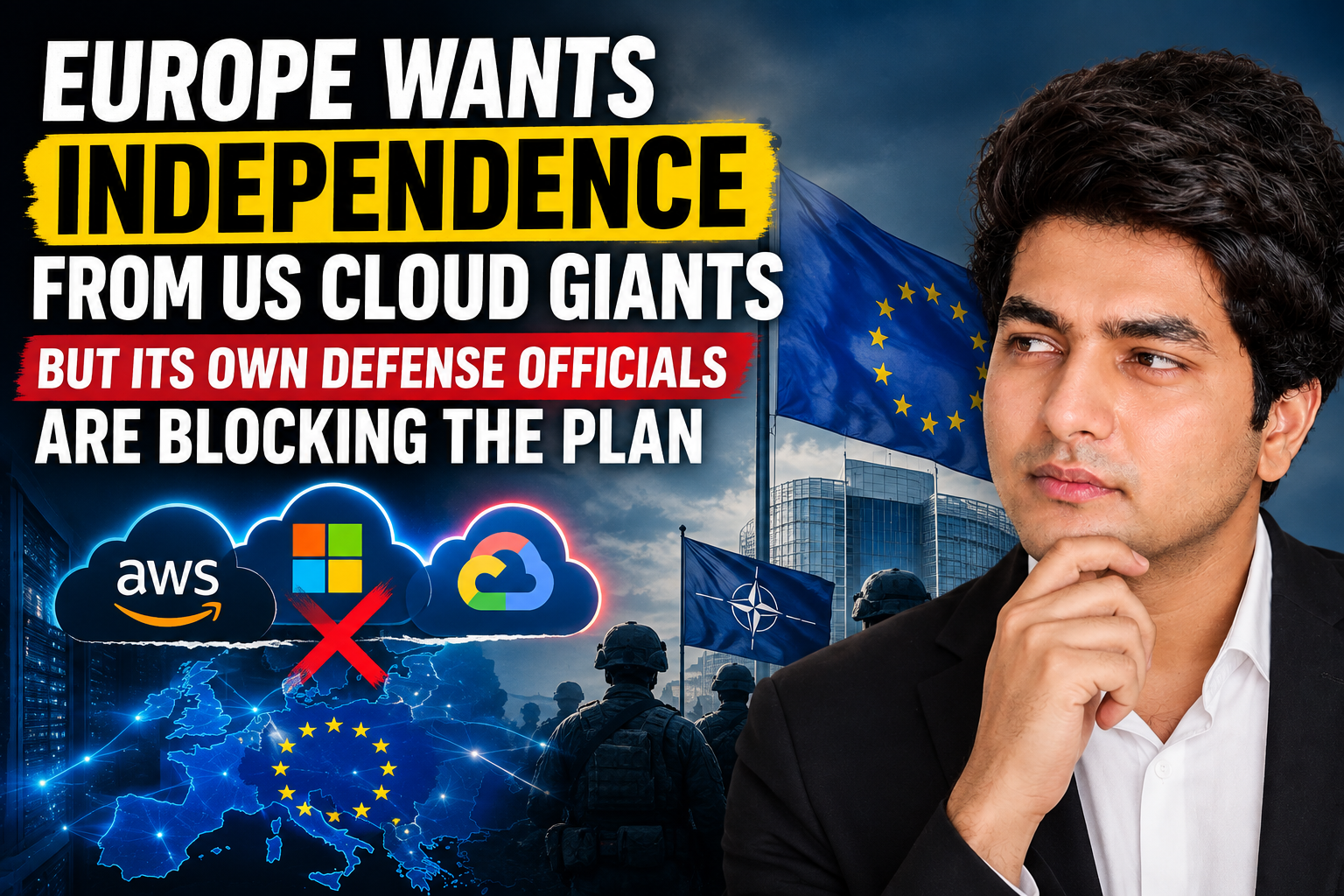
But defense officials across several EU member states are pushing back, and their objections aren't political — they're operational:
→ Rapidly shifting sensitive workloads to European-controlled infrastructure risks breaking interoperability with NATO systems, many of which already run on US cloud platforms
→ European cloud alternatives remain smaller and, in some areas, technologically behind US hyperscalers
→ The proposed rules would tier government workloads by sensitivity — with the strictest restrictions applying to only a small percentage of services — but even that narrower scope worries defense planners
→ The tension sits squarely between two real priorities: digital sovereignty versus operational readiness
Here's what makes this more than an EU-internal squabble: it's the clearest sign yet that governments now treat cloud infrastructure as a national-security asset, not routine enterprise IT. Twenty years ago, "who hosts your servers" was a procurement decision. Now it's a geopolitical one, debated at the same table as chip export controls and defense budgets.
And the honest tension here has no clean answer. Move too fast toward European alternatives, and you risk gaps in military-critical systems your allies still rely on. Move too slowly, and you stay structurally dependent on infrastructure another government could, in theory, restrict access to. Europe wants both control and continuity — and right now, it can't fully have either.
This is a preview of a fight that's coming to every government eventually: at what point does relying on a foreign company's cloud become a national-security risk worth the cost of untangling?
Where do you land — is sovereignty worth the short-term disruption, or is interoperability with allies the higher priority right now?
#CloudSovereignty #EUPolicy #Cybersecurity #DigitalSovereignty #TechPolicy #NATO #CloudComputing