

Washington Wants to Cut Chinese Drones — But America's Farmers and First Responders Are Sounding the Alarm
The U.S. is moving toward restricting Chinese-made drones. The problem: police departments, farmers, and emergency responders across the country have spent the last decade building their operations around exactly that hardware — because it was affordable and it worked.
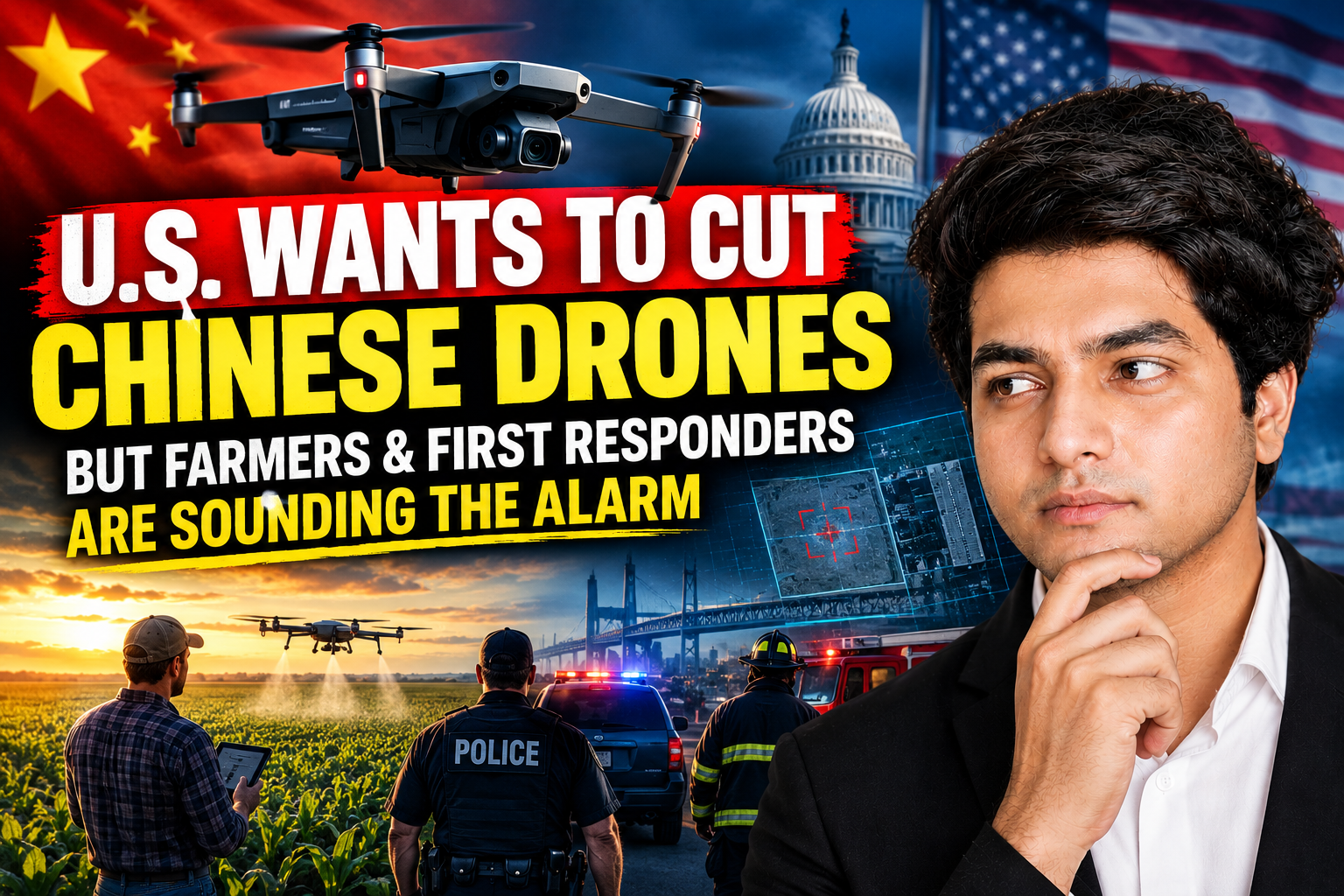
Here's what's actually at stake:
→ Chinese manufacturers built dominant market share in drones the same way they did in EVs and solar panels — capable hardware at aggressive prices that undercut Western competitors
→ Farmers use these drones for crop inspection and spraying, police departments use them for mapping and emergency response, and infrastructure operators use them to inspect bridges, utilities, and pipelines
→ Washington's core worry isn't price — it's data. Drones collect imagery, mapping, and other potentially sensitive information, and a foreign-made fleet flying over that infrastructure is now treated as a national-security exposure, not just a hardware choice
→ Domestic users are warning that U.S. and allied replacements may cost significantly more and may not yet match the range, battery life, or reliability of Chinese systems
This is the same pattern that played out with telecom and networking equipment: once a foreign technology gets deeply embedded in daily operations, ripping it out isn't a policy switch — it's a years-long, expensive transition that someone has to pay for. Except this time it's not just corporations absorbing the cost. It's small farms and local police budgets.
The opportunity underneath the disruption is real too. If U.S. and allied drone makers can close the price and performance gap, this could be the moment that finally builds a serious domestic drone industry — the way restrictions on other Chinese tech categories have occasionally forced faster innovation elsewhere. But "if" is doing a lot of work in that sentence, and the transition window matters as much as the destination.
Security policy and small-operator economics rarely pull in the same direction. This is a clean example of what happens when they collide.
Where do you land — is this a necessary national-security correction, or a policy that's going to hit working farmers and local police budgets harder than it hits Beijing?
#Drones #TechPolicy #USChinaTech #NationalSecurity #SupplyChain #TechNews
— 𝔖𝔞𝔫𝔡𝔢𝔢𝔭 ℜ𝔞𝔦𝔷𝔞