

Unredacted Court Filings Reveal Microsoft Knew Copilot Was Gutting The New York Times' Traffic — And Shipped It Anyway
The NYT vs. Microsoft and OpenAI copyright case just got a lot more interesting — not because of new arguments, but because of numbers that were hiding behind redactions until now.
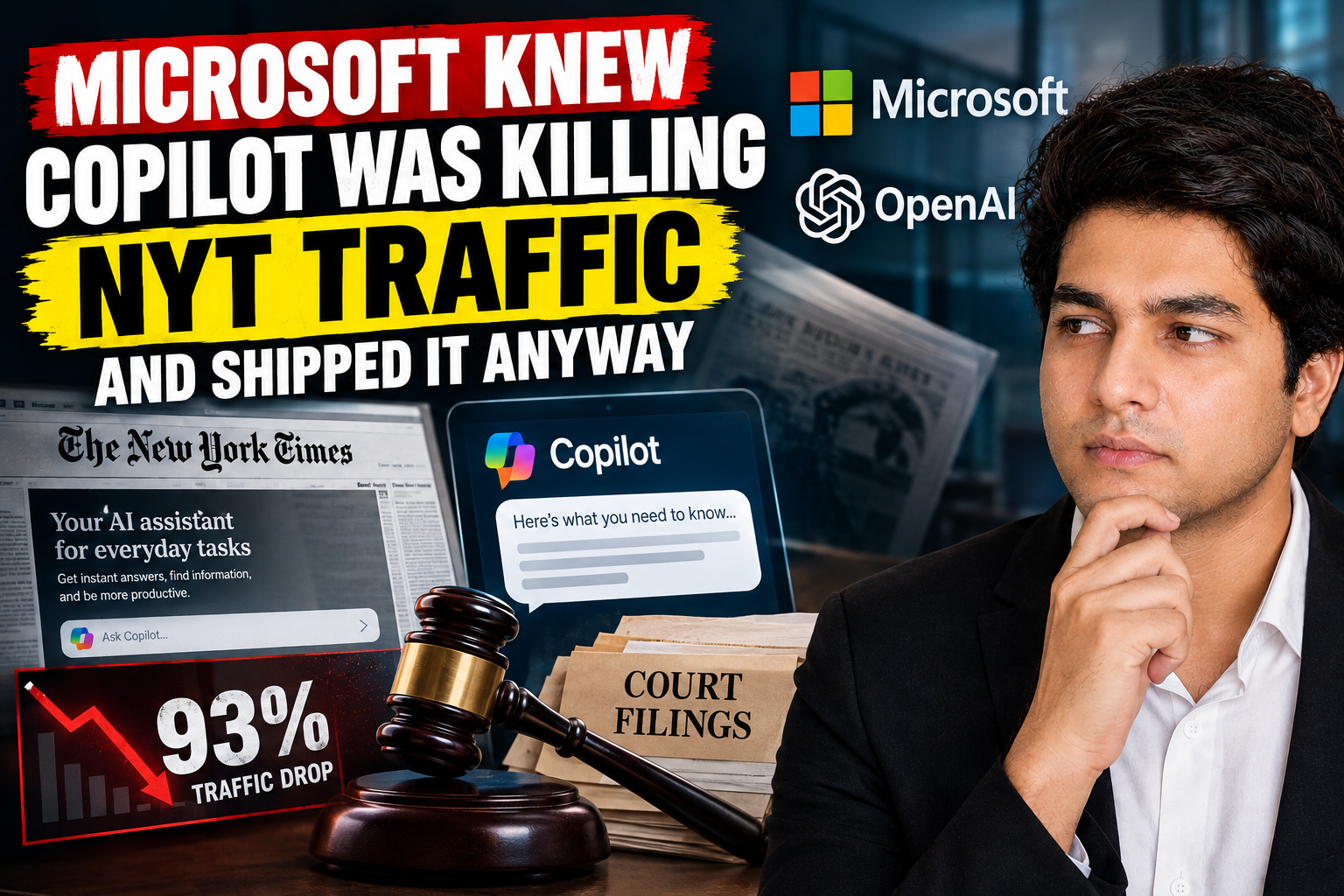
Here's what the newly unsealed material reveals:
→ Microsoft's own internal data reportedly showed Copilot-generated answers cutting click-through traffic to the New York Times by as much as 93%, compared to traditional Bing search results
→ Internally, Microsoft executives were allegedly worried about the economic damage AI-generated answers could cause publishers — while OpenAI personnel reportedly discussed how increasingly "substitutive" chatbot answers were becoming
→ The filings also allege training data at industrial scale: over 91,000 copies of Times, New York Daily News, and Center for Investigative Reporting content in certain mid-training datasets, and a separate Common Crawl-derived dataset allegedly containing 2 million+ documents from nytimes.com
→ Important caveat: this comes from the plaintiffs' brief, not the underlying sealed exhibits directly — so some of it may lack full original context until those documents surface
→ Microsoft and OpenAI have not commented on the newly disclosed material
Here's why the "93%" number matters more than it might look: US copyright law's fair-use test weighs whether a use harms the market for the original work. Abstract arguments about "training on public data" are one thing. A company's own internal number showing near-total traffic collapse to the source it trained on is a very different kind of evidence — it's not a hypothetical harm, it's a measured one.
This is the shift happening across the entire AI-copyright fight right now: cases are moving from "did you use our content" to "what did using it actually cost us." And that's a much harder question for AI companies to wave away with a fair-use defense, because it's no longer about intent — it's about outcome, documented in their own data.
If a chatbot answer replaces the reason someone ever needed to click through to the original article, is that still "transformative use" — or is that just substitution with extra steps?
#AICopyright #OpenAI #Microsoft #NYTimes #TechLaw #GenerativeAI #MediaIndustry
— 𝔖𝔞𝔫𝔡𝔢𝔢𝔭 ℜ𝔞𝔦𝔷𝔞