

Truecaller Just Opened Its Scam Database to Everyone — No App, No Sign-In Required
For over a decade, Truecaller's scam intelligence was locked behind an app with 500+ million users. Now it's putting that same database directly on the open web — accessible to anyone, not just Truecaller users.
The company launched Scam Checker on September 28, a free web and Android tool, and the details show real intent behind the move:
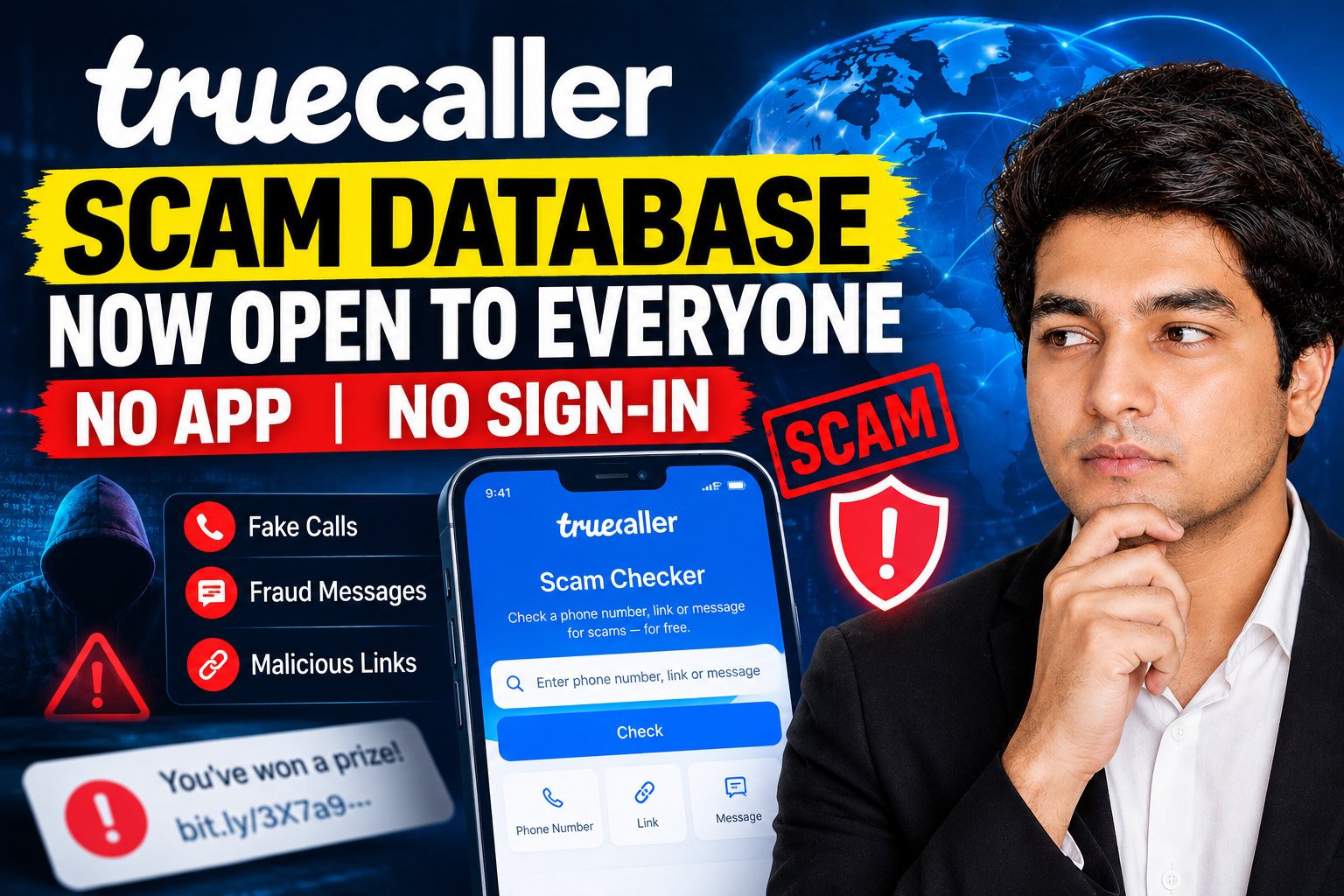 Truecaller launched Scam Checker, a new web and Android service that lets users paste in a suspicious phone number, link, or message to find out if it's fraudulent, with no app or sign-in required. To work, the service surfaces related reports from Truecaller's community, Scamfeed.
→ The tool accepts a phone number, a web link, or a full suspicious message, and returns fraud indicators from Truecaller's risk database and community reports
→ For links, the service expands shortened URLs and follows redirects to the final destination before checking it — closing a common scam trick where a safe-looking shortened link hides a malicious destination
→ The free tool is initially available in India and set to expand to Latin America, the Middle East and Africa, and Southeast Asia
→ The open web version holds back granular details — information like the exact name tied to a phone number remains locked inside Truecaller's traditional sign-in app
→ Truecaller estimates people make about 14 million web searches a month just to check suspicious links and phone numbers — that existing behavior is exactly what shaped the product
→ One industry voice suggested the logical next step is opening the scam intelligence up as an API so businesses can check incoming numbers directly
Here's what's smart about this move: scams don't live inside phone calls anymore. The launch comes as scams have grown well beyond phone calls to text messages, messaging apps, and web links — and 14 million people a month were already trying to verify suspicious content through plain web searches, completely outside Truecaller's ecosystem. Rather than trying to pull everyone into an app, Truecaller met people exactly where that behavior was already happening.
The bigger strategic shift is in the company's own words — moving beyond caller ID into a general-purpose trust layer for the open internet. As a result, Truecaller's focus is evolving beyond caller ID, and if the API route materializes, this stops being a consumer safety tool and starts becoming infrastructure other companies build fraud checks on top of.
Would you trust a crowdsourced scam database over a government or bank's official fraud-reporting channel — or do you want both working together?
#Truecaller #ScamChecker #CyberSecurity #DigitalSafety #Fraud #TechNews
— 𝔖𝔞𝔫𝔡𝔢𝔢𝔭 ℜ𝔞𝔦𝔷𝔞