

The AI Boom's Hidden Chemical Problem: Every Data Center Needs "Forever Chemicals" to Run
Every AI data center chasing faster inference is quietly driving up demand for one of the most persistent pollutants ever made.
A survey by Swedish chemicals watchdog ChemSec found that most of the world's largest PFAS producers are planning to increase production — and several named data centers and AI hardware directly as their growth markets.
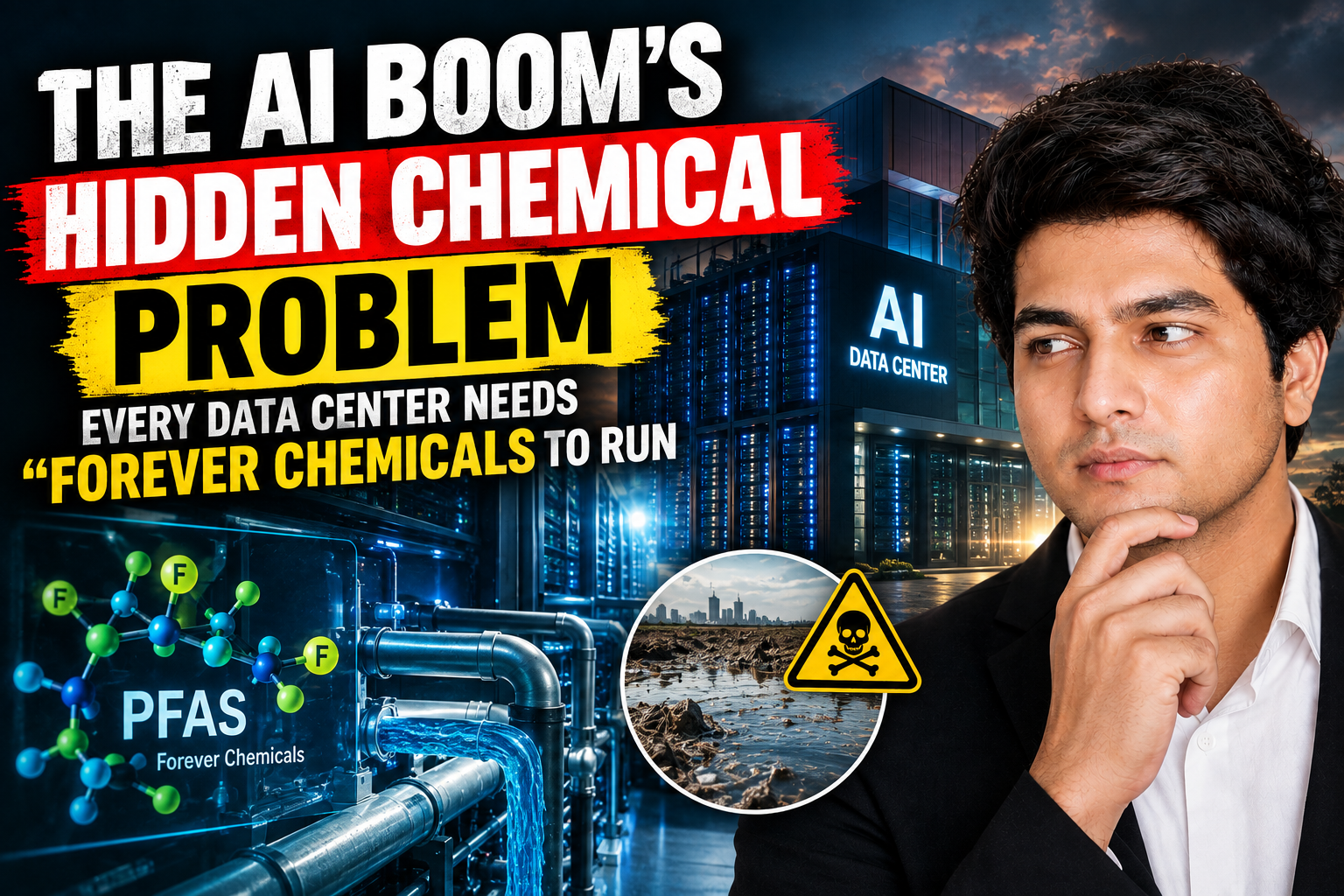
Here's where these chemicals actually show up in the AI stack:
→ Chip manufacturing — PFAS compounds are used across numerous highly specialized steps in semiconductor fabrication, prized for their extreme chemical stability
→ Liquid cooling — next-generation cooling systems for densely packed AI hardware increasingly use fluorinated fluids, because they transfer heat away from chips more efficiently than conventional coolants
→ Major producers responding to demand — companies including Daikin, Arkema, and Chemours are expanding capacity tied specifically to data-center and semiconductor growth, while some European producers are moving toward alternatives or exiting the market entirely
The same property that makes PFAS useful — its near-indestructible chemical stability — is exactly what makes it dangerous. These compounds don't break down. They're already the focus of growing regulatory and public-health scrutiny worldwide, tied to contamination that persists in soil and water for decades.
Here's what this really tells us: the AI industry's environmental story usually stops at electricity and water — gigawatts consumed, gallons used for cooling. But there's a third layer that gets almost no attention: the actual chemistry required to build and run this hardware at scale. Faster models don't just need more power. They need more chips, more cooling infrastructure, more of exactly the kind of durable, hard-to-regulate chemicals the world has spent years trying to phase out.
As AI infrastructure keeps scaling, this is a supply-chain and regulatory risk that's going to get harder to ignore — not easier.
Should AI companies be required to disclose the chemical footprint of their hardware supply chain, the same way they're starting to disclose energy and water use?
#AI #DataCenters #PFAS #Sustainability #TechNews #Semiconductors #ClimateTech
— 𝔖𝔞𝔫𝔡𝔢𝔢𝔭 ℜ𝔞𝔦𝔷𝔞