

Tencent Is Borrowing $4.5B+ for AI, With Cash in the Bank, and Investors Lined Up With $17B in Orders
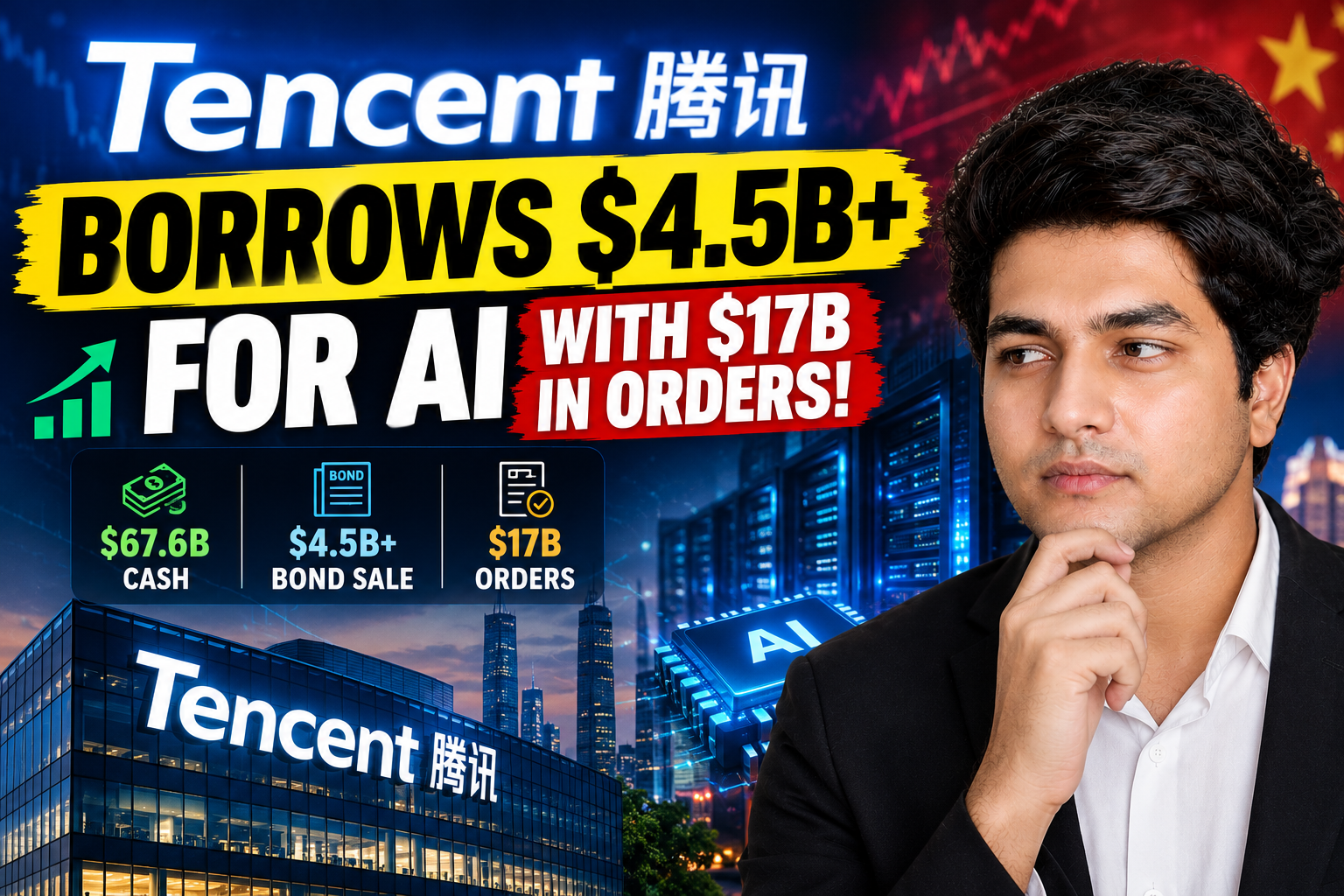
Tencent has roughly $67.6 billion in cash. It’s still going to the bond market for the second time in four months to pay for AI. That tells you a lot about where the AI buildout is heading.
On October 13, the company launched a combined US dollar and offshore yuan (“dim sum”) bond sale targeting at least $4.5 billion.
 The details:
→ The structure: 10-year and 20-year US dollar notes, plus 10-year and 30-year offshore yuan notes. Proceeds are for “general corporate purposes”
→ The demand: Reuters reported total orders of about $17.1 billion, nearly four times the minimum target. Yuan tranche orders alone passed 77 billion yuan, even as AI spending jitters hit global markets
→ The credit: Tencent is rated A1 by Moody’s, A+ by S&P, and A by Fitch, with JPMorgan, Goldman Sachs, HSBC, and Morgan Stanley coordinating the dollar sale
→ The spending: Tencent’s capex more than doubled to 96.3 billion yuan in H1 2026, from 45.9 billion a year earlier. That covers computing equipment, software, and data centers
→ The cash flow: One analysis shows free cash flow turned negative in the June quarter, partly because of large AI compute prepayments. Management says excluding those prepayments, it would have been positive
→ The context: Tencent last tapped bond markets in June, raising about $4.66 billion. Its shares are down roughly 30% this year, and it has also reportedly leased access to around 100,000 AI chips through Oracle outside China
Tencent isn’t short of money. Even the best-capitalized tech companies now prefer to finance AI infrastructure with long-dated debt rather than draw down cash. Combined capex at Tencent, Alibaba, and ByteDance could more than double to about $104 billion this year, according to the FT. Wall Street is doing the same thing with chips, with deals like Amazon’s $8 billion Nvidia chip financing vehicle.
The $17B in orders for a $4.5B deal suggests lenders still trust the credit, even while equity investors have been more skeptical. The risk is that the debt is long-dated while the revenue from AI products is still unproven. These are 10, 20, and 30-year commitments against technology that is changing every few months.
Do you think AI infrastructure spending is better funded by debt or by cash flow, and what happens to these borrowers if monetization takes longer than expected?
#Tencent #AI #AIInfrastructure #TechFinance #China #Bonds #TechNews
— 𝔖𝔞𝔫𝔡𝔢𝔢𝔭 ℜ𝔞𝔦𝔷𝔞