

OpenAI Starts Invisibly Watermarking ChatGPT Text — But Only for EU Users
Every reply ChatGPT gives EU users is about to carry a hidden signature baked into the words themselves — one that survives copy-paste and follows the text wherever it goes.
On October 5, OpenAI announced it will add invisible watermarks to text from ChatGPT and its Codex coding agent for users in the European Union, using a method it calls textGrain.
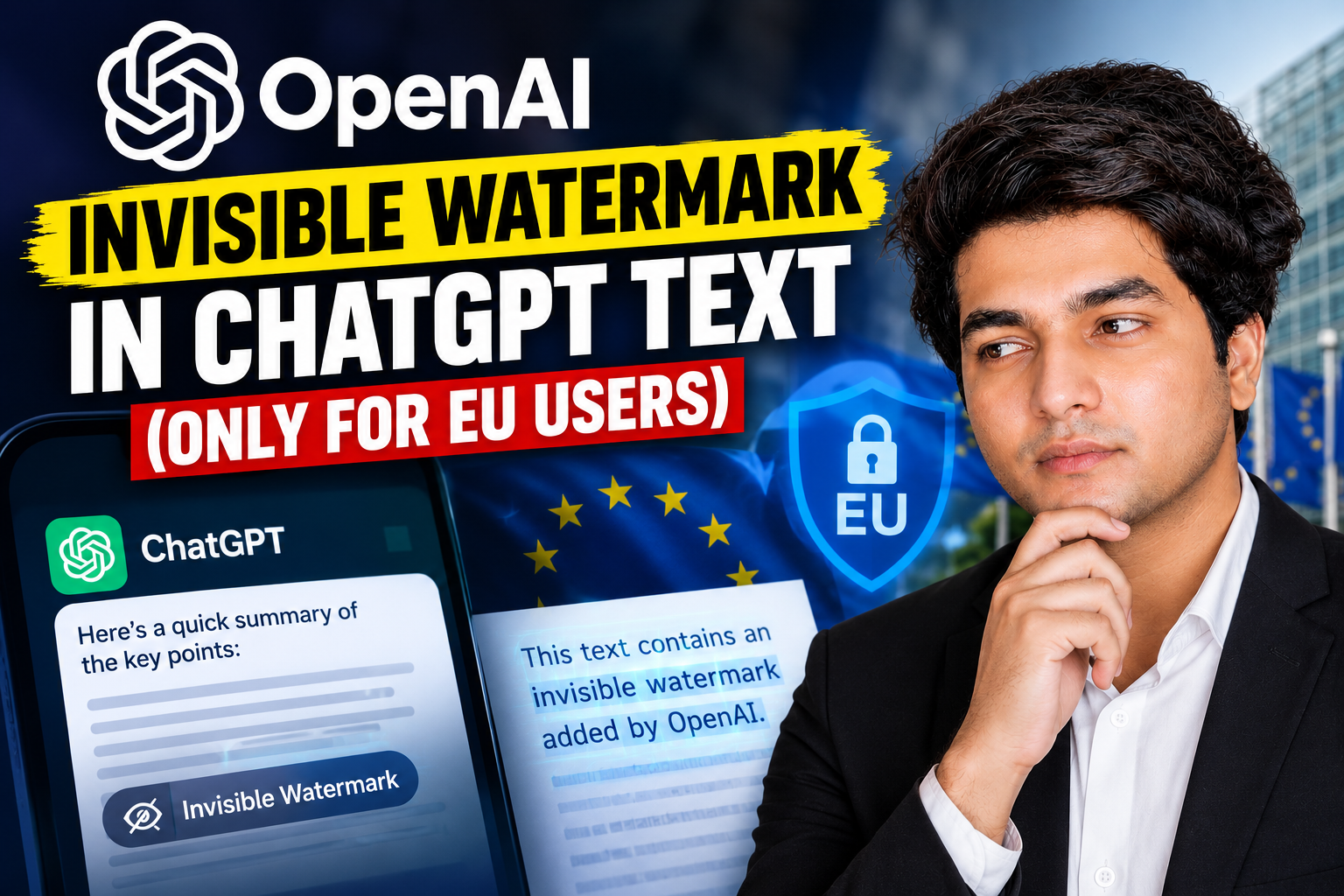 Here's what's actually in the rollout:
→ The watermark works by subtly shaping word choice through statistical patterns — not visible formatting — so it travels with the text even after it's copied elsewhere
→ It rolls out "over the coming weeks" to eligible ChatGPT and Codex users on all plans, but EU-only for now — no global default at launch
→ Developers using OpenAI's API anywhere in the world can opt in for select models starting now, but it stays off by default
→ OpenAI admits the limits upfront: short passages, math answers, and translated text are harder to detect, and heavy editing weakens the signal
→ Access to the detector that actually reads the watermark is restricted to approved researchers, regulators, and expert organizations — not the general public
→ This is OpenAI's direct response to Article 50 of the EU AI Act, in effect since August 2, which requires AI providers to make synthetic content machine-readable
What makes this interesting is the contrast with Anthropic. Claude's watermarking went live globally back in August — not just for EU users — and it reportedly drew pushback from users who argued they supplied "the instructions, context, decisions" while Claude was just "the tool." OpenAI is taking the narrower, compliance-only path: watermark where the law requires it, leave it off everywhere else by default.
Here's the deeper tension this exposes: a watermark that only exists because a regulation demands it, and that only works reliably on long, unedited passages, isn't really a transparency tool for everyday users — it's a legal checkbox with real gaps. The people most likely to misuse AI text (stripping attribution, passing off work as their own) are also the most likely to edit it enough to break the watermark. Meanwhile, ordinary users who paste a clean ChatGPT answer into an email get tagged by default.
Do you think invisible watermarking actually solves the "is this AI-written" problem — or just shifts the burden back onto detectors nobody outside research labs can access?
#OpenAI #ChatGPT #EUAIAct #AITransparency #AIRegulation #TechNews
— 𝔖𝔞𝔫𝔡𝔢𝔢𝔭 ℜ𝔞𝔦𝔷𝔞