

IMF Chief: AI Will Touch 40% of Jobs Worldwide, and Entry-Level Workers Face the Biggest Risk
At the 2026 IMF–World Bank annual meetings in Bangkok, IMF Managing Director Kristalina Georgieva repeated a warning she has been building all year: AI is reshaping the global job market, and the people just starting their careers are the most exposed.
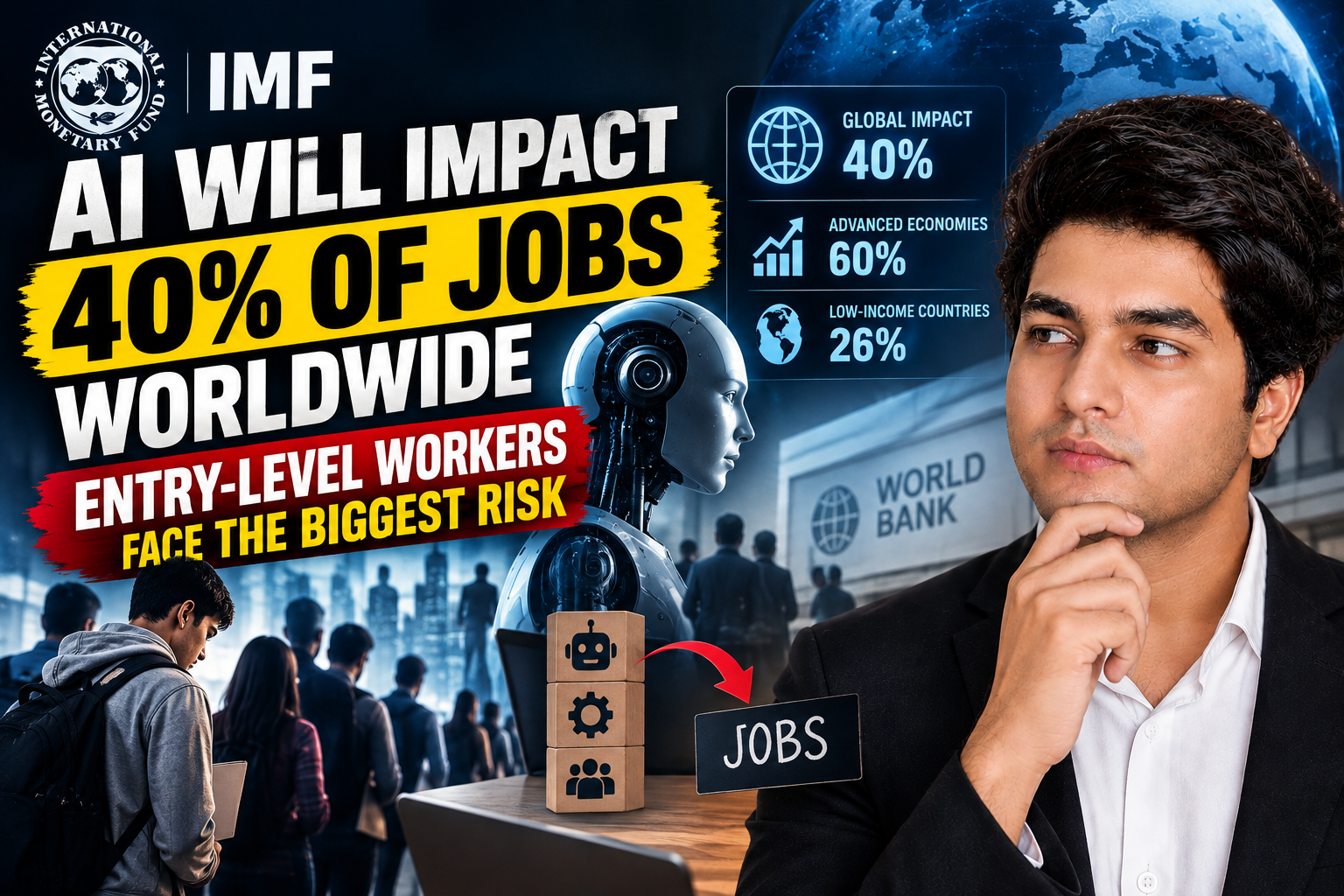 Here is what the numbers actually say:
→ The IMF estimates AI will affect roughly 40% of jobs worldwide and about 60% in advanced economies. In low-income countries the figure is closer to 26%
→ “Affected” is not the same as “eliminated.” Georgieva has described the impact as jobs being enhanced, transformed, or replaced
→ The IMF’s earlier research suggests roughly half of exposed workers could benefit through higher productivity and pay, while for the rest, key tasks once done by humans get automated
→ Entry-level work is the pressure point. In her words: “Tasks that are eliminated are usually what entry-level jobs present, so young people searching for jobs find it harder to get to a good placement”
→ She has already pointed to early evidence: in the US, about one in 10 jobs now require AI-enhanced skills, and those jobs pay more
→ Not all of it is bad news. IMF research estimates AI could lift global growth by about 0.8%, and add around 0.7% a year to India’s GDP
→ World Bank President Ajay Banga added a different angle: smaller, locally adapted AI tools could improve agriculture, healthcare, and public services in developing economies
What stands out to me is how the risk is structured. Entry-level jobs are not just jobs. They are where people learn the craft: how a business runs, what good work looks like, how to handle mistakes. If AI absorbs the repetitive first rung of the ladder, the open question is how the next generation of senior professionals gets trained at all.
That makes this less of a “will AI take my job” story and more of a pipeline story. Companies, universities, and governments will need to redesign how people gain experience, because the old route of doing the simple tasks first may quietly disappear.
If you hire, manage, or mentor early-career talent, it is worth asking now: what does your first-year role look like when AI can do the first-year tasks?
Where do you see the biggest risk: for fresh graduates, or for mid-career professionals whose roles AI doesn’t boost?
#AI #FutureOfWork #IMF #Jobs #ArtificialIntelligence #CareerGrowth #TechNews
— 𝔖𝔞𝔫𝔡𝔢𝔢𝔭 ℜ𝔞𝔦𝔷𝔞