

Google’s $15 Billion AI Hub in Vizag Meets a Hard Question: Who Pays for the Water?
Google’s largest AI investment outside the United States is now facing its first real test, and it isn’t a technical one. It’s whether a gigawatt-scale data center can win over the community it is being built in.
Google, together with the Adani Group, is building a 1-gigawatt AI hub around Visakhapatnam in Andhra Pradesh. This week, a Google executive publicly defended the project against local concerns.
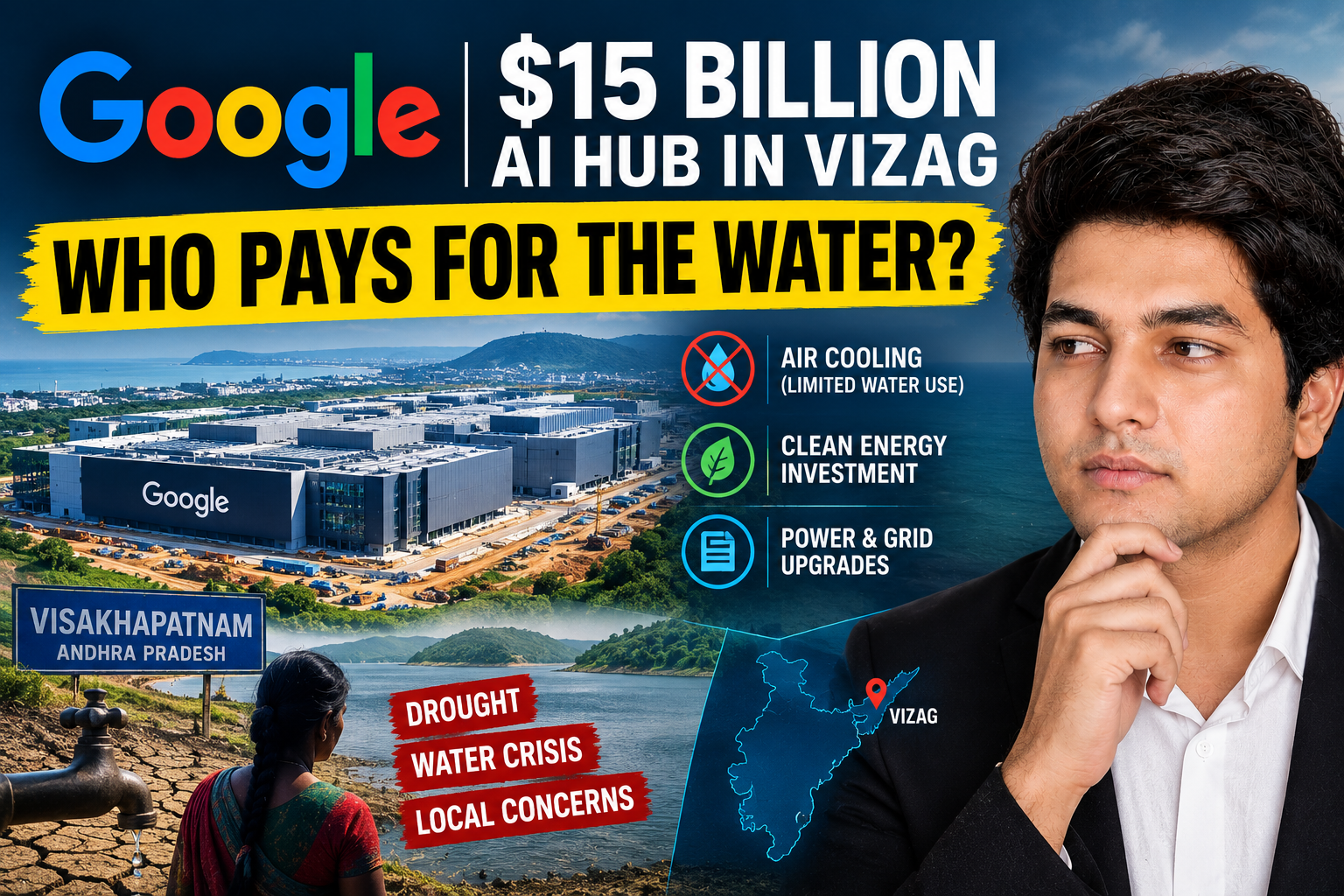 → The plan: $15 billion over five years, across three sites covering 600+ acres, with parts going live in 2028
→ Google’s answer on water: the facility will use advanced air cooling instead of water cooling, so water use is limited mainly to restrooms and kitchens. Google says its assessment found pressure on the local watershed, which is why it chose air cooling
→ Google will also invest in additional clean-energy projects and fund the electricity infrastructure upgrades the site needs
→ The concern on the ground: a weak monsoon and drought have already pushed the local reservoir down and groundwater levels lower. Residents worry about water, power supply, and land near the Kambalakonda Wildlife Sanctuary
→ The state government says water won’t be diverted from residential use. Residents remain skeptical
→ A court challenge in August failed to stop construction
→ State authorities have granted Google land discounts and preferential water and electricity rates for ten years
→ The jobs question is also open. Some locals doubt a data center will create many local jobs
Here’s what stands out to me: the air-cooling decision is a good engineering answer to a real problem. But air cooling shifts the load from water to electricity, so the grid question matters even more now. And preferential rates for a hyperscaler, in a city already short on water, will always draw scrutiny, however good the cooling design is.
This is the pattern every country building AI infrastructure will face. Capital and technology are no longer the hardest part. Local consent is. The companies that win in the long run will be the ones that treat water, power, and jobs as part of the product, not as PR problems to answer after the fact.
If you were advising on a project like this, what would convince a drought-stressed community that a data center is a good neighbour?
#Google #AIInfrastructure #DataCenters #India #Visakhapatnam #Sustainability #TechNews
— 𝔖𝔞𝔫𝔡𝔢𝔢𝔭 ℜ𝔞𝔦𝔷𝔞