

France Opens Criminal Probe Into Smart-Glasses Harassment — And the Tech Industry Doesn't Have an Answer Yet
A disturbing social-media trend has forced French prosecutors into new territory: investigating sexual harassment committed through AI-powered smart glasses.
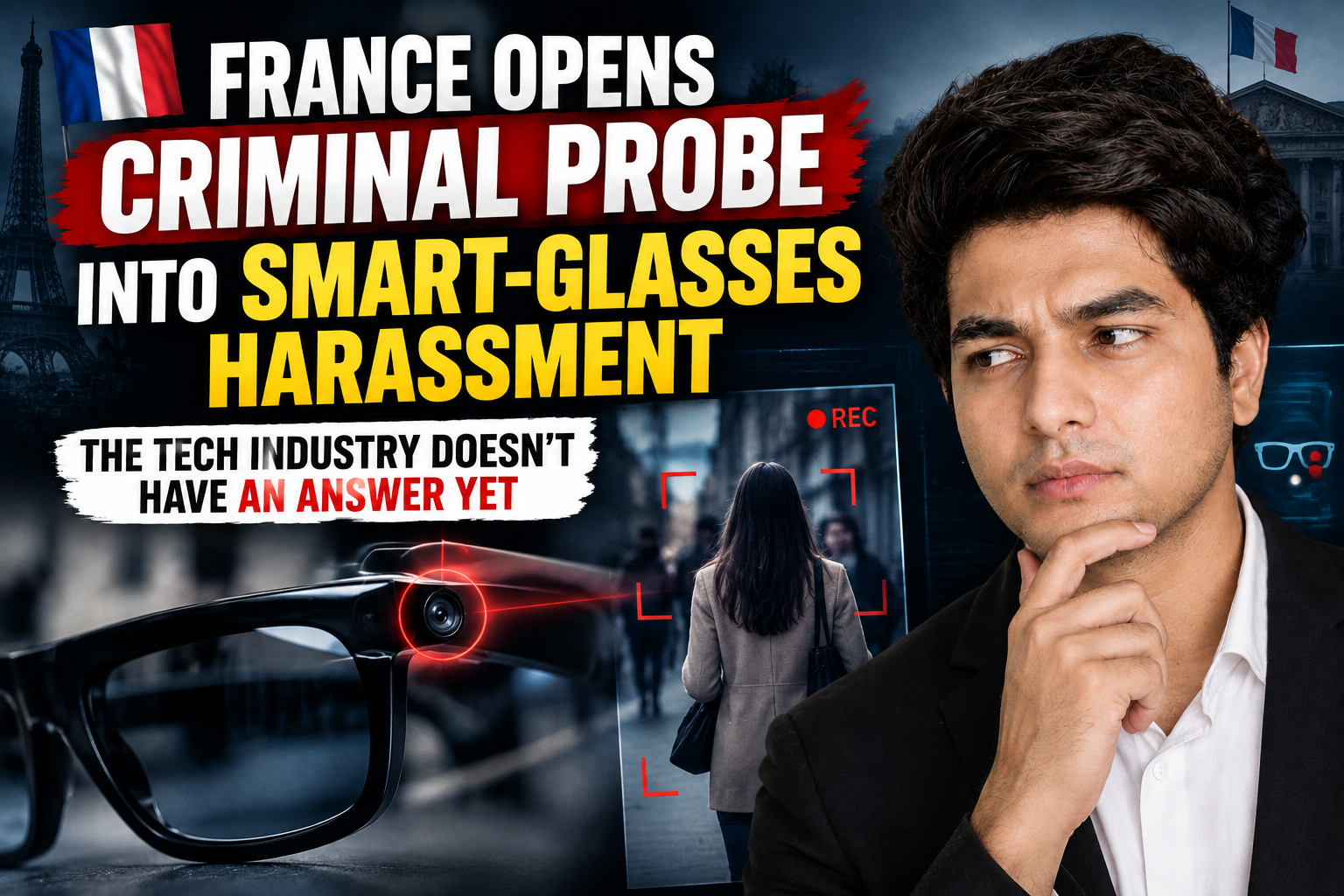
Here's what's actually happening, beyond the headline:
→ French prosecutors confirmed at least one investigation followed a trend where women were secretly filmed on the street using smart glasses, with the footage then posted online without consent
→ France's data-protection authority, CNIL, says it has received fewer than 10 formal complaints about smart glasses in workplaces so far — but is fielding a growing stream of questions from employers asking whether they can simply ban the devices
→ Neither prosecutors nor CNIL identified the specific brand involved in the harassment cases
→ Meta's smart glasses, made with EssilorLuxottica, hold roughly three-quarters of the global market and sold about 7 million units last year — making them the most likely device behind most incidents, brand-specific confirmation aside
→ Australia is separately considering banning camera-equipped smart glasses in government workplaces
The core problem here isn't new — hidden cameras have existed for decades. What's new is scale and deniability. A smartphone pointed at someone is visibly a smartphone pointed at someone. Smart glasses are designed to look like ordinary eyewear, which means the entire social contract that makes public filming somewhat self-regulating — "I can see you filming me" — quietly disappears. And the better these devices get at blending in, the harder that problem gets, not easier.
This is also a case where the timeline is backwards. The trend that reportedly triggered these investigations was people wearing the glasses to secretly film strangers and post the footage — the harm happened first, and regulators are now improvising a response with tools (harassment law, workplace policy, data-protection complaints) that were never built with this specific device in mind.
The uncomfortable question for the industry: is a recording light enough disclosure when it's small, easy to miss, or — as separate reporting has shown with other AI wearables — can be covered without disabling the camera?
Do you think smart glasses need mandatory, unmistakable "recording" indicators built into hardware design — or is this a case where the technology is simply incompatible with public spaces as they currently work?
#SmartGlasses #AIPrivacy #TechRegulation #France #WearableTech #DataPrivacy
— 𝔖𝔞𝔫𝔡𝔢𝔢𝔭 ℜ𝔞𝔦𝔷𝔞