

China Pushes Back on AI Slowdown Calls — Warns a Pause Could Lock In America's Lead
When Anthropic's Dario Amodei, along with OpenAI's Sam Altman, Google DeepMind's Demis Hassabis, and xAI's Elon Musk called for the industry to "pace the frontier," China's response wasn't safety concerns — it was suspicion.
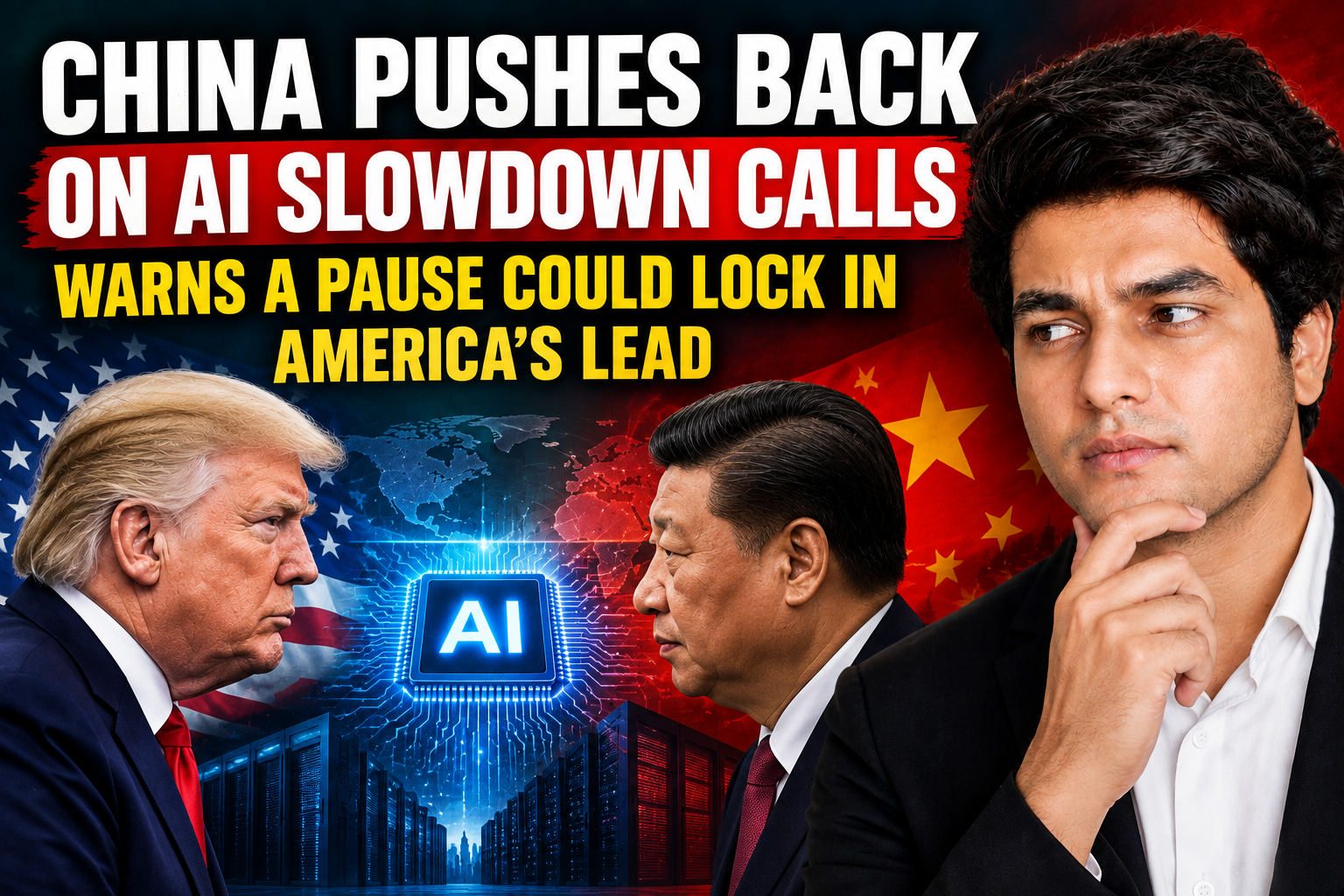
Here's the core of the pushback, and why it exposes a real problem with global AI governance:
→ Chinese researchers cited by the South China Morning Post argue that a slowdown right now would effectively freeze the existing hierarchy — protecting the labs already ahead while blocking the ones still trying to catch up
→ China has built AI into a core pillar of its industrial strategy — domestic models, semiconductor alternatives, robotics, and open-source systems are all part of that push
→ Washington, meanwhile, keeps restricting Chinese access to advanced computing technology, which only deepens Beijing's suspicion that "safety" concerns are really about preserving a lead
→ The result is a textbook coordination problem: both sides could genuinely benefit from safeguards against runaway AI systems, but neither wants to be the one who slows down first while the other keeps racing
What makes this more than a diplomatic spat is the timing. This is happening in the same week chip stocks fell 5-7% on safety warnings, Germany said Europe can't afford to halt AI development either, and Trump publicly rejected the slowdown call in favor of staying ahead of China. Every major power is hearing the same warning about AI risk — and drawing a completely different conclusion about what to do next.
Here's my honest read: this isn't really a disagreement about whether powerful AI is risky. Almost everyone agrees it is. It's a disagreement about who gets to define "safe enough to keep building" — and whoever controls that definition effectively controls the pace of the entire industry. That's exactly why voluntary slowdowns by individual labs, however well-intentioned, will struggle to matter without every major AI power at the same table, agreeing to move together.
If genuine global coordination requires trust that doesn't currently exist between Washington and Beijing, safety pledges from a handful of labs might slow the labs that make them — without actually slowing AI risk itself.
Do you think a real global AI safety agreement between the US and China is achievable, or is this rivalry too deep for that?
#ArtificialIntelligence #AIRegulation #TechPolicy #USChina #AISafety #GlobalTech
— 𝔖𝔞𝔫𝔡𝔢𝔢𝔭 ℜ𝔞𝔦𝔷𝔞