

The confrontation around Iran sharpened on Friday, with fresh reports of damage to oil tankers in the Strait of Hormuz, warnings of possible renewed U.S. action and a quiet drawdown of some American diplomatic personnel across the region. The developments put shipping security and the risk of a wider conflict back at the center of an already volatile energy market. Attacks on ships have hit a record high this month.
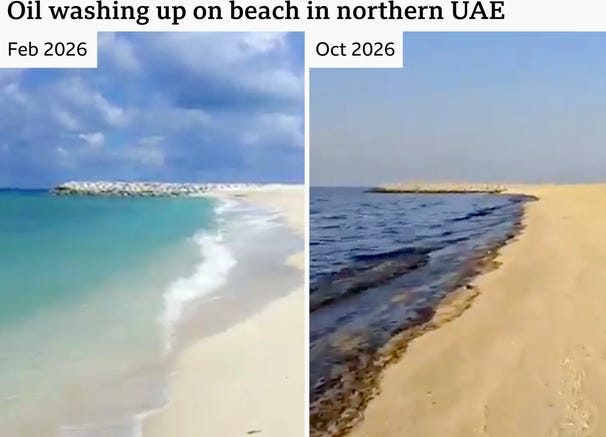
Oil is washing up on the shores of the UAE and people there are reporting the smell protrudes even the highrises in Dubai.
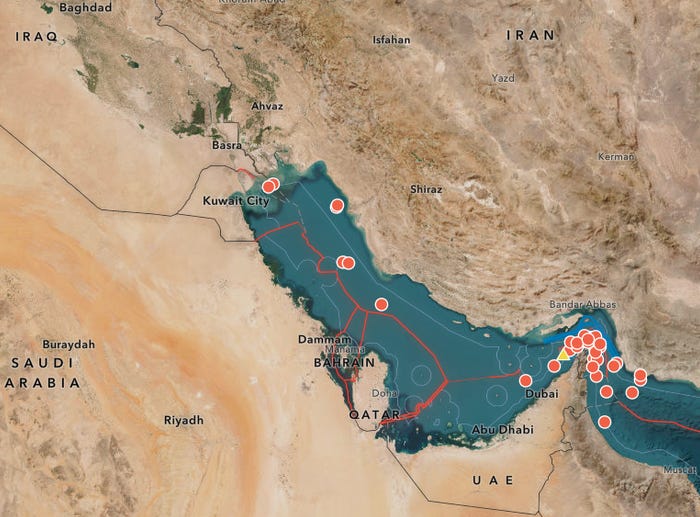
Iran’s Revolutionary Guard said two supertankers had struck sea mines while attempting to pass through a southern route it described as unauthorized. The Guard said the explosions damaged the ships’ engine rooms, sparked fires and prompted both crews to leave. It also claimed the vessels were carrying more than 4.5 million barrels of crude. The specific account, including the ships’ condition and cargo, could not be independently verified.
The broader danger to shipping is clearer. October has become the worst month on record for attacks on commercial vessels in and around the strait, with 28 confirmed and reported incidents tallied so far this month. More than 30 very large crude carriers have been damaged since the war began, including 11 in October. Yet oil continued to leave the Gulf at close to prewar levels, even as Brent crude climbed above $114 a barrel and daily tanker rates topped $1 million. The contrast suggests that trade has not stopped, but that operators are paying heavily to keep it moving.
Ryan Dawson's Anti-neocon Report is a reader-supported publication. To receive new posts and support my work, consider becoming a free or paid subscriber.
President Donald Trump offered no clear signal that tensions would ease. He said the United States might carry out another operation against Iran if Tehran did not agree to negotiations, while also saying the war could end quickly and questioning whether Washington should seek a decisive finish or let the conflict fade. He asserted that oil was still moving through Hormuz and that the United States was “getting everything we want.”
Meanwhile, Washington ordered non-emergency personnel and family members to leave Saudi Arabia and made temporary staffing changes at several other embassies, including in Jordan, Lebanon, Qatar and the United Arab Emirates. The moves came amid concern about regional escalation and increased Houthi attacks on Saudi Arabia. They signal heightened caution, not proof that a new U.S. strike is imminent.
The fighting’s reach was also visible in the occupied West Bank, where Israeli forces began a multi-day operation in Hebron after a shooting that reportedly killed two Israeli soldiers. Residents faced searches and restricted exits as the military said it was looking for weapons and armed infrastructure. In Yemen, rival sides traded claims of advances and attacks, including allegations of strikes on Saudi territory; details of several reported incidents remained unconfirmed.
For governments and energy traders, the day’s central question was whether these confrontations could be contained. Tankers were still passing through the Gulf, but every new attack claim, troop movement or threat of retaliation added to the cost and uncertainty of keeping that vital route open.