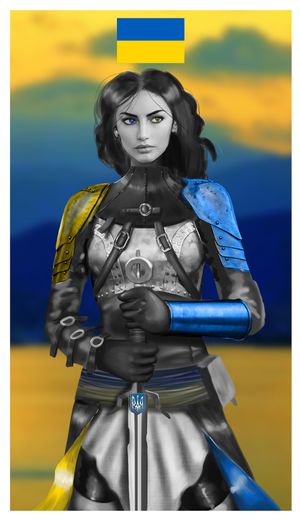

I recently asked my social media followers what they’d like to read more of in these blogs, and the response was overwhelming: more about fighting disinformation!
So here it is. You ask. I provide. (Just remember: you asked for this.)
This Ain’t No Disco:
The Rule of Three (Hundred Million), Born This Way?, and the Origins of #BeLessStupid
I was going to write about how/why I became an Information Warrior, but it’s not a pretty tale, and there has been way too much horror and sadness this week, so let’s go with something more academic. I’ll get around to the Senora/Iryna Adler Origin Story eventually, honest.
But for today: one of things that interests me most is WHY disinformation works at all.
If you hold a rattle in front of an infant chimpanzee then hide it behind your back, the chimp reacts to its disappearance. It can tell if something is there or not there. Even a baby chimpanzee, and a baby human, has some appreciation of “real” and “not real,” and as an infant grows (chimp or human), it develops skills (or some do…we think…more on this in a moment) for testing out what is true and what isn’t. So, why do adult humans have so much trouble with this?
There are TWO main models of thought on this (plus my extra ½ an idea, which is probably offensive and admittedly anecdotal; you’ve been warned).
The Rule of Three (Hundred Million)
MODEL ONE: Repetition, Repetition, Repetition
Most politicians, journalists (excluding those actively engaged in debunking malinformation), pundits, and civilians (the unwitting targets of malinformation), will tell you the reason malinformation is believed is because there’s just soooo much of it.
Paleontologists estimate that the brains of ancient humans (about 50K years ago) had to process about 100-500 pieces of information each day. Neurologist Danial Levitin found that modern humans are confronted by around 300 exabytes of information (that’s 300,000,000,000,000,000,000 pieces of information) every day. If each of those pieces of information were written on a 3-by-5-inch index card and spread out side by side, they would cover every square centimeter of Massachusetts and Connecticut combined.
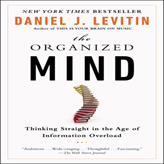
This information glut creates two conditions that favor malinformation growth (yup, just like warmth and moisture help mold grow between your toes).
First, since you can’t possibly pay attention to every piece information that crosses your path, your brain prioritizes. It chooses information it thinks is important and pushes that to front of the queue, forcing you to pay attention to that and ignore other information. Your brain tends to choose information that provokes a strong physiological response, since it associates this with danger. If a bear is chasing you, for example, that’s a bit of information you need to deal with right away. But your brain doesn’t necessarily add a footnote saying *not real bear; only ruzzian propaganda AI generated photo of bear.
Your brain also gives priority to that which repeats, since if it’s really important, they’ll repeat that message about the train being late because it’s on fire, right? Repetition also makes information feel familiar, and we like familiar. It makes us feel like we’re on top of this. The brain will even try to make unfamiliar things feel familiar by reaching into our vast catalog of old information and trying to make associations, which is just one of the many ways cognitive biases can lead one down the conspiracy theory rabbit hole, if one isn’t careful.
"Of course! I knew it all along! I could feel it in my bones!”
Disinfo pushers know this, so they repeat, repeat, repeat until something obviously untrue starts to feel true. Repetition is also helps them to launder disinformation; trad media covers something false because “everyone’s talking about…” and even if they debunk it in real time, the narrative the next day is, “well, on MSNBC they were talking about how Biden was created in a secret Ukrainian lab on the Moon by the ghost of John Dillinger, so it must be true!”
Secondly, the sheer volume of information you have to process each day, each hour, each second, doesn’t leave much time for critical thinking, let alone fact-checking. If the weatherman on your local TV station said “today, ferrets will fall from the sky,” you’d probably stop and think that through, maybe try to find a confirming source before calling out of work. But if the weatherman said it’s going to be sunny, no need to take an umbrella today, you’d probably accept that without checking your biases or the National Weather Service for verification. And you might just get wet. But that’s a low-stakes example. Disinfo pushers want you to blindly accept malinformation that could be far more dangerous to your health and sanity. The repeat, repeat, repeat, causing information overload and leaving your brain no “bandwidth” for analyzing it.
This is why pols talk about “the dangers of social media” and U.S. lawmakers are on their way to banning Tik Tok. Other information delivery systems (books, broadcast news, professional journals) are expensive to make, and no one would buy 3000 copies of the same book just because each had a different author listed. It’s really hard to get a book to go viral (believe me, I’ve tried!). But we’ve probably all re-tweeted the same information from four or five different posters without thinking about it. Social media is the ideal medium for repetition and a dozen other tricks disinfo pushers use to activate our other cognitive and perceptual bias.
“If we can stop the disinformation at the source, all will be right with the world!” the pols cry. And they have a point; it certainly wouldn’t hurt, IMO, to have some sort of oversight. Not government; they are bad at stuff like this—censorship and all—but maybe something like the MPAA ratings (G, PG, PG-13, R), overseen by information professionals, that could flag a platform or a specific poster as credible or less credible or outright pants-on-fire liar (everything out of official MFA ruzzia, in other words).
But those who have devoted their professional lives to stud the brain are starting to find that repetition, repetition, repetition and the sheer amount of disinformation available might not account for the spread of disinformation all by itself.
Born This Way?
MODEL TWO: Personality Traits and Neurostructural Differences Make Certain People More Susceptible to Believing Disinformation
I should point out here that “Born This Way” is really a misleading title (I just really like that song). What we’re talking about here are both genetic traits (the nature) and traits developed in early childhood (the nurture), as well as some that we really have little idea how they form, but probably some combo of nature and nurture. What the research does show, though, is that people with certain measurable traits are more likely to believe malinformation.
In a 2023 study, researchers found that people who believe malinformation are also more likely to score high on tests for insecurity, paranoia, emotional volatility, impulsivity, suspicion, and were observed to be “more withdrawn, manipulative, egocentric and eccentric.” (Bowes, et al, 2023). Other studies have found that those who score high for extraversion, agreeableness, openness, conscientiousness and neuroticism are LESS likely to be taken in by malinformation. (Bad news for me; I’m an introvert at heart. Eep.)
Obviously, much more research is needed to determine how these traits interact with education levels, socialization and level of exposure to malinformation. For example, I’m a suspicious, manipulative, insecure introvert who is bombarded with disinformation on a daily basis through my work with NAFO. But I also have three post-graduate degrees and was exposed to people from very diverse backgrounds from a young age. And, ok, I’m kinda neurotic.
Still, it’s pretty hard to put one over on me. (Though not impossible! But that’s a story for another time.)
Simply censoring malinformation on social media won’t be a panacea. People who score high on those traits that make them more likely to believe malinformation also report being more conscientious about seeking out information, including the information that confirms their beliefs, even if they suspect it might not be from credible sources. In other words, there may be some people who are wired to need malinformation, and even if we shut down every bad info source (looking at you, Elon), they will find some way to get their fix of it.
Which brings me to my little theory.
The Origins of #BeLessStupid
The politicians come at this problem as the potential protectors of their constituents, and the psychologists as curious but dispassionate researchers. But I view the issue of disinfo through the lens of one who has been a victim of it.
How shall I put this? Oh, ok…imagine if pootin and tRump were your mom and dad.
Alright, it wasn’t that bad, but there was a lot of gaslighting, whataboutism, infantilizing, and broken promises followed by the ubiquitous “I never said that” when I was growing up. (Oh, yeah, see, we got that sad shite in there after all.) Anyway, I had to learn how to fight back. What do you do when someone tells you you’re crazy for feeling the way you feel? You find solid proof that you’re not crazy, that’s what! I became obsessed with research and learning. So, thanks for that at least, mentally ill parents! Heh.
I mention this only because the thing that triggered (I hate that word, but it works here) me more than anything else when disinfo pushers not-related to me started coming after me was that so many of them would just deny reality. If I have seventy-five different kinds of sources, from stats to interviews with experts to Bill-Nye-the-Science-Guy-style experiments that even a five-year-old can understand, all backing up my valid argument free from fallacies and experimental error, you have to agree with me! You can’t simply say “no, the earth isn’t round because that’s just your opinion.”
And yet, that is the sort of response I get most often when I confront someone, even well-educated people who really ought to know better, with something that disproves their belief. They don’t point out a mistake in my reasoning or question the real-world validity of some study I’ve quoted. They just say no, it’s still just an opinion. Then they call me a four-letter word. And misspell it.
I’ve tried introducing them to #InformationHygiene, hoping they could be educated to take better care of themselves, the way you teach your kids to shower and brush their teeth. I pre-butted the whole MAGAt Covid disinfo campaign back in January 2020 by joking that Republicans would probably die first because they thought washing was for “the elites.” I even started a hashtag trend: #MAGAUnwashed.
I never dreamed my joke would come true.
So, while I fully acknowledge the role flooding the info sphere and individual traits play in spreading disinfo, as someone who’s been on both sides of this fight, I still think there’s a piece of the puzzle missing. And I think it has something to do with what I said above about the chimps.
I think some people are just very, very stupid.
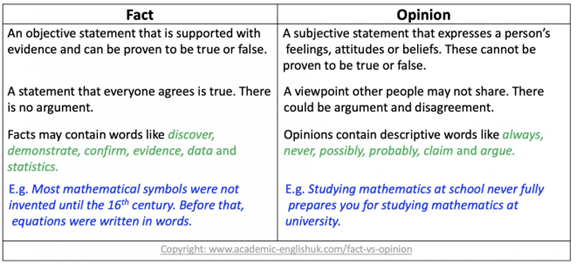
I’m not talking about genetics or education here, though both of those play a part. I mean there are some people who are so stupid they will drown staring up at the rain with their mouths hanging open. I’m talking about people who can’t be taught and missing certain basic instincts for self-preservation. People too stupid to keep themselves alive. People who aren’t just being contrary when they say, as one vatnik did today in an exchange with Pekka Kallioniemi, that a fact is “anything that you agree with and an opinion is anything you disagree with.” They actually think this is true.
And then the ice weasels come…
And the thing is, I don’t how to fight that. The info flood, we could try to ban all social media or counter ever ruzzian lie or regulate it all somehow. If it’s about traits, well, we can teach people to be aware of those and when/how to overcome them, just as I’ve learned to moderate my introversion so that I can teach and lecture and speak publicly. But what do we do about people—and I’m using the term loosely here, you should understand by now—about “people” who are simply missing the part of their brain that tells them that, ya know, some things are real and some things are not, and yes, it’s possible to find out which one a thing is? “People” too stupid to know they shouldn’t drink bleach?
Other than a worldwide project to cull the terminally stupid out of the human gene pool? Something like a deadly virus that would be easily preventable by some simple actions any half-intelligent creature would take to save their own lives and the lives of their offspring, say wearing a mask and washing one’s hands?
Marv? Is there funding in the biolab budget for something like…no?
Ah, ok then. Back to making memes.
Brought to you (tax-free!) by
The Department of the Unexpected and the Impossible. ; )
Read More About It:
American Psychological Association. (2023, June 26). Why some people are willing to believe conspiracy theories [Press release]. https://www.apa.org/news/press/releases/2023/06/why-people-believe-conspiracy-theories
Bowes, S.M., T. H. Costello & A. Tasimi (June 26, 2023). The Conspiratorial Mind: A Meta-Analytic Review of Motivational and Personological Correlates. Psychological Bulletin.
Kallioniemi , P. (2024, March 15). The soup central. YouTube. https://www.youtube.com/@TheSoupCentral
Levitin, D. (2015). The Organized Mind: thinking straight in the age of information overload. Dutton.