

5 criteria that are valued over just skills and qualifications. Let’s look at behind-the-curtain interviews at top design companies.
Almost every time I got an interview, interviewers will ask me “Where is your focus?”. For the first few times, without experience, I just answered “I can do everything. You know I can do UX research, UI design. I think code as well”. After that, they sent me emails wishing me luck for the next time.
 I have collected 6 keywords from dozens of my interviews and learnings from design leaders.
Value
Stakeholders
Curiosity
Business-centric outcomes
Your design focus
Why, why and why
What do interviewers look for?
Interviewers don’t expect much experience from an early stage designer — although you still can manage to have some industry-related experience in the next section. I have failed dozens of time while succeeded a few times to come up with this list:
Be curious and keep asking why to find solutions. You are an early stage designer, so be curious about everything around you. Interviewers want to know why you make those decisions, especially in the remote context. Your ability to solve problems is the top priority. Highlight the key problem you're going to solve — preferably in relation to business objectives or metrics. When I applied for the position as Community Coordinator at DesignX, I wrote them an email answering 2 questions together with my LinkedIn profile. You can be fresh and your qualifications are not perfect, but your approach to finding solutions is the key.

Open to feedback and appreciate it. I got my first full-time job, also an abroad position, as a product designer right after graduating from my first bachelor’s degree in International Business. I didn’t have any previous design knowledge at that time. My interview was on Skype. 2 HR staff asked me about projects I was involved in and how could I improved projects after 1.5 years of running it. My answer is I’m always open to feedback. I take in all the feedback, from my managers, my teammates, my clients, and summarize them so I can improve myself and dive into a new field. Knowing that my background was business, not design, my manager gave me much feedback on design, teamwork, even personal mental health (because I was abroad and I missed my family a lot). I appreciate every single piece of advice and minute of his time spent on me. When you make your stakeholders like you, the experience is no longer a barrier.

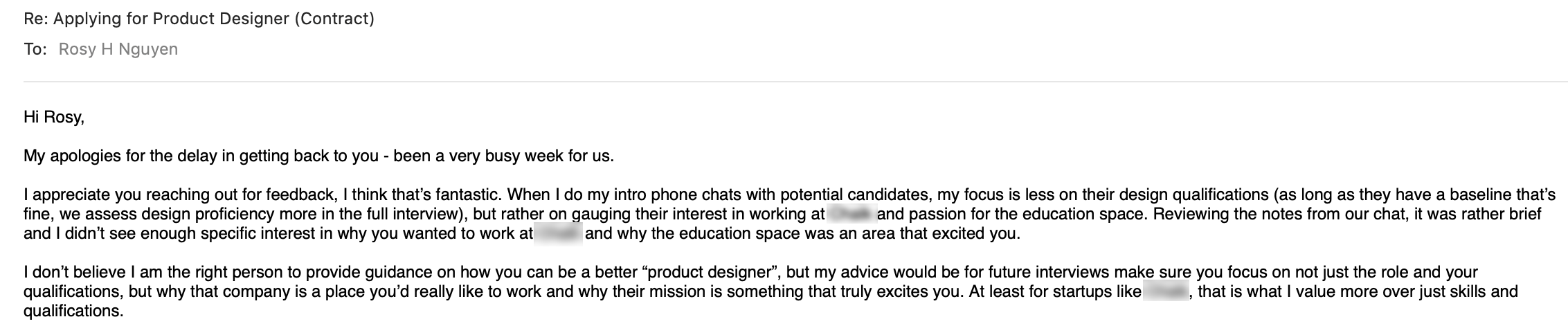
Know your stakeholders well, and make sure it matches your value. Your value can over just skills and qualifications. Stakeholders can be your future managers, HR people, your design team, your clients. Working with a company that has 10 designers is different from working with a 2 people design team. Understanding the organization you apply is critical, especially at startups. I once get rejected by a startup in Toronto with the reason for not showing enough interest in “why that company is a place you’d really like to work”.
 If you are applying for a big company with a bigger design team. Please study how you will report back to your stakeholders, how you plan to work with other designers in the team.
So which values you actually should bring to the table? I notice many junior designers show the testing results on the case study by expressing how easy users can use their devices. But when possible, highlight business-centric outcomes and values that you can bring to the team and the organizations. Remember, they hire you to bring value to a business, even if you play a designer role. You can read more about how to include business-centric value to your case study at “How to Write the Perfect Introduction to Your UX Case Study”.

Know yourself well and be focused. Be clear and concise, not overwhelming. One month ago, I had a virtual interview for the digital designer position at a toy company in Toronto. The conversation was like:
Lead designer: It seems you have played a lot of different roles. So where is your focus?
Me: I am best at the controlling whole process. From the idea stage till the day the product is launched.
Lead designer: I know you can do a lot of things, but what is really your focus? More on the research side, or design side? Or the development side?
Me (after thinking for 20 seconds): Actually I am more on the digital design side. My bonus point is I can code HTML, CSS and JavaScript.
Lead designer: That’s great. Please send me some digital design works later. I want to see it.
After that, I sent him around 5 different email HTML templates I did at the previous work and he was pleased.
What I mean here is being focused. Senior designers don’t expect you to know everything. For example, If you don’t know about A/B testing, just say you don’t know clearly about that, but you know UI design well and want to focus on it. This sounds better than you know everything. Now they acknowledge that you are proficient in UI, not usability testing. It’s much easier for them to evaluate you and assign the appropriate role for you.
Interview tips for early stage designers:
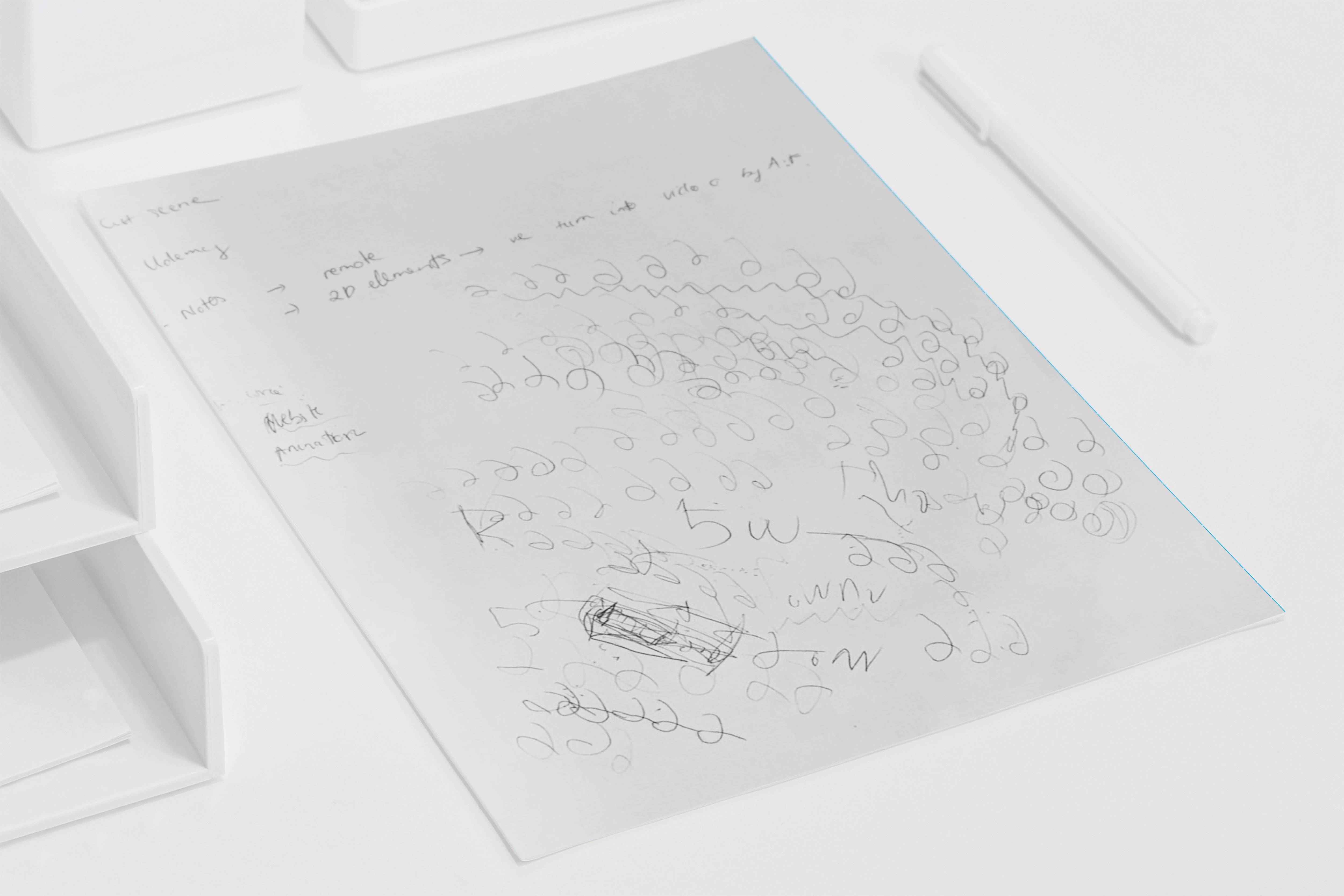
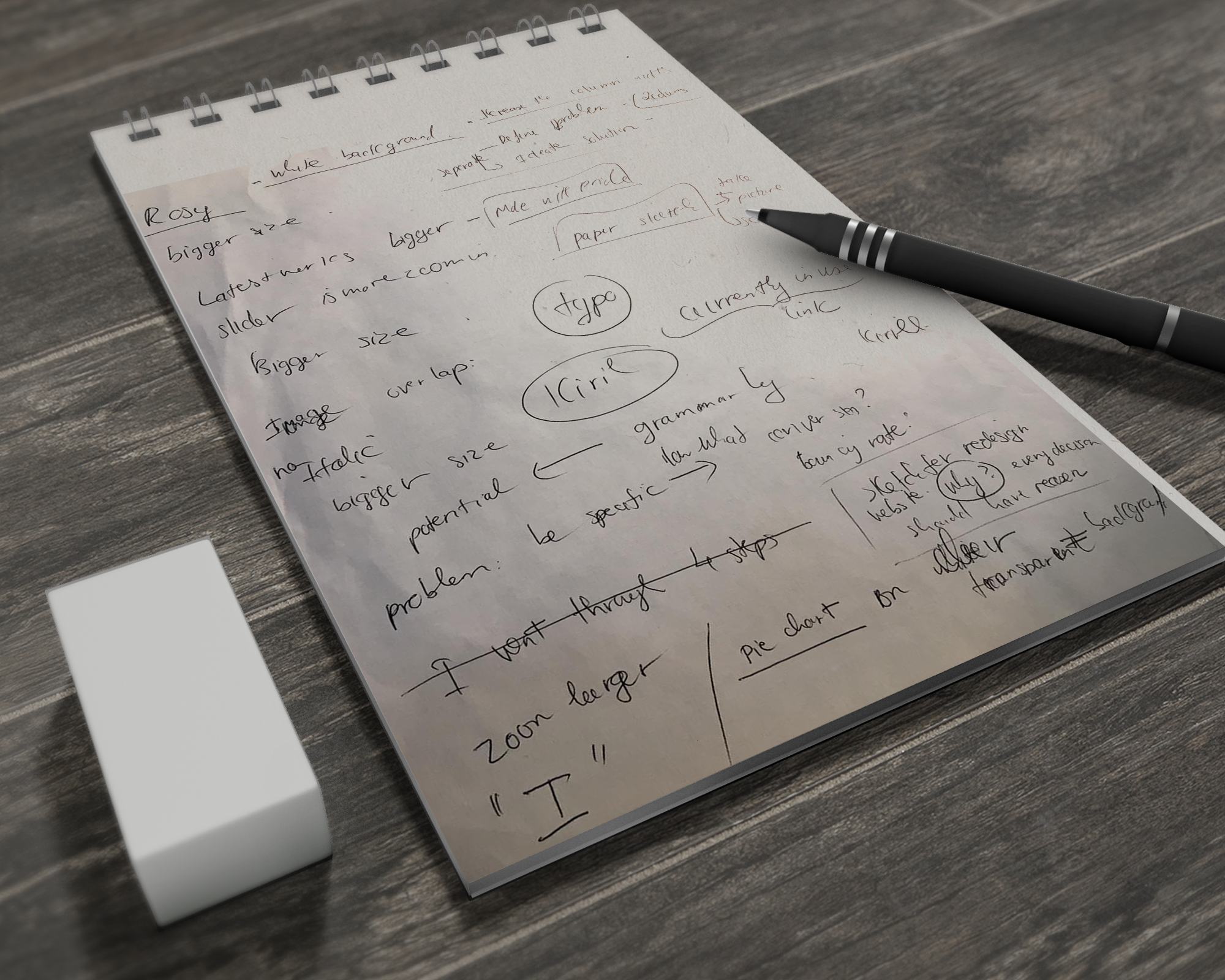
Prepare some papers, plan your answers with keywords, and write down interview questions so you don’t miss any. Feel free to doodle. Interviewers will continuously ask you questions. 2–3 interviewers may question you at the same time. On one of my phone interview, I noted down 2 main projects I would love to show them (the cut scene video and the Udemy course I’ve been working on). Whenever the interviewers asked me, I noted down the keywords and kept doodling while answering. That interview successfully turned into my full-time offer. Harvard Health Blog has proved that doodling can significantly improve your focus. Having a paper in front and you can answer more fluently and confidently.
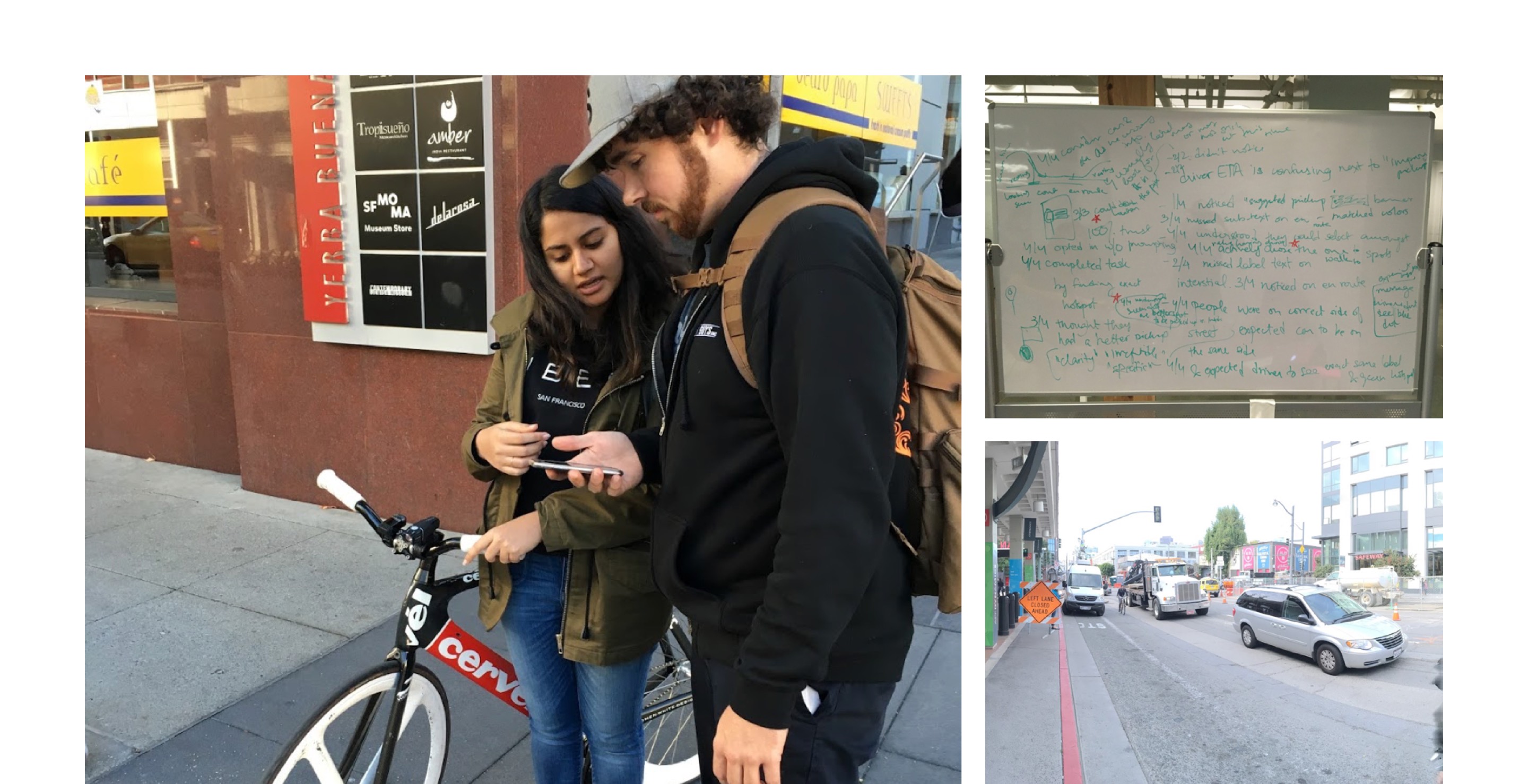
 If your work is messy, leave the messiness. If you come across problems while doing research for your case study, just show people how the messiness leads you to the final solution. Showing your mistakes, challenges is not always bad. If you can show how to overcome that messiness, it’s actually a bonus point. Simon Pan has presented an excellent case study about Uber with all the messiness and real-life challenges.
 Being too clean makes your case study unreal. Don’t need to write checkmark every stage in your case study because a real project is barely that neat.
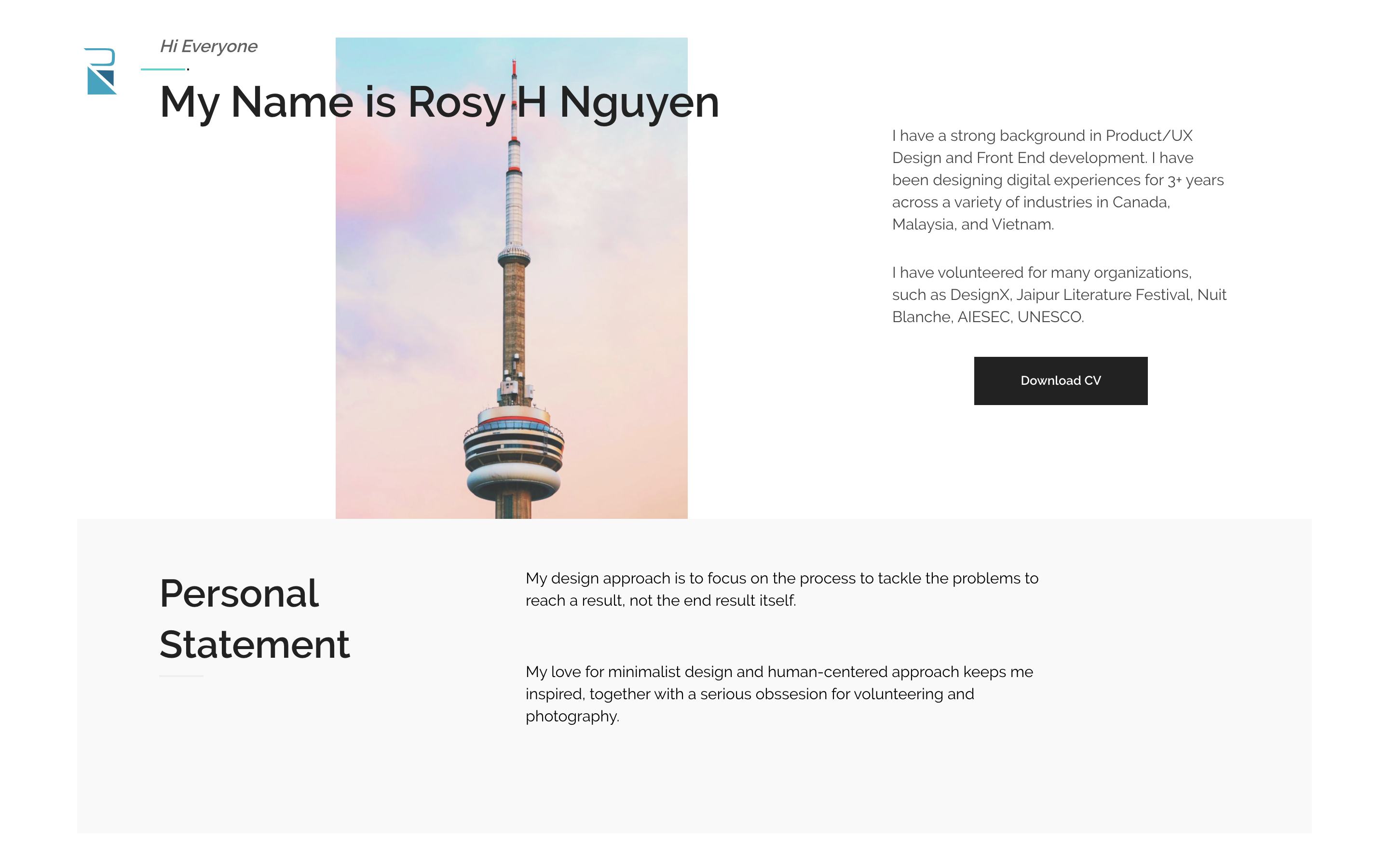
“About” page is important. It reflects your personality. It is how do you put yourself out there. I choose to include my personal statement, professional profile and work experience on my About page. A button on the page allows recruiters to download my resume. My personal statement says I love minimalist design. That’s why I try to design my page with minimalist style. If you contend that you love anime style, you should add more colour and make it look like anime-influenced. What you state has to match what you design.
 Prepare in case interviewers will ask you to raise some questions. If you are unprepared, it’s likely you will say you’re fine and no question. But you can choose to impress your future workplace by asking them a few questions:
What is your company structure?
How does the UX process work in your company?
What types of skills is the team missing that you’re looking to fill with a new hire?
What are the next steps after this interview?
You can view more questions to ask (and to avoid) in an interview on The Muse.
Get your portfolio reviewed and get feedback. You can never be perfect from day one so get your case study reviewed by senior designers. Many design communities support early stage designers with portfolio review and feedback. I have brought my portfolio to get reviewed by many senior designers and keep curating my case study (come back to #2 point — be open to feedback). You should be thankful to when a designer leaves you a comment, not when he says your portfolio looks awesome — just it! Here is some design community and designers that I received feedback from DesignX Community, Kirill Vechtomov mysoulteam, Amazing Design People list.
 Behind the curtain interviews at top design companies.
I decided to curate this interview process based on my experience and inspired by sharing from senior designers in my network.
First, the design department will scan your portfolio and resumes. If you pass this round, they will give you a short interview on the phone. After passing the call, you will be invited to their office for a full day interview(up to 6 hours).
Next, on the day you come to their office, there are a few scenarios:
You will have to present your case studies in your portfolio in front of their design team. The company designers will question your presentations at the end.
You will be given a design exercise and expected to come up with a problem statement and present it with a solution. Q&A follows.
After your presentation, you will speak to design team members one by one so that the company can evaluate if you can fit it their vibe and culture. A lot of decision is made based on gut. Therefore, be open to new ideas, spread the good vibes, be conversational, and raise your voice to ask smart questions.
P/s: We all are experiencing a hard time because of this pandemic. Most designers have to opt for remote work while many others get laid off. If you can’t find a job during this tough time, please don’t feel discouraged. Instead, this quarantine is the perfect time to sharpen your network, start your side hustles, volunteer for design communities, or start revamping your portfolio website.
In case you have any topics you wanna hear more about - or even just to say Hi, feel free to ping me on LinkedIn. I’ll manage to spend time writing an article about it.
P/s: If you find my sharing useful, please buy me a coffee here. This coffee will help me to stay awake and create more content for you ☕
🤞& 💌
Rosy