
Have you ever watched those videos of men trying the period cramp simulators? I always laugh my ass off while watching those. There’s just something about seeing big tough guys fold in half like a lawn chairs, cry in pain, and grab the nearest countertop while their legs buckle underneath them. It always brings a smile on my face.
But, they only demonstrate one small aspect of menstruation and not every person with a uterus even suffers from severe cramps. I don’t know about you but I suffer more from mental cramps than physical ones.
My brain becomes overloaded with every existential crisis I ever experienced, every conversation I ever had, and every decision I have and not yet have made. Everything feels heavier. Smaller choices feel bigger. The mental load that usually hums quietly in the background suddenly feels like it’s screaming.
I used to respond by trying to be more disciplined. More organized. More “on top of it.” It never worked. Now, instead of pushing through, I try to follow a set of bare-minimum rules that reduce cognitive load and help my nervous system feel safer.
My brain doesn’t need motivation or complex self-care rituals. It needs fewer and softer decisions.
This post may contain affiliate links. That means if you purchase through these links, I may earn a small commission at no extra cost to you. I only share resources and tools I genuinely use, trust, or believe will support your wellbeing.
1. I eat the same breakfast every day.
In high-capacity weeks, variety feels fun. This week, it feels like work. Choosing food first thing in the morning asks my brain to problem-solve before it’s even online. So I remove the question entirely. Same breakfast. Same mug. Same routine. It’s not about nutrition optimization, it’s about giving my brain one less fork in the road. Some great options are oatmeal, overnight oats, or yogurt bowls. Sometimes even just having a scrambled egg is enough.
2. I rotate the same comfort outfits.
Period week is not fashion week. It’s nervous-system-protection week. Soft fabrics, loose waistbands, predictable comfort. When my body already feels sensitive and inflamed, even clothing texture can tip me toward overwhelm. Getting dressed becomes easier when the decision is already made. I used to shame myself for always reaching for the same outfit but now I embrace it and already know what I am wearing when I am deep in it.
3. I pre-plan easy meals and snacks ahead of time.
Evening is when my mental battery is lowest and my irritability is highest. That’s the worst time to ask, “What should we eat?” So I decide ahead of time: simple meals, repeatable meals, low-effort meals. Decision removed, stress reduced, energy saved for just existing. Some of my favorites are baked potato bar, spaghetti bolognese, pizza and of course dark chocolate.
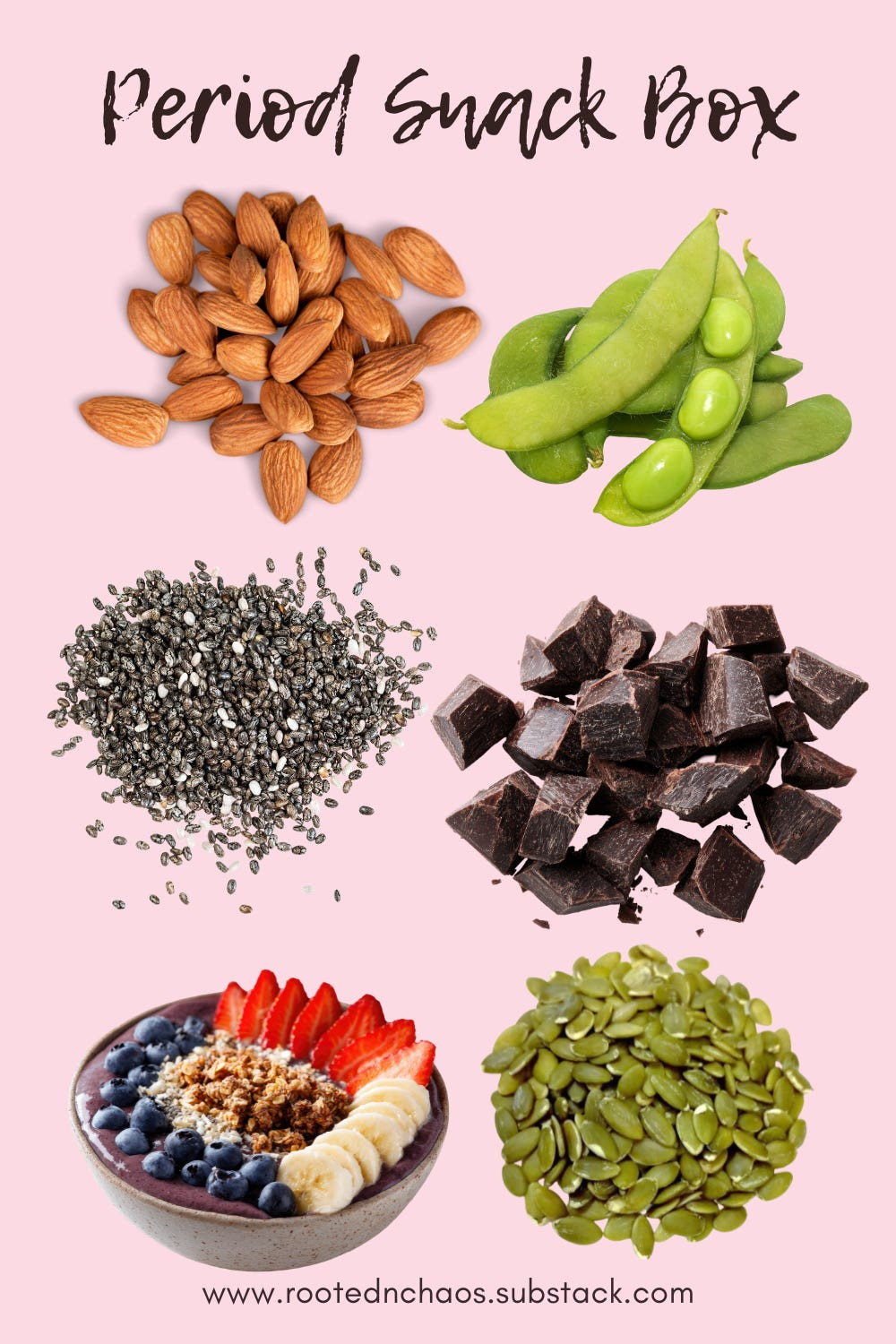
*Check out these snack containers, they have been a real game changer in our home.
4. I stick to slow movement not hard training.
My body is already working overtime this week. Inflammation is higher, energy is lower, and my nervous system is more sensitive. Pushing through intense workouts doesn’t make me stronger right now, it just drains what little capacity I have. So I shift to gentle walks, stretching, or slow yoga. Movement becomes about circulation, easing tension, and feeling better in my body, not proving anything. This is maintenance week, not performance week.
5. I don’t start new systems or habits.
This is not the week to reinvent my routine, reorganize the house, or “finally get disciplined.” Trying to overhaul my life when my capacity is lowest only fuels shame. Maintenance is the goal. Stability is the win. I stick to habits I already have formed and save the new habit trackers for the follicular stage. I do however check in with my body throughout the week and track mood, energy, and symptoms.
6. I choose one priority per day.
When everything feels urgent, nothing actually is. I pick one meaningful thing for work, home, or personal and let that be enough. This protects me from the spiral of trying to prove my productivity while my body is clearly asking for less.
7. I reduce social expectations.
Socializing requires emotional regulation, attention, and energy. During period week, I have less of all three. So I cancel what I can, keep plans low-key, and allow myself to be quieter. Protecting my energy is not antisocial, it’s preventative care.
8. I default to comfort over productivity.
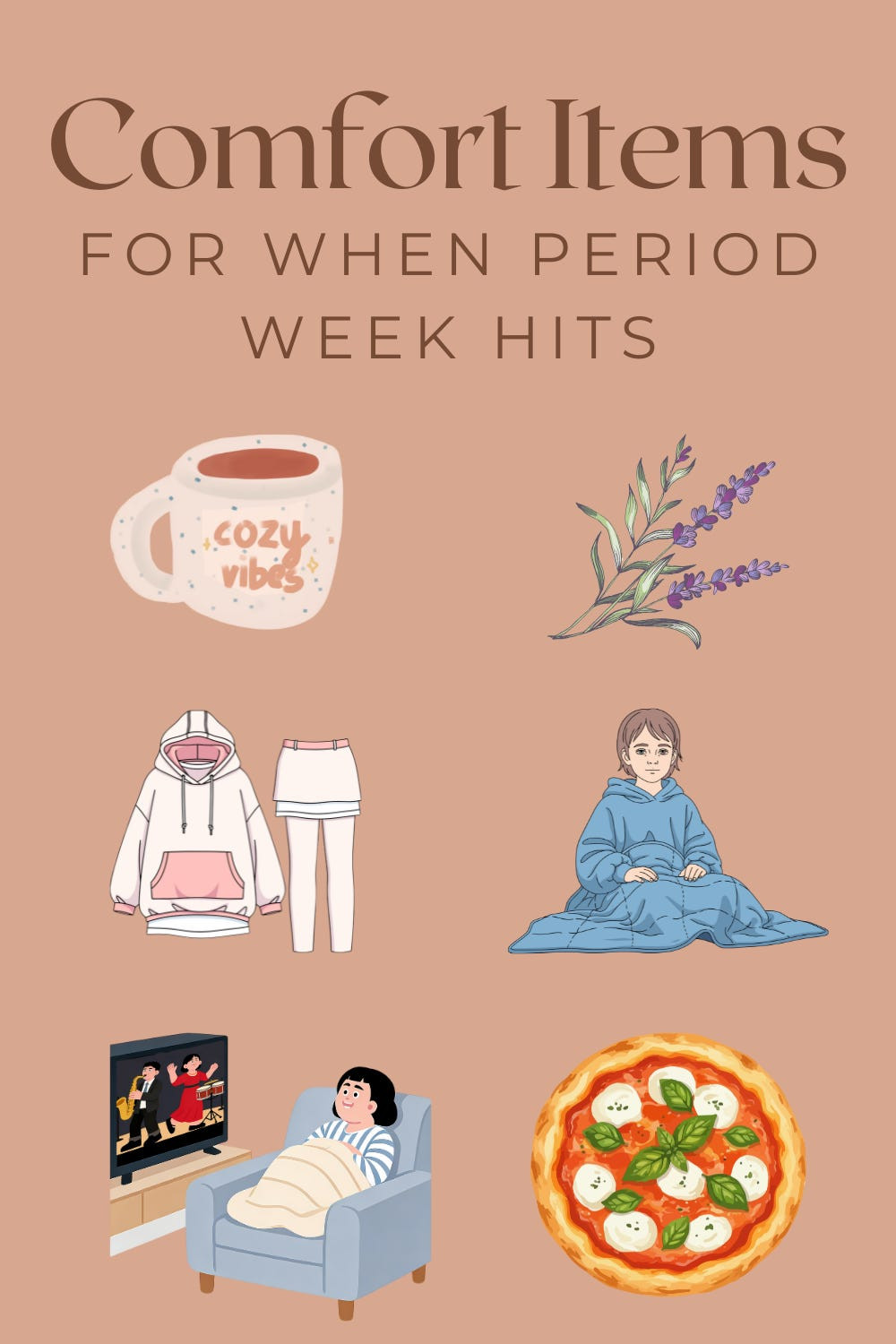
Comfort is not indulgent. It’s regulation. Warm drinks, low lighting, familiar shows, quiet time — these cues tell my nervous system it’s safe. When my internal world feels loud, external gentleness helps balance it. I will put FRIENDS on the TV, fill my diffuser with lavender oil, cuddle my Sloth Warmie and settle in for the day/evening.
9. I use “bare minimum mode” for chores.
Perfection is a trap this week. Function is enough. Clean dishes to usable level. Laundry contained. One clear surface. I remind myself that the goal is reducing stress, not creating a Pinterest kitchen. My bedroom is my safe space so it is the space I try to keep the cleanest.
10. If it feels heavy, I delay it.
Hard emails, big decisions, emotionally loaded tasks; they wait. Not forever. Just until my brain comes back online. Future-me with more capacity can handle them better than this version of me. Sometimes this can lead to feelings of guilt so I use my reframing worksheet to keep me out of my head.
These rules aren’t about giving up.
They’re about recognizing that my capacity changes and meeting myself where I actually am instead of where I think I should be.
I built these into a simple period-week comfort system so I don’t have to think my way through my lowest-capacity days. Because sometimes the kindest thing we can do is stop asking our brains to perform… and start helping our bodies feel safe.
That’s exactly why I put it all into the Period Week Comfort Pack — a gentle toolkit with bare-minimum routines, comfort supports, reflection prompts, and soft structure for when your brain and body both need less demand and more care. It’s designed for the version of you who doesn’t have extra bandwidth, so the support is already there when decision-making feels heavy.
You don’t need better decisions this week.
You need fewer decisions and more support.
Click here to purchase.
For more articles check out my Substack. https://rootednchaos.substack.com/