
Hello my friends,
Let's talk tourniquets...again. And Again. And a few more times for good measure since information still isn't sticking. We're going to go over a couple of topics brought up on my recent X post.
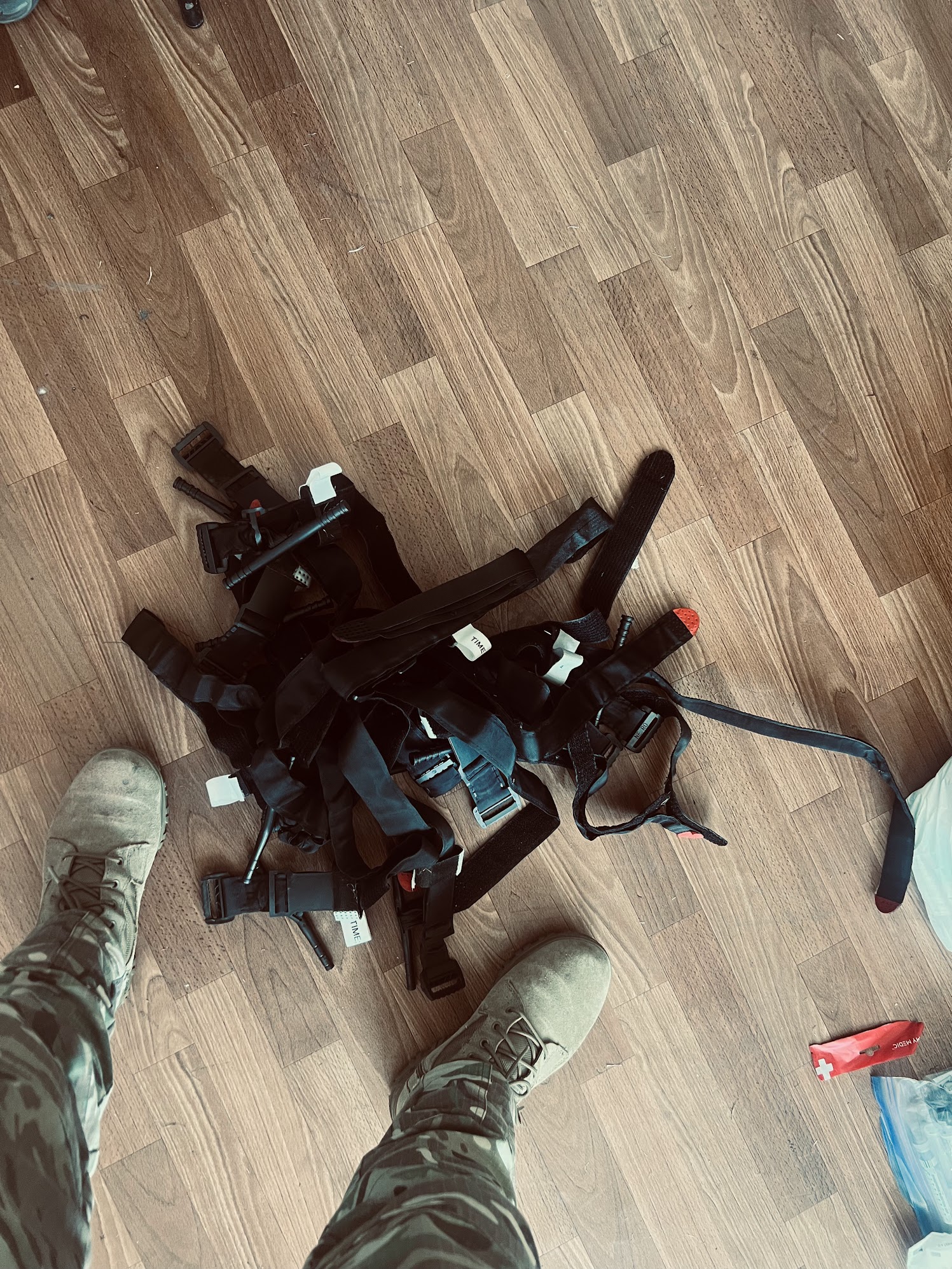
Boulevard of broken tourniquets...
Recently I was tagged in a troubling post where someone was recommending Rhino Rescue tourniquets and even RATS tourniquets. To be recommending two TERRIBLE options for trying to save someone that's massively bleeding from their extremities THREE YEARS into the war is astonishing. We all know by now that Rhino Rescue is Chinese made and has a high failure rate in addition to being bad quality. It's just NOT a chance I am willing to take on someone's life to save a few bucks. RATS tourniquets are glorified bungee cords, photo below. In addition to causing more tissue and vascular damage because it's too thin, it is NOT user friendly. If it's not CoTCCC recommended, I am only using it in training, that goes for any tourniquet that's not on the list. Here's one research based article why:
"In April 2022, a 19-year-old male underwent a bilateral below-the-knee amputation from an antipersonnel landmine. Massive hemorrhage prompted the use of bilateral CAT-like tourniquets. During transportation, the right tourniquet's windlass broke, resulting in a brisk hemorrhage. Due to the high patient-to-healthcare-personnel ratio, the bleeding remained unaddressed for an unknown amount of time, resulting in death from hemorrhagic shock."
https://pubmed.ncbi.nlm.nih.gov/39276363/
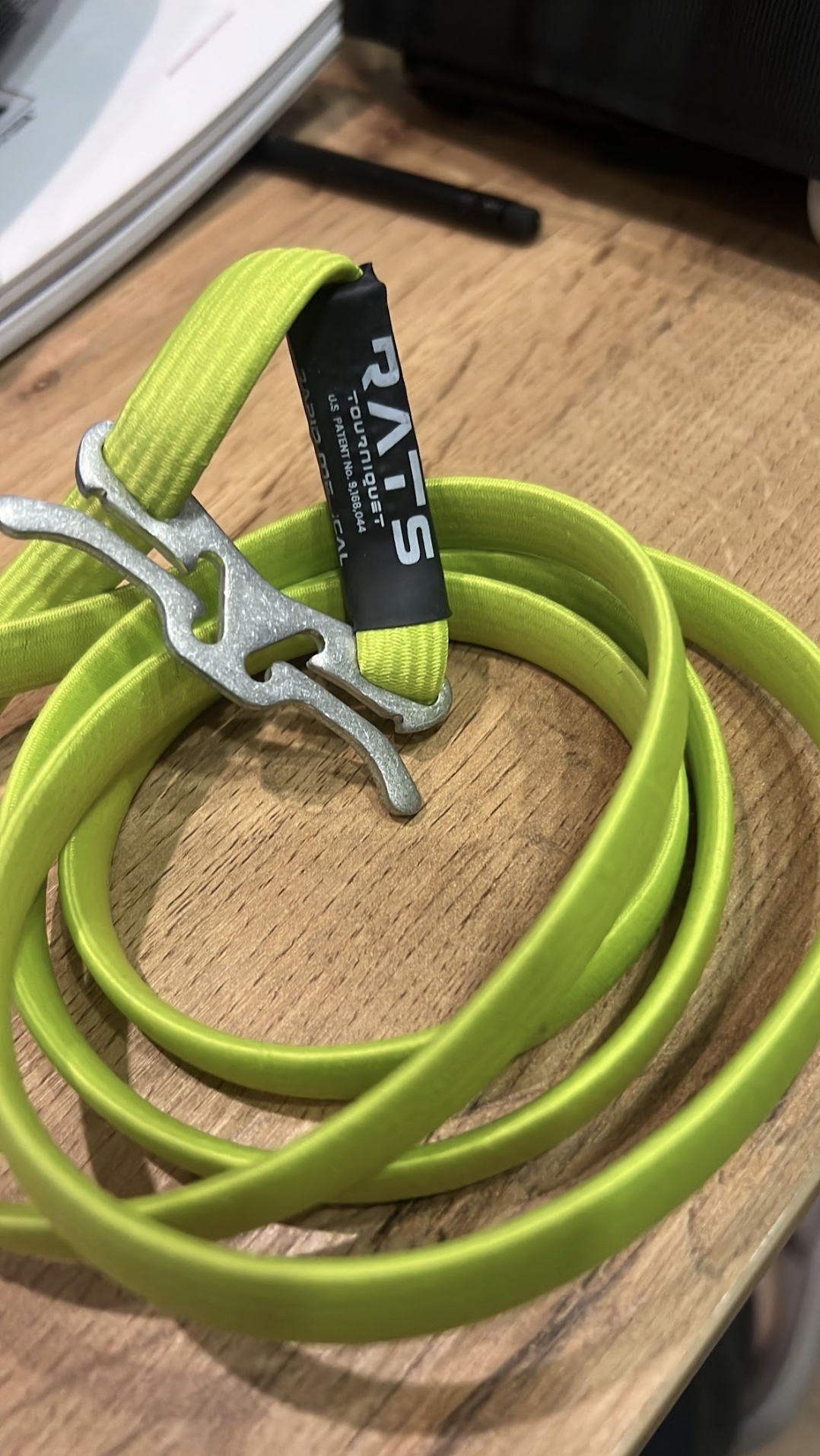
See? Glorified bungee cord. Its too long and too difficult to wrap with one hand. the band also needs to be much wider in order to help with stopping the bleed.
Just buy CAT7 which is what we mainly use in Ukraine or what's recommended by CoTCCC (we don't use rachet tourniquets here):
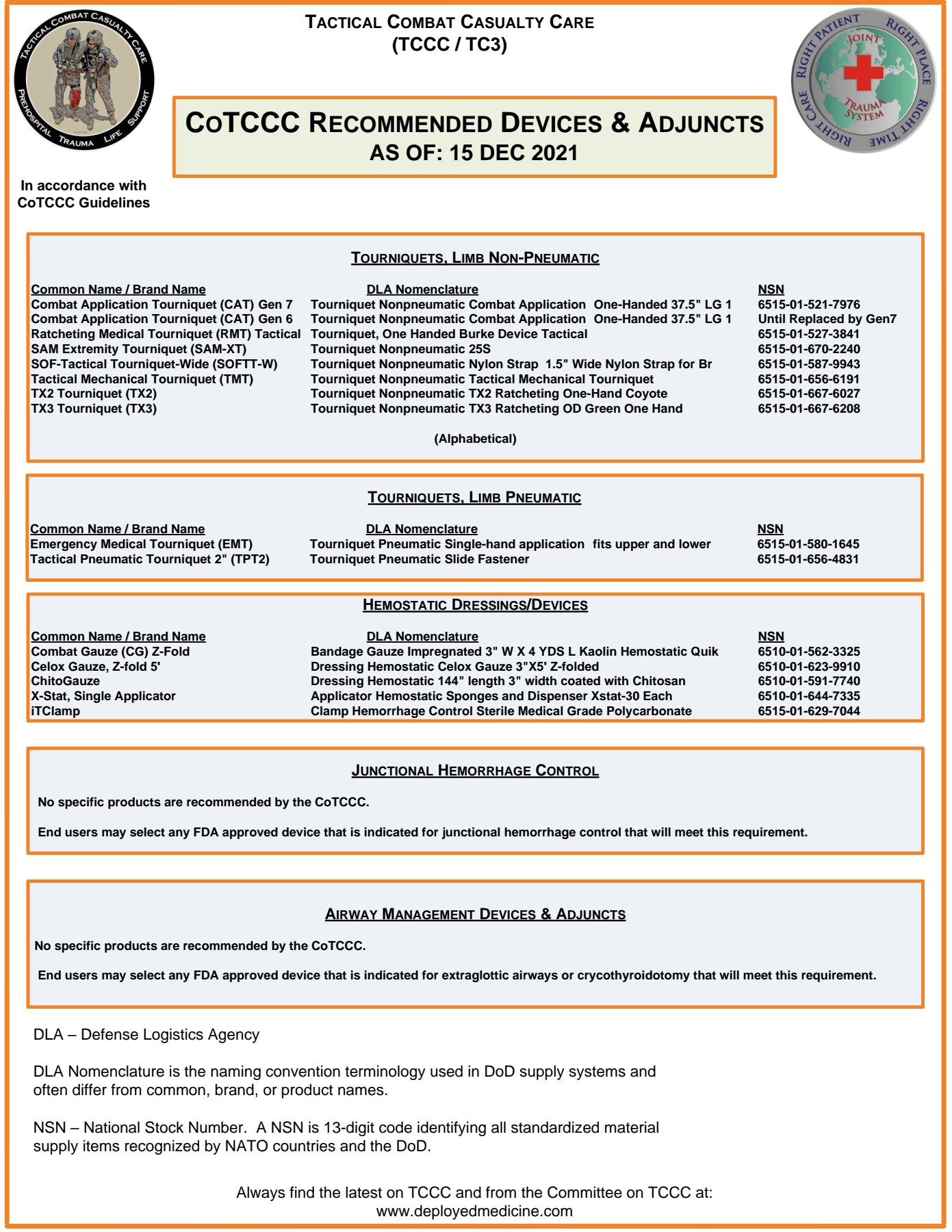 These are all IFAK and medical items that have a long test history. Hopefully we will see an updated list soon.
Now some other topics relating to tourniquets:
Tourniquet-What is it?
A tourniquet is a medical device used to stop massive hemorrhage in the arms and legs by cutting off the blood flow from the arteries when fully secured. It only stops massive bleeding if it is on and fully tightened, bleeding will start again if it is removed. The less blood a casualty loses, the better the outcomes and fewer problems medics and doctors will have.
MEDICS DO NOT REMOVE TOURNIQUETS. That is the job of the doctor/surgeon. Our job is to stop the bleeding until we get our casualty to the higher level of care.
"But what about saving the limb?! What about preventing unnecessary limb loss?!" FYI-Tissue death starts around 6 hours.
I hear you. I really really do. Couple things:
In TCCC we teach to spot the differences between what is massive bleeding and what isn't. HOWEVER- in a high stress situation, plus possible darkness, etc etc etc, better safe than sorry if one isn't sure.
That being said, we teach two skills both at the CLS and CMC level to help either save the limb or as much limb as possible.
1) Tourniquet conversion to save the limb: Basically you convert a wound that is has been tourniqueted but doesn't need a tourniquet into a packed wound. You pack it first with hemostatic gauze and then wrap it with a trauma bandage before you release the tourniquet. Once its packed, slowly release the tourniquet until it's loose but LEAVE IT ON loose in case of rebleeding.
This one is complicated for a few reasons:
-It has to be done in 2 hours or less if you're a CLS and within 4 hours or less if you're a CMC. If it's on for more than 5 hours, removal will result in releasing dangerous proteins into the blood stream that can shut down the kidneys and the heart (crush syndrome). This is why it must be done by a doctor/surgeon that can provide immediate treatment.
-If the casualty is in shock, conversion cannot be performed.
-If there is an amputation, absolutely not.
-Inability to monitor for bleeding.
These are the main ones for why you would not convert.
2) Tourniquet replacement to save as much of the limb as possible: this is where we put a new tourniquet closer to the injury that currently has a high and tight tourniquet. Once the new tourniquet is on and secured 2-3 inches above the wound, slowly release the old tourniquet and watch for rebleeding. Keep the old tourniquet on the limb loose as an insurance policy in case the new tourniquet fails to control the bleeding. This can be done at any point, especially if medics know there is a long evacuation wait time, it's better to do this as soon as possible.
We are absolutely teaching both of these skills here as per the TCCC guidelines at the CLS and CMC level. As always please don't hesitate to ask questions.
More information is available here on fakes and on IFAKs:
buymeacoffee.com/rimaziuraitis/real-vs-generic-why-cutting-corners-costs-lives
https://buymeacoffee.com/rimaziuraitis/what-ifak
On CAT7: