
 My love affair with the Afro began long before I was permitted to wear one.
I was growing up in Los Angeles during an extraordinary period of Black cultural and political awakening. Beyond the carefully managed images of Black life presented by mainstream media, an entirely different narrative was unfolding. It was a narrative of beauty without European approval, of intellectual independence, and of a people reclaiming the authority to define themselves. I was captivated.
The Black Panther Party, Angela Davis, Maya Angelou, Paula Kelly, and Los Angeles's own Mafundi Institute introduced me to expressions of Black consciousness that resonated with something already stirring within me. I was discovering a history far more expansive than anything offered in my schoolbooks, and with each revelation, my understanding of myself deepened. The Afro became one of the most visible expressions of that awakening.
I admired the natural hairstyles worn by women who seemed entirely comfortable occupying their own space in the world. Angela Davis, in particular, embodied an unapologetic Blackness that I found irresistible. Her Afro was magnificent, but what fascinated me was the woman beneath it. She possessed an intellectual authority and a willingness to confront injustice that made a lasting impression on my developing consciousness.
I wanted an Afro of my own. Unfortunately, my mother had other ideas.
Mom was a proper Southern woman, which meant there were certain expectations concerning how her daughters presented themselves to the world. Hair was among the more serious considerations.
Unfortunately, hairstyling was not one of my mother's particular talents. Whether straightened or nappy, my hair presented challenges she was neither especially skilled nor inclined to negotiate. Complicating matters was the fact that I was notoriously tender-headed.
For those unfamiliar with the expression, being tender-headed meant that even the most routine manipulation of my hair could become an ordeal. And in my case, it frequently did. I cried, squirmed, and protested throughout every shampoo, press, and curl. By the time the beautician finished, everyone involved had endured an experience that could scarcely be described as relaxing.
My performances were apparently so memorable that more than one beauty salon politely suggested that my mother and I take our business elsewhere. Imagine that. Being effectively banned from a beauty salon before reaching adolescence!
Nevertheless, my mother remained committed to the proposition that a respectable young lady ought to have her hair properly done. In our household, that generally meant a pressing comb and enough heat to persuade even the most determined kink to reconsider its position. I was thoroughly acquainted with the ritual, and I dreaded it.
Looking back, I suspect my desire to wear an Afro arose from two impulses that eventually became inseparable. One was the very practical wish to escape the discomfort of having my hair forcibly straightened. The other was my growing conviction that the hair emerging naturally from my scalp required neither correction nor apology.
As my understanding of Black consciousness deepened, so did my resistance to the pressing comb. What had once been a childhood ordeal was becoming a matter of principle.
At twelve, I asked if I could wear an Afro. My mother said no.
At thirteen, I tried again. The answer remained unchanged. I wasn't especially surprised. My mother was not a woman easily persuaded once she had made up her mind. Nevertheless, I continued making my case, convinced that my request was entirely reasonable.
By then, the matter had become considerably more important to me than a change of hairstyle. I wanted my appearance to reflect the consciousness taking shape within me. The distance between the girl I was becoming and the one sitting unhappily beneath a hot comb was growing increasingly difficult to reconcile.
Finally, during the summer before tenth grade, my mother relented. I have sometimes wondered what persuaded her. Perhaps she simply grew weary of the discussion. Perhaps she recognized that my determination was unlikely to diminish. Or perhaps she had finally exhausted the patience of every beautician within a reasonable driving distance. Then again, it may have been my rather compelling observation that she wore her own hair natural, so why couldn't I?
Whatever the reason, I had finally received permission. And I wasn't about to waste another minute.
I remember the extraordinary satisfaction of washing the straightness out of my hair. What I hadn't anticipated was that my hair would require a little time to remember its natural disposition.
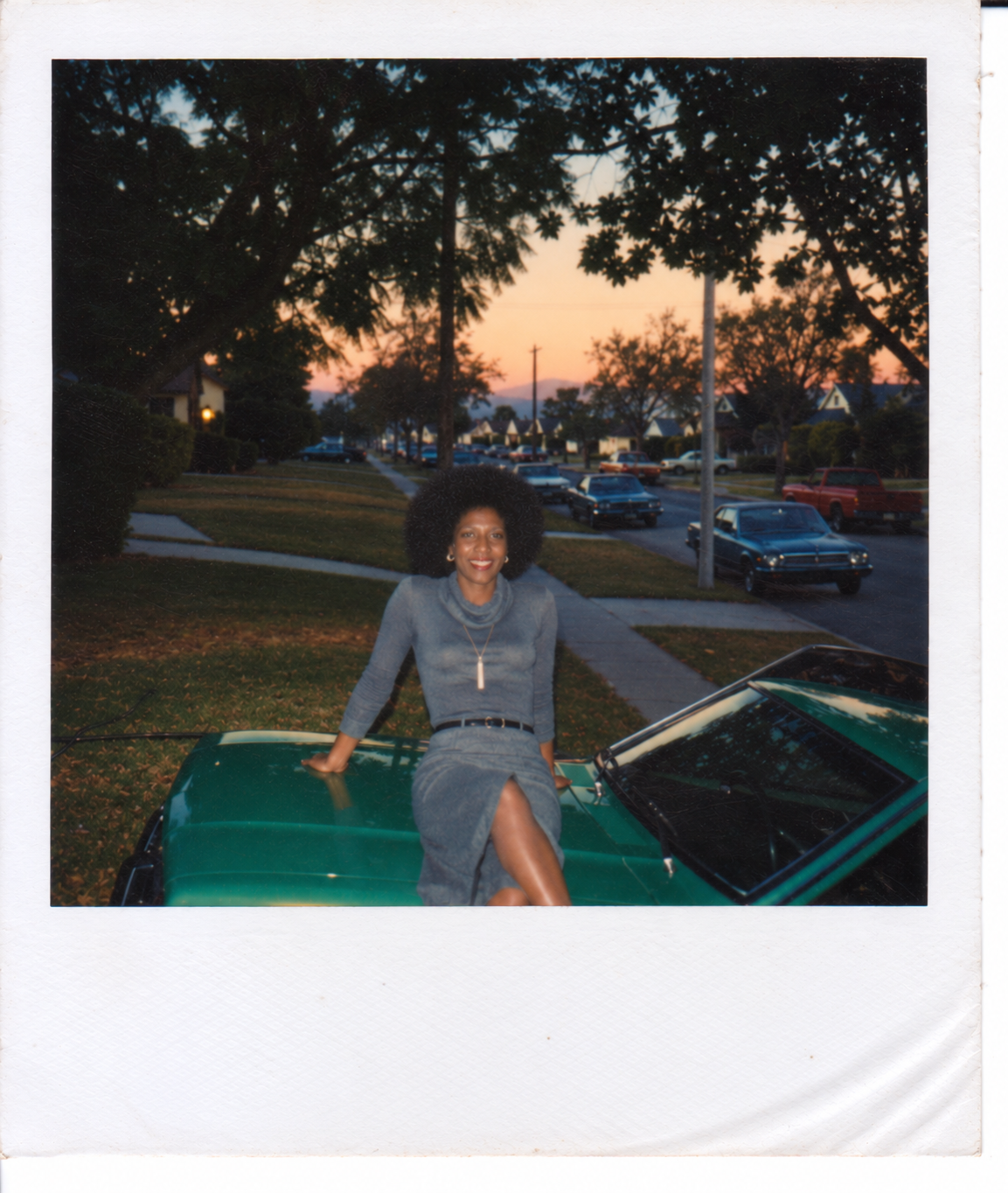
After years of submission to the hot comb, my first attempt at an Afro was rather disappointing. The sides showed promise, but the middle fell limp, still bearing the evidence of countless sessions beneath a pressing comb. My hair had been trained to lie down for so long that it wasn't quite prepared to stand at attention simply because I had declared my independence.
I found the situation both frustrating and faintly amusing. Here I was, ready to make my grand entrance into the world of natural hair, and the crown of my head was apparently reluctant to join the revolution.
Nevertheless, I persisted.
Afro Sheen became an essential part of my grooming routine. I oiled my scalp, kept my hair moisturized, and patiently encouraged my natural texture to return. Gradually, my Afro began to take the shape I had imagined.
There was something deeply satisfying about that process. My hair was recovering from years of being pressed into conformity, and I was discovering the pleasure of allowing it to exist on its own terms.
I had begun to associate straightened hair with something far more consequential than appearance. In my adolescent understanding, a relaxed hairstyle could suggest a relaxed mind—one conditioned to accommodate the expectations of a dominant culture whose standards of beauty had little regard for our natural features. I understood, even then, that a woman's hairstyle did not necessarily reveal her convictions. Nevertheless, I was determined that my own hair would reflect mine.
And so, every two weeks, washing my hair became a private act of resistance. As the water moved through my coils, I silently reaffirmed my refusal to accept someone else's definition of beauty. I was washing away more than the remnants of a press and curl. I was consciously rejecting the notion that my natural appearance required alteration to be worthy of admiration.
What began as a bi-monthly grooming ritual had become an exercise in self-determination, long before I possessed the language to describe it as such. That ritual also gave me a curious sense of continuity between the ideas I was encountering in the Black consciousness movement and the ordinary business of getting ready for school. I could spend an afternoon learning about Black liberation and return home to practice a small expression of it in my own bathroom.
My Afro was becoming the outward expression of convictions I was increasingly prepared to defend.
By the time I entered tenth grade, I was wearing more than a new hairstyle. I was wearing my politics.
By 1976, I had acquired something of a reputation. I was a troublemaker. At least, that was how my willingness to challenge accepted narratives was sometimes interpreted.
I questioned the misinformation routinely presented as Black history. I was disturbed by the disproportionate presence of liquor stores in Black neighborhoods and had no hesitation about expressing my concerns. I wanted to know why certain conditions were treated as inevitable and why the people most affected by them were so rarely afforded the opportunity to determine what happened in their own communities.
These were not abstract questions to me. They concerned the world I inhabited and the people whose lives were unfolding around mine.
I was young enough to believe that an obvious injustice ought to be challenged immediately, and sufficiently outspoken to make my position known.
I suspect I exhausted the patience of more than a few adults. Yet, for all my revolutionary enthusiasm, I was never particularly interested in joining an organization. I was, as I sometimes describe myself, a rebel without a group.
I moved among different circles, participating in activities wherever I found something that nourished my curiosity or expanded my understanding. I enjoyed the exchange of ideas and the opportunity to learn from people whose experiences differed from my own. But belonging to a particular group held little appeal.
My independence was not a rejection of community. I simply understood, even then, that meaningful participation did not necessarily require formal affiliation. I wanted the freedom to explore without being obligated to adopt every belief or position associated with a particular organization.
That tendency has remained remarkably consistent throughout my life. Looking back, I recognize those years as an important part of my education, although much of what I learned had little to do with formal schooling.
My exposure to Black political thought sharpened my awareness of the relationship between personal experience and the larger social conditions shaping it. I became increasingly interested in the ways people responded to injustice, particularly the accommodations they made simply to survive circumstances they could not easily change. I was also beginning to trust my own perceptions.
I could enter a room and sense when something was amiss, even when everyone appeared perfectly agreeable. I noticed inconsistencies between what people said and what their behavior suggested. I was drawn to conversations about spirituality and the less visible dimensions of human experience.
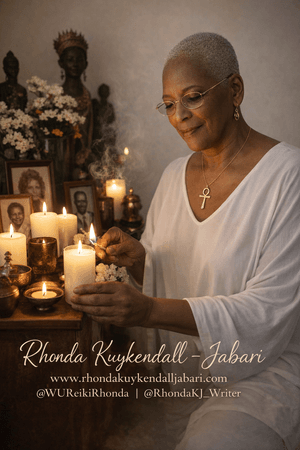
At the time, I had no particular framework for understanding these inclinations. They were simply part of how I experienced the world. Only much later would I recognize their relationship to the intuitive awareness that informs my work as a healer.
I don't imagine that my teenage fascination with Black liberation somehow destined me to become a Reiki Master Teacher. Life rarely unfolds according to such convenient narratives. What I do recognize is a continuity of consciousness.
The girl who questioned the conditions affecting her community eventually became a woman whose work centers on healing and personal agency. My understanding of what constitutes liberation has expanded considerably, but I remain interested in the circumstances that prevent people from living fully within their own authority. Healing, as I understand it today, cannot be entirely separated from that inquiry.
Age has also afforded me a more generous understanding of my mother's position. As a young girl, I interpreted her insistence on pressed hair primarily as an unnecessary restriction. I wanted the freedom to make my own choices, and her refusal seemed hopelessly out of step with the cultural changes unfolding around us.
I understand now that my mother belonged to a generation of Black women for whom appearance carried implications that I was only beginning to comprehend. Respectability was not always a matter of personal preference. For many Black women of her generation, it was a carefully cultivated means of navigating a society in which opportunities could be denied on the basis of something as seemingly inconsequential as a hairstyle.
A proper Southern woman knew that presentation could influence how one was received, and sometimes how one was treated. My mother had learned to negotiate those realities. I was growing up in a period when young Black people were increasingly determined to challenge them.
Neither of us was operating without reason. We were simply approaching the question of Black womanhood from different historical experiences.
I can appreciate the care behind my mother's expectations without surrendering the importance of my youthful resistance. And I remain grateful that she eventually allowed me to make the choice for myself.
Over the decades, my relationship with my hair has continued to evolve. I've worn it in different styles and lengths, each reflecting something of the woman I was at the time. I've also discovered that cutting my hair can carry as much personal significance as allowing it to grow. But I have never forgotten that first Afro.
I remember the pleasure of feeling my natural texture beneath my fingertips. I remember the anticipation of returning to school with a hairstyle I had fought for, and the satisfaction of presenting myself to the world on my own terms. More than anything, I remember the girl who wore it.
She was developing a mind of her own in a world that did not always welcome independent Black girls. She had an emerging sense of justice and very little inclination to remain silent when something offended it. I look back on her with considerable affection. I also recognize how much of her remains in me.
My work has taken me into the healing arts, where the questions I ask are often more intimate than those I raised in 1976. Yet I continue to believe that people deserve the opportunity to understand themselves beyond the limitations imposed by others.
I remain suspicious of narratives that diminish human possibility, particularly when those narratives have been repeated so often that they are mistaken for truth. And I still prefer to find my own way.
That first Afro was an early expression of a disposition that would shape much of my life. It was my introduction to the deeply personal experience of claiming authority over my own body, even as I was beginning to understand the broader struggle for Black self-determination.
I could not have articulated all of that as a teenager. I only knew that something important had changed when I washed the press and curl out of my hair. For the first time, I saw my natural reflection and felt no desire to alter it.
My Afro was never merely a hairstyle. It was the beginning of a conversation with myself about freedom, identity, and the courage to live according to my own understanding.
Fifty years later, that conversation continues. And I am still listening.
What part of yourself have you had to reclaim from the expectations of others, and what did it take for you to finally embrace it?