
 When I first stumbled across the book Hexing the Patriarchy back in 2020, it practically jumped off the shelf at me. That title. That cover. A striking Black woman—head high, regal, adorned with accessories that whispered ancestral power. I felt seen. Or so I thought.
Imagine my disappointment when I discovered that the author was not Black. (Look it up for yourself.) And upon quickly browsing, nowhere in the book could I find meaningful acknowledgment of the image she used—or the traditions, the pain, or the power behind it. I wondered: Why that cover? Why our image? Why our magic?
At the time, I made a conscious decision not to publicly comment. I understand the business side of things. The book. The kit. The clever branding. The neat packaging of “empowerment” into a saleable lifestyle product. I didn’t want to be perceived as tearing down another woman’s work. But now, a few of my followers have asked me directly, “What do you think of this book? Of this movement?” And because they asked with sincerity, I feel compelled to respond—with honesty.
The phrase “Hex the Patriarchy” blends magical rebellion with feminist outrage. It comes from a lineage of feminist witchcraft activism that began most famously with the W.I.T.C.H. collective (Women’s International Terrorist Conspiracy from Hell) in 1968. On Halloween that year, a group of radical white feminists hexed Wall Street in protest of capitalist and patriarchal oppression. They wore pointy hats, cloaks, and performed rituals as political theater. Other covens popped up across the U.S., each one performing its own brand of spellcraft-as-protest.
Clever. Revolutionary. Witchy. But also, deeply white.
Black and Indigenous women were not at the table—not as leaders, not as voices, and certainly not as the honored ancestors of the magical traditions that many of these feminist witches drew from.
In 1968, while W.I.T.C.H. was hexing Wall Street:
Dr. King had just been assassinated.
The Black Panther Party was building free clinics, breakfast programs, and community defense initiatives.
Black women were organizing for reproductive justice and racial equity—without the luxury of capes and media-ready theater.
We were healing our communities with rootwork, Hoodoo, conjure, prayer circles, and quiet strength passed down from grandmothers who had survived forced labor, sexual violence, and generational erasure.
Our magic was always there—but it wasn't hashtag-ready, and it wasn’t invited to the feminist table unless it served white feminist causes.
White feminists have long welcomed Black women into their movements—but only when convenient. When it’s time to fight for bodily autonomy, Black women are asked to show up. When it's time to talk about police violence, economic injustice, or systemic anti-Blackness? Crickets.
So when I saw Hexing the Patriarchy the book, with its powerful Black feminine image on the cover—but little to no engagement with Black magical traditions—I felt the sting of erasure. Again.
This is not to say white women can’t be allies. The author of this tome may very well be an powerful ally. But an ally tells the truth—about who built the table, whose voices are missing, and who is constantly being asked to lend power without reciprocity.
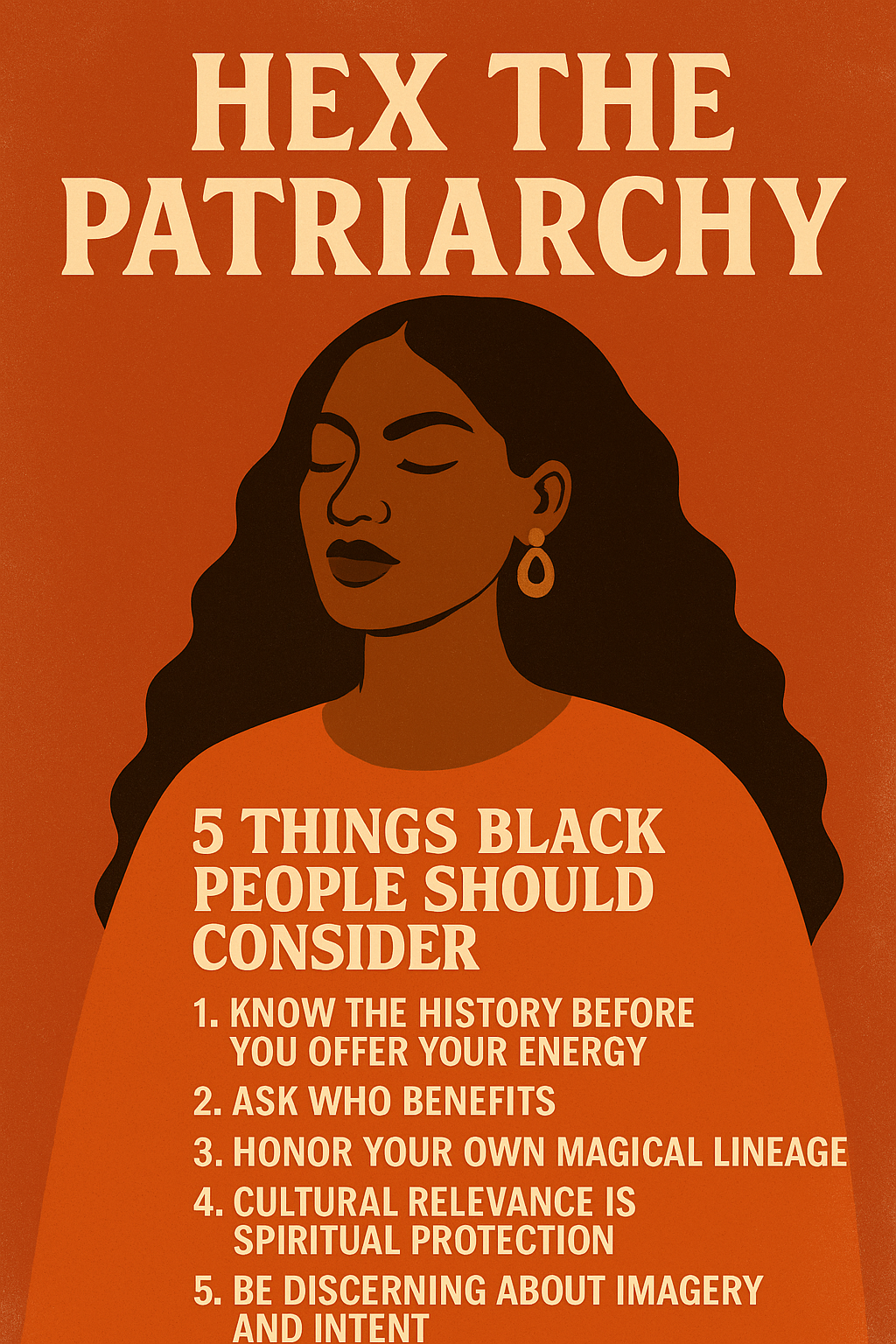
5 Things Black People Should Consider Before Aligning with “Hexing the Patriarchy”
Know the History Before You Offer Your Energy
Movements like W.I.T.C.H. often excluded BIPOC voices and traditions. Do your homework. Not every slogan is rooted in liberation for all.Ask Who Benefits
Is this movement amplifying Black and Indigenous practitioners? Or are they capitalizing on our aesthetics, language, and sacred practices without accountability?Honor Your Own Magical Lineage
Hoodoo, rootwork, Yoruba, Obeah, Ifá, curanderismo, and Indigenous plant medicine are not aesthetic trends. They are systems of survival. Learn them. Practice them. Protect them.Cultural Relevance is Spiritual Protection
In a time of #FAFO (F*** Around and Find Out), be clear: aligning with movements that don't see or protect your Blackness can be spiritually dangerous. Your magic deserves alignment with your liberation.Be Discerning About Imagery and Intent
When you see a Black woman on a book cover, in a ritual, or on a social feed, ask: Is this honoring, or is this harvesting? Not all representation is respect.
FINAL WORD
Hexing the patriarchy is real work. And we’ve been doing it—every time we show up in our power, protect our joy, remember our ancestors, or reclaim our breath in a world designed to take it from us. But not every movement that uses our image, our magic, or our language is truly aligned with our freedom.
We are the daughters of conjure women, midwives, priestesses, and rebels. Let us move with wisdom, power, and precision. And let us never forget that the magic we wield didn’t come from hashtags or headlines—it came from survival. From spirit. From us.