
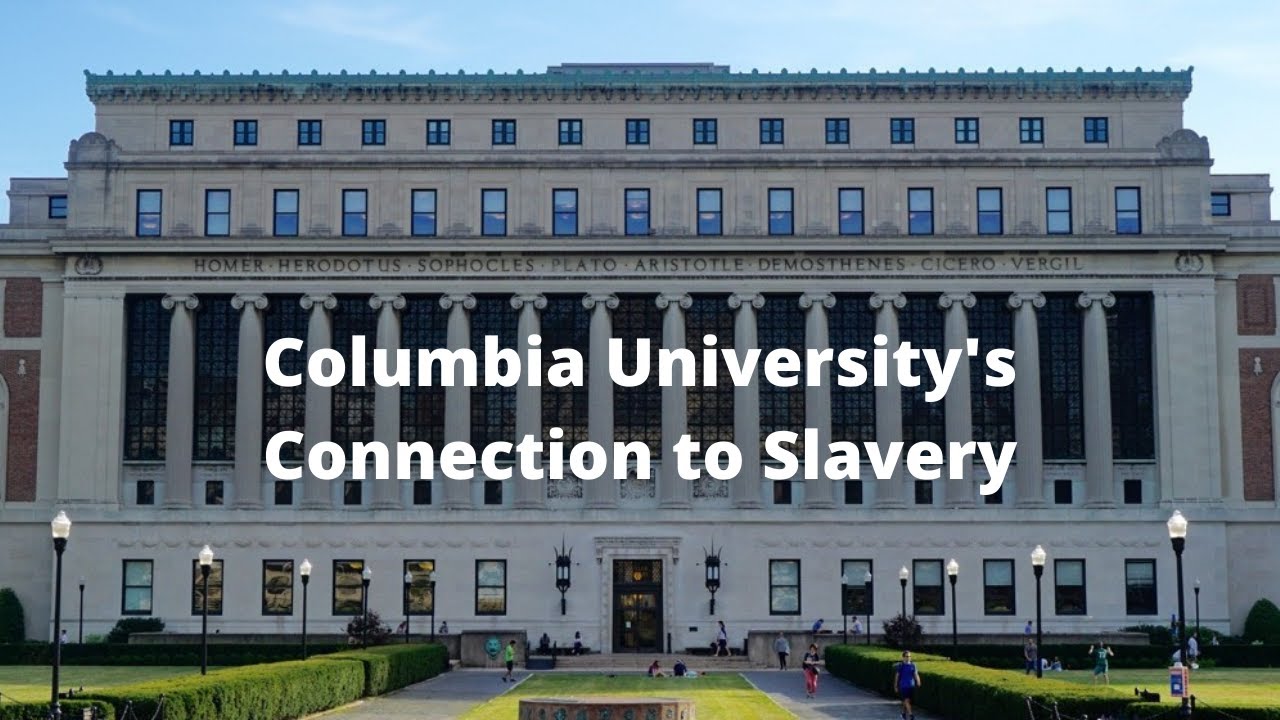
Columbia University’s Hidden Past: New York’s Elite Institution Built on the Backs of the Enslaved
A Black History Minute Deep Dive
When most people hear the words “slavery” and “United States,” they automatically picture the Deep South — cotton fields, plantations, and states below the Mason-Dixon line. But that’s only part of the truth. The other part — the part they don’t like to teach — is that the North was just as invested, just as involved, and just as financially committed to the business of enslaving Black bodies.
And nowhere is that clearer than in New York City, a place that loves to brand itself as “progressive,” “liberal,” and “forward thinking.”
But behind the skyscrapers, the universities, and the polished reputation lies a different story — a story that includes chains, auctions, and institutions built with money earned off the backs of enslaved Black Americans.
One of those institutions?
Columbia University.
THE AD THEY HID IN PLAIN SIGHT
In 1755, a New York City newspaper printed an article celebrating the swearing-in of the governors of the newly founded King’s College — the school that would eventually become Columbia University.
But at the bottom of that same page, in the very same newspaper, sat a chilling advertisement:
“For sale: two likely Negro boys and a girl.”
Let that sink in.
On the top half?
The birth of one of America’s most prestigious universities.
On the bottom half?
The business of buying and selling Black children like livestock.
That ad didn’t shock anyone at the time.
It didn’t raise eyebrows.
It didn’t stir debate.
Why?
Because many of the people running King’s College — presidents, trustees, donors, and even students — owned enslaved Black Americans.
This wasn’t an uncomfortable footnote.
This was the foundation.
THE NORTH WASN’T INNOCENT. IT WAS INVESTED.
New York City was once one of the largest slave ports in America. The streets of Wall Street — literally — saw auctions of enslaved men, women, and children. The economy of the city thrived off maritime trade, sugar refineries, shipping industries, and banking systems fueled by slavery.
Columbia University, then King’s College, fed on the same economic bloodstream.
Early donors profited from the slave trade.
Trustees held human beings as property.
Students came from wealthy slaveholding families.
Presidents themselves owned enslaved laborers.
These aren’t allegations — they are documented facts now being pulled out by Columbia’s own internal research.
The same institution that stands today as a symbol of elite academia was once financially supported by the exploitation, oppression, and sale of African people.
THE REPORT THAT CHANGED THE CONVERSATION
Columbia, in recent years, finally commissioned research on its historical ties to slavery. What did they find?
Exactly what Black historians and FBA people have been saying for decades:
Columbia’s early leadership was deeply entangled with slavery.
Enslaved labor helped support the lives and households of university officials.
Wealth that built educational infrastructure was linked directly to slave-based economies.
New York’s colonial elite — including the founders of King’s College — were major players in the trafficking and ownership of African people.
This wasn’t “the South’s problem.”
This was America’s problem — top to bottom, North to South, Ivy League to rural plantation.
THE WHITEWASHING OF ELITISM
Columbia University, like many Ivy League schools, benefited from a historical amnesia that conveniently erased its uncomfortable beginnings.
For centuries, the narrative was:
prestige
scholarship
innovation
academic excellence
But missing from that convenient Ivy League story was the reality that Black suffering helped create the economic foundation that allowed these institutions to rise.
Students today walk across manicured lawns and marble halls that exist because enslaved Black Americans once walked across auction blocks and plantation fields.
This contrast is not just historical — it is moral.
WHY THIS MATTERS FOR BLACK AMERICANS TODAY
Black Americans continue to deal with educational barriers, systemic exclusion, wealth inequality, and intergenerational trauma — all tied to a system that institutions like Columbia benefited from.
Understanding Columbia University’s connection to slavery isn’t about guilt.
It’s about accountability.
It’s about truth.
It’s about recognizing that:
Black children were sold while white children were educated.
Black bodies were exploited while white wealth was established.
Black lives were devalued so white institutions could flourish.
And it’s about correcting a false narrative that the North was somehow detached, innocent, or morally superior in the machinery of slavery.
BLACK HISTORY MINUTE’S VERDICT
Columbia University is one more example of how America’s most prestigious institutions were built with money soaked in the pain, labor, and exploitation of enslaved Black Americans.
So today?
Black History Minute shuns Columbia University for its connection to slavery — and for the centuries it took them to acknowledge it.
Because truth delayed is still truth denied.
THE BLACK FACTS
Columbia University began as King’s College, founded in 1754.
In 1755, a newspaper celebrated the college’s leadership while advertising enslaved Black children for sale on the same page.
Many of the early presidents, trustees, donors, and students were slaveholders.
New York City was a major center for the slave trade and slave-dependent commerce.
Columbia’s wealth and development were tied directly to slavery-based economies.
A new university report confirms long-standing evidence of Columbia’s financial and social ties to slavery.
Black suffering and forced labor helped shape the educational foundation that privileged white students would go on to inherit.
Columbia’s acknowledgment is recent — but the damage stretches across generations.