

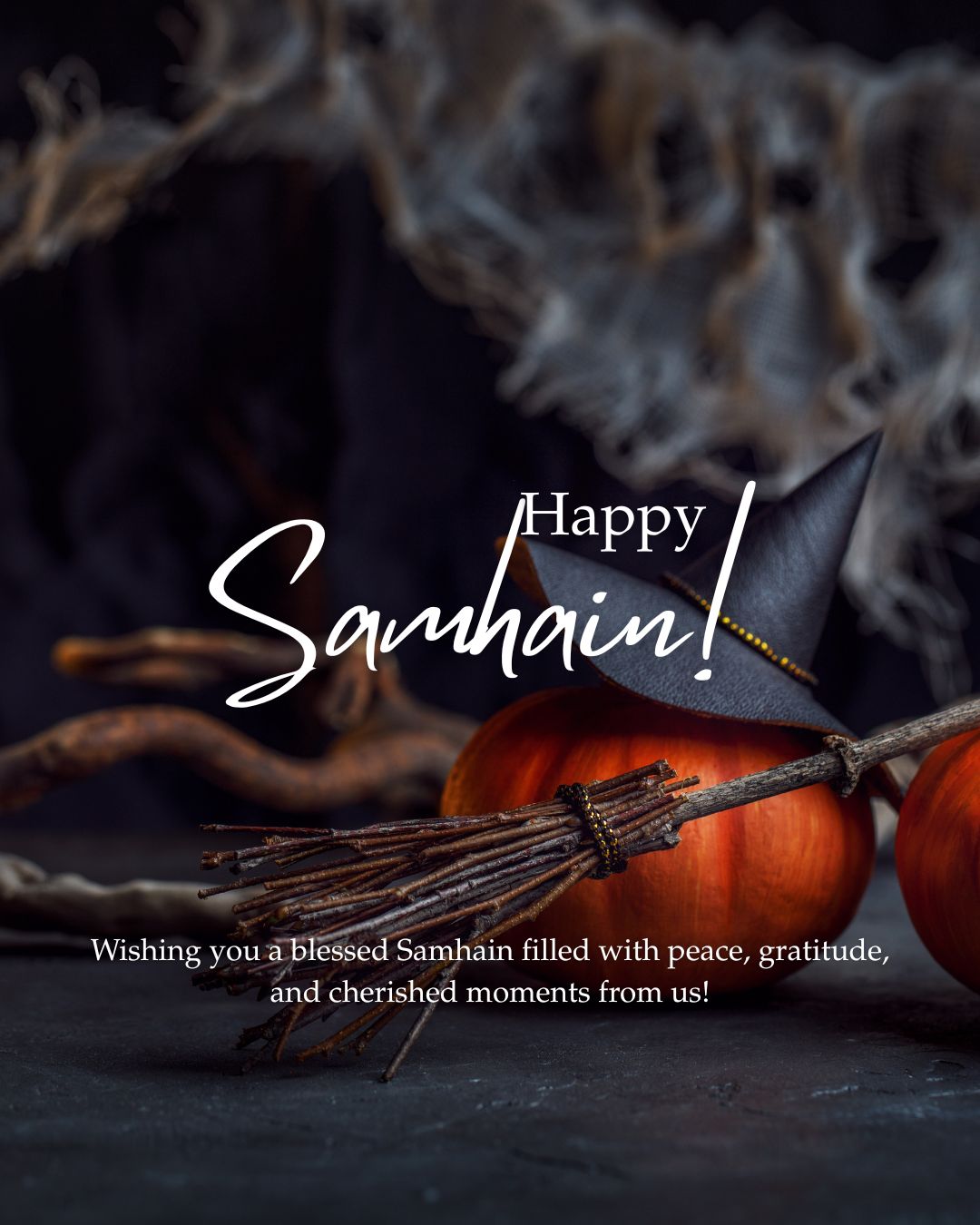
 When the Veil Grows Thin — The Story of Samhain and the Traditions of the Season
There is something different about October.
The air grows colder, the leaves fall in shades of amber and crimson, and the evenings arrive a little sooner each day. The earth begins to quiet, the harvest is gathered, and nature slowly retreats into the darkness of winter. There is a stillness to this time of year, a feeling that we are standing between two worlds — one filled with the warmth and abundance of summer, the other waiting in the long, quiet months ahead.
Long before Halloween lights illuminated doorways and pumpkins glowed on porches, our ancestors marked this turning of the seasons with reverence, celebration, and a healthy respect for the unknown and dark time of the year.
To those who lived by the rhythms of the land, this was the time when the Sun God began his descent into darkness. The life-giving light that had nurtured the crops, warmed the earth, and sustained the people was slowly withdrawing. As the days shortened and winter approached, the land entered a season of death, rest, and transformation. The Sun God's fading light became a powerful symbol of the eternal cycle — the promise that what disappears into darkness may one day return with the spring.
But as darkness settled over the hills, another ancient story stirred.
From beyond the village came the distant sound of hooves, the howl of hounds, and the rush of wind through the bare branches. Folklore spoke of a spectral procession moving across the night sky — the Wild Hunt, a fearsome company of supernatural hunters and restless spirits sweeping through the winter darkness.
In some northern European traditions, the Wild Hunt was led by Woden/Odin, the Norse All-Father, riding through the storm with his ghostly host, accompanied by his Valkyries. In other folklore, Zeus, Artemis, Diana, Herodias, Arduinna, Abnoba, Lady Godda, Herne the Hunter, The Morrigan, Gwyn ap Nudd, Cernunnos, Annwn/Arawn, Mesnie Hellequin, Dziewanna, Guro Rysserova, Frau Holle(Holga), Frau Perchta, Frau Berchta, Frau Gaude, Baba Yaga (Jadzia/Jadwiga/Jagusia/Jaga), Krampus, The Yule Lads, The Yule Cat, Grýla, Leppalúði, and even King Arthur were all associated with spectral hunts and haunted woodland. In Japan, the Hyakki Yagyō, The Night Parade of One Hundred Demons, was said to be led by the supreme yōkai commander Nurarihyon, along with the assistance of Nozuchi and Otoroshi. Though this one seems to be associated with inauspicious nights during summer rather than encapsulated in winter between Samhain and Yule. Although these figures belong to different traditions, all became connected in later folklore with the eerie power of the wild, the dead, and the approaching winter.
Naturally, traditions emerged to combat the spirits and their procession. In Ireland and Scotland, people carved turnips into lanterns, told ghost stories, played divination games, gave out candy or food, and sometimes wore disguises to confuse or ward off wandering spirits. When Irish and Scottish immigrants brought their traditions to North America, pumpkins — larger and easier to carve — became the lanterns of choice. The glowing jack-o’-lantern became one of Halloween's most recognizable symbols.
While Samhain is closely associated with October 31st, other cultures have their own ways of remembering the dead during this season. In Mexico, the preparations for Día de los Muertos begin before the principal celebrations on November 1st and 2nd. As October draws to a close, families may begin gathering photographs, candles, marigolds, and favourite foods for their ofrendas, the altars created to honour loved ones. Homes and cemeteries become places of remembrance, filled with colour, stories, and the enduring love of family. The mood is much different from Halloween's spooky atmosphere. Rather than treating death as something to fear, Día de los Muertos celebrates the lives of those who have passed and the memories that continue to connect generations. Though the traditions are distinct, both invite us to consider the people who came before us and the ways their stories remain woven into our own.
Perhaps this is why October has always captured the human imagination.
As the natural world prepares for winter, we are reminded that not everything needs to bloom all year long. Trees release their leaves. Gardens become quiet. The earth rests. Darkness arrives, not as an ending to everything, but as part of a greater cycle. For those who celebrate Samhain today, October 31st may be a time to light a candle for an ancestor, prepare a seasonal meal, spend a quiet moment in reflection, or release what no longer serves them. Others may celebrate through storytelling, autumn walks, bonfires, or simply gathering with loved ones.
Perhaps we remember someone whose voice we can still hear in our minds. Perhaps we reflect on the year that has passed, acknowledging both the things we have gained and the things we have lost. Or perhaps we simply stand beneath the October sky, listening to the wind move through the trees, and feel connected to something much older than ourselves.
Beneath it all lies an ancient reminder: life is made of cycles, every ending makes room for a beginning, and remembering where we came from can help us understand where we are going.
Blessed Samhain and a magical Halloween to all who celebrate. May your hearth be warm, your memories cherished, and your October nights filled with wonder. 🍂🕯️🎃
Love,
Raven - The Tea Witch