

 Motocross madness! The new MXGP game is good?
For about 10 years the MXGP from series from publisher Nacon was generally regarded as an ok to decent representation of motocross and the MXGP series. Then MXGP 24 happened. While the game was fully featured with a robust career mode and small but detailed open world game mode, the poor handling and bugs left a sour taste for most fans of the series. Now with a two year break and new developer Artefacts Studio on board, MXGP 26 has arrived with a strong but a little shaky landing.
MXGP 26 is a motocross game aiming to be more of a simulation of the sport, more so than previous games in the series from the handling to the on-track physics. The game follows the FIM Motocross World Championship (or MXGP) with events around Europe, Asia, and Australia. The two classes, MXGP and MX2 are featured with all of the bike manufacturers and teams included. MXGP 26 includes 19 official tracks and 16 official bikes from the likes of Ducati, Honda, KTM, and Yamaha. There is a lot of variety in the tracks and bike selection, as well as quite detailed tuning options.
Graphics, UI, and sound
New for this year is the change to Unreal Engine 5. This game looks really good. MXGP 24 looked fine but the KT Engine was a bit lacking in some areas like the animation of the riders. The switch of engines makes such a huge difference to the visual fidelity of the track surfaces, track side details, and weather effects with performance being kept to a stable 60 fps, even with middling PC hardware. There is a bit of noticeable stuttering here and there but not enough to detract or hinder gameplay at all.
Rider animations get a massive upgrade. The riders look more natural with them reacting realistically to every bump, lean, and landing on the track. The only complaint is when riders crash and fly off their bikes their animations get a little stiff and aren’t as dynamic as when they are on the bikes.
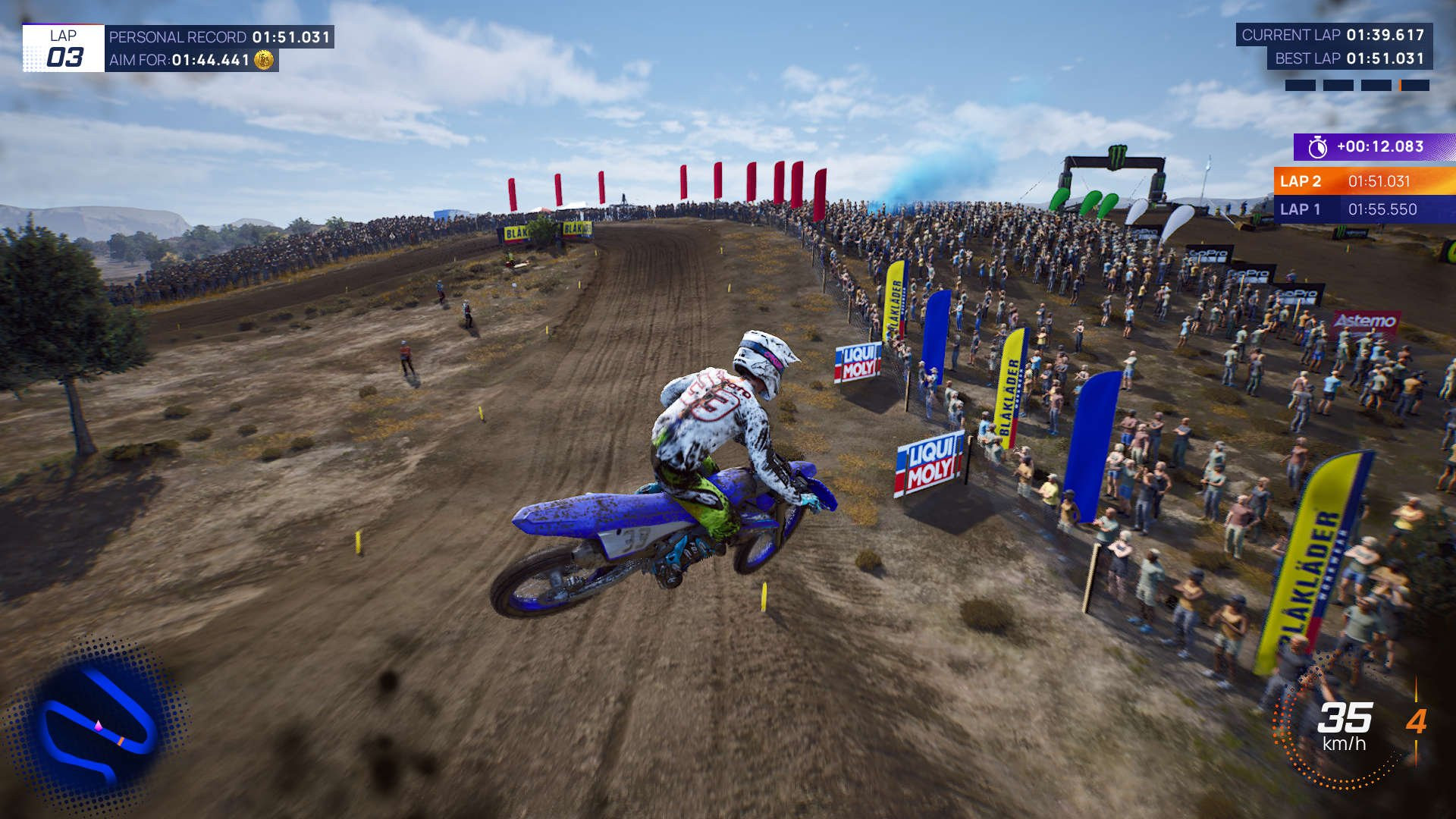 The biggest change is the track surfaces and how they change over the course of the race. The track surfaces now react dynamically to all of the bikes. As the bikes go through the course they leave ruts which affect the handling of the bikes to a large degree. Your line from the beginning of a race to the end can change dramatically. It is really amazing to see the transformation over a few minutes and makes playing a race very challenging but rewarding. The physics of the bikes over the ruts and jumps feels very satisfying. It’s possible to just have fun running time trials and seeing how much you can dig up the track over 10 or 20 minutes. Each track also has it’s own specific surface, hard pack, clay, and sand with sand being the softest and trickiest to navigate as traction can be hard to find. Hard pack is obviously the hardest surface with the most traction and clay somewhere in between. Rainy weather makes all of that muddy and a literal slog to ride through. Traction is limited so getting through a wet race can be tough if you aren’t patient with the throttle and brakes. It really shows the bike and surface physics at work.
Along with the excellent physics, the handling of the bikes stands out. It’s very responsive and every rut and bump is felt so it’s easy to know when you’ve got traction, stuck in a rut, or when you get into a good line and then slingshot out of a corner. Or when you come of a jump and scrub or whip and land just perfectly. It feels great and intuitive once, however it can take time to get a handle on it. Figuring out the best racing line when the track is constantly changing is sometimes frustrating though. You think you’ve got a good line into a corner only to spin coming out of it or you get stuck in a rut and fly off the side of the track. Air control when coming off jumps is difficult but very controllable but like riding on the ground takes practice to master.
There are a lot of assists for handling to help you adjust. When starting out you can set the game to help with leaning, braking, speed, air control. You can’t make a feel like an arcade game but it can make the game less frustrating when you’re learning. The game is more sim-like after all.
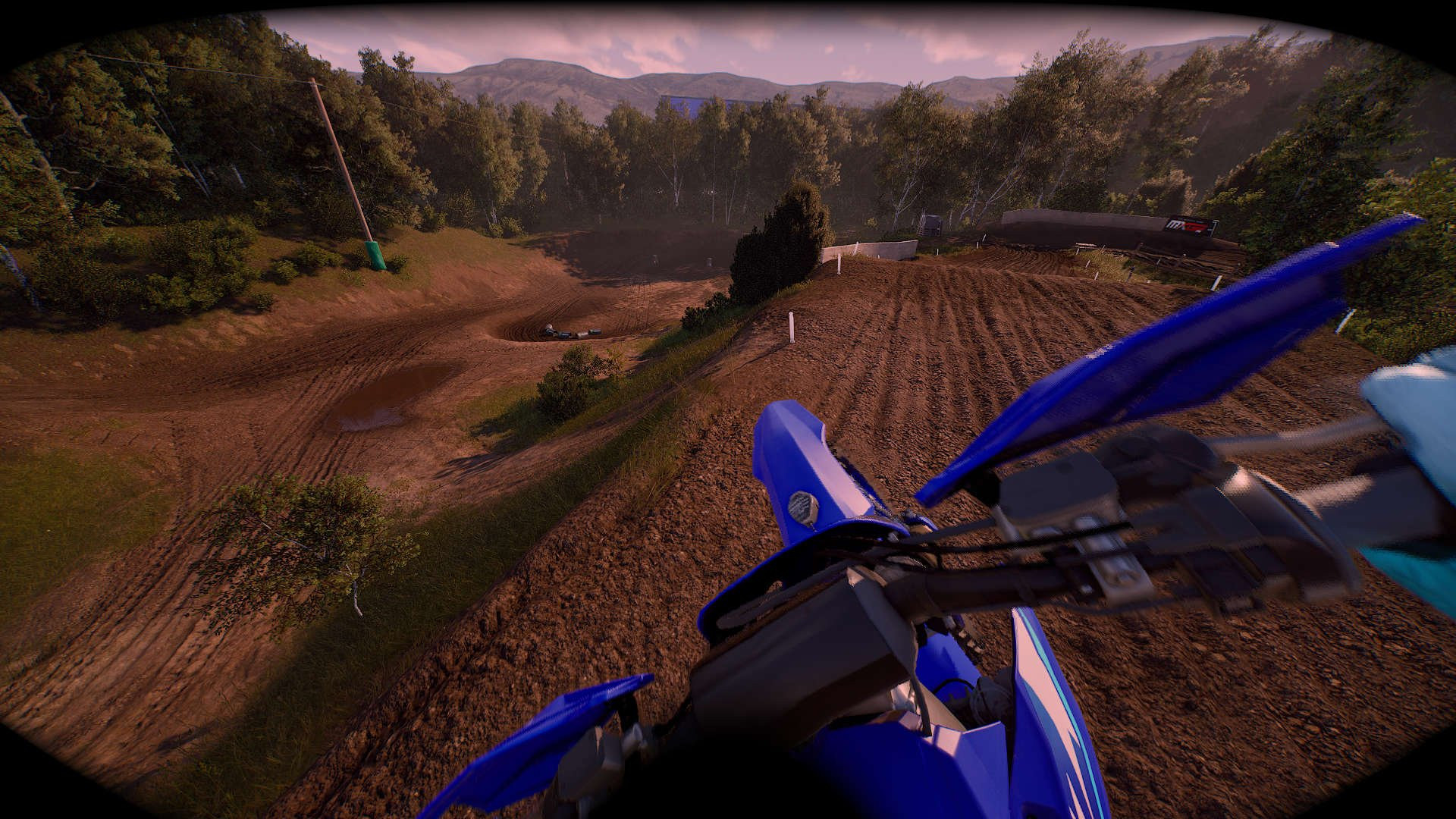
There’s 4 different gameplay camera views, two third person views (one close, one farther out), and two first person views. One of the first person views lets you view the world as if you have a helmet and goggles on. The view is slightly discoloured and the sound is muffled. It’s neat and helps with the immersion but the first person view gets disorientating quickly. Maxing the FOV helps but it feels too chaotic to be useful as a main view for gameplay. It is an improvement over MXGP 24 though where it could be quite jittery.
 The UI is fine and easy to navigate. It’s smooth and loading between sections is quick. The sound of the bikes and effects of going through the dirt is reasonably authentic. Overall the effects are pretty good.
 Content, tracks, and bikes
As mentioned above there’s a good amount of tracks to race on and bikes to race with. 19 tracks are included from the 2026 season calendar with 16 bikes (MXGP and MX2) from 9 manufacturers.
The tracks are very detailed with great atmosphere from the crowds to the track side details. The bike modelling is also very good.
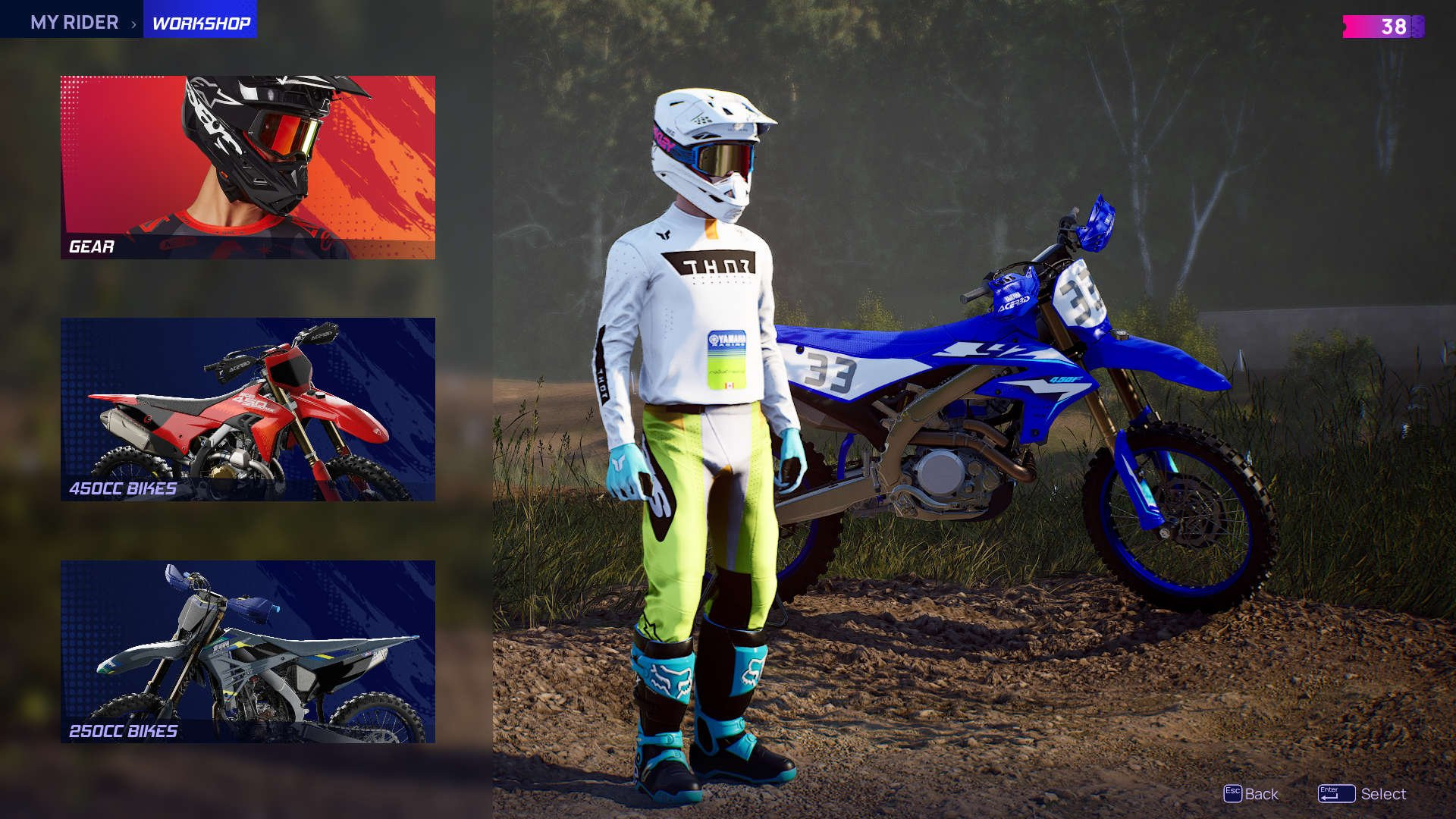
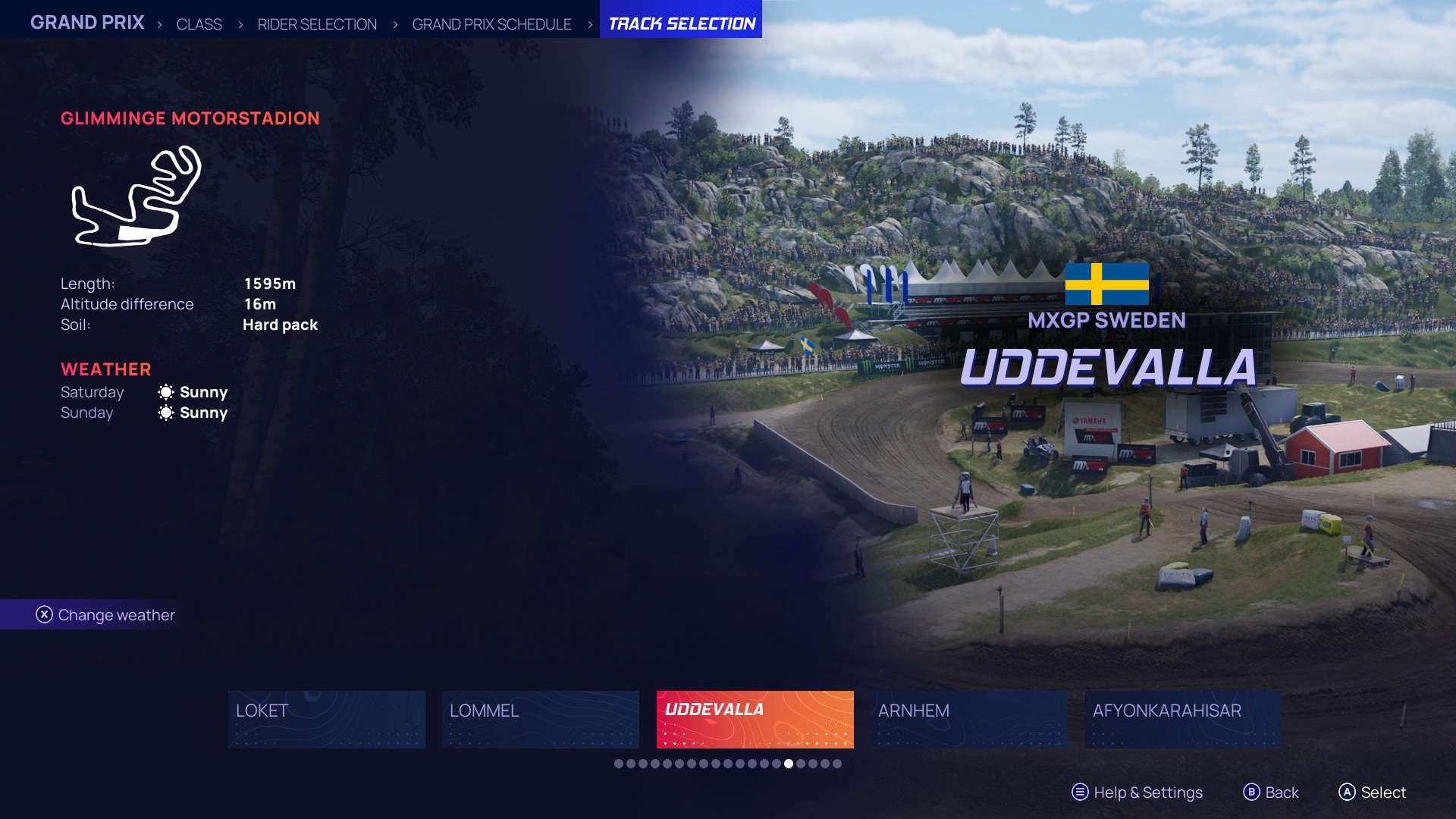 You have the ability to customize your bike with unlockable liveries but it’s unfortunately limited. You can’t create your own liveries or add any decals or stickers to the bike. You also can’t change any parts on the bike. You can change the tuning before races but there’s not much to change cosmetically.
All tracks and bikes are available to race on from the start, only the liveries and rider gear are unlockable by earning tokens by completing achievements durning gameplay.
Single player & multiplayer
For single player modes you get Time Attack, Grand Prix, Championship, and the Training Ground.
With Time Attack you can select from real MXGP or MX2 riders or your custom rider and any of the 19 tracks to set the best time against the online leaderboard. One thing to note here is you will always be doing the time trial in sunny weather, no rain which is too bad and limits the variety in the competition a bit.
Grand Prix mode lets you select either MXGP or MX2 classes and do a full weekend event with practice, qualifying and two races. Again, like Time Trials you can select to use your custom rider or an official rider and any track. You can also set the weather for each day of the event.
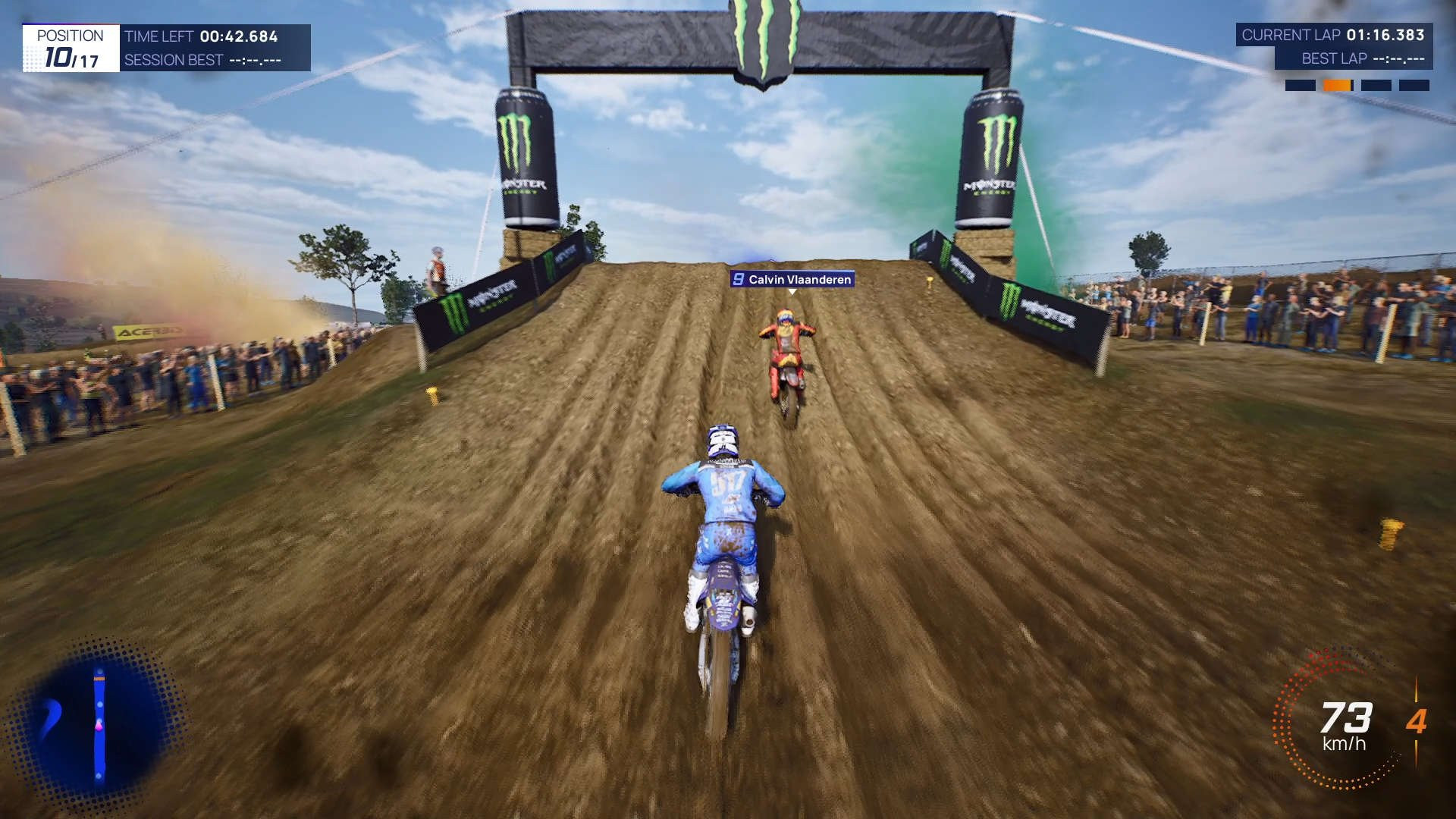 Championship is a full season calendar of races on all of the 19 tracks with points earned depending on your place. It’s pretty basic stuff. You can choose your bike setup and that’s about it. There’s no real career mode simulating what a rider goes through in a season other than racing. No development program, bike upgrades, sponsorships, or team management.
The Training Ground is an open area with various tracks and jumps to practice on. You can select any bike and just ride around to your hearts content. That's really all there is do to. It's nice that it's there to practice on but there aren't any events or challenges to complete, and no races like on MXGP 24.
Weirdly, there’s is no damage modeling on the bikes during the race, which also means there’s no pit stops to fix anything or change out your goggles if they get dirty. This would have added some more strategy to the races and encouraged cleaner racing as there’s no penalty to forcing yourself through the pack.
The race AI is decent. The lowest difficulty setting, Amateur, will be a cake-walk for most people and doesn’t present much a challenge. The other riders are just slow. Semi-Pro offers a better challenge but it won’t take much time to get better and beat them. Pro is a good middle ground, while Expert is the toughest.
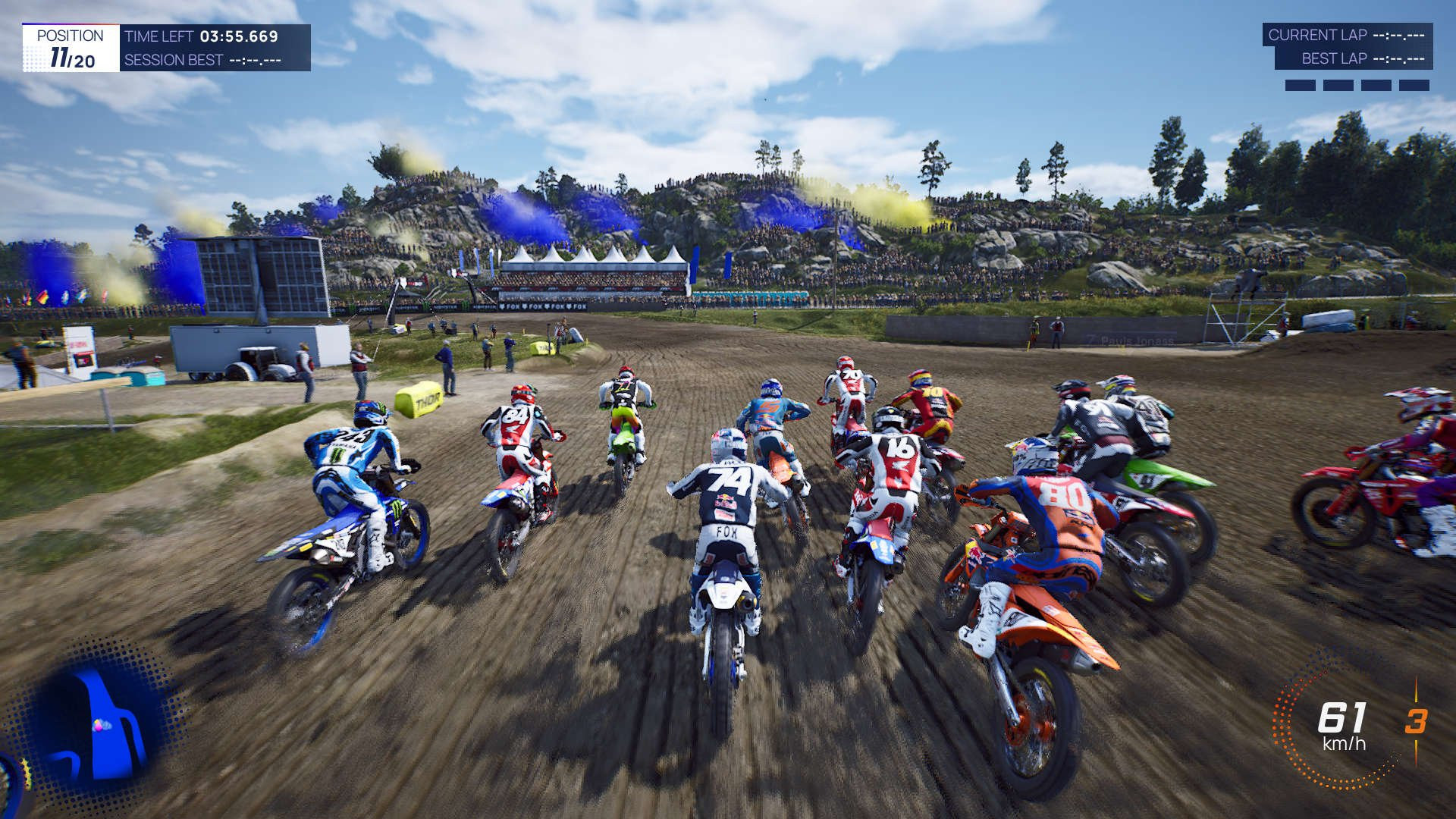 Multiplayer has Find a Race which automatically matches you with players on random tracks, Create a Private Race which lets set up a race with which ever class and track you want and invite friends, or join a Private Race.
For private races you can setup a single weekend grand prix options for practice, qualifying, and one or two races or a championship with at least 2 events.
At launch the server population was low and joining a Find a Race session resulted in 2-6 players. Sometimes a race ended with you as the lone rider. If you could find a match the other riders would be very jittery, maybe due to a poor connection on their end but it was not a good impression. Track deformation is not a part of multiplayer racing which is disappointing but somewhat understandable due to the amount of track data would need to be synced for all players.
Is MXGP 26 worth playing?
The common theme and maybe the biggest issue with the game is the barebones nature of it, lacking depth, and problems with multiplayer at launch. There’s a good amount of content, the physics are great, graphics look amazing. The game play and feeling of the racing makes up for the shortcomings though. It’s addictive in the best way. So yes, it is worth playing, but keep in mind the simplicity of the overall package and some initial multiplayer issues. The amount of options for assists help in adding a lot of depth when you want to take the game farther and maybe more competitive in a multiplayer setting. This isn’t an easy game to play but it is rewarding and worth the time to learn.
Just a note, if you’re old school, be aware that going out of bounds does not catapult you back onto the map. Oh well, maybe for next year’s version.
Note: This was played on a Windows 11 PC through Steam.
System: AMD Ryzen 5800x, 16 GB RAM, Nvidia RTX 3060ti, Gamepad
This game was provided free of charge by the publisher for purposes of review. No money was exchanged and the publisher does not have final say in the contents of the review. All opinions are that of the reviewer.