

Kishapolee is an affectionate moniker that our Pleiadian Elohim use for planet Earth. It means "child of mine", and in true compassionate fashion for a world dear to them, guardians from the Seven Sisters constellation [called Lashae by those who live there] introduced many of their own treasured animal friends as gifts to early human beings. The hope was that the expanded consciousnesses and raw spiritual emotion of these creatures would assist in elevating our own vibrational frequencies, as the dawn of humanity was not a comfortable time to be alive. These beautiful 'gifts' remain with us as companions and family members to this day, but their predecessors are still living comfortably in the higher worlds which starseeds will one day be returning to, and Earth-native souls will soon meet them for the very first time. [Note: for the unaware, the term Elohim has become synonymous with "God" for the devout, and this misinterpretation was deliberate by those who sought to manipulate biblical scriptures to fit their own pagan beliefs, which had nothing to do with what Yeshua actually taught. Elohim has always been a plural word, and it refers to the first races to emerge directly from 12D in an already supremely-advanced state. These would include the Pleiadian, Arcturian, Sirian, Andromedan, and Olais/Orion NHI races, both male and female, in whose image we were made, and all of whom contributed their own DNA to our genetic blueprint.]
This article focuses on the most common forms of animal life that can be found in the Pleiades. Many, such as elephants, goats, zebras, horses, and pandas, are already familiar to us. Others, like the wie [a type of flying dog with wings], unicorns, pegasus, and dragons, are those we've been conditioned to believe can only be found within the dusty pages of mythology chronicles.
The wonderful animals featured here not only 'exist', but play prominent roles with their Elohim families as sisters, brothers, mentors, and best friends. As all beings living in 7D Lashae, they have expansive consciousnesses and telepathic ability. Their stunning majesty will forever be a treat to the eyes of all who live there, and I hope to show a glimpse of that beauty here [however small], with as much color, life, and personality as each deserves.
Lions and Tigers: Big Cats of Lashae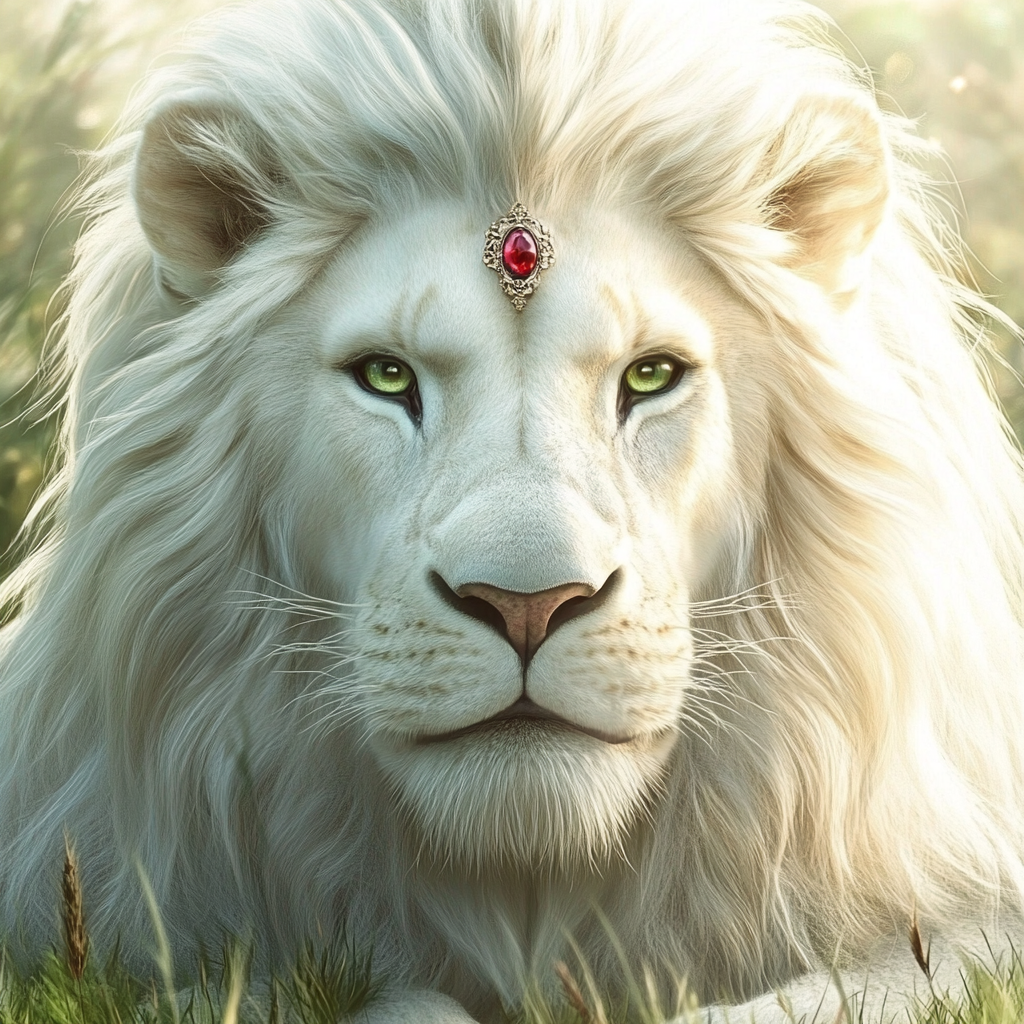
Cat lovers can rejoice; the Pleiades star cluster is home to a majestic population of big cats, who are the progenitors of the lions and tigers living among us on Earth. Here, the largest tigers can reach lengths of up to ten feet, and their lion cousins are a bit smaller, attaining lengths of eight or nine. That might seem 'huge', but in the Pleiades they're even more stately. At a colossal twenty feet in length, the lions and tigers there are magnificent, with a few additional qualities; unlike the felines of Earth, who are obligatory carnivores, Pleiadian big cats don't require meat in order to survive. They're able to refresh themselves on the same fruits, vegetables, grains and seeds that nourish the Elohim, and they exhibit none of the aggression or territorial behaviors that make them so dangerous on 3D Kishapolee. Pleiadean lions and tigers are gentle, accommodating, and thanks to their telepathic gifts, they see and understand all that occurs. In the Pleiades, big cats walk comfortably in beautiful gardens next to smaller animals, and are playmates to youngsters, running and tumbling with them through expansive meadows and parks designed for leisure.
They are also the loyal pets of many Pleiadians we know and love so well-- such as Goddess Aya and Elder Ikai-- and accompany those on missions in the comfortable accommodations of motherships and personal craft. Travelling with their families is as common for Pleiadians and other Elohim as it is for us to take our beloved dogs for a ride in the car. They keep each other company almost everywhere, including in the halls and foyers of Galactic Federation bases.
Even incarnation doesn't separate these cats from their loved ones. When a Pleiadian decides to incarnate as a kasie [human being] on Earth, often their lions and tigers will follow, incarnating alongside them as domestic dogs, cats, or the horses that we share our lives with. Many starseeds reading this will be able to relate, as they may have requested Soul Origin readings from Judith about the higher selves of their pets, discovering with delight that their "fur babies" have always been with them, in the form of tigers, lions, or even dragons in the Pleiades and in other constellations.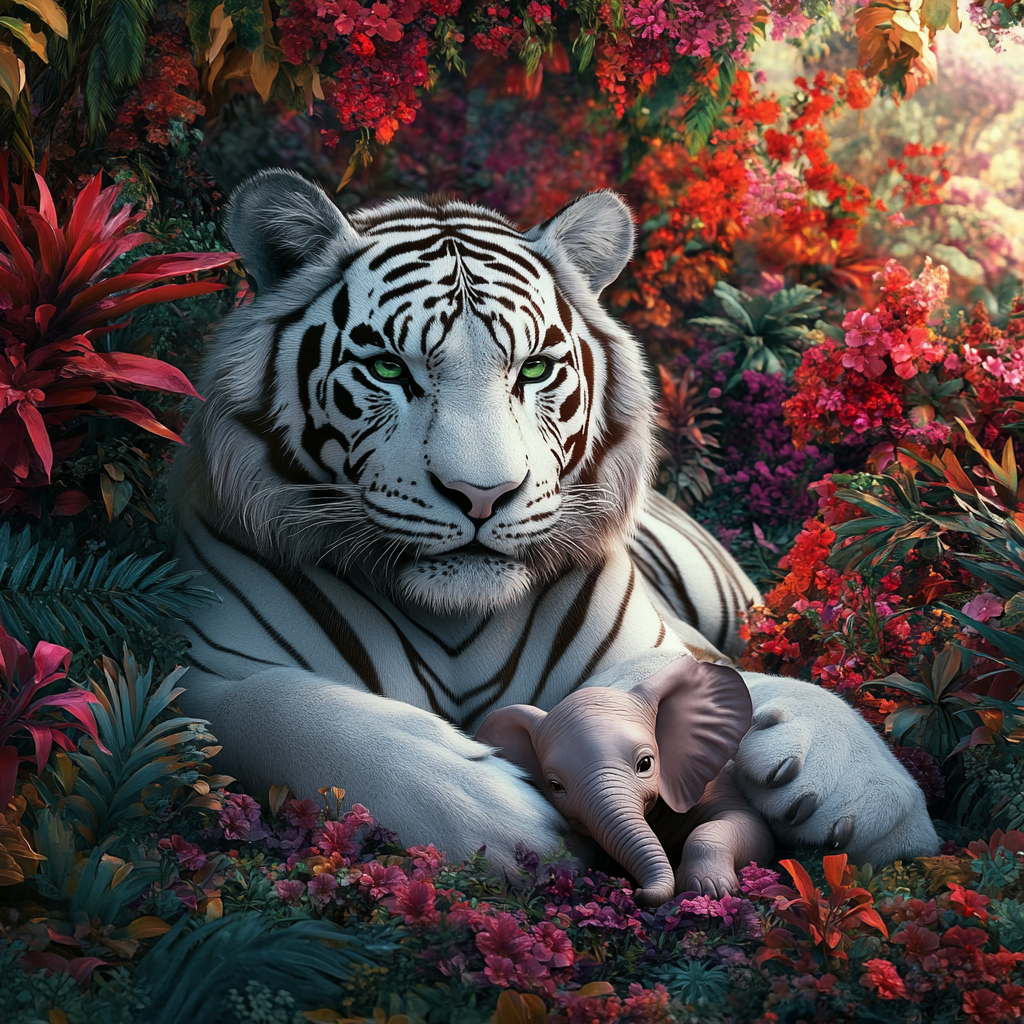
This is what I've been happy to find out, personally. In my case, Origin requests have shown that our dogs Kai [a cattle-dog mix] and Rubix [a pit-bull dalmation mix] incarnated from Celaeno to be with me here on Earth. In the Pleiades, Kai is a small pink and blue dragon named "Piek", and Rubix is a white tiger by the name of "Lesh", who prefers to sleep quietly on a terrace and play with a glowing orange stick. Both requests resonated strongly, I'll admit. Kai is constantly in motion; darting, leaping, and jumping, unconcerned with whether she's straddling a couch, table or the island in our kitchen. It's almost as if she remembers that in Lashae, she has wings! For Rubix's part, she has a snowy-white coat with fine black mackling, and even as an elderly dog, moves with a quiet dignity and grace I rarely see [and as a kennel technician at a veterinary hospital, I've seen a lot of dogs].
Wie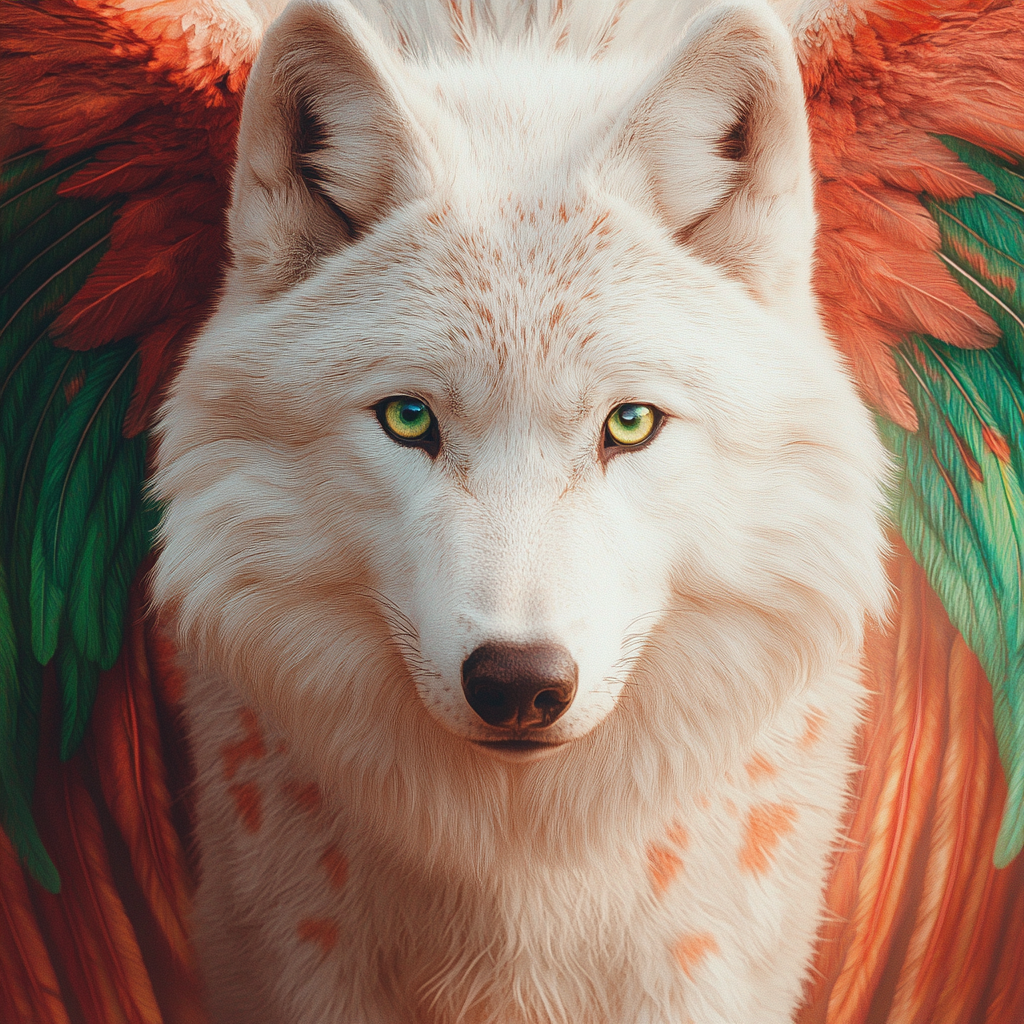
This entry, I'll admit, is the one I most looked forward to writing! The wie is a type of dog with wings in the Pleiades, but even with as much as I've learned about folklore and mythologies over the years, I had never heard about any sort of flying dog in literature before awakening to my true identity as Wiokish. Dogs are wonderful in and of themselves, yet to learn that not only will we meet them in Lashae, but that they can soar with the wings of an eagle, intrigued me from the very beginning. They've been our protectors, our guardians, and our loyal companions for well over 40,000 years on this planet. They've rescued our children, brought us medicines, fended away larger predators, and saved us from drowning. They've slept on our beds, at our feet, bounded ahead of us during our hike in the wilderness, and taken the passenger seat on road trips. Most of us admit that if there's a heaven without dogs, we don't really want to go! So to find out that we will meet (and remember) these incredible canines once we return to our homes of Origin is the special sort of warm balm that all of our hearts need during times like these. Whether they are short, tall, have long tails or none, floppy ears or erect ears, and long fur or short and glossy coats, they are all a type of angel in the mammalian form we have known as both "wolf" and "dog" since the ultimate beginning. 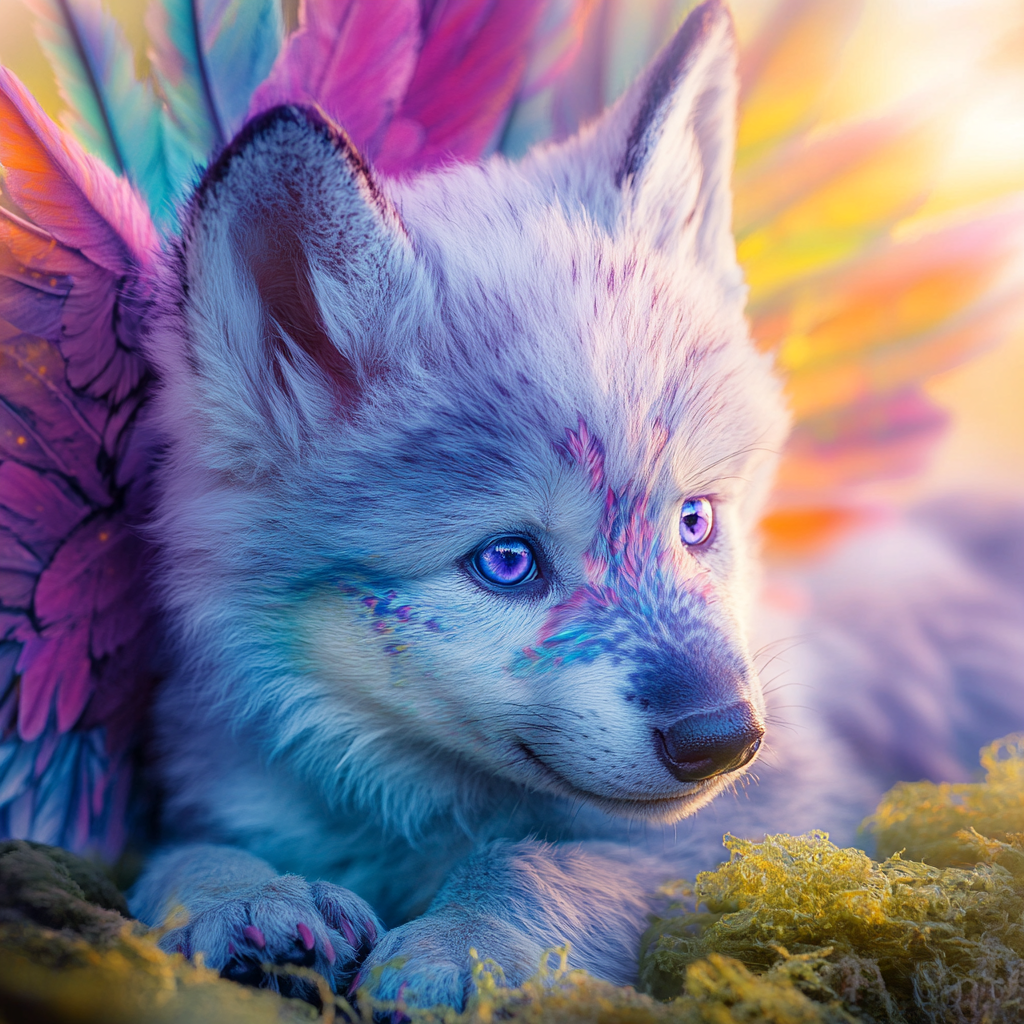
Because dogs love us unconditionally, they're among those creatures we recognize as having the purest of hearts. Many cultures consider the dog as having a direct connection with Spirit itself, which is a direct conduit to the supreme creative force, know to Pleiadians as Elako. Thus, in indigenous culture, it's unsurprising that the wolf is looked upon as an emblematic totem, or a type of spirit animal. Since indigenous cultures retain the closest connection to our Pleiadian guardians and the wisdom they brought to Kishapolee, it is only fitting that the wolf is given so much reverence by them. I would go as far as to say that most indigenous peoples are starseeds, and that their intense connection to Spirit and Source seems to have kept their memories regarding the true origins of dogs as sacred, winged beauties at the forefront of their oral histories and folklore.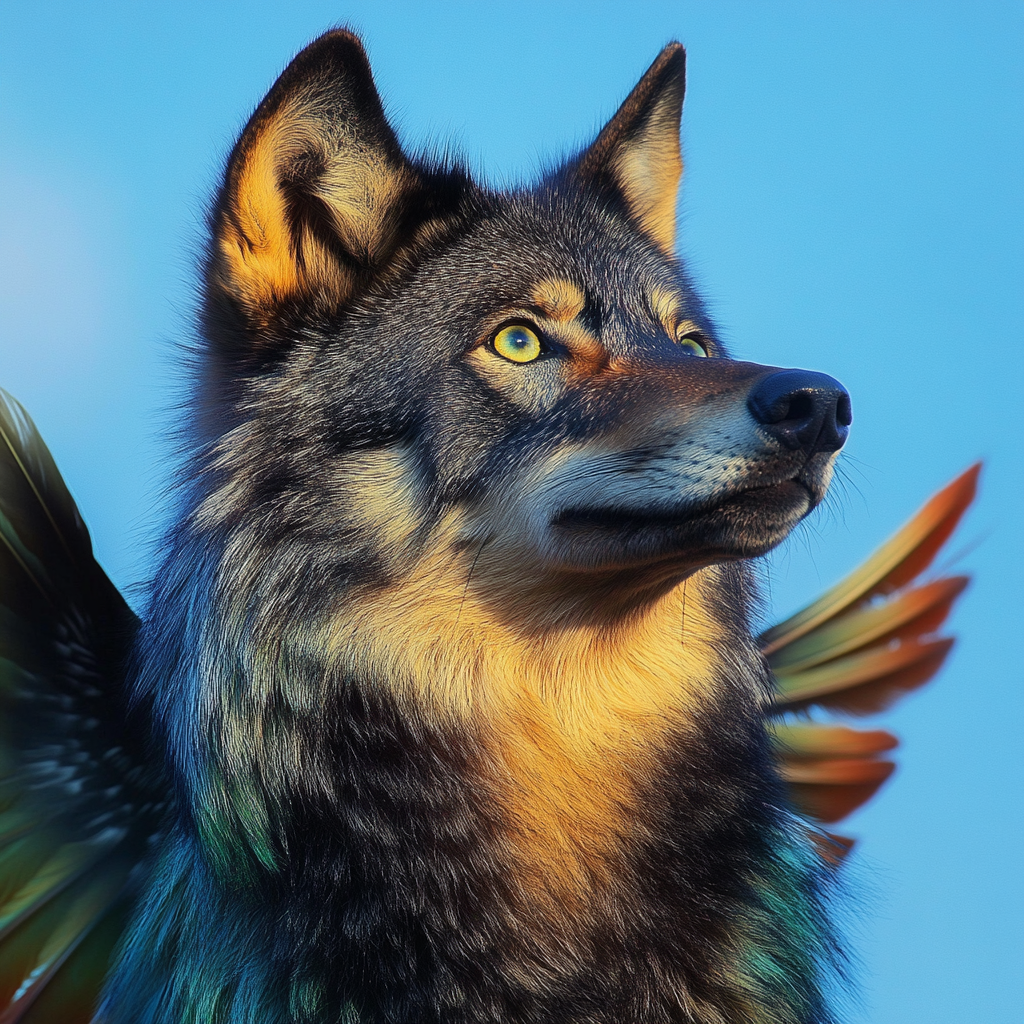
In Armenian culture, arazeles are dog-like spirits who live either in the heavens or on Mt. Ararat. Flying dogs are also associated with the Greek goddess Hecate, and in Japanese mythology, the hero Yamato Takeru had a cherished dog named Kumanokawa, which may have been able to fly or had other supernatural capabilities.
Creating the artwork for this entry was the most enjoyable for me to date! In order to perfect the "look" of the wie, which admittedly is merely an interpretation of what my imagination thinks they may look like, I sought to combine the most ancient and regal appearance of the wolf-- our first introduction to the canine-- with the elegance and impressive spread of an eagle's wings. The color combinations for coat, eyes, fur and feathers are limitless, so I had a lot of fun experimenting with the templates here. All things which manifest must first begin with a single thought, and since thoughts give rise to form in the 4D astral realm when given enough focus and attention, maybe looking at these images will trigger a memory for some, a curiosity which drives them to want to know more, or even give their ordinary canine companions an extra long "hug" before bedtime.
Bears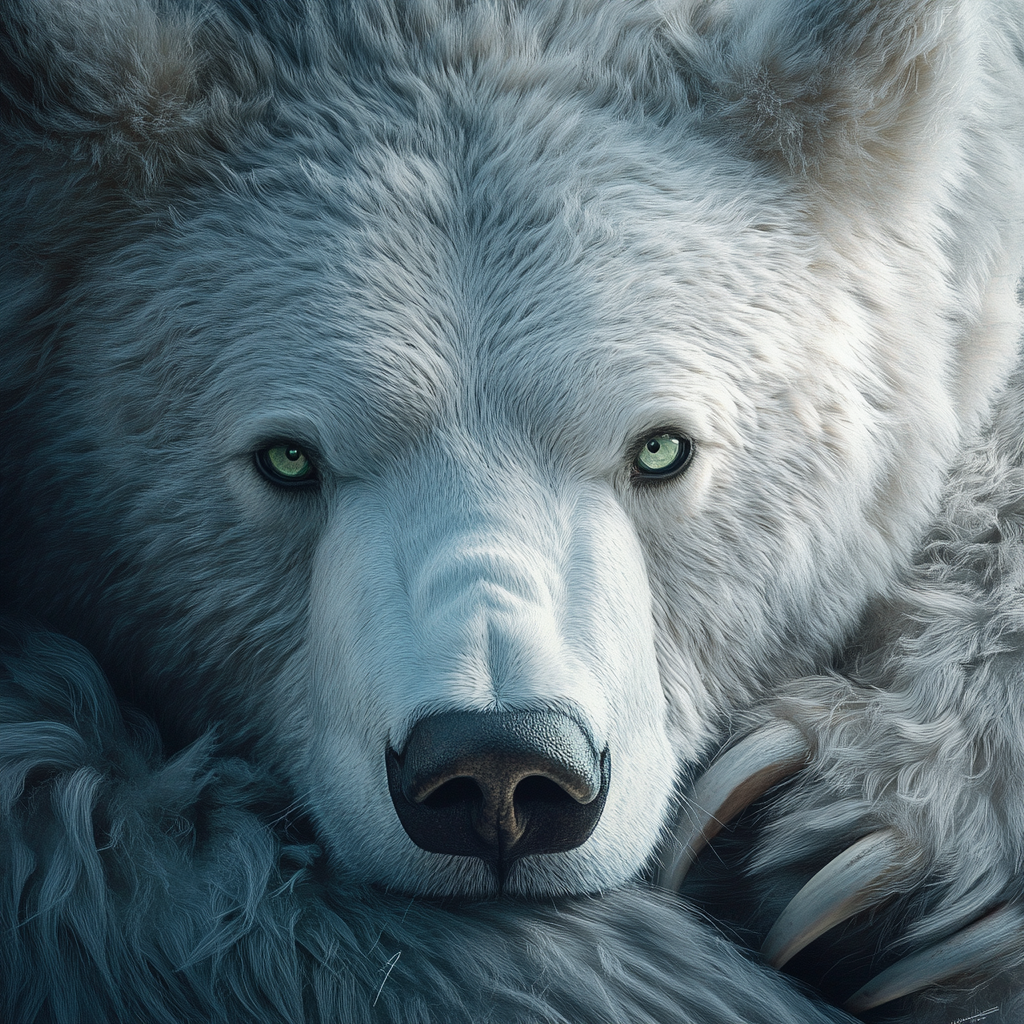
On Celaeno, my star of Origin, I nurture the spirit of creativity and enjoy painting portraits of the large, silver bears that grace Lashae with their poise and refinement. In this waking dream called "life" on Earth, I've strangely never been able to draw, sketch or paint anything more substantial than a stick figure, but since discovering Midjourney AI, I've been able to create more beautiful works of art than I ever dreamed would be possible. To stay true to the spirit of this inner vision, for this entry I've attempted to give life to Lashae's bears as they exist in their true form: huge, gentle, and with thick silver fur.
As humans, we've instinctively understood the power of the bear and his place in our world. He has been honored in many ways, most significantly by the naming of the Ursa Major constellation. Seven bright stars of the Big Dipper comprise Ursa Major's 'tail', and it also contains a nebula, in addition to other named stars that make up the bear's body, legs and head. This constellation is one of the most recognizable in the Northern Hemisphere, and has taken a major role in some of the oldest mythologies in the world. Ursa Major is also famously mentioned in biblical scripture, in the form of a question posed to Job by the one many have attributed to "God": "Can you tie the bands of the Pleiades, or loose Orion's reins? Can you bring constellations out in the season, lead the great bear and her cubs?" [Job 38:31-32]
The Iroquois have referred to Ursa Major as "the sky bear", who lies on its back in the wintertime, crawling out of its nest in the spring, and standing upright in the summertime. One of the most fascinating facts associated with Ursa Major is that songbirds actually learn the pattern of its twinkling stars within about a 35-degree arc, using this 'imprint' of the constellation to help them navigate their migratory routes.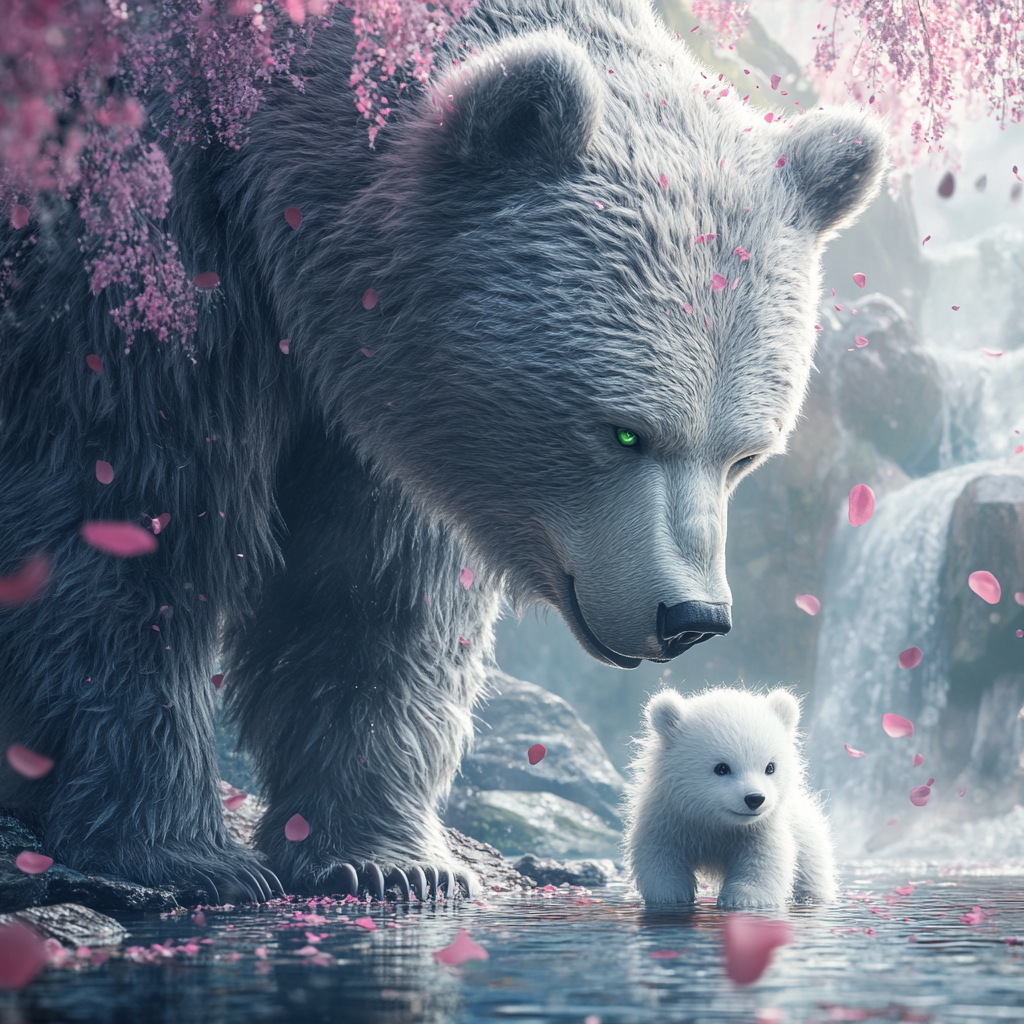
The bear is a powerful totem and spirit animal in indigenous communities. To them, he symbolizes strength, courage, grounding, and the maternal aspect of ursine love and care. On 3D Kishapolee, bears are beautiful creatures who are nonetheless to be avoided and feared because of the danger they pose. Anyone who's seen the movie "Revenant" with actor Leonardo DiCaprio will recall how absolutely overpowering a bear attack can be, and for a while, the scene in which the bear nearly kills DiCaprio's character was all anyone could talk about. While some have been lucky enough to endure a bear attack and walk away with their lives, most aren't that lucky [Timothy Treadwell, once known as "The Grizzly Man", likely had a karmic connection to grizzly bears, but learned his lesson about their lethal rage in the most heartbreaking way.]
In the Pleiades, the low vibrational qualities of aggression, dominance, and agitation are absent, and the bears of Lashae are docile and serene. In a form of service to light that Elohim call 'bi-local service', Pleiadians have the ability to project an aspect of their Soul into any form they choose, to provide short-term assistance to humans who might be in trouble, while at the same time remaining in Lashae. This form is typically a human body, but just as frequently the form of an animal is chosen. Many children lost in the wilderness have explained to their rescuers that they weren't frightened of being alone and weren't even cold, even on the darkest winter nights, because a mysterious "bear" came along and kept them company, shielding them from frostbite and fear.
Dragons [Leatok]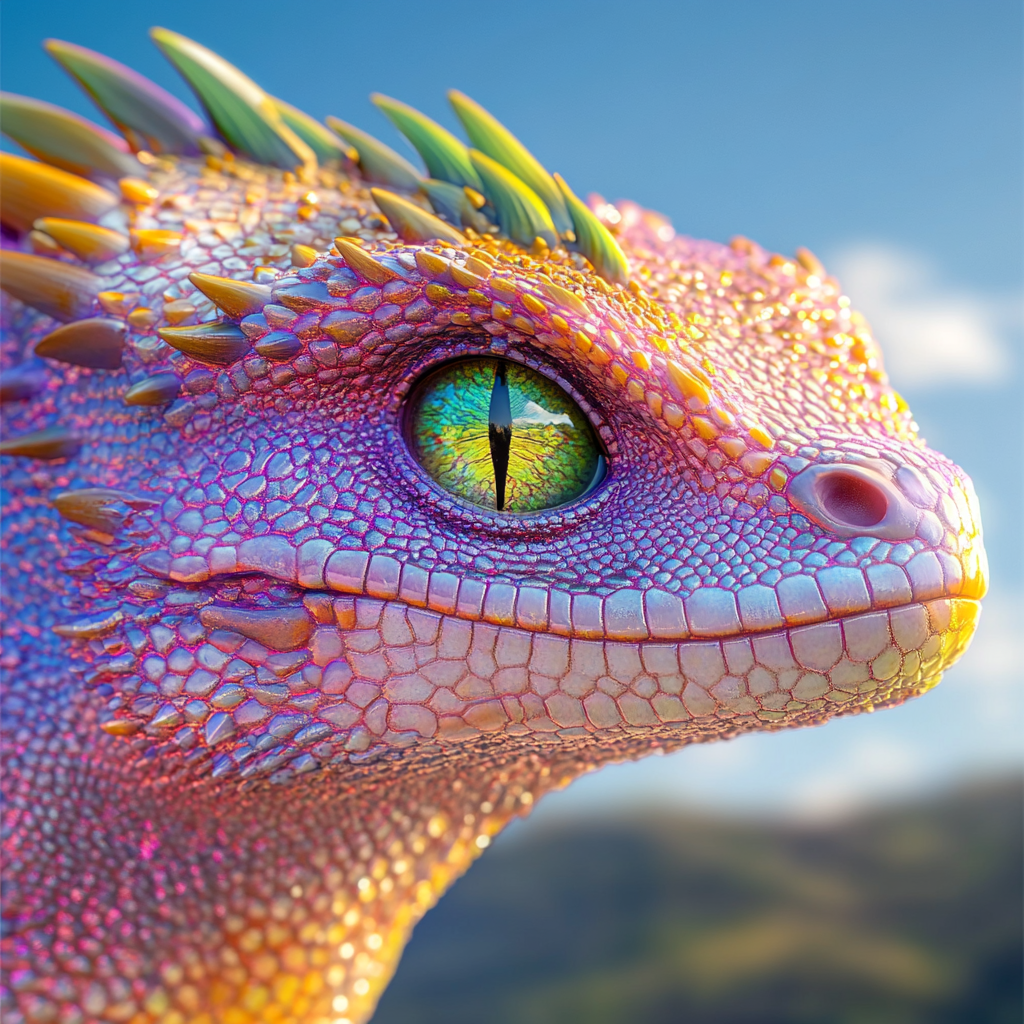
In Pleiadian light language, the term for dragon is leatok, and as an upasikha, I've felt a very strong connection to dragons since I first took the 5 Buddhist Precepts, in a formal ceremony at a Theravada temple for the Thai community. Even before that, I've been fascinated with a certain class of aquatic cryptids most would know as 'sea serpents', or 'sea monsters', and while many are likely thought-forms, urged into occasional manifestation by the collective thoughts of those who kept focus on these beasts as guardians of the waters and, at times, fearful gods to be appeased, there are certain instances in which I think these 'living dragons' may be the remnants of flesh-and-blood creatures.
The first of these would be the creature known as Ogopogo, a serpent-like creature with many fins and a camel-like head which is so commonly seen in Canadian waters that it has earned the moniker of the 'most photographed sea-monster in the world'. This would fit the description of a type of dragon, which in Buddhism is also known by another name: naga.
Another example of a potentially surviving relic is the mokele m'bembe, an elephant-sized sauropod with a long neck whose name in the Congo means "he who stops the flow of rivers". The Congolese have reported this creature for centuries, and because the environment is so dense, packed with impenetrable foliage, wilderness, and a steaming tropical climate, it would be the perfect place for such a creature to survive undetected. Most people won't realize how isolated this region of the Congo really is until they actually take a look at Google Earth. This area of Africa has never been fully explored, and it's nearly impossible to get research expeditions into the area because there is so much war and corruption. Nonetheless, missionaries claim to have traveled there and seen it, and sightings of this naga have been reported as recently as the mid-2000s.
The final example of a still-living naga may be the creature known as "Champ", which has been seen in Lake Champlain for hundreds of years and features prominently in indigenous folklore. Sandra Mansi took what is known as perhaps the best photograph of a sea serpent to date. [To me, the photo clearly shows a long neck and snake-like head looking at the opposite side of the lake, while skeptics have claimed that this could easily just be a piece of wood. That would be possible if all we had was just the photograph, but they have discounted Mansi's experience. She described the creature as emerging from the water very gracefully, and its appearance frightened her husband so much that he screamed for their children to get out of the water. She described its open mouth, its teeth, and the water pouring off of it, and how eventually the creature seemed to become 'agitated' and eventually slipped back into the depths.]
Going back to dragons in the Pleiades, their appearance there is quite different than what we've come to expect from tales of King Arthur's time and popular shows like "Game of Thrones". In Lashae, dragons are typically much smaller, and with very delicate wings, though they come in fantastic colors which can be changed with one wave of a fairy's hand. They are wonderful playmates of children and loving family members to their Elohim relatives. The noises they make are more akin to squeaks and humming than the vociferous roars we're conditioned with, and while they don't breathe fire, they exude a beautiful pink and purple essence, which is like a sparkling mist. Fairies have been tremendous friends not only to dragons, but to the creatures we now know of as dinosaurs. And while dragons typically exist in higher dimensions, they can still be found in mountains, caverns, and hidden places under the Earth. If they wish to be seen, they can lower their vibrational frequencies, but children, babies, and "seers" notice them as a matter of routine.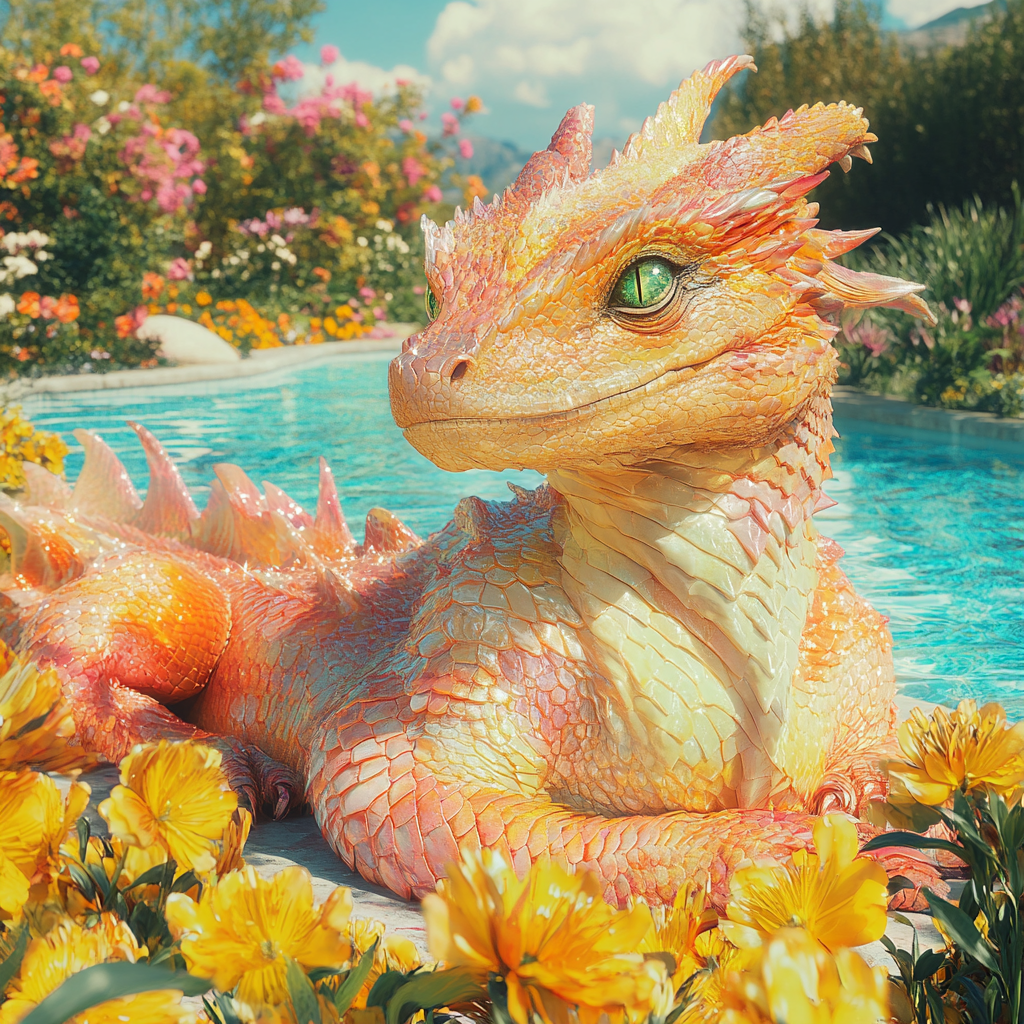
Leatok of the Pleiades hold a special place in my heart. In Buddhism, dragons are thought to be extremely auspicious creatures, with great power, and are masters of advanced meditative absorption. They are held in high esteem, are typically powerful rulers of kingdoms and guardians of treasure, and are usually associated with rivers, lakes and other bodies of water. Dragons are usually benevolent, though the fiercest ones were easily tamed by the Buddha, and many were converted, becoming devoted Dharma protectors and guardians of those who uphold the Buddhist teachings.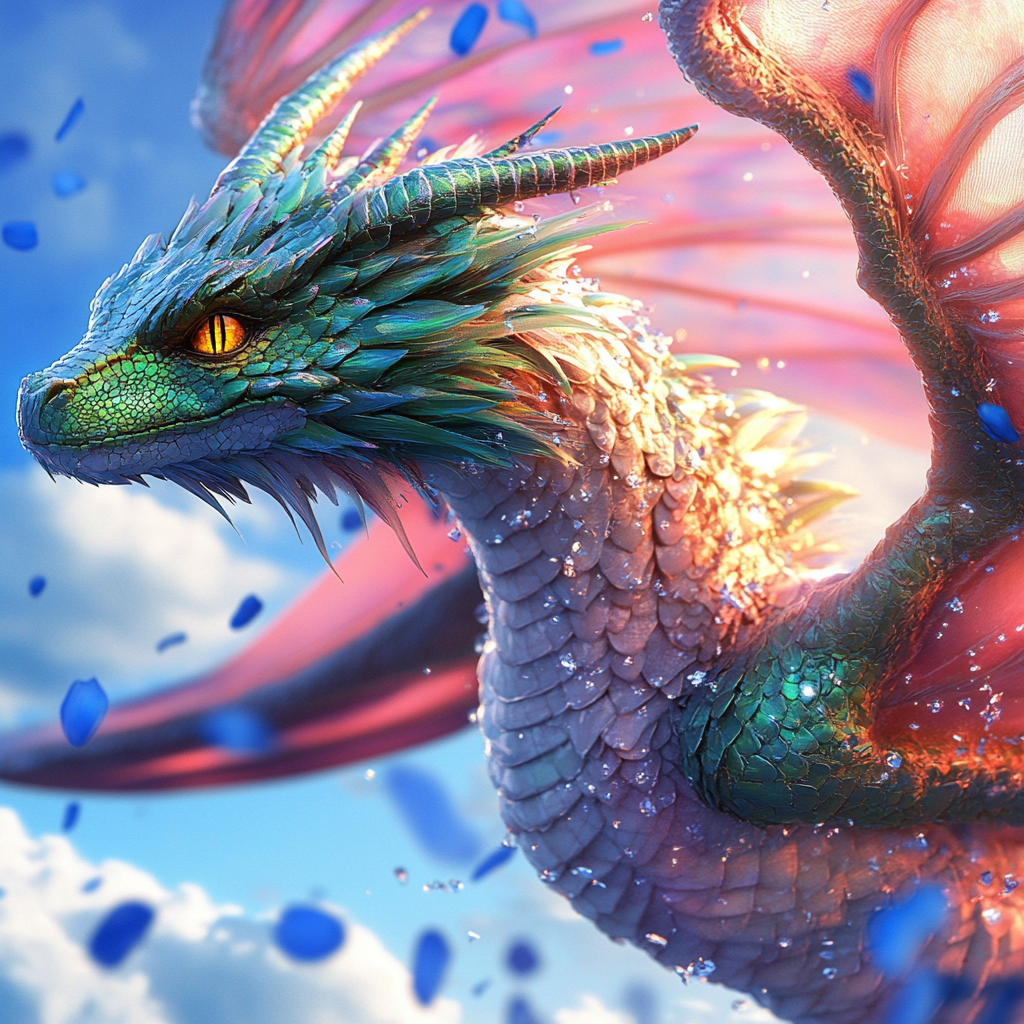
Birds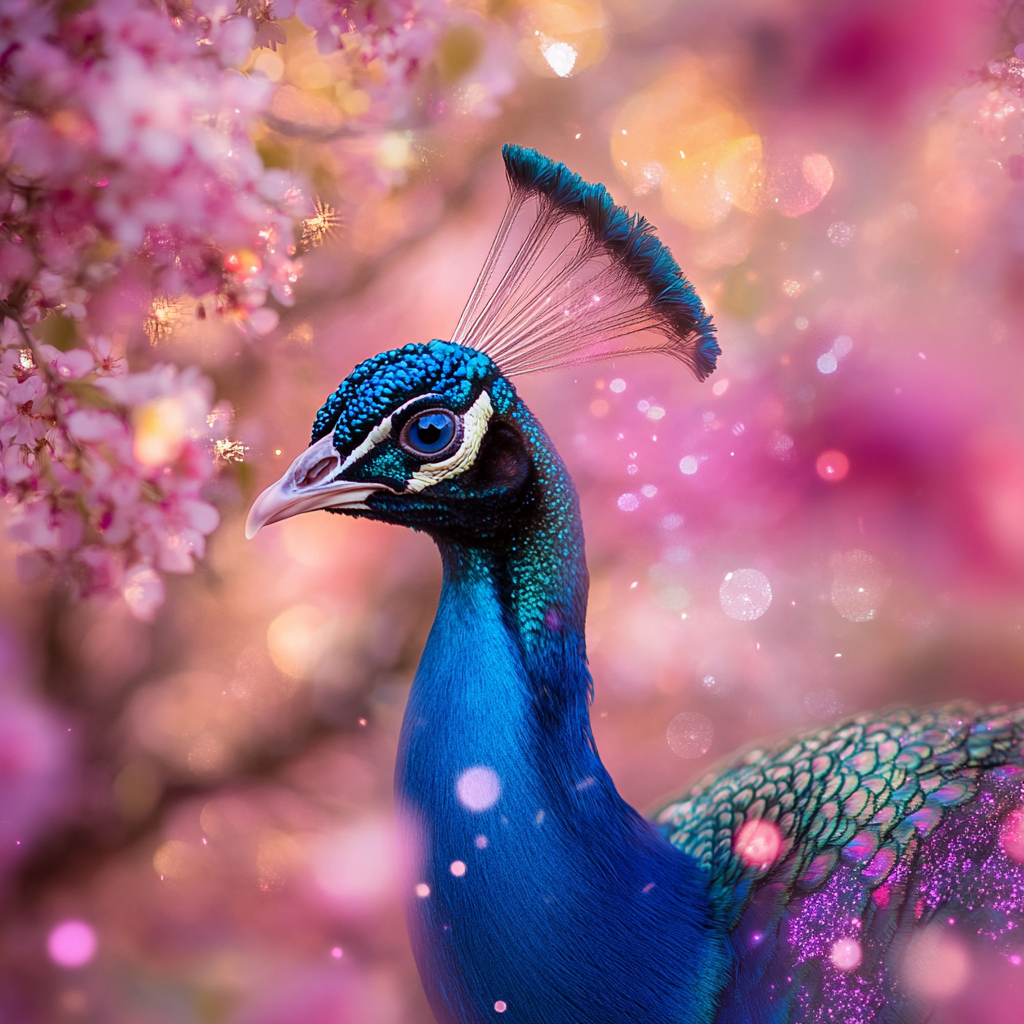
All types of talking birds on Earth have their origins in the Pleiades. The most prominent example we know of here is the parrot, but there are many other species of birds here with the capability of mimicking human speech. These include macaws, mynahs, budgies, and parakeets. Parrots are famous for their vibrant feathers, and like many varieties of Pleadian fauna, these striking birds have huge wingspans, approaching twenty feet, and constantly speak words of wisdom and sing heavenly songs. This is also true of exotic birds appearing in the Buddhist Pure Land, which is known by Pure Land School practitioners as the Western Pure Land of Ultimate Bliss.
Another bird capable of speech mimicry on our planet is the raven, and some report being the recipients of many shiny trinkets brought to her by a family of ravens who seem to have 'adopted' them as members of the flock.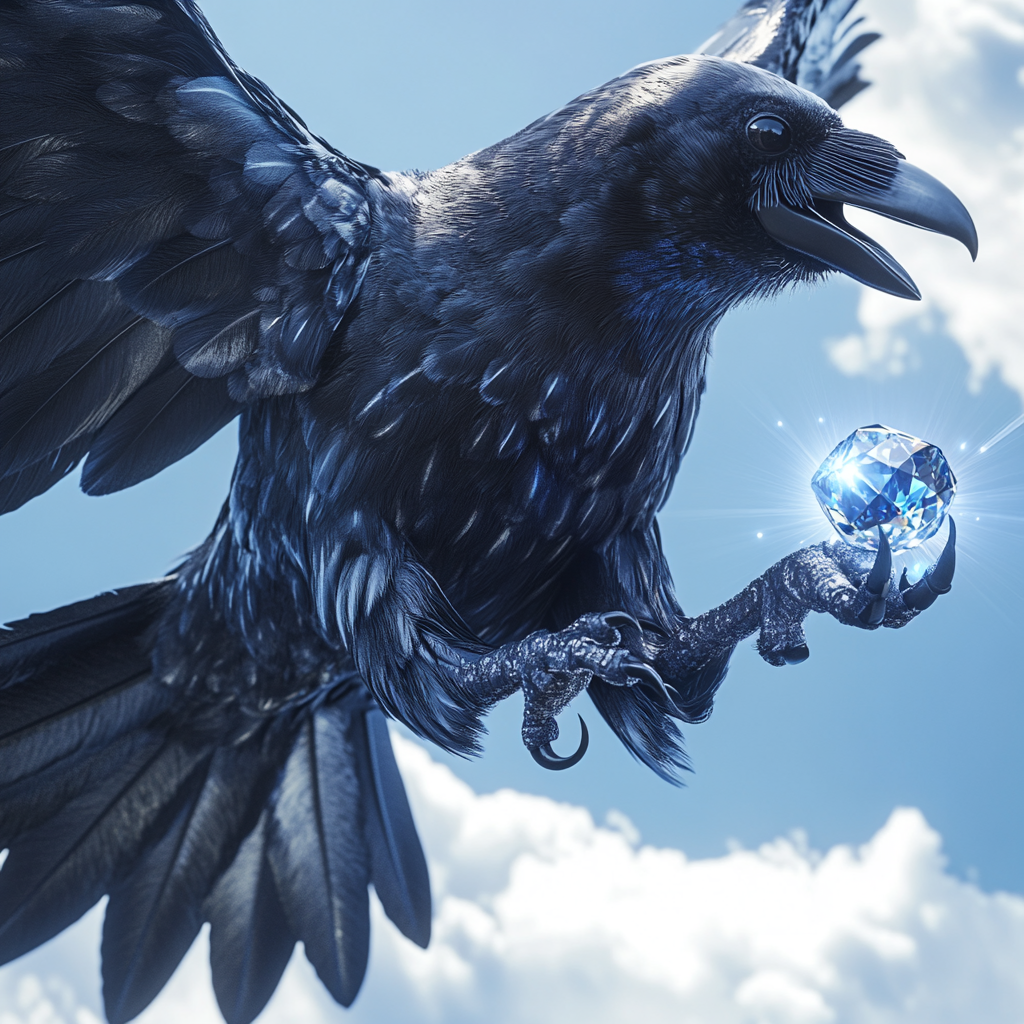
Horses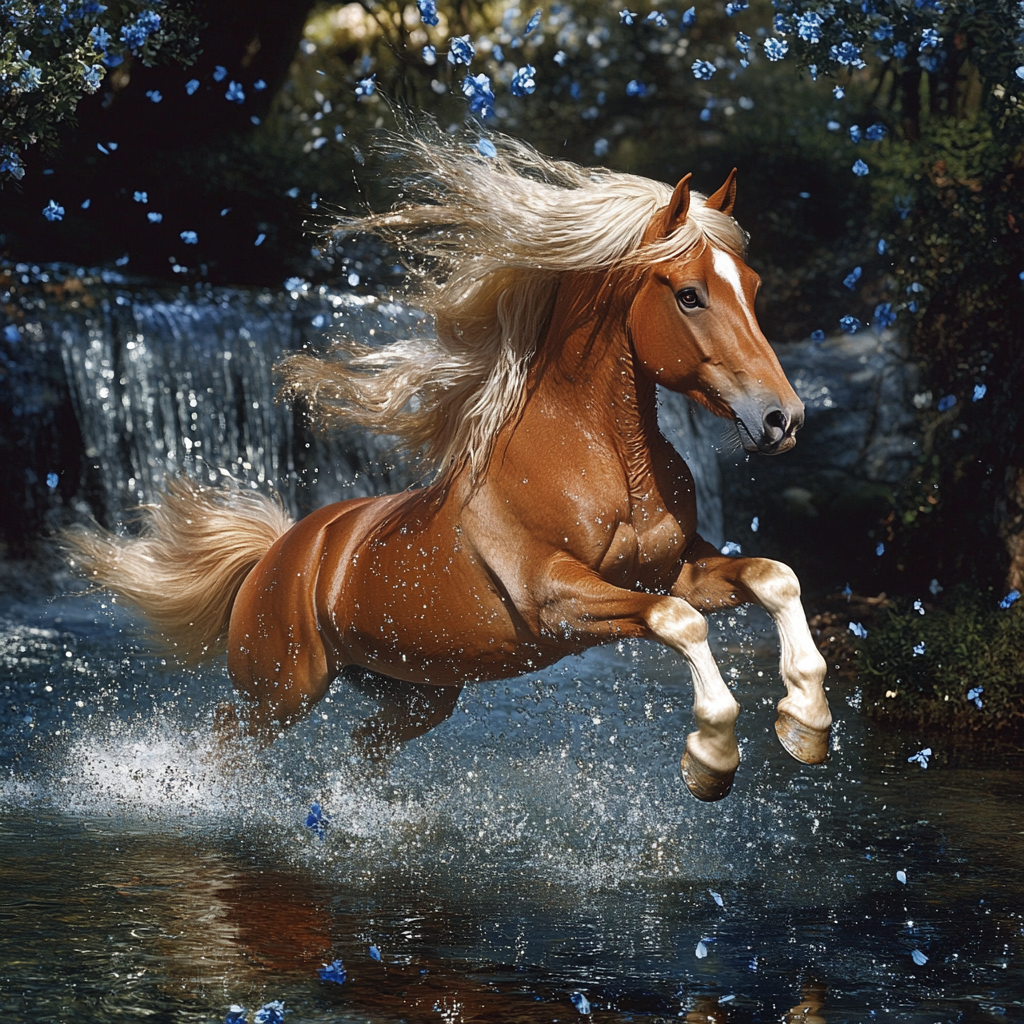
I first learned of Pleiadian horses when I received my Origin reading, which detailed the beautiful white stallions that like to gallop along the seashore in Celaeno. Shortly thereafter I began my research into animals in Lashae, and discovered that horses were among the gifts that Elohim brought to early human beings.
In nomadic cultures, such as among Mongolian and native indigenous communities, horses are thought of as spiritual guides and even mystical beings, worthy of being petitioned for protection and strength. As a totem or spirit animal, the horse is emblematic of courage and independence, and in Greek mythology the Pleiades has been linked to the racehorse Hagesichora. Meanwhile, Kanthaka is the name of the historical Buddha's favorite horse.
Equines are intricately emotive, a deeply spiritual quality which is often shared with us in situations where horses serve as therapy animals. They have a very sharp ability to pick up on the emotional signals of human beings, and are often reluctant to work with or be ridden by those who are agitated, fearful, or have dark intent.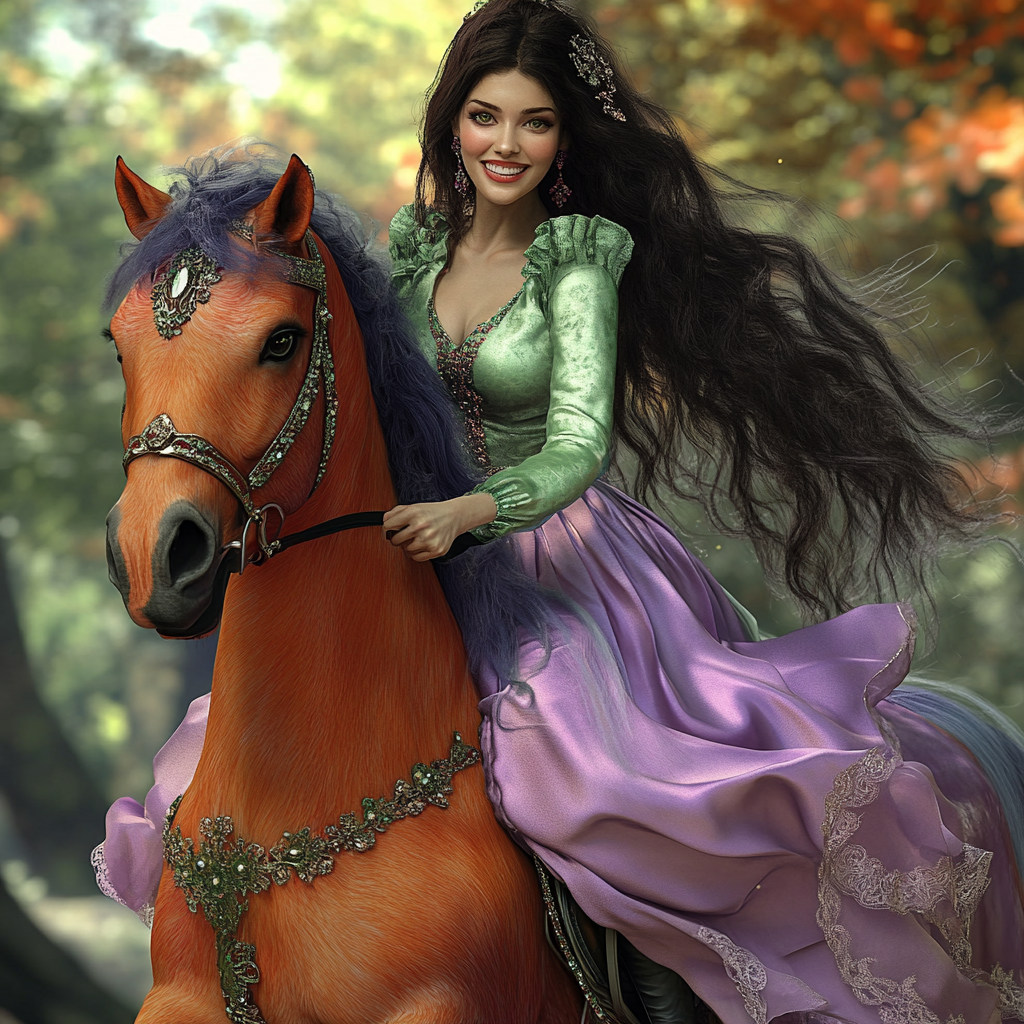
Elephants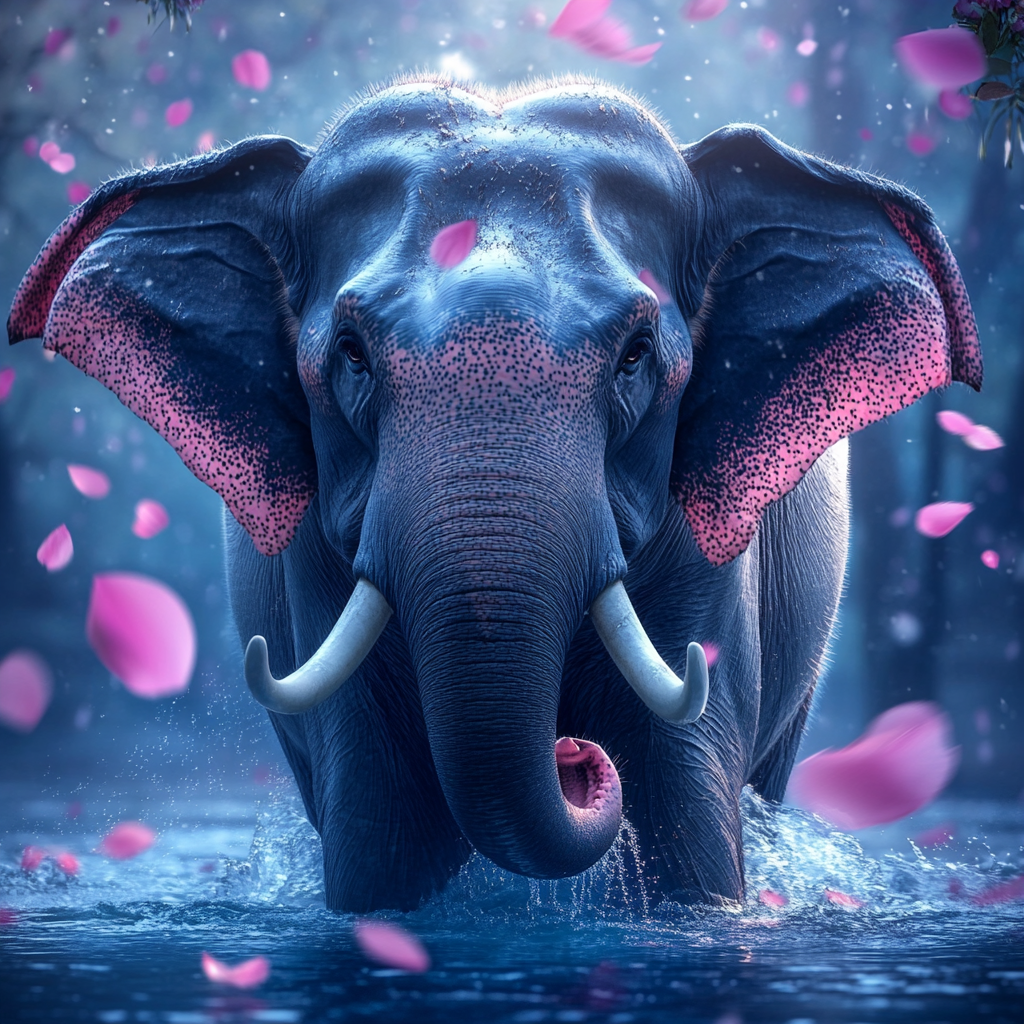
Elephants, and in particular elephant calves, are expressions of pure spirit and joy! The stately elephant is venerated by cultures the world over, and in Buddhism frequently appear in the sutras [eastern scriptures] and Jataka Tales, which are records of the historical Buddha's past lives, many of which were lived in animal form. The night that Siddartha Gotama was conceived, Queen Mahamaya had a vision of a huge, ivory white elephant with six tusks entering her right side. During the life of the Buddha after his Awakening, the evil Ajatasatru fed an elephant named Nalagiri alcohol and unleashed it upon the dignified master, expecting it to trample him. Instead, as the agitated animal bore down on him, the Buddha met Nalagiri with a mind of loving-kindness and tamed the elephant with a single peaceful gesture. Caressing the elephant's forehead, Buddha spoke the following verse:
Oh elephant, do not attack The Elephant [referring to Buddha himself; this attack would be shameful. There can be no good destiny in the beyond for the one who kills the Elephant. Flee from drunkenness and laziness, as the lazy miss the good destinies. Act in such a way as to attain a good destiny.
After these words were spoken, the elephant bowed to the Buddha and respectfully went on its way.
The one once known as "Buddha" now lives as Eihol in his true identity on the Pleiadian star Electra. As an incarnated Pleiadian Soul still living on Earth, Buddha retained memories of the magnificent spiritual qualities of the elephants native to his home among the stars. In Thai Buddhism, where I was first introduced to the great master and his teachings, elephants and their spiritual qualities are held in lofty regard. The wisdom, grace, and intelligence of pachyderms have long been linked to the Buddha himself, and during his many animal rebirths, he often lived in the form of an elephant.
Like dragons, elephants are thought to be stewards and guardians of not only the Buddha and his teachings, but of the Earth herself.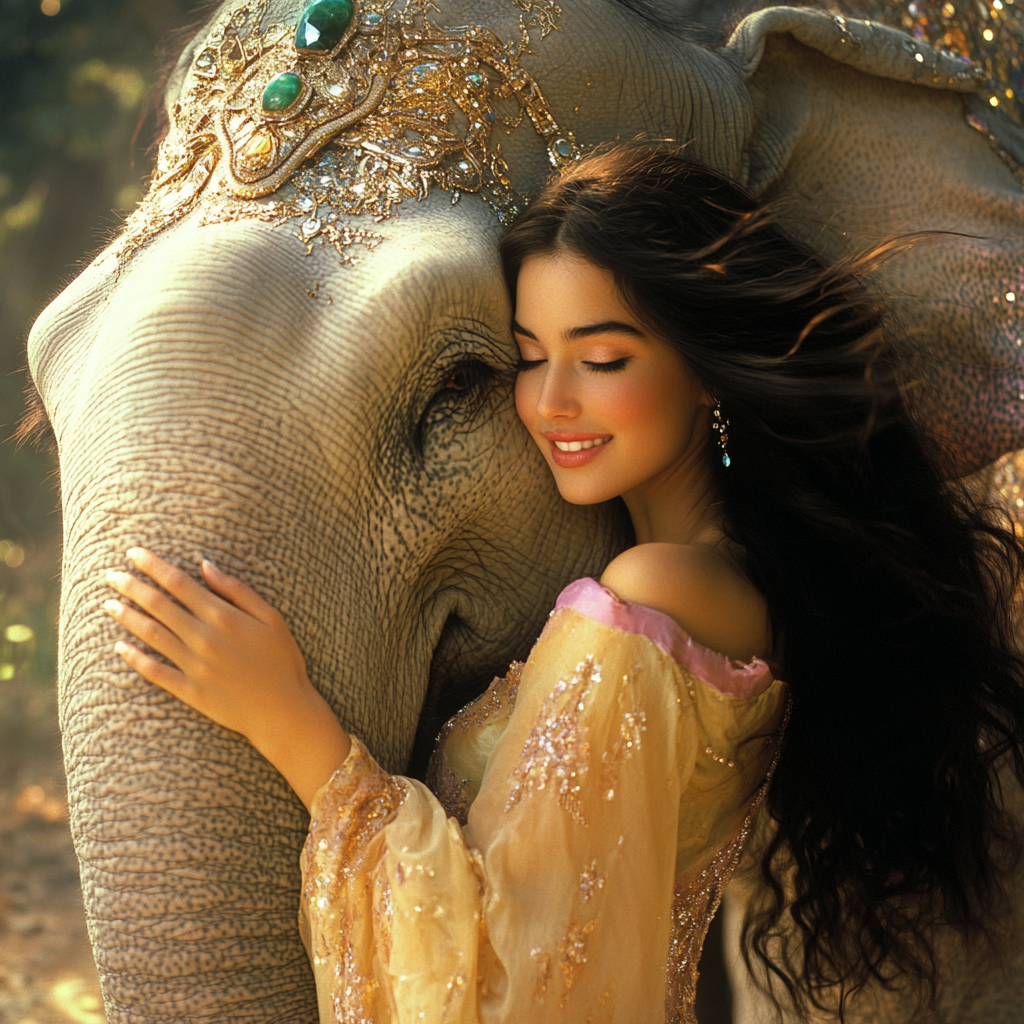
Pegasus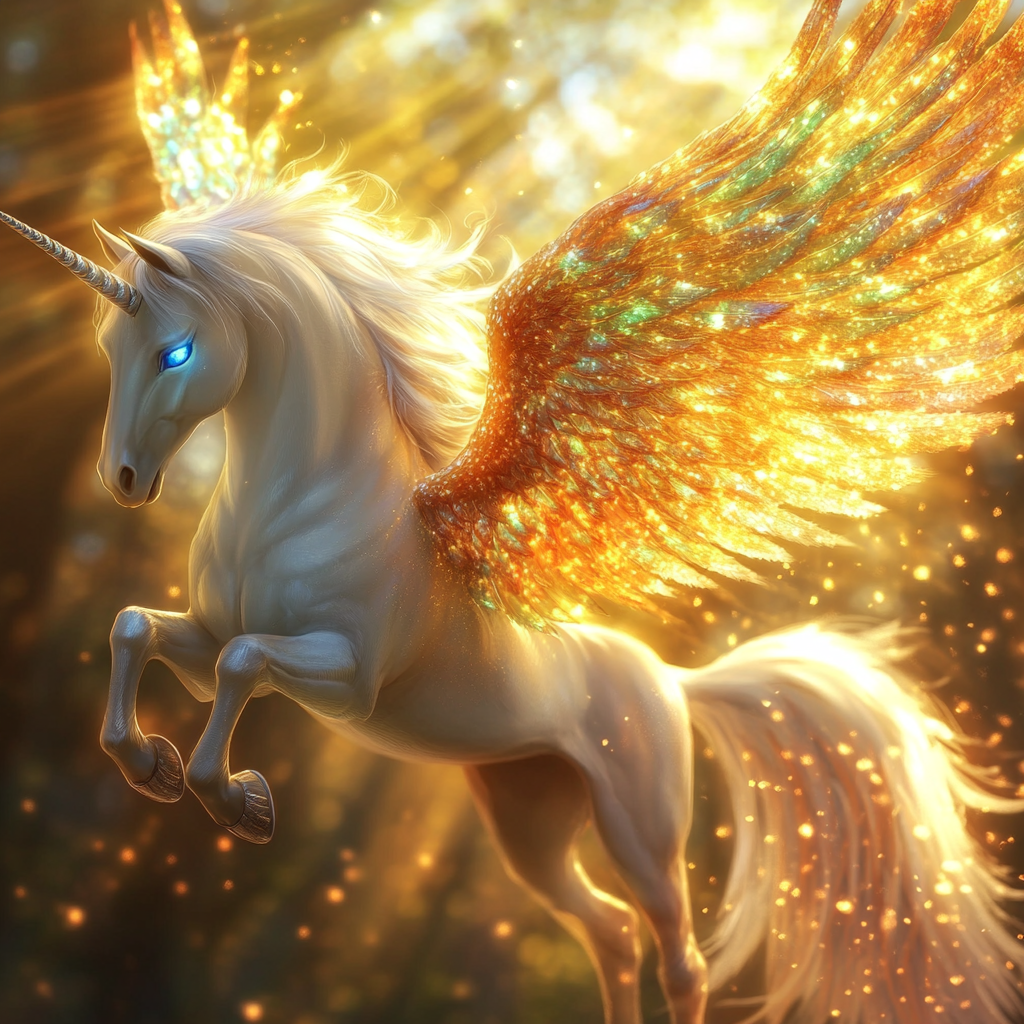
New World Encyclopedia describes the pegasus as "the hoofed master of the ground, and the winged master of the air". This magical equine, along with the unicorn, is thought to be endowed with intriguing qualities and symbolizes the power of humanity's creative spirit. The wings of the pegasus are said to be representative of prayer, and in Buddhism its closest equivalent may be the 'wind horse' of Tibet, a symbol of well-being and good fortune. As the wind horse flies, she carries a sacred jewel known by Buddhists as a wish-fulfilling gem, and she is representative of the fully-enlightened quality.
Most notably, the man known to Buddhists as Padmasambhava, or Guru Rinpoche, is a historical figure who actually lived and is credited with bringing Buddhism to Tibet, where he is known as the Second Buddha. The miracles he performed were so astonishing that for a long time religious scholars were reluctant to admit that Guru Rinpoche actually existed, but that attitude is changing. This ascended master is reported to have directly descended from the sky in a white lotus, or in an 'egg' [which I theorize may have actually been a craft], and immediately set to work taming the vicious demons which were causing so much trouble in Tibet at the time (in approximately the 8th or 9th century). Attempts were made by the wicked to end his life, but this was unsuccessful. Guru Rinpoche was able to turn a huge fire meant to destroy him into a cool, peaceful lake, and before leaving Earth, he left a six-fingered handprint in stone, which many still visit and venerate to this day.
As to the way he left, witnesses describe him flying into the heavens on a magical horse, which may be the most significant appearance of the pegasus in Buddhist literature.
The Prophet Muhammad, an Arcturian starseed, is also famously associated with a winged horse, which is said to have carried him up through the heavens and back again.
Unicorns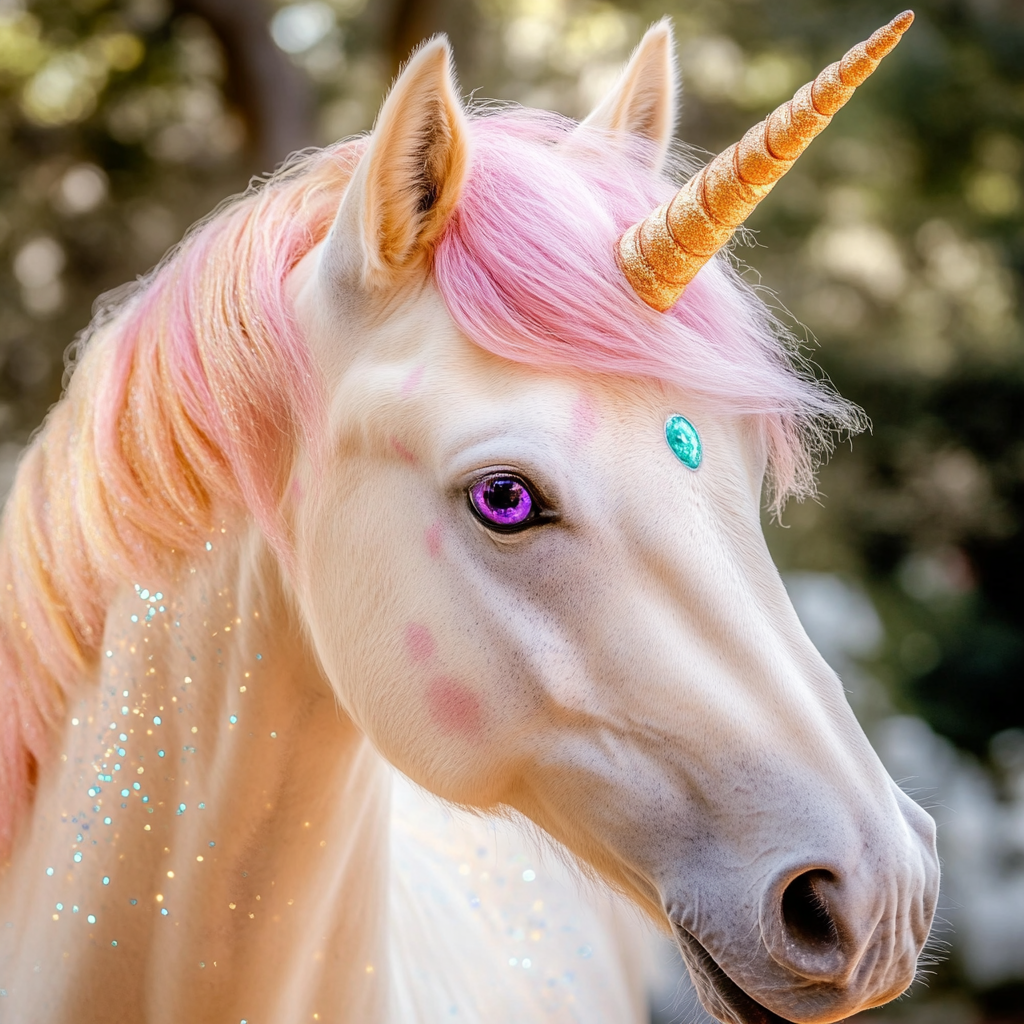
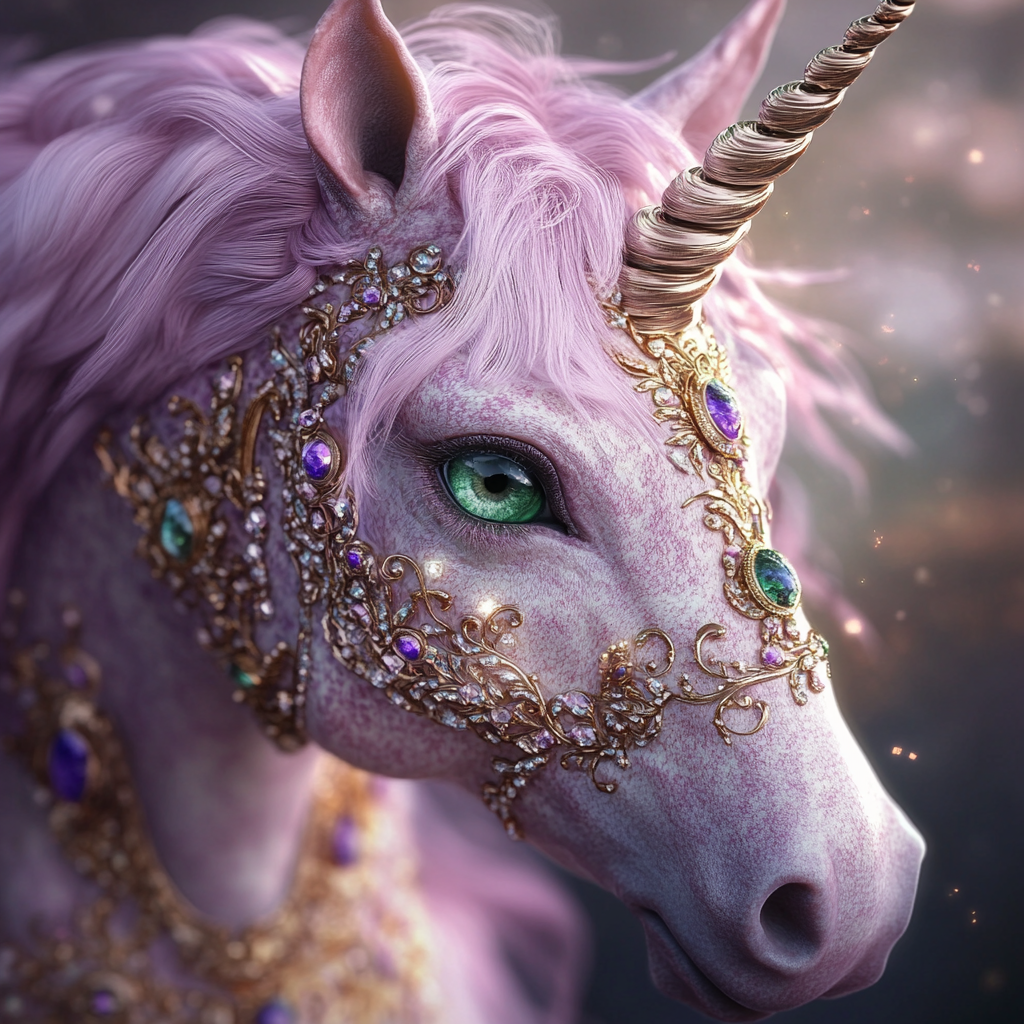
The unicorn, an exquisite creature found not only in Lashae, but in many other worlds and constellations in higher dimensions, has a charmed existence and is held in high esteem almost universally. Unicorns appear in countless myths and legends across the world, and while most of us assume the creature to be merely figurative, the reverse is true. These alluring equines are very real, though their vibrational frequency is so high that most people, with the exception of babies, children, and those with the special gift of multidimensional sight, like Judith of the Taygeta family, are able to "see" them. There is no real way to describe their glory with words; it can only be alluded to, and speculative imagery is the best hope most of us 'normal' people have to be able to connect with them.
As symbols of purity and grace, they are thought to be magical creatures, only able to be approached and/or apprehended by those with the vow of chastity [virgins]. Unicorns make an appearance in a Tibetan manuscript from 1821, where they are described as tso'po, with a wild and unpredictable nature. In Europe, unicorn symbolism was popular to display on family crests, due to the belief that their long, spiraling horns could cure someone who had been poisoned. In Celtic mythology, unicorn horns were thought to be able to purify contaminated water, and they also appear in the myths of China and India.
As a practicing Buddhist upasikha for nearly two decades, I've had the pleasure of reading many sutras and discovering the special place reserved for unicorns in eastern scripture. Unicorns were rumored to have actually lived during the time of Genghis Khan, and in 1224, it was written that Khan was approached by a creature which had one horn in the middle of its forehead, and that it bowed before him three times as if in worship.
In 1800, a British soldier by the name of Samuel Turner visited the country of Bhutan, whose raja, or ruler, claimed that he owned a horse with a single horn, and that it was paid homage by his people. Unfortunately, Turner never had a chance to view this creature.
In Tibetan Buddhism, the appearance of a unicorn is a ruler's sign that all is well with his subjects and his kingdom. In a manner that would only be fitting of such an animal, the unicorn is said never to use its horn unless for self-defense, refuses to trample upon small animals, and-- in true Buddhist fashion-- will not tread upon plant life, flowers or other blossoms.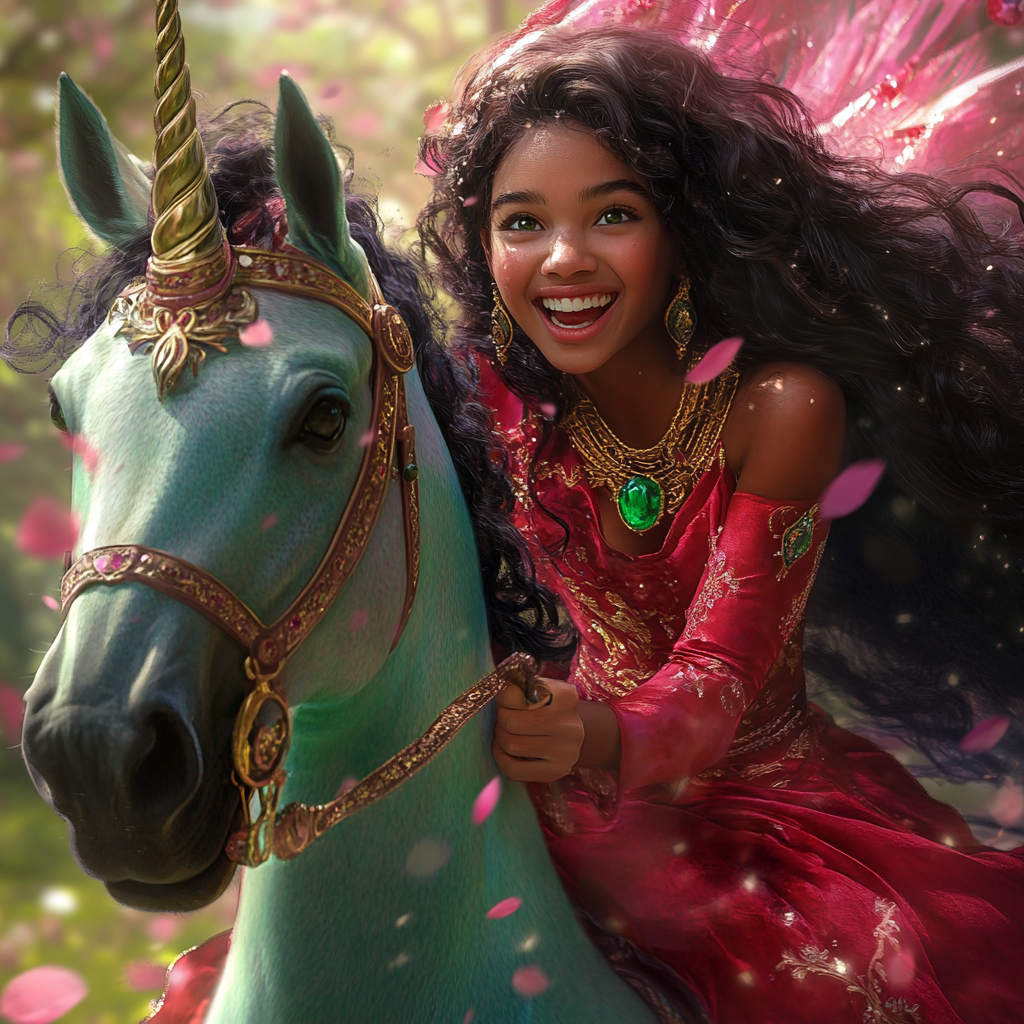
In 2021, an exciting video emerged taken by a man living in England, which he claimed depicted a unicorn grazing outside on grass alongside other wildlife. I've seen the video [you can take a look here], and it looks so realistic that I'm wondering if it was merely clever CGI. The owner of the video claimed that he thought the sighting was genuine and didn't know where the unicorn had come from, and apparently it vanished soon afterwards. It's a whimsical clip, and a beautiful one, but it's likely that we'll never know the real truth behind it. Like so many 'mythical' creatures which we can only dream of seeing, unicorns will remain an enchanting mystery until Sheen is upon us, and eventually starseeds decide to return home.
Zebras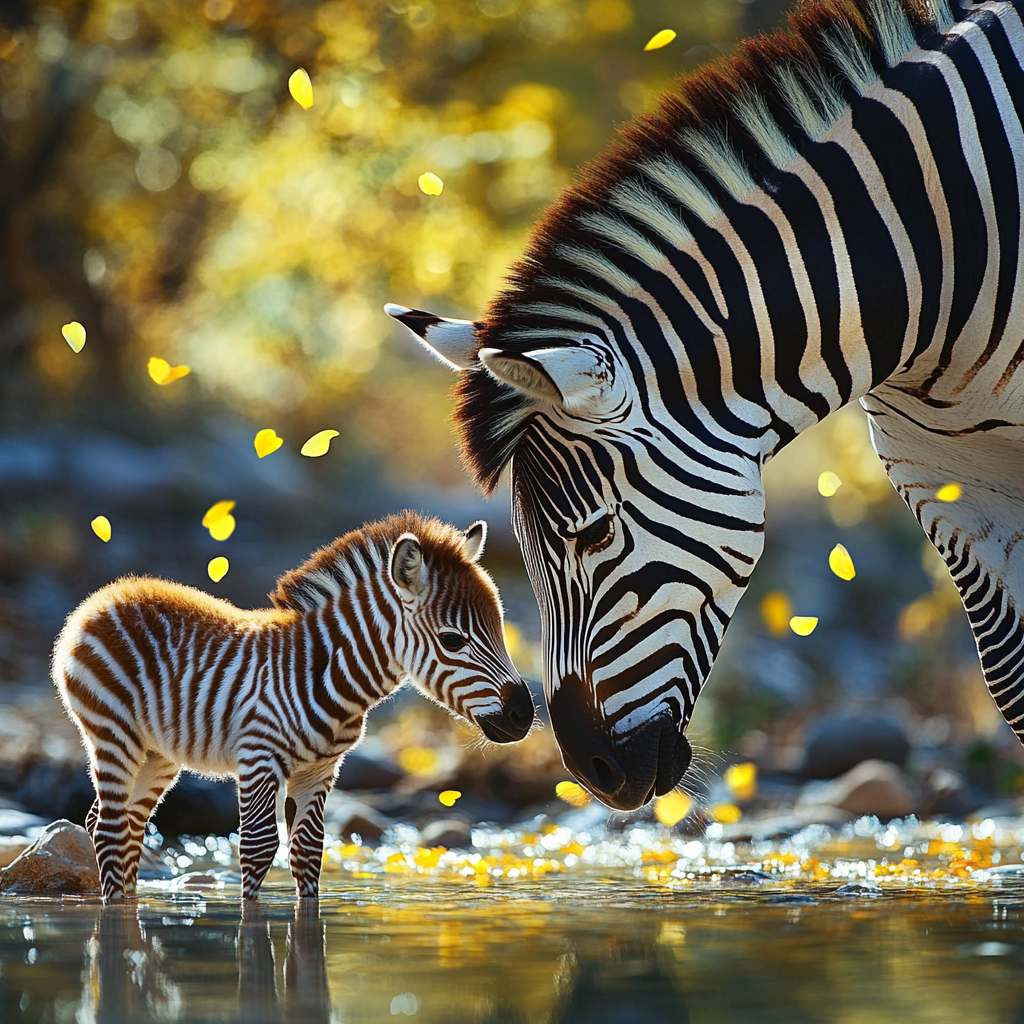
A zebra's stripes, which in some cultures have come to represent the inseparable nature of yin-and-yang, help keep her safe if she's stranded in the savanna and needs to camouflage herself from large predators. They're also as unique to her as each person's fingerprint. As a member of the mammalian Equidae family, she can be loosely grouped into the "horse" category and can even produce offspring with them. The resulting offspring is most commonly called a "zorse" [but can also be labelled a "zebrose", "zebrula", "zebrule", or a zebra mule]. The most prominent example may be a lovely creature named Eclyse, which was born in Germany in 2007, but animals born as a consequence of this kind of cross-mating are typically sterile. This is because a "zorse" inherits two different chromosomal sets that cannot mix, due to the differences in their size, shape and number. A horse has 64 chromosomes, while various zebra species have anywhere from 32 to 46.
Thankfully, in the Pleiades, zebras never have to worry about using their stripes to keep them alive. Their distinct markings are as much a part of their charm as their gentle equine nature, and in the Pleiades they may even be more colorful! Color is not fixed, limited or static in higher realms, where the hues of mountains, oceans, flower petals, and even the fur of animals can be changed with a simple touch, thanks to the eclectic magic of the fae who also call Lashae "home".
In higher dimensions, the zebra is able to live freely and naturally express her inner nature. She isn't able to do this as well as horses can in our three-dimensional world. Because zebras are constantly on the alert for trouble and never truly get to have a moment's peace in their earthly habitats, they're much less amicable than horses are, and naturally 'aggressive' [a quality that disappears in areas of higher density]. This is why they aren't as easily tamed and can't be 'ridden' by people like horses can, though with a mixed-breed "zorse", the temperament smooths out a bit.
In terms of symbolism, the zebra is seen as an animal that enjoys challenge. Typically, in shamanic circles, they're representative of uniqueness, agility, balance, and individuality. Zebras are also thought to embody the qualities of occult knowledge, things 'unseen', and dimensional shifts. Given the proximity of the coming shift to Sheen, the latter is probably most appropriate.
Goats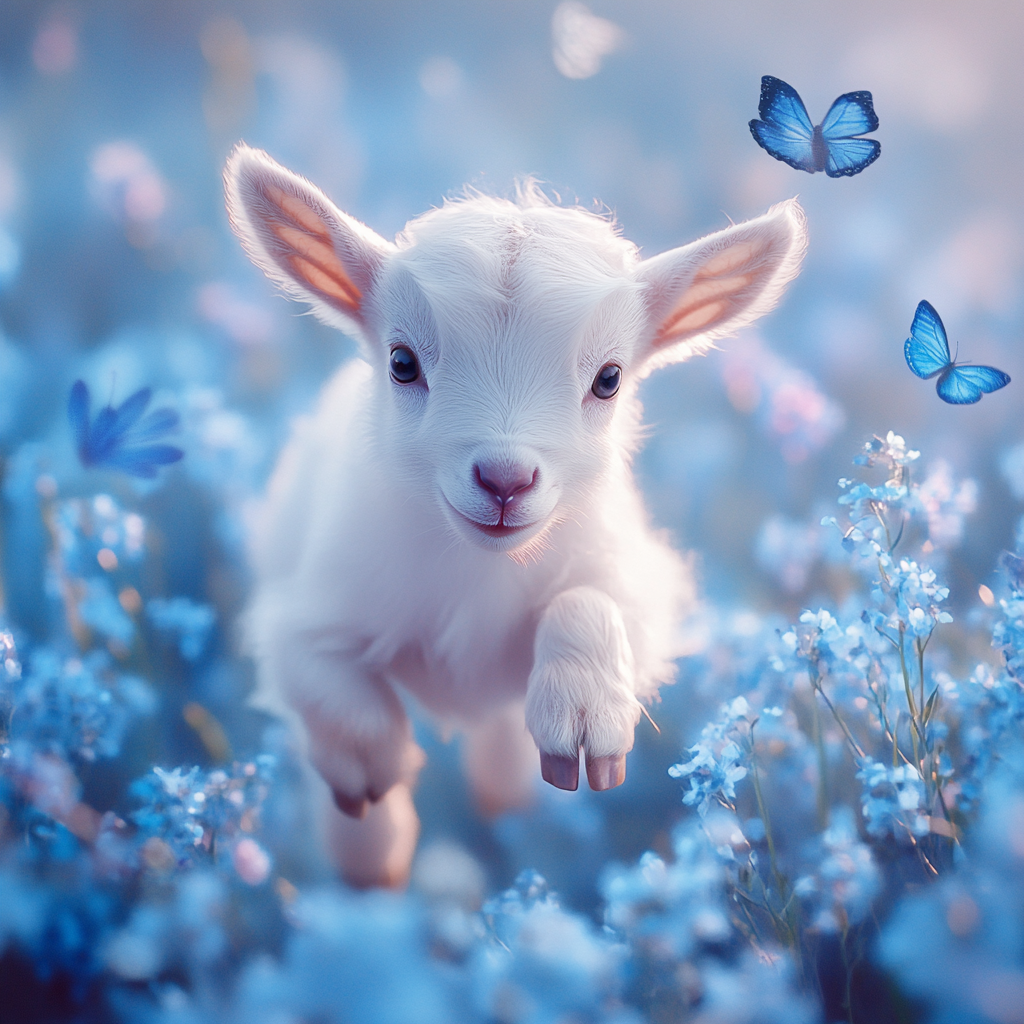
In a topsy-turvy world, where darkness overwhelms and inversion has the illusory power of transforming what was 'good' into something negative, the goat has received a horrible reputation over the millennia. This was never 'earned', and goats are not somehow deserving of it; they are beautiful animals no more inherently 'dark' than any other creature, and the wonderful fact that goats can be found in the Pleiades should put those notions to rest. An entire article could be written on just this unlucky association alone, but as the point of this piece is a positive one, I'll focus on the more positive qualities attributed to goats over time.
First domesticated by Neolithic peoples in the Middle East and Asia, goats would come to be linked with fertility, health, and prosperity by various African cultures. Indigenous peoples of the Americas also revered the goat as emblematic of creativity, and stories about goats appear often in Native American folklore. In Chinese culture, the male goat embodies the Yang principle, whereas the female is linked with harmony and goodness.
In terms of behavior and personality, goats were first domesticated a little earlier than canines were. People who have grown up with and raised goats report that they're just as curious, friendly, and loving as any canine, and are surprisingly one of the most fastidious creatures when it comes to their personal hygiene. It's fair [but limiting] to think of goats as merely destructive creatures. They might demolish personal property and seem capable of devouring any food indiscriminately-- they're actually very picky eaters-- but they're no less sentient and warm-hearted than other mammals humans are conditioned to 'love'. Mother goats recognize their kids immediately after birth by the sound of their bleats, and while they aren't as flock-oriented as animals like sheep, they are nonetheless very sociable creatures. Goats will suffer if they're separated from their families or the people they've become accustomed to.
Among their more endearing qualities, they don't seem to like water or the rain very much, at least here on Kishapolee. Many will testify to their goats being unwilling to walk through puddles. Because they don't like being wet, storms bother them, and they often go running to their homes or the nearest shelter before the first rain-drops are felt.
As to their horizontal pupils, which put many people 'off' to goats because of their appearance, on Earth they serve an important purpose by giving them a wider field of vision as they graze, explore or play. In this way they can keep constant watch for any predators, though of course in Lashae, that vigilance will finally be able to be shelved for good.
Pandas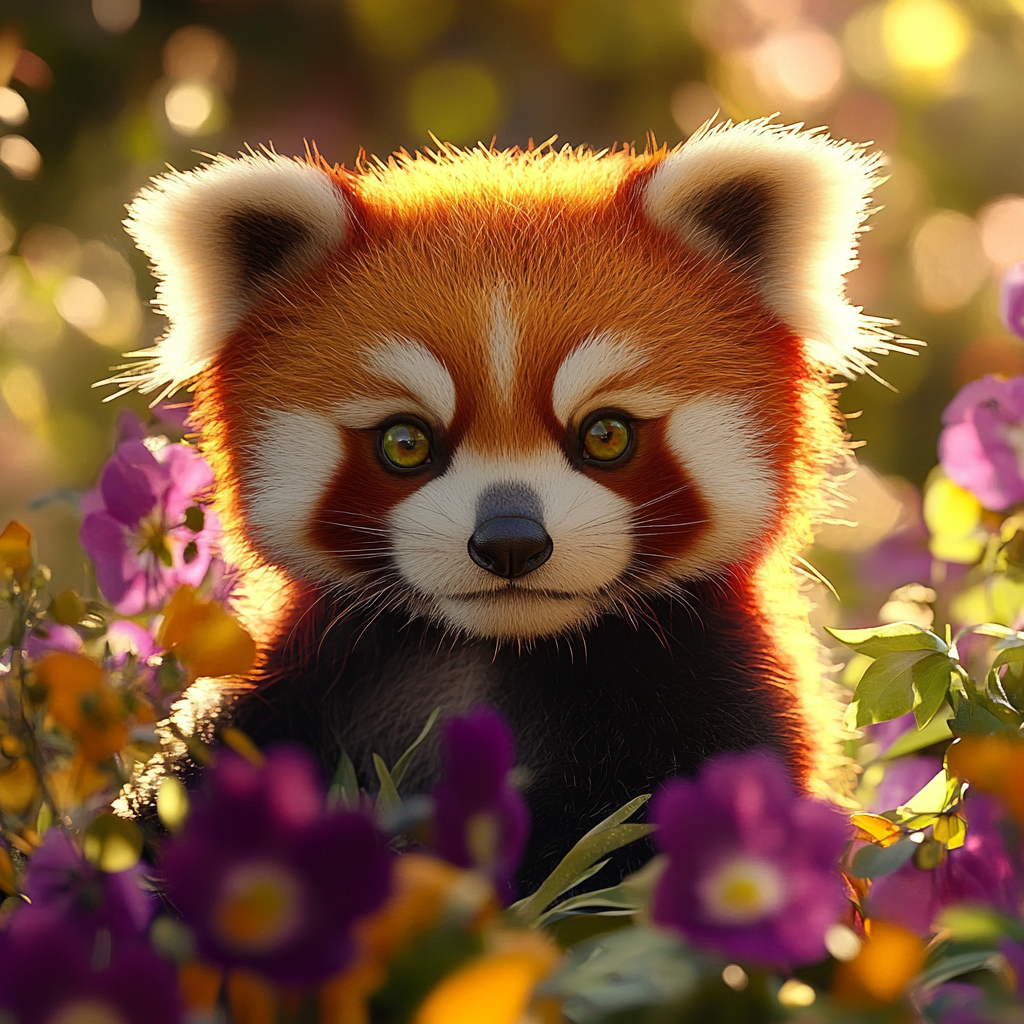
There is more than one type of "panda" to be found here on Earth, and likely an infinite variety of fauna in Lashae, but I've chosen to focus on the red panda here because of their sweet faces and irresistible cuteness factor. Through Origin reveals, many Pleiadian starseeds in particular have discovered that on their sacred stars, they enjoy cuddling with pandas and cherish them as treasured family members. The historical Buddha, an incarnated Pleiadian starseed during his lifetime, originally came from Electra. After his death, he returned to Origin, and lives there now with his own beloved pandas [he is known there as Eihol].
On our planet, red pandas are more closely related to weasels and otters from the family Mustelidae than they are to the black-and-white panda that first comes to mind. Yet, like traditional pandas, red pandas can be found in many parts of Asia and eat huge amounts of bamboo every day. This is their primary food source, but because they're carnivorous, they'll also eat insects, small animals and even birds if the opportunity arises. In Lashae, happily, there isn't any need for pandas to depend on meat, and they're perfectly happy to munch on the same leaves and berries that nourish their distant Earth cousins.
Sometimes, red pandas are referred to as 'red bear cats' due to their adorable looks. The sounds they make somewhat resemble the quacking of a duck, and sleeping, which they indulge in for as long as 17 hours out of the day, is done with the help of their particularly long tails. This helps them balance while in trees, and keeps them warm during harsh winters.
While not technically luminescent, the white fur on a red panda mother's face still seems to glow when it's nighttime. This is thought to be able to help keep the sun out of their eyes, but can also help draw any lost cubs back home to the nest.