

Philosophy of David Hume: Skepticism and the Problem of Evil
$2.99
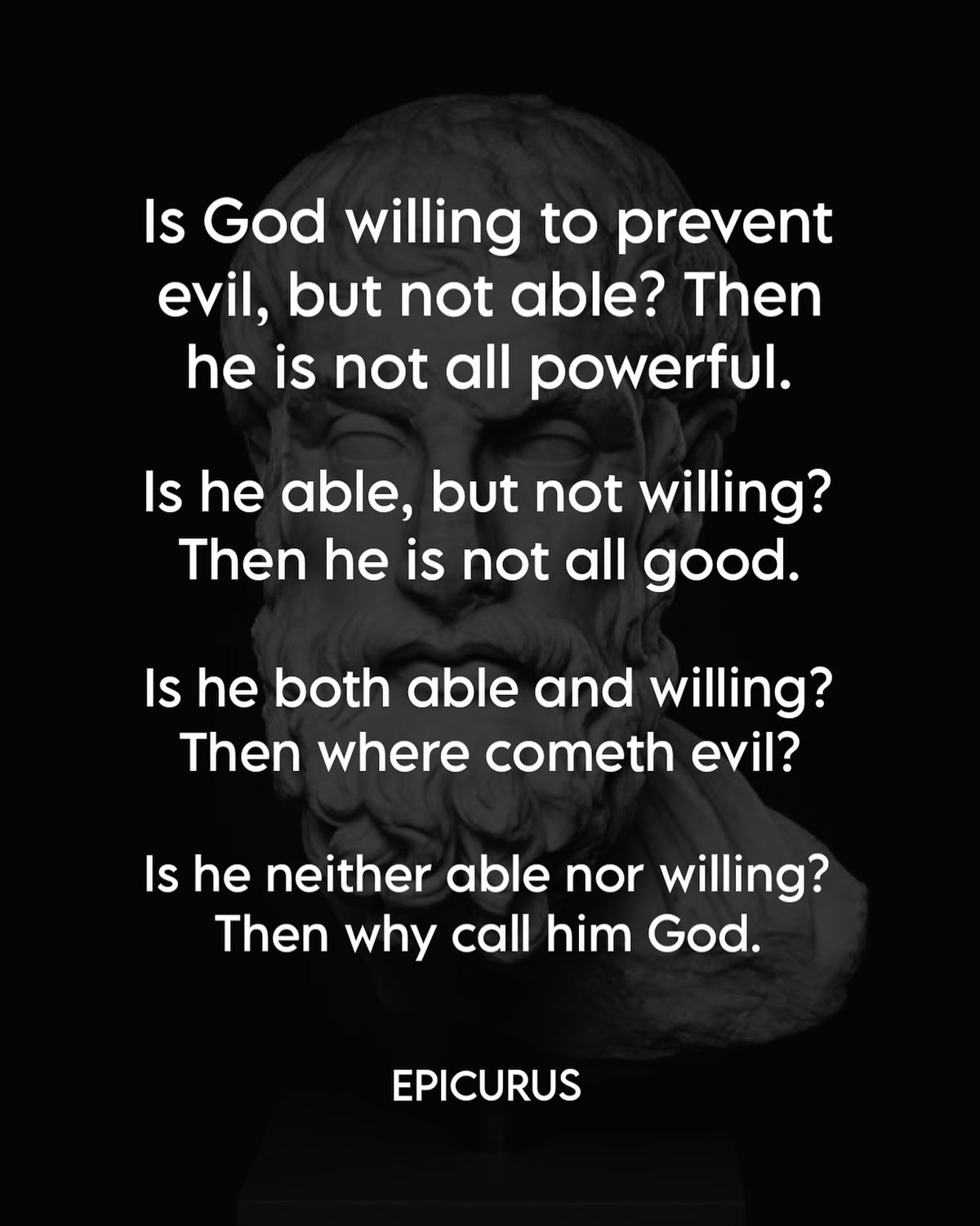
The problem of evil is probably the thorniest and trickiest issue facing any classical theist. It goes back to ancient Greece with Epicurus but finds its most common and popular formulation with the Scottish philosopher, David Hume. Classical theism is the belief system that there is a God who is omnipotent, omniscient and omnibenevolent. Or, there is a God who is all powerful, all knowing, and all loving.
The question that David Hume asks, and the problem of evil poses, is “Where does evil fit into this picture?”
If God professes to love us, how is it that He allows or even inflicts such monstrous and horrific evil that exists in the world? Either God knows about the evil but doesn’t stop it, in which case he’s not omnipotent. Either he can stop it but doesn’t know about it, in which case he’s not omniscient. Or God wants us to suffer to some degree.
There are resolutions to the problem of evil, and these are known as theodicies and the most common one, which goes back to Irenaeus, suggests that evil serves some kind of soul purifying purpose or suffering makes us better in some way.
But this raises another question: If God is supposed to be omnipotent, why is it that he has to use evil to purify our souls? If this is the “best of all possible worlds” as Leibniz suggested, why couldn’t God just make it a little bit better? And without all of the suffering that exists in the world today?
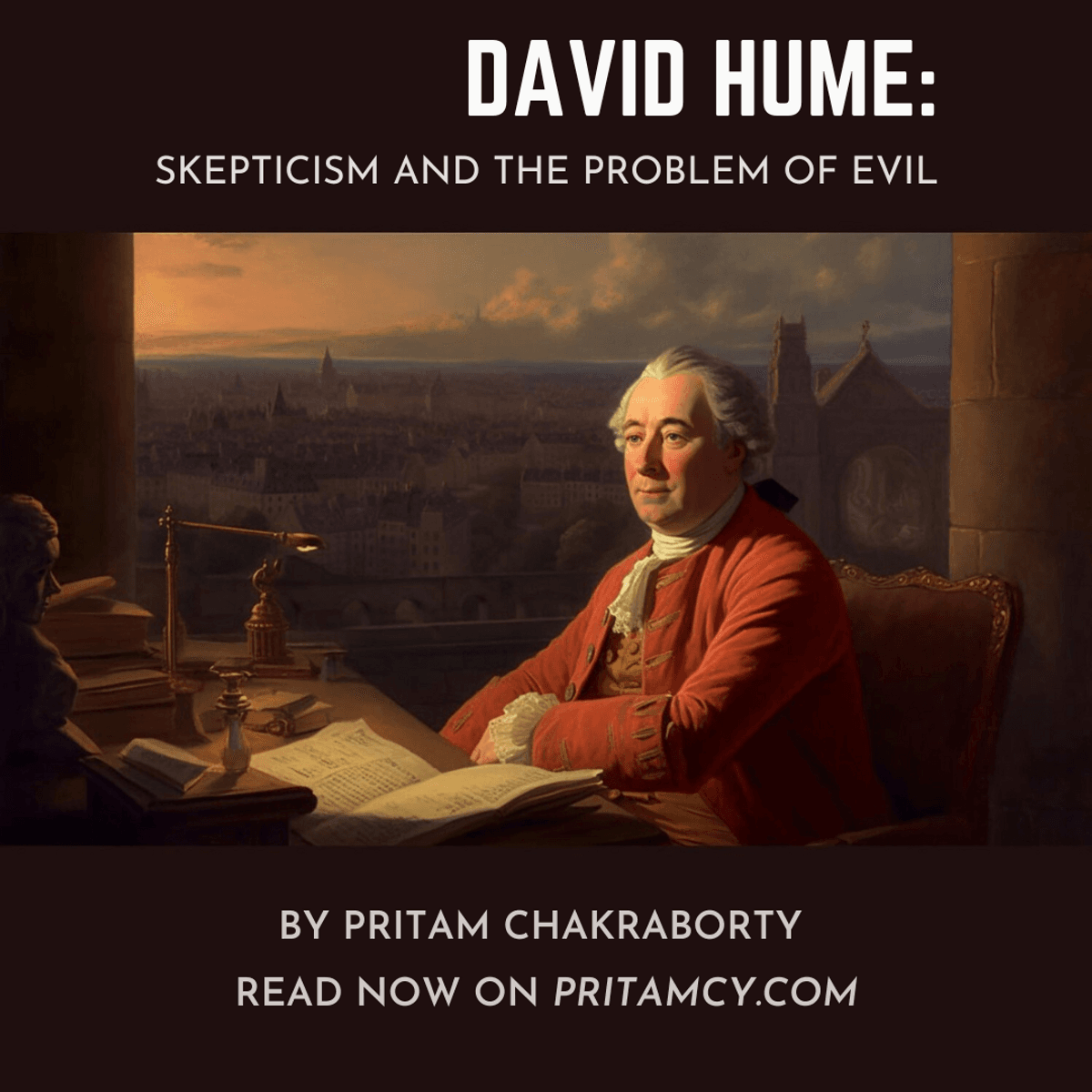
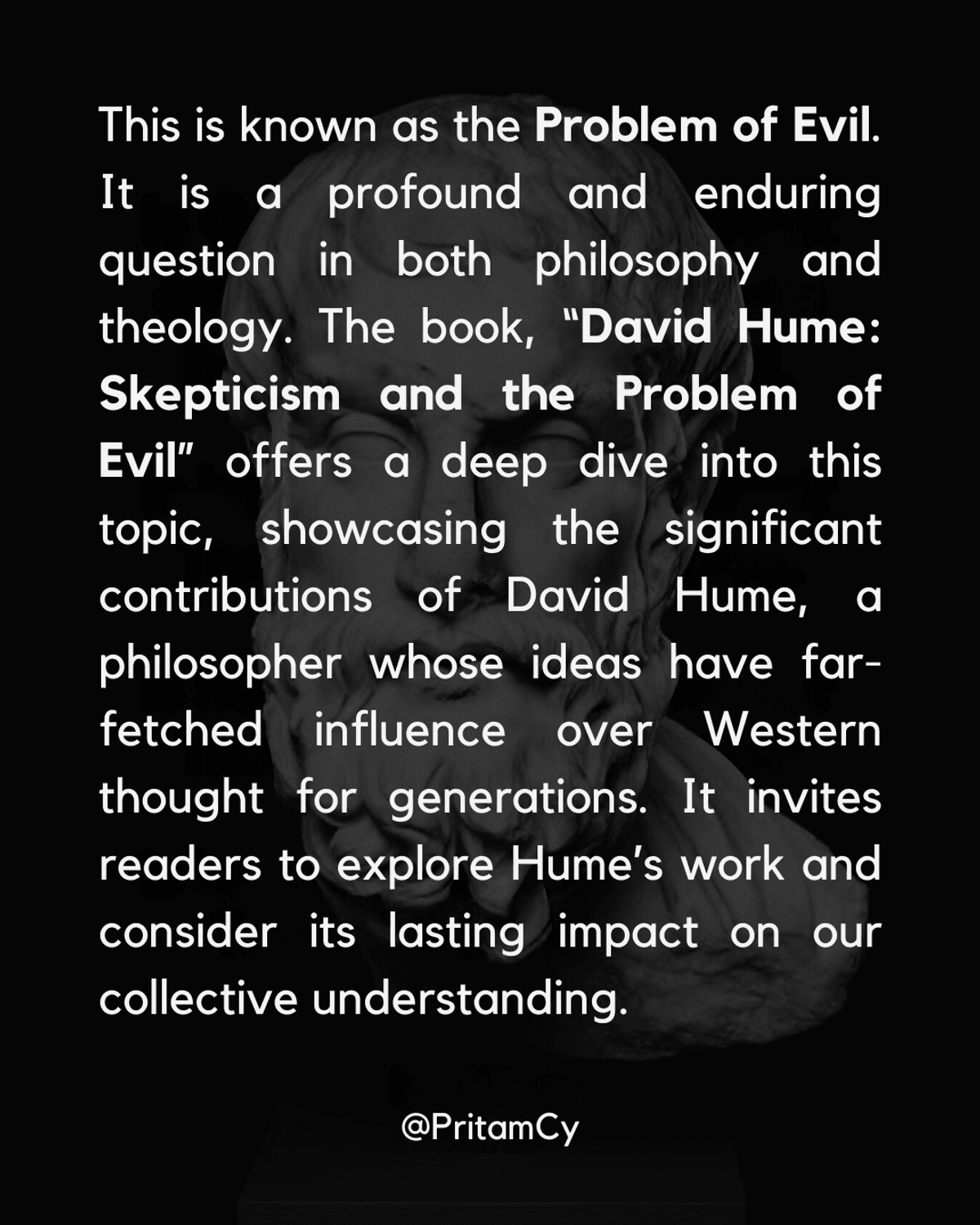
The Book "David Hume: Skepticism and the Problem of Evil" provides a thorough analysis of David Hume, the renowned philosopher of the Scottish Enlightenment, exploring his significant works and philosophical positions, and their impact on Western philosophy.
The text begins with a concise introduction to Hume's life and contributions, then delves into his key philosophies such as empiricism, philosophy of mind, ethics, philosophy of religion, and his perspectives on politics and economics. It further examines Hume's influence on subsequent thinkers, addressing the critiques and debates surrounding his ideas.
The second-to-last chapter contextualizes Hume's thoughts within present-day philosophical discourse, shedding light on their current significance and practicality. The final chapter offers a detailed summation of Hume's philosophical heritage and the prospective future interpretations and applications of his work. This book serves as an essential guide for those seeking a comprehensive grasp of Hume's intellectual legacy and its ongoing relevance.
Book Contents:
- Forwards
- Chapter 1: Introduction to David Hume
- Chapter 2: Hume’s Empiricism and Theory of Knowledge
- Chapter 3: Hume’s Philosophy of Mind
- Chapter 4: Hume’s Moral Philosophy
- Chapter 5: Hume’s Philosophy of Religion
- Chapter 6: Hume’s Political and Economic Philosophy
- Chapter 7: Hume’s Influence on Later Philosophers
- Chapter 8: Criticisms and Controversies of Humean Philosophy
- Chapter 9: Hume’s Philosophy in Modern Context
- Chapter 10: Conclusion: The Enduring
- Legacy of David Hume
Format: Standard PDF
Size: 750 KB
Pages: 128
P.S Refund is not available at the moment due to the digital nature of the product.
If you have any suggestions or questions, please email me at [email protected]
Thank you! :)
$2.99
Free for members
Become a member to get a discount and other exclusive benefits.
$2.99