

The Genesis of a Style
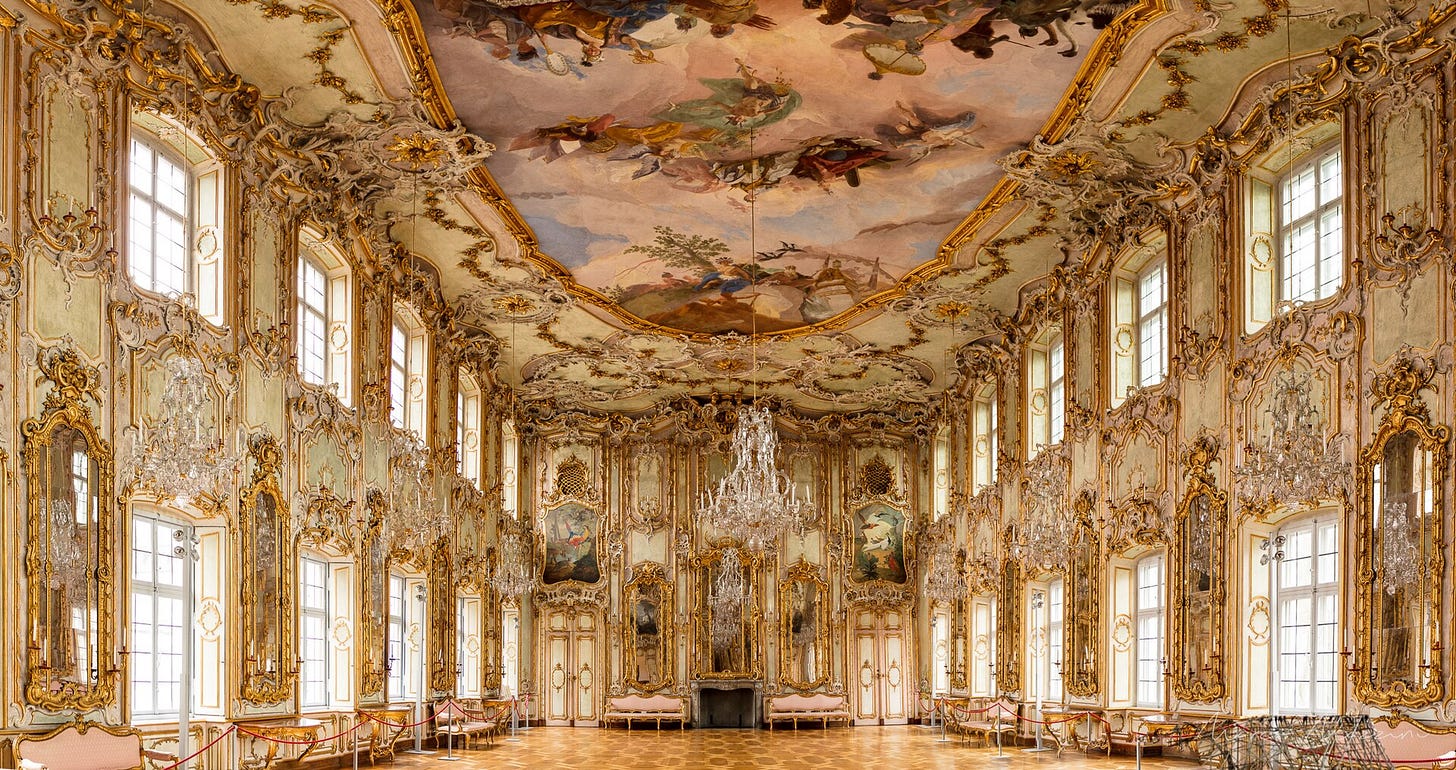 Festival Hall of the Schaezlerpalais in Augsburg by Carl Albert von Lespilliez (1765–1770)
The Rococo style emerged in early 18th-century France as a deliberate departure from the imposing grandeur and solemnity of Baroque design that had dominated the era of Louis XIV. Where Baroque was monumental, dramatic, and authoritarian in its aesthetic, Rococo introduced a vision of playful elegance and personal luxury that pointed out the changing social dynamics among the French aristocracy. This style, often described as the final expression of the Baroque movement, represented perhaps the most rebellious of design movements. The very name "Rococo" derives from the French word rocaille, which referred to the decorative rock and shell work that adorned artificial grottoes and fountains in aristocratic gardens, elements that would find their way in Rococo interiors.
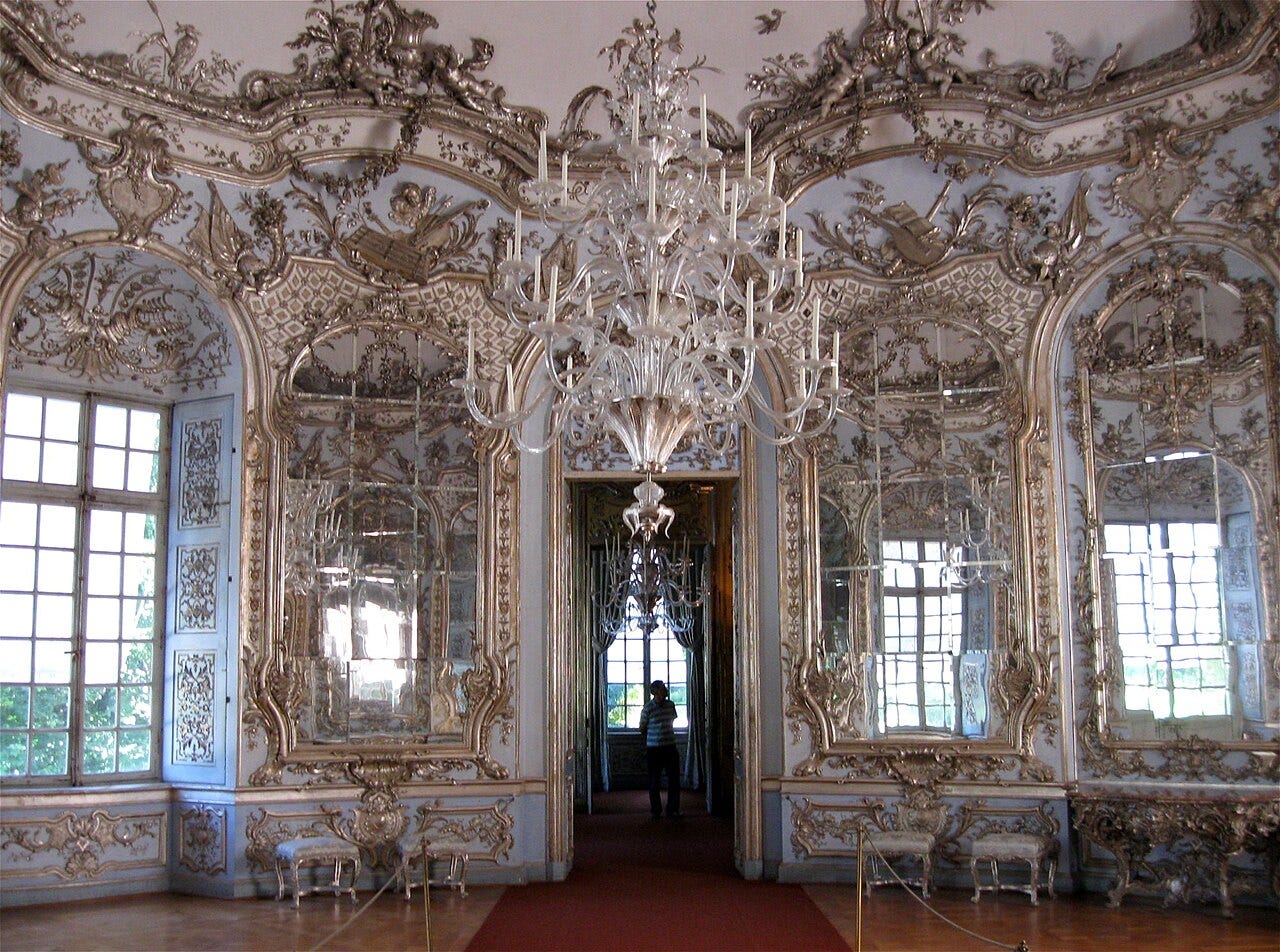 Hall of Mirrors of Amalienburg by Johann Baptist Zimmermann (1734–1739)
The historical significance of Rococo extends far beyond its decorative innovations. It signaled a profound shift in cultural values from the formal to the informal, from the public to the private, and from the rigid to the fluid. As the style spread throughout Europe, it took on regional characteristics in Germany, Italy, England, and beyond, creating a diverse yet coherent design language that would dominate aristocratic interiors for much of the 18th century. Even after its decline in favor of Neoclassicism, Rococo would experience periodic revivals, testifying to its enduring appeal and its remarkable ability to bring forth an atmosphere of luxury, fantasy, and delicate beauty.
The Origins and Historical Context of Rococo
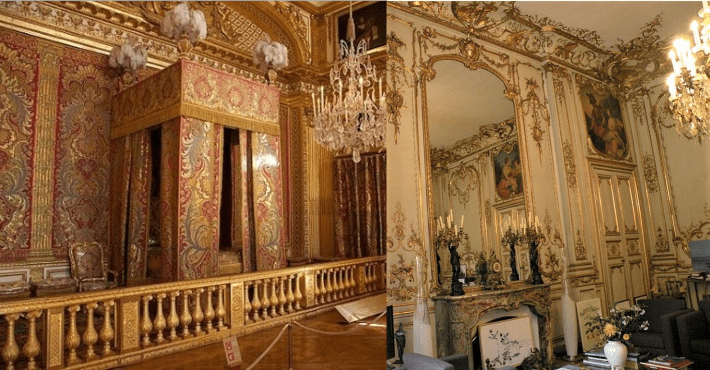 Left: the State Bedchamber of Louis XIV in the Baroque style, Versailles, and right: the Cabinet du Ministre in the Rococo style at the Hotel de Roquelaure, Paris. Note the rich colours of the Baroque versus the lighter whites and gold of the Rococo!
The Rococo style emerged during a distinct period of transition in French society and politics. The death of Louis XIV in 1715 marked the end of an era characterized by absolute monarchy and the imposing Baroque architecture of Versailles. The subsequent Regency period (1715-1723), under Philippe d'Orléans, witnessed a noticeable shift in cultural attitudes as the royal court moved from Versailles back to Paris, leading to a flourishing of urban salon culture among the aristocracy . This new environment favored gatherings and conversational elegance over the formal court ceremonies of the previous reign, necessitating interiors that were more refined and less intimidating than the grandiose Baroque spaces.
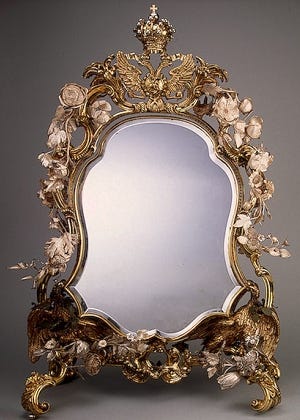 Mirror by Charles Frederick Kandler, 1741/42. The State Hermitage Museum, St. Petersburg.
The development of Rococo was fundamentally shaped by craftspeople and designers rather than architects, which explains why it manifested most prominently in interior decoration, furniture, silverwork, and ceramics rather than in structural architecture . Early proponents included designers like Pierre Le Pautre, Juste-Aurèle Meissonier, Jean Berain, and Nicolas Pineau, who developed a lighter style of decoration for the new residences of nobles in Paris. These designers drew inspiration from natural forms: shells, rocks, vines, and foliage which they translated into abstract curvilinear patterns that would become the hallmark of the style .
Characteristics and Elements of Rococo Interior Design
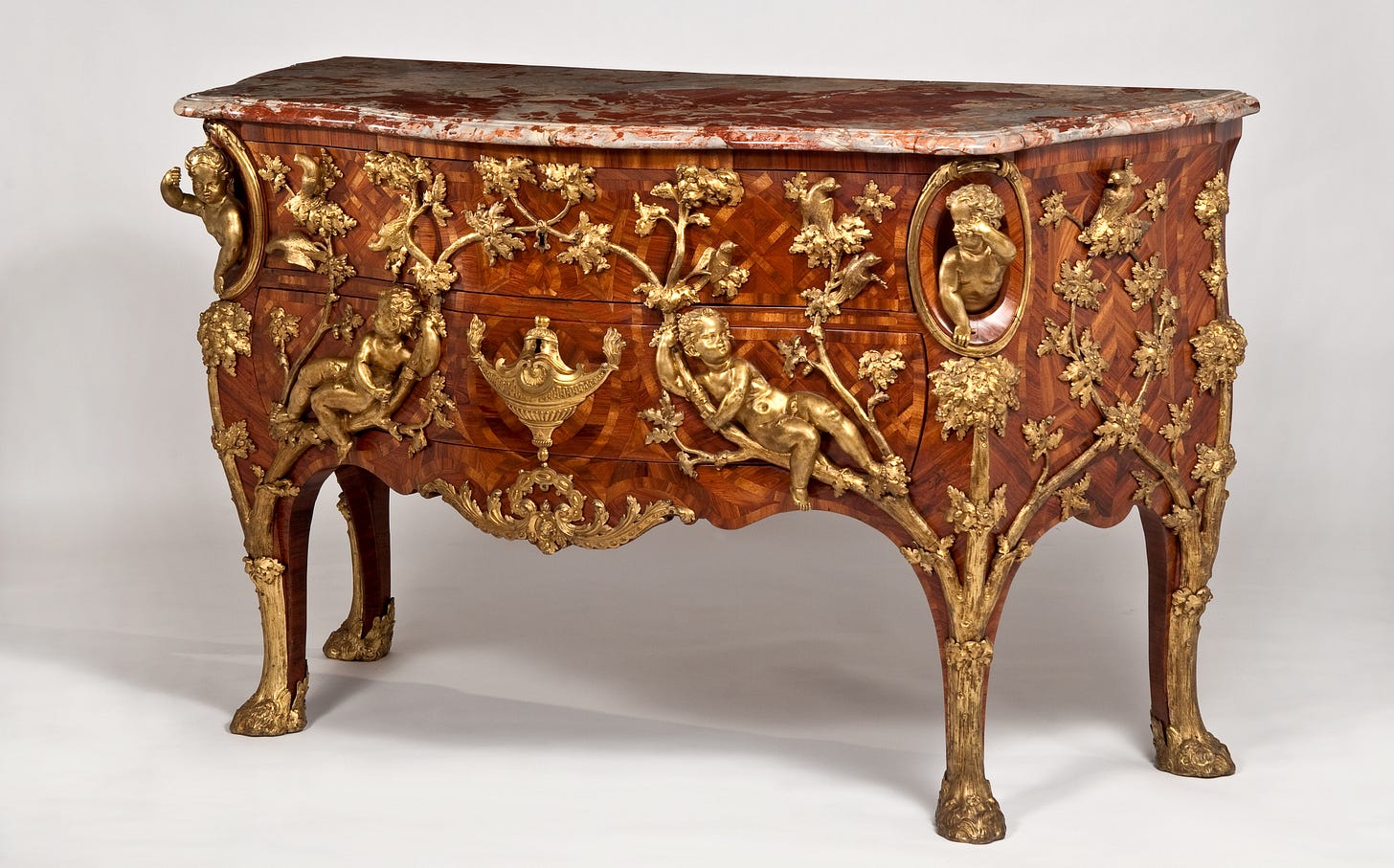 Charles Cressent, Chest of drawers, c. 1730 at Waddesdon Manor
Rococo interior design is immediately recognizable through its distinctive visual language that privileged asymmetry, curvilinearity, and elaborate ornamentation. Unlike the balanced symmetry of Baroque, Rococo embraced dynamic imbalance, with designs often based on S- and C-scrolls, swirling vines, and marine forms that created a sense of movement and fluidity throughout the interior. This asymmetrical design was the rule rather than the exception, appearing in everything from wall panels and ceiling decorations to furniture frames and mirror surrounds.
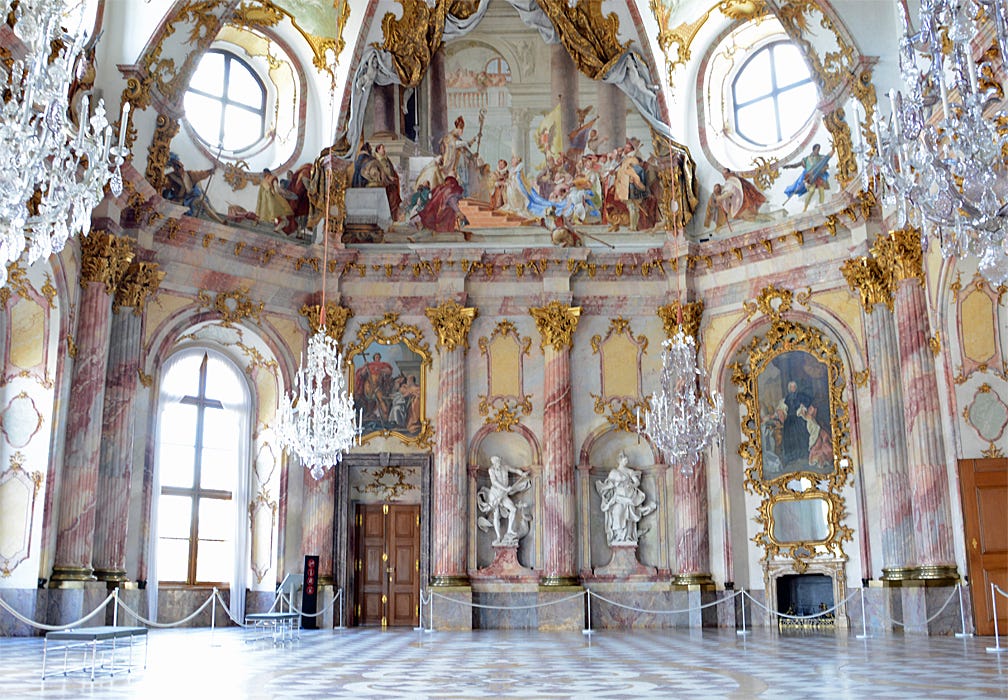 Residenz Würzburg, Kaisersaal
The color palette of Rococo interiors marked a dramatic departure from the strong contrasts of Baroque. Designers favored soft pastels: whitish-yellow, cream, pearl grays, and very light blues often accentuated with generous gilding that created an atmosphere of warmth and luxury . These light tones were strategically enhanced through the innovative use of mirrors and light, with large windows, reflective surfaces, and crystal chandeliers designed to amplify both natural and artificial illumination, creating interiors that seemed to shimmer and glow.
The Spread and Regional Variations of Rococo
The Rococo style, though born in France, quickly spread across Europe, adapting to local traditions and aesthetic preferences in each region. By the 1730s, Rococo had established itself as the dominant style for aristocratic interiors throughout much of the continent, with particularly distinctive interpretations emerging in Germany, Italy, and England.
German Rococo
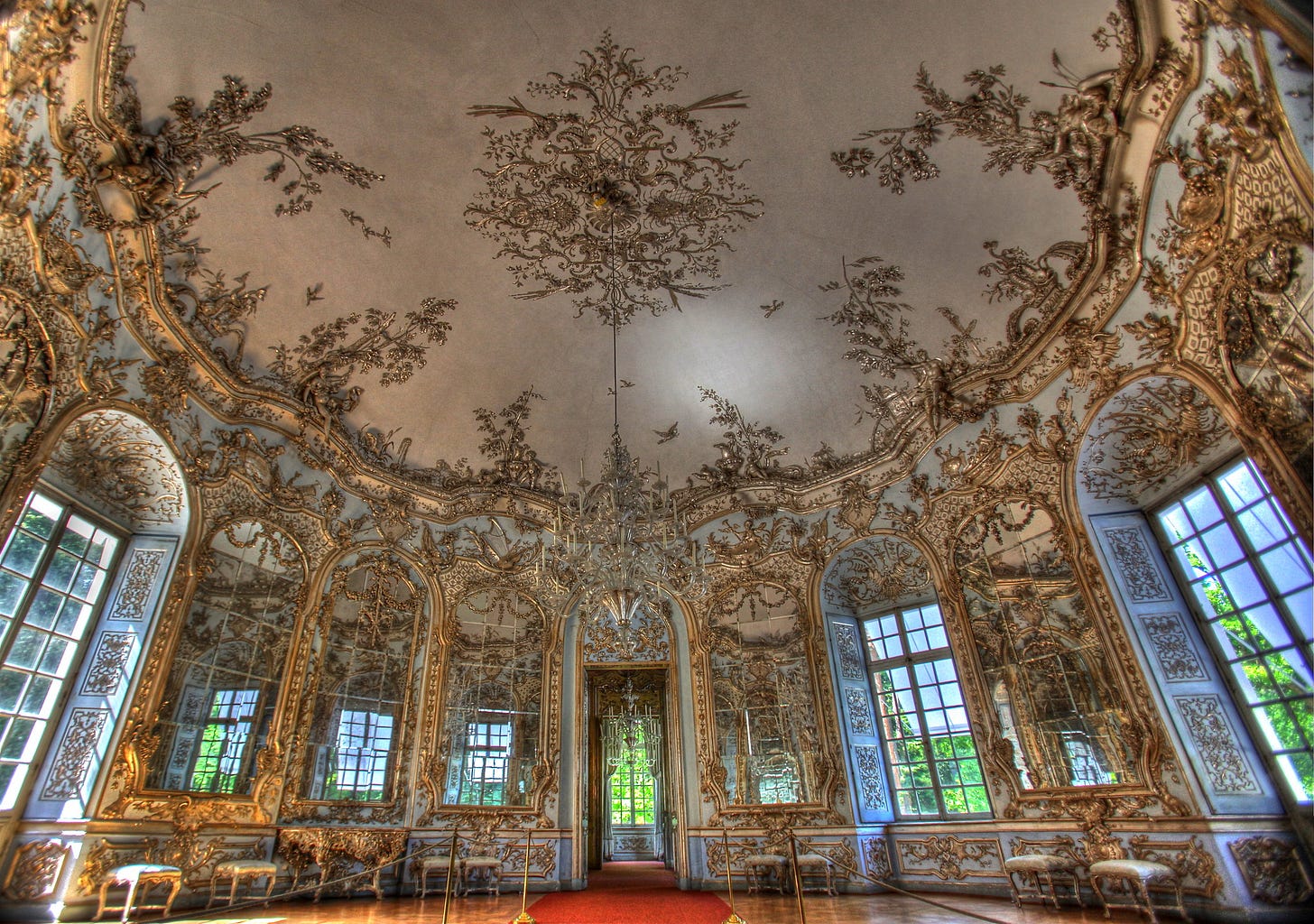 Amalienburg's Hall of Mirrors
Germany, particularly Catholic regions like Bavaria, embraced Rococo with unparalleled enthusiasm, adapting it into a style of religious architecture that combined French elegance with German fantasy. German Rococo interiors were characterized by an explosion of forms that cascaded down walls, with molding formed into curves and counter-curves, twisting patterns, and stucco foliage that seemed to creep across surfaces. Notable examples include the Amalienburg hunting lodge in Munich (1734-1739) by François de Cuvilliés, whose Hall of Mirrors featured silver-plated walls and stuccowork that surpassed even French examples in exuberance.
Italian Rococo
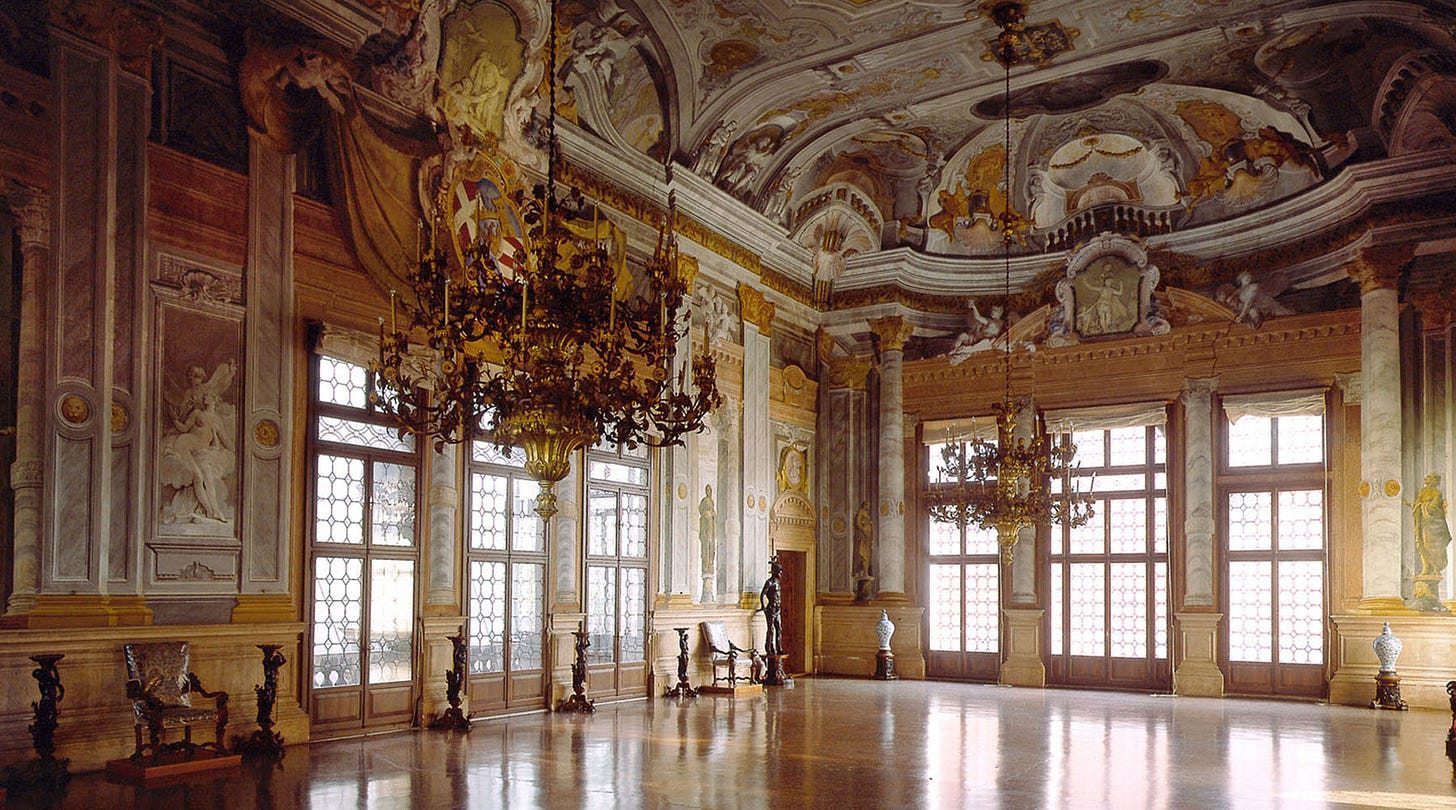 Ca' Rezzonico
Italy developed regional variations of Rococo, with Venice emerging as the most influential center. Venetian Rococo was distinguished by its rich colorism and luxurious materials, reflecting the city's ongoing fascination with display despite its political decline. Interiors featured lavish lacquerwork, especially lacca povera (poor lacquer), in which allegorical scenes and chinoiserie motifs were painted onto furniture. Venetian glassmakers produced exquisite Murano glass chandeliers and mirrors that became coveted throughout Europe, their brilliant effects enhancing the playful lightness of Rococo interiors.
English Rococo
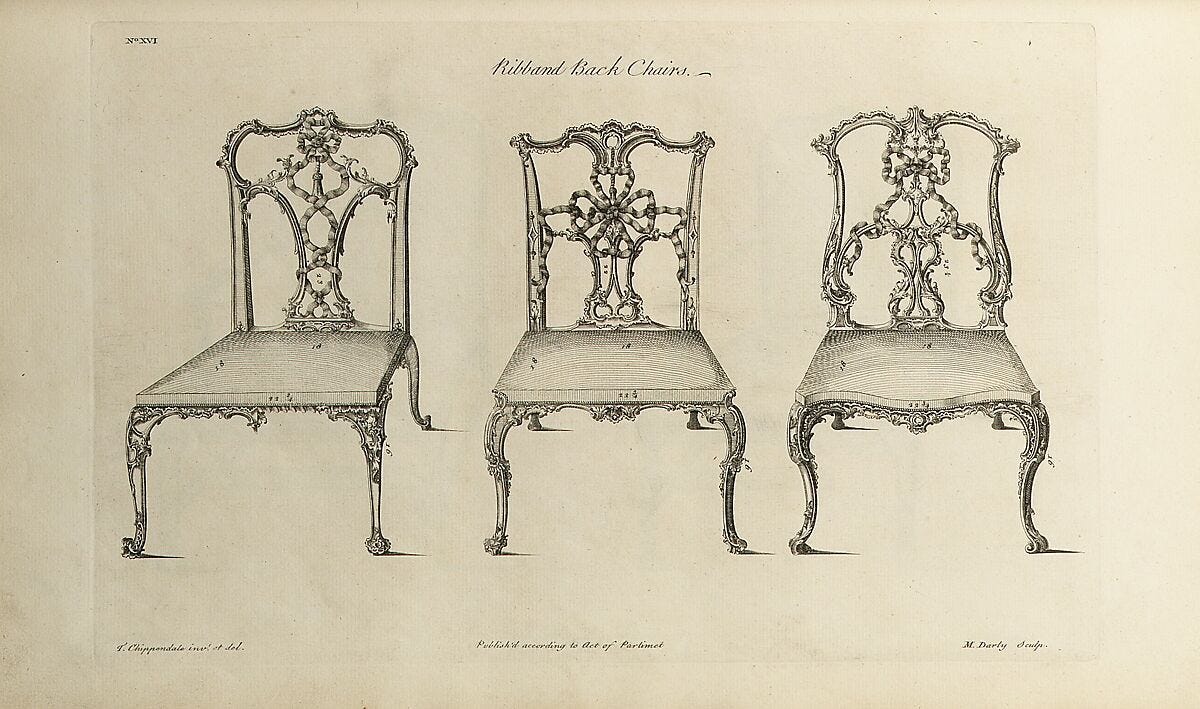 The Gentleman and Cabinet-Maker's Director by Thomas Chippendale, 1754
England adopted Rococo with characteristic reserve, blending it with Gothic and Chinese elements to create a hybrid style sometimes called "English Rococo". The most influential figure in this adaptation was Thomas Chippendale, whose 1754 publication The Gentleman and Cabinet-Maker's Director provided patterns for furniture that combined Rococo scrollwork with Gothic tracery and chinoiserie. English Rococo tended to be more restrained than its Continental counterparts, with less exuberant ornamentation and a greater emphasis on comfort and practicality. The style was disseminated primarily through pattern books rather than immigrant craftsmen, leading to interpretations that reflected England's growing emphasis on middle-class comfort rather than aristocratic display.
Legacy of Rococo
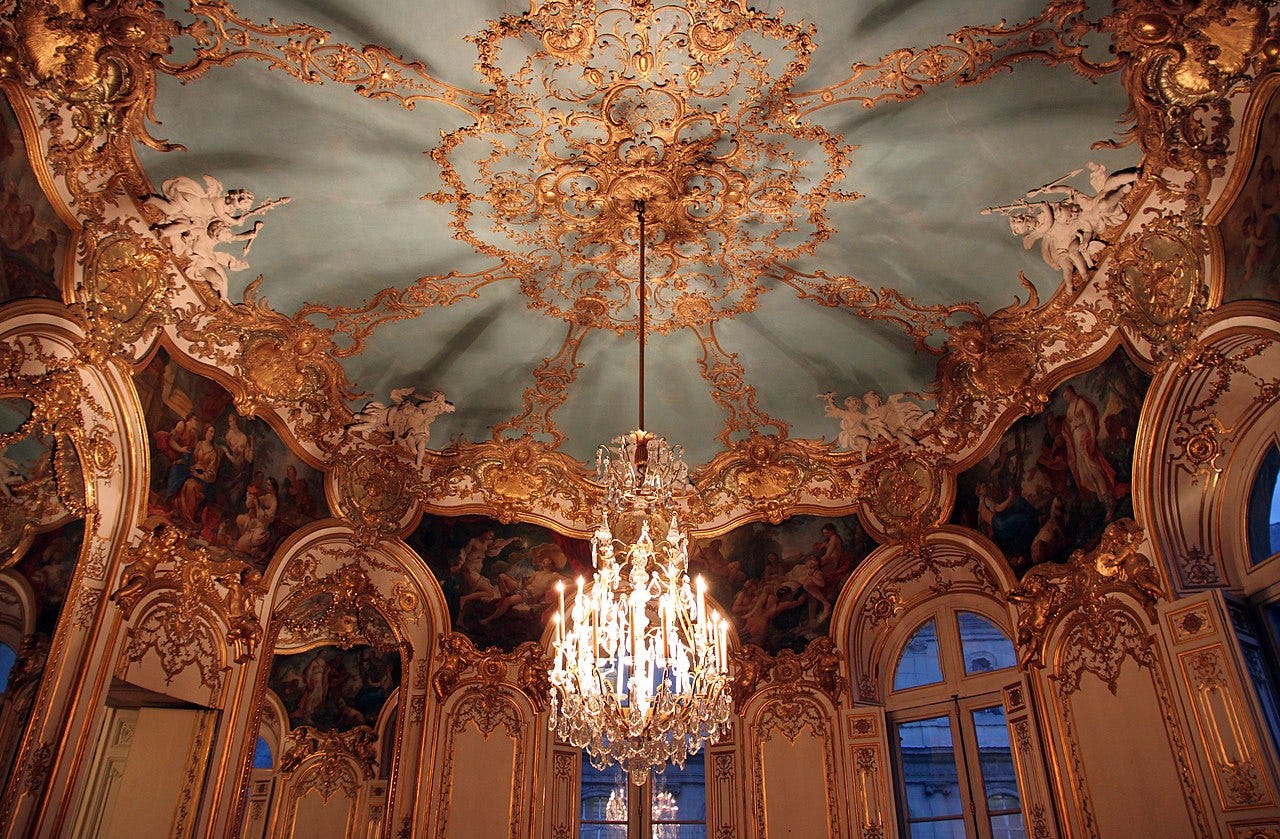 Oval salon of the Hôtel de Soubise (now Archives Nationales), Paris (1735–1740)
Rococo's historical development demonstrates the dynamism between social change and aesthetic expression. The style emerged as aristocratic life shifted from the formal court of Versailles to the intimate salons of Paris, requiring interiors that facilitated comfort, conversation, and casual elegance. Its decline reflected intellectual shifts toward classical rationality and archaeological authenticity, yet its influence persisted in various revivals and reinterpretations .
Today, Rococo continues to resonate with designers and homeowners seeking to incorporate historical richness, artistic craftsmanship, and playful elegance into contemporary interiors. Its legacy reminds us that interior design is not merely functional but expressive. As we continue to reinterpret Rococo for the 21st century, we participate in a long tradition of creative adaptation that keeps historical styles alive and relevant for new generations.